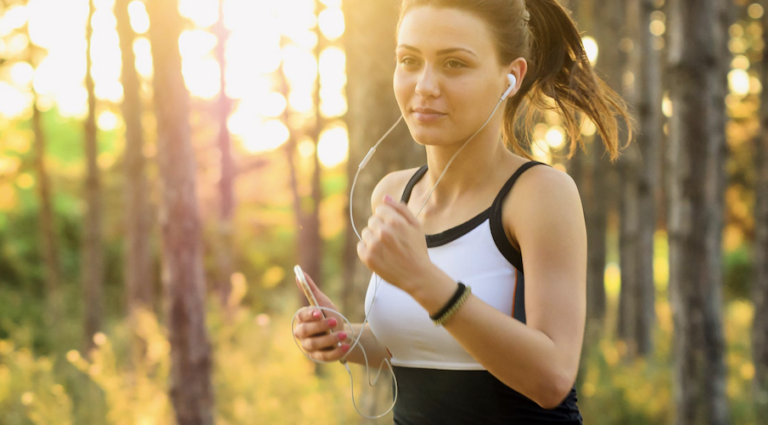
“The doctor of the future will give no medicine but will involve the patient in the proper use of food, fresh air, and exercise.” — Thomas Edison
The increasing number of health concerns worldwide has encouraged people to become fitness freaks.
Unarguably, no one hits the gym just for the sake of so and so results only.
You must have a motive behind stepping into that sweat zone for real.
No matter your reason for hitting the gym hard every day, the goal remains the same to stay fit as a fiddle.
When it comes to gyming, people wish to get 100% results from every rep or run they perform.
And guess what, researchers and fitness experts want the same for you. That’s why they have come up with a series of ideas to help you make the much required difference.
4 Ways How to Exercises Better:
1. Lift weight.
“If you just do cardio, you’re sabotaging yourself,” that’s what Jacob Wilson (Ph.D. certified professor and scientist) says.
Further, he says, “Your metabolism will actually go down, making weight loss more difficult. Resistance training, however, builds muscle to increase your metabolic rate.”
To this, the Harvard School of Public Health researched 10,500 adults, making them spend at least 20 minutes of weight training regularly.
As a result, they gained much less fat in the abdominal area.
2. Listen to good music.
Believe it or not, music has the potential to charge up your body and make you more productive.
That’s what the Indian Journal of Physiology and Pharmacology explains.
It says, “Music boosts the body’s levels of serotonin and dopamine, hormones that are known to foster recovery,”
Therefore, try listening to relaxing music that helps you control your blood pressure and heart rate while you shed those extra lbs.
3. Look at your exercising props.
Many of you may have been neglecting them just for the sake of putting too much pressure on your muscles, but they are essential.
Yes, we are talking about the highly beneficial exercising props like pull up bands, stretch bands, physical therapy bands, mini resistance bands, glute bands, shoulder pulleys, hip bands, and much more.
All of these products prove helpful to accelerate your body potential while helping you hold for that extra minute.
4. Practice intervals.
Following a predefined exercising interval pattern will help you lose fat faster.
The pattern can be minute per minute, high intensity workout, period of all, low intensity “breaks”.. come up with improved cardiovascular potential.
People performing this 20 minutes of exercising pattern are likely to see more promising results than those who don’t.
What You Should Remember?
When it comes to attaining a fit body, everyone wishes to look upon different factors that fasten up the result.
This makes us run after supplements, try a new pair of exercises, or maybe change the entire diet plan for once, but at last, nothing works.
Here, people tend to give up on their healthy living instead of finding out where we go wrong.
But that’s not the ideal solution.
Rather, it lies in your performing the exercises more appropriately.
Have more fresh and organic fruits and vegetables instead.
Cut down on animal based diet, sugar, and unhealthy fats.
You will feel lighter and happier, and weight maintenance happens naturally.
2. Get moving every day.
Daily exercise strengthens your body and mind and keeps disease at bay. It helps you lose weight and maintain fitness levels.
Pick a realistic exercise regime that blends well into your schedule.
It is advisable to consult a personal trainer to devise a personalized plan based on your fitness goals and needs.
Adhere to it every day, and you will experience a state of holistic well being.
3. Steer clear out of stress.
Stress is a silent killer, and it can keep you from achieving your wellness goals.
Steering clear out of stress should be your top priority.
Start by integrating meditation and deep breathing into your daily routine.
Embrace a natural anxiety relief aid such as cannabis to address deep seated anxiety and depression.
Choosing the right product and consumption method is crucial.
Try an htfse concentrate for intense effects and rapid relief. These high terpene and full spectrum extracts offer unique flavors and give more with less.
4. Ditch caffeine and alcohol.
Another wellness trick that helps you ramp up your lifestyle is ditching caffeine and alcohol.
These drinks may pep you up momentarily, but they do more harm than good in the long run.
I started a Dopamine Detox Challenge where I ditched both and I share my experience here. Right now on day 115 of the challenge and I feel like a superhuman, literally.
Avoiding your daily coffee and beer seems like a challenge, but the benefits of doing so make the efforts worthwhile.
Opt for healthier drinks such as green tea, vegetable brew, and cold pressed juice instead.
They cleanse your body and heal your gut.
5. Get more sleep.
Good sleep is the easiest way to achieve a state of well being, but people seldom make efforts to catch up on it.
Rework your sleep cycle to ensure you get at least eight hours in bed every day.
Look for ways to deal with insomnia and sleep deprivation naturally.
Ditching gadgets is the best start.
You can meditate, drink green tea, and have a warm shower at bedtime to sleep better.
A little cleanup of your sleep schedule makes you healthier.
What You Should Remember?
Holistic health need not cost a fortune.
These simple lifestyle changes are the key to a better life.
Integrate them into your daily living, and you will feel like a happier and healthier person.
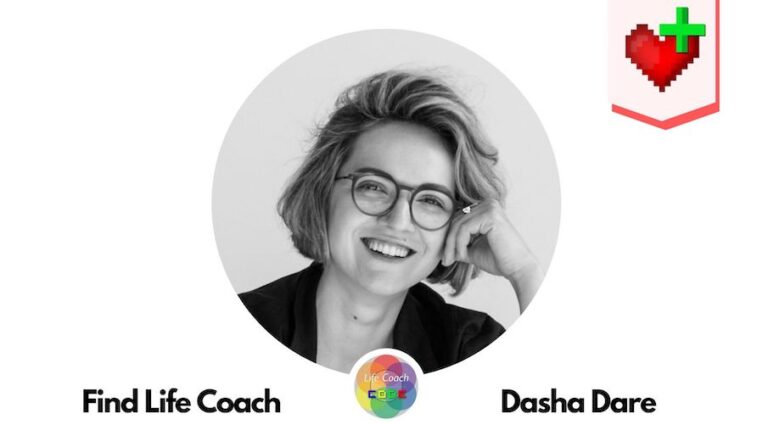
Dasha Dare is one of the coaches we found and we did a little interview with her. She impressed us with her unique approach to coaching that helps people become their realest selves. Here is what she said.
Meet Life Coach Dasha Dare:
Name: Dasha Dare Pillar: The Heart Who is this coach for: Anyone who wants to unleash their true self, who dares to live their best life possible but struggles to make that leap forward, anyone who wants to feel their real personal power. How they can help: By using a unique and innovative method called The DareMethod.
First of all, how are you and your family doing in these Pandemic times?
Everyone is doing well! Thanks for asking.
How does the coronavirus pandemic affect your clients? Did it affect you at all?
Yes, definitely, in my opinion, the main effect is that people have become more introspective. The focus and the intentions have all over sudden shifted towards the inner world as opposed to the outer world.
And in coaching it has changed the questions that people bring to sessions because of the new intention to prioritize themselves and what matters to them the most as opposed to what they were once told that should matter.
What are the biggest lessons that you learned in this pandemic?
1. I can no longer wait to live my life.
2. Since I can’t control the flow of events, I trust that any outcome is the best outcome for me.
3. All the answers are within me.
The Origin:
Tell us about you, your career, how you started with your coaching career?
Born and raised in Russia, I moved to the US approximately 13 years ago.
I have 2 Bachelors degrees: one in Business Administration and the other one in HR management.
However I have always longed for doing creative work which has resulted in me studying at New York Film Academy and turning my long term passion for photography into a career.
I’ve worked as a professional portrait photographer for about 10 years, which has given me the important experience of working with people one on one and perpetually inspired my curiosity about human nature.
Additionally I am a long time meditation practitioner and certified vinyasa yoga instructor, and cannot imagine my coaching work without using instruments from mindfulness practices.
Officially my coaching career started during the pandemic year, when I made a decision to study at Human Potential Institute to deepen my understanding of human nature and possibilities.
At that time I was working on my personal art project devoted to pandemic, called All is One, where I was meeting with, interviewing and photographing several New Yorkers about their pandemic experience.
This work has helped me gain insights about the effect these challenging times might have on our relationship with ourselves.
Looking back at my path, I am quite certain that the combination of my background, education and experiences has helped me create a unique coaching method and design my life coaching programs in a way that allows me to encapsulate everything I know and serve my clients the best possible way.
Today most of my clients come to me because they feel ready to dare in any aspect of their life but don’t know whether it’s actually possible and what are some practical steps they can take to be certain that they can thrive after making the leap.
What was your biggest obstacle that you had to overcome in your life that made you who you are today?
It’s the experience of NOT following my heart, whether it’s a move to another country, a romantic relationship, a career choice, a choice of a major at school, or a choice of outfit to wear or food I order at the restaurant.
It took me years to finally dare and trust myself and live the life in integrity with my values. I am forever grateful for all the lessons because each one of those experiences has inspired me to create a coaching program that can help people like myself dare and thrive.
The Coaching Style:
How do you innovate with coaching your clients?
My coaching program (called “Time to Dare”) is based on three main pillars: Mindfulness + Creativity + Embodiment (which is a reflection of my experience, education and background).
At the core of my work is the experiential practice where we tap into your embodied cognition and the innate knowledge in you, which you are not accustomed to using.
I have developed the DareMethod which is my unique approach to embodiment work with the goal of helping my clients create experiences in their subconscious mind and body in order to gain knowledge of what is possible for them.
Every session is a unique experience for both the client and myself.
What’s unique about your coaching approach?
DareMethod allows people to experience what’s possible for them.
This is the missing part between the readiness to make a leap forward and actually making it.
The majority of us struggle to dare and take action towards becoming more themselves, or making changes to their lifestyle or work, because we perceive it as a very risky project.. by the time we get to this point we already have a reputation, we are not in our 20s, we’ve had some frustrating life experiences, we have people we are responsible for, etc. It’s too much to lose.
And most importantly: we don’t have any experience of making such leaps, no experience of actually daring to be ourselves.
So my coaching program is designed implementing DareMethod which is my unique combination of instruments and experiential practices to give a person an experience of their own power, of what it feels like to be themselves.
Once you have that, it becomes your absolute truth that you can rely on in making a decision to dare.
What benefits do your clients get after working with you?
The main and most important benefit is the experience that the client gets during our work:
The experience of being himself or herself and the experience of what it feels like to overcome the fears and limiting beliefs.
Unlike knowing something in theory, experiencing has a much more profound effect on people, and eventually serves as their reason for making a decision to dare and thrive in life.
Additionally we work on strengthening relationship with self, becoming more intuitive, more resilient, learning to self regulate emotions and thoughts, reaching alignment between themind and the body, resolving inner conflicts, understanding the nature of resistance and any tension in the body, understanding stress response mechanism, and overall becoming more mindful, self confident, present and joyful.
Do you use any specific tools to be efficient with your clients?
You can find everything you need on the website at dashadare.com.
The Impact:
If you had a super megaphone that, when you speak into, the whole world will hear your message, what would you say?
“Dare to be Yourself”
What is the greatest lesson you have learned in your life?
That’s a big question! There is definitely more than one ; )
Be patient and kind to yourself and others.
Listen to your heart.
Your final thoughts?
I am genuinely very excited about the massive awakening that we are witnessing right now and feeling very blessed and grateful to be part of this movement towards creating a world where we all get to thrive and be ourselves.
It’s time to dare.
Where Can You Find Dasha Dare?
If you liked this interview and want to learn more about Dasha’s innovative coaching go to her website dashadare.com. Or if you have any burning questions you can reach her directly on her LinkedIn profile.
She is also active on her Instagram account where she shares nuggets of value, make sure to follow her. It was an honor having this interview with her.
Confidence can seem like an elusive concept for many people, especially if they are not naturally outgoing.
What is confidence?
We all know how it feels, how it looks, but what is confidence really?
The definition says that it is a deep trust in oneself and in its capabilities. So, to gain confidence you need to establish trust in yourself and in your capabilities.
How to do that?
There is an easier way that we will talk about in this article, and a harder way.
The harder way is to take action, to do things you are insecure about until you are not insecure anymore, to face your flaws, to face shame, fear, laziness daily, to do hard things even when you feel like not doing them.
Ok, that might seem overwhelming, but that is the long term strategy.
What’s the easy way?
If you are struggling with your confidence levels or are starting to have self esteem issues, here are some of the easy steps that you can take to give yourself an easy short term confidence boost.
5 Easy Ways to Boost Your Confidence:
1. Sort Out Your Smile.
Around half of Americans are self conscious about their teeth, and this can make it difficult to feel relaxed when you are out and about.
You may start covering your smile or trying to solve your dental issues yourself, which can worsen the appearance of your teeth in the long run. Better yet, you should check this dentist out in Marlborough for expert intervention.
Then, if you are struggling with yellow or unaligned teeth, or if you have gaps in your smile, you should consider contacting Sensational Smiles to see what cosmetic treatments they can offer to turn back the clock in terms of your teeth.
2. Exercise.
Many people do not exercise regularly, and some avoid exercising in public places due to self esteem issues.
However, exercise can have a great impact on your confidence levels as it can help you to increase the number of endorphins flooding through your body.
As well as lightening your mood, exercise can help you to make progress toward your dream body and to feel better about yourself.
It can also give you focus, meaning that you are less likely to direct your thoughts inwards.
3. Dress Well.
A quick way to boost your confidence, though, is to dress in clothes that you love and that flatter your body.
Sometimes, it can be hard to find clothes that suit you, and the type of clothes that you look good in will highly depend on your body shape.
However, it is more important to find clothes that you love wearing and that you believe express you and your personality and interests.
4. Go to Therapy.
Visiting a therapist can help your confidence issues, as well as any underlying mental health issues that may be affecting your confidence.
Therapists might suggest a course of CBT, which can alter your behaviors, while also getting to the bottom of why you have confidence issues and what you can do to overcome these and to adjust your thinking patterns so that you do not always think negatively about yourself and your actions.
5. Surround Yourself with The Right People.
Sometimes, your confidence may be impacted by your inability to be yourself, and you may feel constantly restricted or unable to express your personality or identity.
Then, you should try to surround yourself with people who accept you for who you are and who lift you up rather than bring you down.
You should also consider journaling your thoughts, as this might help you to unravel the causes of your lack of confidence and your inability to be yourself around others.
You should also try to focus on your strengths and use affirmations to turn your thinking around, as well as drawing your attention inwards rather than wondering how others think about you.
What You Should Remember?
Confidence is something that is built over time however, there are few easy changes you can make that can give you the starting boost.
With an estimated 150 million Americans drinking coffee every day, it’s safe to say that, as a nation, we can’t get enough of the good stuff.
Whether a cappuccino is music to your ears, or an espresso is what gets you through the day, there are many ways to get a caffeine fix. Unfortunately, too much coffee can heighten anxiety, cause insomnia, and lead to high blood pressure.
If you love your daily cup of joe, there are easy hacks you can put in place to make your coffee healthier, such as those below.
7 Ways How to Make Your Coffee Healthier:
1. Ditch the Milk.
For coffee fanatics who are always adding milk to their beverage, now may be time to rethink your strategy. Black coffee like espresso has less than 10 calories per 8 ounce cup.
If you’re wanting to cut down on calories and keep your coffee as healthy as can be, try and ditch the milk and steer away from added ingredients.
While black coffee can taste bitter initially, your taste buds will soon adapt.
2. Opt for Almond Milk.
As long as you’re not allergic to nuts, it may be time to look at adding almond milk to your cup of joe.
When compared to whole milk, which can see your cup of coffee reaching 180 calories, there are less than 100 calories per serving if you use almond milk.
3. Avoid Artificial Creamers.
While artificial creamers may be convenient, especially if you’re on the go, you need to be wary of all the ingredients and sugar that go with them.
They’re not the healthiest thing to mix in with your cup of coffee, so instead of adding them to your drink, why not try a bit of coconut milk instead?
4. Brew with Organic Beans.
The origin of your coffee bean can make all the difference in terms of how healthy it is.
To ensure you’re free of harmful chemicals and pesticides, it’s wise to buy certified organic coffee instead.
This will mean your body isn’t being filled with additional chemicals because of your morning brew.
5. Never Drink on an Empty Stomach.
If you’re not a morning person and the idea of breakfast turns your stomach, you may think a cup of coffee will do the job to get you ready for the day ahead.
However, drinking coffee on an empty stomach can lead to all kinds of health risks.
These include increased anxiety and a damaged stomach lining.
To stop this from happening, try and eat something before indulging in your morning coffee.
Your body will thank you for it.
6. Go for Chocolate.
Dark chocolate and unsweetened cocoa are excellent additions to your cup of coffee.
Make sure you drink them in moderation, otherwise you could experience caffeine related side effects, like sleeplessness, and nervousness.
Once you find the right balance, opting for chocolate in your coffee may give health benefits such as balancing cholesterol levels.
7. Try Something New that’s Healthy.
For those who like to be adventurous with their coffee, now may be the time to try something out of your comfort zone.
Civet is a kind of coffee made from coffee beans that are excreted whole in the droppings, or let’s say the poop, of the Asian palm civet.
While this may not sound the most appealing, it has been said that civet coffee can boost short term memory, promote brain activity, and increase concentration levels.
If you’re willing to give civet coffee a try, you’re sure to reap the health benefits mentioned.
What You Should Remember?
Lots of people love to drink coffee. But coffee doesn’t have to be unhealthy if you follow the advice we gave you.
If you’re a lover of all things coffee, the next time you grab a cup, trying any of the tips above can make your beverage that little bit healthier for your mind and body.
Personally I loved drinking coffee. But when I started doing my Dopamine Detox Challenge I stopped drinking coffee, or any type of caffeine.
To be honest, I haven’t felt better in my life.
So if you can, try it yourself. Or make your coffee drinking healthier. Both options are good for you.
Malcolm Nair is one of the coaches we found and we did a little interview with him. He impressed us with his unusual yet brilliant approach to coaching.
He has a self help book titled “Arnav’s Affirmations,” suitable for both adults and children.
He is recognized as the top therapist in Airdrie, Alberta.
He has articipated in over 25 interviews on YouTube channels, discussing near-death experiences and personal life story. Here is what he said.
Meet Life Coach Malcolm Nair:
Name: Malcolm Nair
Pillar: The Spirit
Who is this coach for: Anyone who wants to find out what’s been holding them back in life.
How they can help: Mind, Body, Heart and Spirit Connection, 20+ years of shedding past life experiences.
First of all, how are you and your family doing in these Pandemic times?
Fantastic, we have actually prospered throughout the pandemic and grew both of our businesses 10 fold.
How does the coronavirus pandemic affect your clients? Did it affect you at all?
It affects their beliefs, and it causes procrastination in people.
For me, it drove my ambition to serve.
What are the biggest lessons that you learned in this pandemic?
That people will either continue to allow outside circumstances to dictate how they feel inside or decide that going within is the only way out.
The Origin:
Tell us about you, your career, how you started with your coaching career?
It all started with a vision and mission statement.
I was sick and tired of being sick and tired and I needed real fulfillment in my life aside from the 9 to 5 that was earning me around 6 to 8 thousand a month.
I asked the source how can I serve… I listened and heard, “Guided Intelligence” Everything started there.
What was your biggest obstacle that you had to overcome in your life that made you who you are today?
A Near Death Experience, dying for 3 days and going through my wake up call, having life flash before my eyes and noticing everything as an observer.
This is what woke me up.
Here are few videos to learn more about that:
The Coaching Style:
How do you innovate with coaching your clients?
Cutting past all the BS.
All the fraudulence and talk.. I cut through it all and get down to the root of their blockages.
What’s unique about your coaching approach?
I am able to read your mind and call you out in front of your face, which means you are only lying to yourself.
And when I show them the cracks they start becoming vulnerable and start opening up.
What benefits do your clients get after working with you?
Inner peace, freedom and living in harmony.
Do you use any specific tools to be efficient with your clients?
I use Guided Intelligence and over 20+ years of life’s experiences and understanding the mind.
The Impact:
If you had a super megaphone that, when you speak into, the whole world will hear your message, what would you say?
Don’t wait till you die, just so your spirit says you coulda, woulda or shoulda.
You don’t have to die to realize you could have changed.
What is the greatest lesson you have learned in your life?
That things happen for us and unless we start seeing things the way we want to see them changed, nothing will.
Your final thoughts?
I appreciate you and how you are educating the world and spreading this.
If you have any burning questions you can directly contact him on his LinkedIn profile, you can follow his Facebook and Instagram accounts where he shares pieces of value regularly.
If you really liked this interview and want to learn everything you can about him, all his social media, you can find all of it here. It was an honor having this interview with him.
Do you constantly find yourself gaining and losing weight for no reason?
One week you feel like you have put on several pounds, and another week your clothes don’t seem to fit at all.
And we all know that diets are never a long term solution for proper weight management and ultimately puts your health at stake.
If you feel that there is something unknown at work, you are probably right.
Your genetic design can play a crucial role in weight management.
Moreover, the solution to better health is unique to each person, and it can narrow down to an individual’s makeup of DNA.
With Genetic testing, you can find an underlying issue restricting your body from gaining its full potential. And when you are aging, your body is going through many changes that you might know about.
And that’s why there has been a rapid increase in the demand for genetic testing worldwide.
Below, you will also find how you can take advantage of this and get better at weight and health management.
The Future of Preventive Health Measures:
You must be aware that there are thousands of tests available to diagnose any particular medical condition or disease.
Moreover, with a Genetic Test, an individual becomes eligible to find the essential factors contributing to their health.
Based on that knowledge, you can make the required changes in your lifestyle and enjoy the benefit of living a more active and healthy way of life.
With genetic testing, you can identify the following:
1. Your wight management strategy.
The activity of specific genes that control how your body treats fats, carbohydrates, micro nutrients, and proteins.
2. Your exercise strategy.
How different types of exercises affect your body and how some types of exercise can be more beneficial when compared to others.
3. Your aging strategy.
It can help you find out how your lifestyle habits affect your aging process.
4. Your performance.
It can show how unique physiologic and metabolic functions affect an individual’s athletic performance.
5. Your ideal diet.
Thanks to the science and advancements in genetic testing, anyone could find customized weight loss or gain programs that were once impossible to attain.
We all need right nutrition to support the function we perform with our bodies. As a result, the nutritional supplement is one of the most crucial parts that you might be missing on your weight management journey.
With a genetic test, you can find the right minerals, minerals, and nutrients you need to give your body the benefit of a healthy diet. Additionally, when you supply your body with all the essential nutrients, you begin to feel more energetic.
You ultimately become better at performing demanding workouts at the gym or home. This will further accentuate the process of fat burning in your body while helping you gain muscles at the same time.
What You Should Remember?
Somewhere deep down, we all know there is a lot more to weight management than counting calories or your reps at the gym.
And the answer is in your DNA, which you can access with the help of genetic testing.
There you will find that answer and the secret to your wellness and optimal health.
It is important to find practical ways to study during your student years. There is no one size fits all approach to studying. This is probably something you have already realized.
Visionaries are the ones who have led to many of the wonders we see today. Our society’s progress depends on our ability to think positively.
Studying doesn’t have to be a difficult task.
But some teachers make life difficult for students. Learners wonder if anyone can write my thesis and how to find people who can help me with that.
You just need to use the right strategies to help you achieve your goals.
The 7 Most Useful Pieces of Advice for Students:
1. Set goals.
You can make positive changes in your life by setting goals.
You should set SMART goals, Specific, Measurable, Achievable, Relevant, and Time Bound.
This will include creating plans that will help you get the personal essay, help.