There are so many vegetarian burgers, from tofu to zucchini, that defining what constitutes a veggie burger can be difficult.
A veggie burger does not contain any beef. Instead, any plant based food, including grains, beans, soy, and of course, vegetables, can be used to make vegetarian burgers.
Plant based burgers have a wide range of nutritional value due to the variety of ingredients used.
Your homemade tofu, black bean, and quinoa patty will undoubtedly be high in fiber, plant based protein, and minerals.
While vegetarian burgers are from a wide array of the plant basedingredient list, those purchased at a restaurant or supermarket may be overly processed and high in sodium.
The good news is that vegetarian burgers contain a lot of protein and vitamins.
The protein in these newer plant based burgers is comparable gram for gram with beef and poultry. They are both high in protein, with the former made primarily of soy and the latter primarily of peas and mung beans.
Are Tofu And Veggie Burgers Good?
Carbs
In contrast to animal burgers, the majority of vegetarian burgers contain carbohydrates.
Because they are derived from beans, whole grains, and vegetables, these are frequently complex carbs that take longer to digest.
Some carbs in an adequately prepared veggie burger may come from added sugars, depending on the recipe.
Fats
Vegetable burgers are low in fat, but they require a binding agent, such as oil, to keep their shape. As a result, a single vegetarian patty has very little fat, about 4.4 grams.
Protein
Veggie burgers are lower in protein than beef burgers.
This is not to say that they do not count toward your daily total.
The soy based veggie patty contains 22% of the daily value recommended by the USFDA, with 11 grams of protein.
4 Benefits in Terms of Health:
In addition to being a delicious and varied meat substitute, veggie burgers have these several health benefits.
1. Insulin Resistance Can Be Improved.
Insulin resistance is a significant factor in the development of type 2 diabetes. Fortunately, the foods you eat can influence your body’s ability to respond to insulin. Following a 16 week experiment, researchers discovered that adopting a plant based diet reduced insulin resistance in 75 overweight adults.
2. Enhances Digestive Health.
A single soy based veggie burger contains 3.4 grams of fiber, which helps women meet their daily fiber goal of 25 grams and men meet their daily fiber goal of 38 grams. Bean based veggie burgers may contain even more fiber. Constipation can be relieved, and bowel movements can be controlled with a high fiber diet.
3. Could Help You Lose Weight.
Instead of red meat, choose plant protein in a vegetarian burger to aid in weight loss. A vegan diet has been proved in research to be an excellent technique of weight loss and obesity prevention.
4. It Could Aid in Cholesterol Reduction.
Studies found that people who ate a plant based diet had significantly lower cholesterol levels.
What You Should Remember?
Plant based burgers contain vitamins and minerals found in animal proteins, including vitamin B12 and zinc, in concentrations equivalent to (and in some cases exceeding) those found in red meat and poultry.
This is advantageous for vegetarians, as these nutrients are frequently scarce when consuming just plant based diets.
Because vitamin B12 is predominantly derived from animal sources, staunch vegetarians and vegans must supplement their diets with fortified foods.
Phytic acid of the plant compounds binds to minerals, resulting in a 50% increase in zinc requirements and probably a twofold rise in iron requirements.
For persons who consume at least some animal protein, vitamin and mineral fortification are fewer selling points.
So far, we’ve been talking about leadership ingredients such as: vision, communication (listening) and feedback.
[If you haven’t read about them go and get up to date with this one: Part 1, Part 2, Part 3.]
Time to look at the fourth ingredient today: Influence!
Now, I will start with this: you can only influence as much as you let yourself be influenced by others!
Yes, I know, maybe it seems counter intuitive, but here’s why it’s not.
The 5 Ingredients for Leadership: Ingredient 4 – Be Influenced So You Can Influence!
1. Let yourself be influenced.
First off, as a leader, you need data that helps you make well-informed decisions. If you want to influence on a larger scale, that is.
What’s the best way to get that data?
Well, check with your team!
They are there because they are ALL leaders in what it is they’re responsible for.
We expect that they take accountability and responsibility for their actions and results.
So then why not include them in the conversation when making decisions that affect them?
And what’s the best way to get that data? Well, learn how to listen, get the feedback and then decide what to do with it!
It’s funny, isn’t it, how, when we talk about feedback, we typically have this preconceived image of someone, usually ‘the boss’, coming and telling us we’ve done something wrong. They say it and leave it with us. And that’s it. End of conversation.
First of all, that’s not a conversation. That’s a monologue, a criticism, a line. And it certainly is not feedback.
Feedback is a dialogue. One that takes time to give and discuss. If it doesn’t take time, it’s a waste of energy, because it leads to no result.
Now, the question is, how can you make it a dialogue?
6 Steps to Receiving Feedback as a Leader:
1. Focus.
This is the hardest part, and it’s right at the beginning!
Remember how we talked about giving negative feedback and include feelings? That’s it.
When receiving feedback, we need to express our observations, concerns, assumptions, ideas AND feelings.
Keeping it all bottled up never helped anyone, under any circumstance.
At some point, the bubble can only burst.
Express yourselves without being defensive or aggressive. Express your honest reactions from a place of observation and care.
5. Say ‘thank you’!
They took the time to observe and think about how they express their observations. That’s one definition of caring.
It takes a lot of courage for anyone to come forward and give negative feedback, knowing that we’re not going to like what we hear, knowing that them, as ‘feedbackers’, might end up being misunderstood, judged, criticized.
Talking to each other from this place of caring about what is going to happen next always helps.
Acknowledging and respecting each other’s effort in both giving and receiving feedback, that takes that dialogue to a whole new level! A level where collaboration starts and creativity sparks. A level that takes us to the 6th step below.
6.Decide or agree on the next steps.
Now that we agree on what the issues and concerns are, we can decide on the solutions.
Feedback discussions need to be solution oriented. Anything less is not feedback.
So make your list of solutions you agreed on and decide how and when you are going to implement them.
2. Expand your own circle of influence.
Now, with all the data you have available, you’re ready to expand your own circle of influence!
Knowledge might have been power, but in the information age, shared knowledge is the real power!
When people feel heard and understood, they will be more ready to listen to and understand you. Now they’re ready to contribute. Now that they feel included in the conversation, they will feel more motivated.
So, what do you need to focus on now?
1. Work on your leadership presence, verbal and non verbal.
Remember, we will always believe what we see over what we hear!
When you think about your capacity to expand that circle of influence, make sure that you pay attention to HOW you say what you say.
Make sure you work on your leadership presence: understand how you convey your messages, notice how they are received, ask for feedback and then choose to work on the things that don’t work in your favor.
Imagine a case scenario where you’re saying something like: ‘I am so excited about this idea that you had’, but your body language will ‘communicate’ the opposite.
What do you think will happen? The other person will most likely believe those non verbal cues over the verbal ones.
Here are some questions that help you work on your presence more:
What does your body language convey when you talk to your team, or to your clients?
What’s your tone of voice?
How might the others interpret the message based on your non-verbal cues?
What is your communication style? How is it different from your audience’s style?
What would they need to hear from you? What would they not?
2. Be curious instead of needlessly authoritarian (aka defensive)!
A common example is that, when we’re passionately presenting an idea that we believe in and the others will have objections to it, we become defensive.
Approach that situation with curiosity rather than defensiveness and you’ll see some tables turning!
Some leaders fear that they need to have all the answers or otherwise that’s a sign of weakness. Nothing further from the truth!
Power is a two way street!
Are you really a leader if you have no ‘real’ followers? If they’re only following you because they have to?
And are you an authentic and rational leader if you’re not ready to follow the experts in your team when they are taking the helm? What does that say about your decision, as a leader, to hire them in the first place?
For more tips on how to boost your team leadership skills muscles, check out the All Personal online courses and live workshops here: https://allpersonallearning.thinkific.com
If you are living with a disability, you may get financial and medical help from Social Disability Services.
The social security disability laws are very complicated and maybe beyond the understanding of most people. You can still file the claim independently, but you’ll have to go through several steps.
That’s why most people prefer to get assistance from a lawyer.
You may be thinking that hiring a disability lawyer is a waste of money. Here are some of the benefits of hiring a disability lawyer.
7 Benefits of Hiring a Disability Lawyer:
1. Reduce Paperwork.
The application process involves more than 40 pages of personal and career information.
You’ll have to provide the details about your education and medical situation.
In addition, you have to list your disabilities and current capabilities.
A disability lawyer will complete this process, so you don’t have to worry about anything else.
2. Understand The Legal Process Behind It.
The disability regulations and laws are regularly changing.
Since disability lawyers handle these cases every day, they know the latest changes and regulations.
As a result, they can know what you deserve and if you qualify for the disability.
3. Reduce Time Spent.
A disability attorney may have been completing disability application forms for many years.
During that time, they would have improved their process to complete the application in a shorter period.
You can expect a disability attorney to complete your application in a short period.
4. High Ethical Standards.
Disability lawyers have to meet several regulations of conduct before they can start practicing.
You’ll be confident that the lawyer will respect the attorney client privilege and obey all requirements.
5. Overcome Legal Wrangling.
Not every disability application results in a successful claim.
In some cases, you may have to pursue your case before a disability judge.
A good disability lawyer can have your rejection overturned so that you can get disability benefits.
The lawyer will gather all documents and successfully prosecute the case in court.
6. Meet All Deadlines and Appointments.
Social security is a very rigorous process with strict deadlines and appointments.
Failure to submit the documents within the required time can result in an automatic rejection.
That’s why you need somebody who has been doing the application many times and is familiar with the existing deadlines.
7. Receive Expert Legal Opinion.
A disability judge may finally make a determination about your disability application.
It’s possible to avoid this step by presenting compelling documents and applications.
A reasonable disability attorney will prepare the correct argument and save you money and time.
Deidrè Akaloo is one of the coaches we found and we did a little interview with her. She impressed us with her expertise. Here is what she said.
Meet Life Coach Deidrè Akaloo:
Name: Deidrè Akaloo Pillar: The Mind Who is this coach for: For executives, teams but also individuals that want to get more clarity in their life and make a plan that leads them forward. How they can help: By being present with each individual, using various tools like personality profiling, action plan document, journaling and mind mapping.
First of all, how are you and your family doing in these Pandemic times?
Thank you. We are doing well, considering the entire world was thrown off axis and we are slowly returning to normal life again.
How does the coronavirus pandemic affect your clients? Did it affect you at all?
Much of my professional world was already virtual, so not much changed with my client in terms of accessing or connecting with me for their sessions.
However, with that being said, the emotional impact was significant.
Many of my clients were anxious, had to deal with loss and grief in various forms, and had to adjust to different working conditions, bringing a measure of uncertainty.
Our sessions dealt with the virus and the impact it was having on work from various aspects like family demands, loss, navigating technology, respect for time and space and the anxieties caused by the uncertainty on a wider scale.
The biggest concerns were health of the staff, their own safety and keeping their doors open.
We worked through much of the uncertainty and the lack of control that we felt, we drew on resilience techniques, change management techniques and responses to circumstances that were in, or out of, my clients’ immediate control.
I generally have an open mind and a change ready mindset.. but the pandemic threw me off balance.
I did not sleep well, I was worried, consuming negative news exacerbated my anxiety. Admittedly, my own anxieties levels, caused by the Corona virus, were high.
No time to panic!
Being open to changes and understanding that some major adjustments are required, we quickly pulled together as a family to figure out what we needed to do to stay safe, keep healthy, live together in the same space every day, and maintain our sanity.
As a family we had more meals together, we played board games and often had family meetings to remind the kids that the pandemic is real, and we were required to remain indoors and function together as a unit in an enclosed space. Luckily, we are all home bodies and can find ways to entertain ourselves: I studied, learnt new art resin techniques, walked every day, cooked interesting dishes, and maintained my spiritual practices.
Once we had an idea of what we were dealing with, we knew how to manage our behaviors in terms of masking, social conduct and sanitizing. We started feeling more comfortable.
We trusted the scientist to manage an issue that fell squarely into their professional ambit, I felt less anxious, afraid, and overwhelmed.
What are the biggest lessons that you learned in this pandemic?
The major lesson through the pandemic that being with yourself is a great opportunity for reflection, regrouping, and redefining life.
As human beings we are incredibly resilient and if or when we are forced to change, we can and we will.
We are resourceful and can make any situation work out positively.
We must reach within ourselves to cope, change, support and love each other during tough times.
I learnt that there is so much to be grateful for.
Often, we neglect appreciating the people and the aspects of ourselves that show up to support us through the difficult times.
Despite the loss, confusion, sadness, anxiety we still made efforts to stay connected with friends, celebrate birthdays, find ways of to survive and in some cases even thrive, and carved out a life that was different yet fulfilling and sufficient to get us through the pandemic.
The Origin:
Tell us about you, your career, how you started with your coaching career?
I started my career in Human Resources after attaining my B.Social Science degree, with majors in Industrial and Organizational Psychology and Industrial Sociology from the University of Cape Town.
My job after graduating focused exclusively on Diversity and Inclusion, just as South Africa became a democratic country.
It was a privilege to be involved in this transformation journey, to support moving an organization from a mindset, steeped in Apartheid, to one that was inclusive and offered equal opportunities for previously disadvantaged employees
People and Change Management have since underpinned my work as an HR practitioner over the last 25 years.
I enjoyed being in HR in a generalist role, gaining exposure to all aspects of human resources. I however found my greater joy in seeing people in jobs that truly satisfied their souls.
Individuals in the right jobs, excelled. They seem to thrive, love the work they do, make the job look easy, and continue to move their careers forward in the direction they plotted.
As a senior manager in corporate organizations, I served as a coach and mentor to many people. Again, the people who excelled already knew where they were going and would rely on me to support their careers from an advice and consult perspective,, they did not need me to manage their careers.
Their success coupled with my coaching sparked the “pull” towards coaching.
I wanted to develop and formalize my capabilities in this space and continued learning through part time studies and in 2010 obtained my formal Business Executive Coaching certification from the Wits Business School.
I kickstarted my coaching practice on a part time basis with family and friends but the final “push” that finally made me realize that coaching was really my calling, and required my full time focus came through my last corporate assignment in Change Management and Organizational development.
At the time my company was restructuring, and those changes would ultimately lead to job losses. I recognized that we had a structured approach to invest and develop people in careers within the company and support their transition into to new roles.. however, failed to do the same for affected, retrenched employees who required this support as a much higher need as they transitioned their entire lives and livelihoods into a world of unexpected uncertainty.
People attach a huge amount of value to their jobs, not only the associated income, but also status, self worth and emotion is attached to work.
It was therefore necessary to develop a framework or coaching program that would support their transition out of the organization, to help them accept, adjust and reconnect with their purpose and lifestyle changes that were triggered through these unplanned circumstances.
The company’s brand reputation and how they treat employees through these termination processes must be recognized and appreciated.
Our company recruitment strategy at the time was that we might want to hire those skills back into the organization in the future, maintaining positive relationships with people holding corporate knowledge as future rehires therefore, parting on amicable terms was important.
Alongside my change role, I coached to placate a group of people who believed they were being “discarded” or treated unfairly.
As we equipped our managers with the tools to consult, we also needed to coach people to the realization that the job market and the company offers opportunities beyond the current job that is becoming obsolete, that being “stuck” means denying the reality, and ultimately delays accessing future opportunities.
Coaching means transition because we are helping people dislodge from a place where they are feeling stuck.
I have and continue to provide coaching to my clients who are in between careers, jobs, into or out of organizations, taking on different responsibilities, into or out of the job market, between high school and college or stuck with making life decisions.
I enjoyed my corporate jobs, and every role was necessary for my career growth and getting to the place that I need to be.
The corporate experience was necessary for me to build empathy and appreciation for the kinds of challenges my clients face in their successful careers every day.
My final resignation conversation with my boss, for whom I have the greatest respect was that: “I need to leave, go out, take the risk and do work that feeds my soul.”
What was your biggest obstacle that you had to overcome in your life that made you who you are today?
The two life events that stand out as awakening moments are: divorce and leaving my corporate job.
Both “relationships” one in marriage and the other in work has made me realize that to be whole and fully functional we must spread our energies across our BODY, MIND, HEART, SOUL.
Seeing life, from a narrow perspective, as only a wife or a working woman consumed so much of who I was. I neglected giving focus to my health, other important relationships, and my soul.
My MIND was consumed by work, and my HEART was consumed by the role of wife.
It was only when both roles started causing me an immense amount of pain and discomfort, that I realized there are other, more interesting aspects of myself being neglected.
These roles are important, but we must guard against being consumed by them.
My biggest obstacle was, blinkered vision, being too focused on an “idea” of a reality that I created and thinking that I was in complete and absolute control in making that “idea” my absolute truth.
Despite my pain, tears, discomfort, and aching heart, reality was not going to change for me, just because I denied it.
Amid this discomfort, I immersed myself into mindset work, self awareness, soul work, understanding pain and working with it, and adjusting my course.
I came to the realization that living in the past or in the future, stuck on an idea is not reality and does not bring progress.
Planning is important, but we cannot spend our lives “there”, reflecting is important, but we cannot spend our lives “there” either.. living in the reality of the present is how we maximize both our plans and reflections and where we make the dream real through our actions.
It was through this pain and then awakening process that I found peace in my true essence and true purpose.
The Coaching Style:
How do you innovate with coaching your clients?
Every client is unique and comes with a unique approach to life, each navigating to their point of awareness and clarity for the answers they seek.
Immersing myself completely into each session invokes innovation, something new, and unexpected is bound to happen that changes me or the client.
Clients seek answers, to get to an answer a question is required. Listening to the client, their objective for the session, issues they present, are unique opportunities for framing questions.
Since I cannot predict what the client wants to address, questions cannot be prepared beforehand, and emerges through dialogue and listening.
The client is given time to think and process their thoughts, and herein lies the magic of coaching.
Once the client has come to a point of identifying what they want to address, we can then focus on solutions and actions aligned to what has emerged through the coaching dialogue, utilizing the resources the client has access to.
Transformation and innovation happen in the “aha” moments, when the client makes their own realization, and come to their own awareness.
What’s unique about your coaching approach?
Coaching works off the premise that the client already has what they need to be whole and successful individuals, they already have the solution to the problem they are battling with, they just haven’t found it yet.
As a coach, we work with the client to access the answers they seek through various methods, tools, and coaching techniques.
Coaching means being fully present and open to what the client brings into the session with absolutely no judgment or pre conceived ideas of what the potential solutions could be.
The client states upfront what they wish to achieve from their sessions, as the client engages with me, they may also rethink and redefine their coaching goal.
Through the process of dialogue and questioning, picking up on language cues, body language cues, various nuances and reflecting on what you as the coach see and hear, and then finding ways of reflecting it back to give the client the clarity they are seeking helps with the thinking and searching process.
Much of what is established in our sessions can only be brought out through absolute trust and feeling safe enough to put out what is going on with my client.
My coaching approach moves the client into exploring options and finding action focused solutions.
The coaching client wants a plan that they can execute and put into play to direct them in their journey to achieving their objectives and their life or career goals.
What benefits do your clients get after working with you?
Coaching clients benefit from the experience by:
1. Getting to a point of clarity that is within their reality sphere, articulating a clear and well-defined objective or vision for their life or their career.
2. A tangible execution plan and a set of actions that give my clients direction to achieve a set of goals.
3. Accountability partnering. Commitment to the goals and actions can sometimes be challenging, when we partner as client to coach in accountability coaching we work together towards execution and exploring the way forward to achieve the goals.
Do you use any specific tools to be efficient with your clients?
Yes, I have several tools that I draw into my coaching approach, I’ve listed them below:
Personality Profiling. In some instances personality profiling may be useful to help clients identify strengths development areas, communication styles, blindspots etc.
Models and conceptual tools. These help to clarify human behaviors and to create context around a particular topic. Some clients enjoy understanding the theory or seeing how it operates inside a model, it then sparks thinking, discussion and rationalizing the change or transition they are striving towards.
Action Plan Document. An actual action plan document, an extremely effective tool, a document the client populates with steps toward achieving the goal they wish to achieve, using SMART goal theory.
Journaling. This is a tool I encourage my clients to use. There are so many non traditional forms of journaling which we discuss and clients then opt into the reflection tool that meets their style.
Mind mapping and Visioning tools. This is a processes that help clients unpack their thinking in a structured manner.
Most important is listening and observing. So many clues are in the language used by the client, and on many occasions echoing and mirroring help bring awareness and clarity.
There are several coaching approaches and methodologies.. because clients are all so unique, I find myself drawing on several depending on where the client is and what they need from the session.
The Impact:
If you had a super megaphone that, when you speak into, the whole world will hear your message, what would you say?
Count your blessings.
Just having the ability to open our eyes, take a breath and start each new day is a blessing.
We need to learn to say “thank you” for all those things we take for granted.
What is the greatest lesson you have learned in your life?
The greatest lesson that I learned is that there is always enough.
Having a mindset of abundance has made me realize that there are enough resources in this world for everyone to live and be happy.
By this I don’t mean financial resources only, we have time, ideas, skills, and various other resources that we can share to make this world a better place.
We should look at opportunities to invest in making the world better for ourselves and for the next generation.
Pulling people out of poverty or a bad situation, providing education and support systems makes them resourceful and productive members of society.
This not idealism or socialism but people find themselves in bad situations temporarily and if we share the resources we have, we should, with little expectation but to future proof our world and make it a better place.
Your final thoughts?
Coaching has tremendous benefits…… and is enriching for both the client and the coach!
Coaching is fulfilling work for me. I feel privileged when my clients invite me into their life and on their journey.
The most gratifying feeling is when they call months later or even years later to talk about their achievements, and I must remind them that they’ve done the work and put in the efforts in making their success possible, coaching is merely the process they chose.
Where Can You Find Deidrè Akaloo?
If you liked what you read in this interview and you want to learn more about her coaching, please feel free to visit her website at https://www.boxingsmartly.com/.
If you have some burning questions that you want answered you can always shoot. her a message on her LinkedIn Profile. It was an honor having this interview with her.
Cheryl Ginnings is one of the coaches we found and we did a little interview with her. She impressed us with her wisdom and warming kindness. Here is what she said.
Meet Life Coach Cheryl Ginnings:
Name: Cheryl Ginnings Pillar: The Spirit Who is this coach for: People who care for someone with special needs and want to learn how to overcome their challenges. How they can help: By using her expertise, experience and wisdom to guide them through their challenges, sharing 5 powerful lessons to follow and using her deep empathy to make others feel seen.
First of all, how are you and your family doing in these Pandemic times?
We are doing well.
There have been a lot of changes to make for ourselves and our friends and families, but we are doing fine.
We have sadly, lost several friends the past year and half, not all related to Covid, but being unable to be with families during their times of sadness and not able to visit during times of illness is hard for us.
Also, not being able to have funerals for many of them was sad. No closure for all to gather together.
Missing the events that are just a natural part of life have made the time frustrating, but we wanted to be safe, also.
How does the coronavirus pandemic affect your clients? Did it affect you at all?
I have seen a lot of fear and anxiety,especially from those who are dealing with or caring for someone, not wanting them to be exposed. Also, a lot of anger that people cannot get all the services they need.
There are so many depressed people and I am aware of how that has made our young people more vulnerable to depression or suicide.
I believe we handled it OK. I actually had 5 surgeries during most of this time and needed to be home more.
A few months ago, we took a month off to go travel and spend time in time shares. We had some weeks built up from not being able to use those weeks for a while. That time away helped us.
What are the biggest lessons that you learned in this pandemic?
I believe that many things have been assumed that are not proven.
We need to read what we can and take precautions to prevent ourselves and others being exposed, but it will happen to some anyway.
For us, we still take precautions, but no longer feel the need to stay in all the time.
When we are with groups we are not used to be around, we are even more careful, but not to an extent that we live lifein fear!
We need to have some sense about what situations we are in, but not live in fear and anxiety all the time.
The Origin:
Tell us about you, your career, how you started with your coaching career?
My life has always been in a minister’s home, so helping others has always been a very important part of life. My father was a minister and my husband has been a minister over 50 years.
When we had our firstborn, he was diagnosed with cerebral palsy and we had a very difficult time.
Our friends, the church, and others in our lives watched how we dealt with the problems and challenges that we had.
They started coming to us as a young couple saying thatthey knew since we had problems, we could understand theirs.
I taught lots of classes for children, then teens and women, and wanted the classes to relate to real life and how our spiritual lives are affected.
Then I started being a speaker who was invited to many places across the country, into Christian colleges for special events, and for special days for women’s events.
I love doing that, but always aware that people live in a world of problems and they want to know how to deal better with the challenges.
These events morphed into helping families with special needs children and knowing that we had to face all the problems ourselves.
I knew what it was like. I was hearing the same problems that we faced and wanted to make a difference.
Then, helping with our parents also, we have gone through a lot that helps us to understand what others have experienced.
All of this seemed to lead from one event to another.
I wanted to do more and got certified three times to keep understanding more about how to help others.
What was your biggest obstacle that you had to overcome in your life that made you who you are today?
I believe that having a special needs child made me learn how to become bolder and speak up, not just for him, but for others who are overlooked.
I am more aware of others dealing with challenges and want to be a voice for those who do not have someone to speak up for them.
I have several tips that I try to teach those who are caring for someone that can make them stronger and more powerful.
I want them to understand how important it is to be bold in their voices and not let people walk over them or ignore their needs.
I actually went back to finish my degree after my youngest was in third grade. My major was Communication and they had me do extra work for an honors degree.
I was asked to produce a video about why communication breaks down in families with special needs children.
I interviewed doctors, therapists, families, educators, and anyone that would let me ask them questions.
I was excited to produce 28 hours of interviews which led me right into a special room where there was an editing machine. Then I was told to make those hours into 28 1⁄2 minutes.
It was used on TV and at two Universities.
The Coaching Style:
How do you innovate with coaching your clients?
A few years ago a radio station called me from NY and wanted me to be a radio host on a program because Autism was on the rise.
I laughed and asked how they found me, and they said, “Cheryl, you do know we can read anything you put out on social media, right?”
That was a tremendous learning experience. I hosted a weekly program live every week and interviewed people about caring for family.
I wanted to know what gave them the courage to do it, and what lessons they learned that they wanted to pass on to younger people.
Even while my son was in the hospital 10 weeks and three surgeries in three hospitals, I never missed my program. I felt it was one way to help others who needed to know they are not alone.
It has grown from radio, to interviews, articles about issues we deal with, and answering questions on Quora with about 300k readers of my answers.
It helps me to know that people are actively looking for answers to the questions they have.
I believe I am a very empathetic person who can relate to others.
I know they have different lives, but so many problems we face are more similar than different.
The fact that I am a loving and hugging person, makes others feel at ease.
My husband used to laugh at me and said I could talk to the fence post. He was meaning that I am at ease with others and am able to put others at ease.
What benefits do your clients get after working with you?
One of the sweetest things that one said was that she thought I had a lot of wisdom. I hope she was right.
If so, I believe I had good examples from parents and family members who are long suffering and patient with others.
Caring is very important and it’s making people think that you are not just judging them. (Coming from a minister’s family, I think some look at us like we are just judging them.)
Do you use any specific tools to be efficient with your clients?
I have several tips that I share:
1. Be bold, find your voice!
2. Live one day at a time!
3. Attitudes may be the only thing you can control!
4. Knowledge, go after the knowledge you need and do not depend on others!
5. Encourage others every way you can!
The Impact:
If you had a super megaphone that, when you speak into, the whole world will hear your message, what would you say?
Learn how to speak up for what you need, and for those who have needs but are unable to speak. Speak in kindness. Treat others as you want to be treated.
We all have the same needs: to be loved and have others to love. Learn to be content. Life will be easier.
What is the greatest lesson you have learned in your life?
I know that we are all here to be examples for others and to live a godly life.
I am a Christian and know we will all die one day and the most important thing is to love others and treat others as we want to be treated.
Even when I had to travel back and forth to help care for my parents, I would need to go back home and help with my own family.
I knew that if my mom died while I was away, me being there might not make a difference.
I have to live life as if I might die any day. I want to be a good example to others and help those who are needing help that I can help.
I realize that I have been so fortunate to have people who have loved me and our son and without their love and support, I could not have done what I have done.
We all need one another.
When you see families who are caring for someone, check up on them. Offer to sit for an hour or so to let the caregiver go out alone to get groceries or just sit and relax a while.
They feel alone and most people never ask them how they are. They are more concerned about the person they care for.
Your final thoughts?
I am starting a course to help caregivers because NYU asked me to do one. I also realize that families need to understand what to expect when they begin caring for parents. There are about 90 million caregivers and more are home without pay than paid. So that will be something new people can expect.
If you are struggling, find someone to help you. If you are in need of help, it is not smart to do everything on your own. Even finding support groups online, or someone you can text back and forth is important.
Learn to treat others with kindness and find ways you can support others.
If you have someone with special needs, find their strengths to focus on.
Avoid trying to always correct their weaknesses. They may never need to know some of the things that others focus on, even in good faith. (For instance, my son could not learn time or money, but that is never important. He will always be cared for totally.)
Learn to forgive others and yourself. You do not need to carry burdens of guilt around all your life.
Where Can You Find Cheryl Ginnings?
If this interview resonated with you than make sure to visit Cheryl’s website at http://cheryl-ginnings.com where you will find everything you want to know about her.
She also has another one dedicated to her coaching for special needs, if you are interested in that go at http://cheryl-coaches.com.
She is planning a group coaching to help families learn how to manage the changes they are going through as a caregiver. If anyone is interested, they can send her a message at [email protected]. It was an honor having this interview with her.
Everyone knows that they should lead a more active lifestyle.
It will help you to lose weight, avoid health problems such as diabetes, and live longer.
However, when things such as work, family commitments, and the thousand things on your to do list get in the way of your aspirations, leading an active lifestyle can be the last thing on your mind.
Rather than simply knowing that you should be leading a more active lifestyle, sometimes you need a more substantial reason to stay healthy.
Here are four tips for leading a more active lifestyle that will motivate you to start right away.
4 Highly Effective Ways How to Start Leading Active Lifestyle:
1. Make It Fun.
If the idea of pounding away at the gym like a hamster on an exercise wheel brings you out in a sweat for all the wrong reasons, you are not going to feel motivated to go.
Instead, do something a little bit different that you know you will find enjoyable.
Take up a new hobby such as martial arts, indoor climbing, or join a sports team and see what you enjoy doing.
You will stay motivated if it is fun, especially if you worry that you will be letting other people down if you don’t show up.
2. Make It Sociable.
If your choice for a Tuesday night is between working out or going for a drink with your friends, it is likely that the latter one is going to win!
After all, you can be active any time, right?
However, if you combine the two you can stay active and motivate your buddies to work out at the same time.
Rather than meeting in a bar, why don’t you meet at the park instead?
Take a ball with you and you have a game of basketball or soccer.
You could still aim to finish up at the bar if you want to, but you will feel healthier for doing it this way, and so will your wallet.
3. Make It Easy.
If leading an active lifestyle seems difficult then you already have an excuse not to do it.
However, if it is easy, you lose that excuse and are more likely to stay motivated.
For example, if it takes you forty minutes to drive to work and back in traffic but it only takes you 25 minutes to cycle, then theoretically, it is easier to cycle than it is to drive.
You will arrive at work feeling fit and active and not full of pent up rage because someone cut you up on the freeway.
The trick is to keep living your more active lifestyle for this length of time. Then if you feel like giving up you will miss it.
You will be feeling more active and energetic by this time, which will keep you motivated too.
You don’t have to make massive changes but if you can fit your activities into your lifestyle rather than trying to force your lifestyle to fit around your activities, you will find it more enjoyable and easier to keep up.
What You Should Remember?
You can make create a more active lifestyle by giving yourself a reason to stay active rather than finding an excuse not to.
Once you have cracked this, you will be able to enjoy a more active lifestyle and better long term health and habits than you enjoy now.
Finding a girl for a relationship is not as easy as it may seem at first glance.
The second most tricky matter is how to keep the feelings during the years you are together.
Romantic relationships, in addition to many pleasant things, are, first of all, an enormous work for both partners.
It’s an art in which you need to invest not only financially but also spiritually.
Some people have such an unreasonable desire like my friend who kept telling me “I want to find a Russian bride for myself!” And guess what. Now he is married to one.
At first I thought it’s just an empty desire. But he had a clear description of what he was looking for and, that’s why he found it.
When I asked him why Russian women specifically, he said there are various reasons. First, because these women are beautiful, and second, their mentality.
The most important thing is that it is quite possible to win such a lady’s heart. Russian women are famous for their romance, family approach, good cooking skills, and beautiful appearance.
And yet, the question arises: how to find yourself a single Russian girl in 2021? I asked my friend to give us few pieces of advice and he agreed. So let’s find it out!
5 Ways How to Find Beautiful Russian Girl:
1. Social networks.
One of the ways to get acquainted with a Russian lady is through social networks.
Almost every girl from this country has an Instagram account. If not, she is definitely registered in the most popular social network in Russia, VKontakte. It’s the equivalent of Facebook. Although Facebook is still not so popular there.
Use groups in social networks. You can get acquainted with someone right there or contact a girl privately.
Choose some according to your interests. It will not be tough to come up with an approximate list of topics for conversation.
But be careful, and observe literacy, avoid extremes. Remember that Russian women are extremely cautious, and immediate intimacy in communication will slightly repel a person than cause sympathy.
2. Dating services.
The easiest way to find a Russian girl in 2021 is through dating sites, of course.
This method is probably the best way to meet someone abroad and nearby.
The pandemic has shown everyone that this method really works. And indeed, it has become much simpler.
Especially with a cruel lockdown, because of which a year ago you did not have the opportunity to fly abroad, and even more, you couldn’t leave home. You need to know few things about internet dating especially during a pandemic.
Make sure to follow these 3 steps:
1. Write the information about yourself wisely. For example, do not put false facts about your work and career if you are currently unemployed.
2. Fill out the profile and the section with interests. The better you write about your free time activities, the more likely it is that the girl will pay attention to you.
3. Be polite. No matter how much the girl in the photo reminds you of a wild cat or a princess, you should not inform her about it in the first message. For dating, even on specialized sites, nasty remarks and vulgarity are inappropriate.
3. Travel.
Today, people have already got back the opportunity to fly across borders, but with certain documents and under certain conditions.
You can personally go to Russia and find your dream lady there. Good cities for such a trip are Moscow and St. Petersburg.
There are all the circumstances, institutions, places where you can meet the chosen one. Restaurants, pubs, parks belong to this list.
But remember that Russians are very cautious girls, and you need to present yourself correctly.
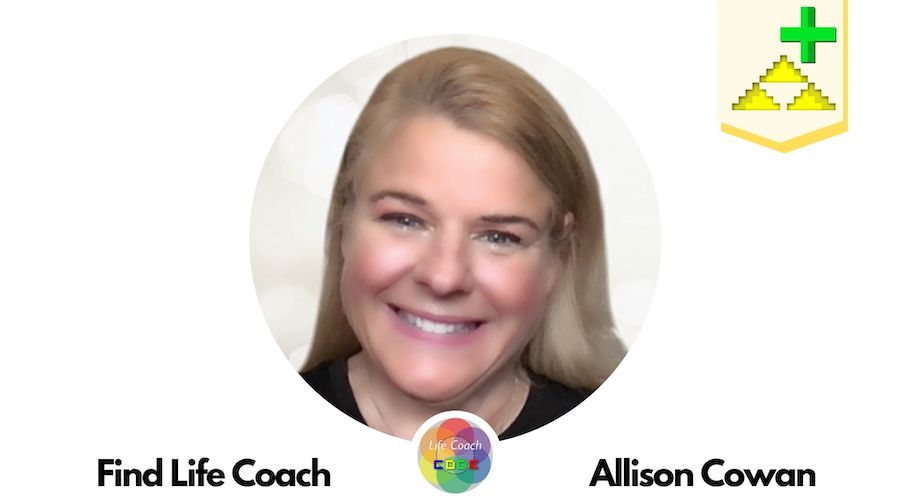
Allison Cowan is one of the coaches we found and we did a little interview with her. She impressed us with her extremely client oriented approach. And when we say “extremely” we mean in the most positive way. Here is what she said.
Meet Life Coach Allison Cowan:
Name: Allison Cowan Pillar: The Spirit Who is this coach for: Anyone who needs support to get to their desired results, anyone who needs someone to believe in them and help them unleash their endless creative potential. How they can help: By using a unique and customized approach to each person’s requirements.
First of all, how are you and your family doing in these Pandemic times?
The Pandemic has been difficult, not only for me but especially for my family.
Both of my parents have been undergoing cancer treatments.
While I work from home and am not out and about very much, I still have a lot of concern for them, not being able to visit with them.
With their immune systems being so extensively vulnerable, I am extremely cautious.
This saddens me as we are close and I feel like I haven’t been there to support them as much as I would like.
How does the coronavirus pandemic affect your clients? Did it affect you at all?
This is heartbreaking.
So many of my clients have lost a friend, loved one or immediate family member. Young fathers dying. Clients blaming themselves believing that they were the source of transmission. So much grief.
While I have been fortunate in not losing anyone, I’ve been affected by the bereavement of those whom I coach.
I have had to learn to coach around and through this issue without breaking the ethical boundaries that life coaches are held to.
What are the biggest lessons that you learned in this pandemic?
Even if it’s over the phone or other technology, stay close to those you love.
Reach out to those you care about and check in on them because they matter. I’ve had many friendship rekindled because of this.
Having more time in “isolation” has allowed for deeper thinking about meaning in my life and those who hold meaning in my life. Life is so precious.
You can replace things, but you can’t replace people.
The Origin:
Tell us about you, your career, how you started with your coaching career?
In many ways, I’ve been coaching throughout my life through different groups and positions that I led.
I also worked as an educator for over 20 years, where truly believing in the potential of every student brought about greater results.
I taught elementary school music and would see between 500 to 600 students a week. That’s a lot of believing!
I ended up resigning from my teaching career after becoming extremely ill from working in an environment filled with mold. This was such a difficult choice for me but I had to choose my health and have since recovered.
However, because of this decision, I spiraled down into devastation. What do I do? Who am I now? Where do I turn?
I turned to a life coach.
When I experienced not only personal growth and transformation but saw the beauty and art of coaching, I knew that I wanted to coach.
From the core of my being, I knew that this is what I was born to do. The devastation of my resignation became my biggest silver lining.
So, I jumped in head first and started my business. Got training. Got clients.
I can’t wait to wake up every day knowing that the coaching process is transforming others.
What was your biggest obstacle that you had to overcome in your life that made you who you are today?
How to choose when there are so many obstacles in life and each of them is an opportunity to learn!
If I had to choose my biggest, I will venture to say that it has been overcoming lack of confidence and self worth.
It’s actually through being coached that this has been allowed to develop. To have someone believe in me and my potential has allowed for me to blossom.
The Coaching Style:
How do you innovate with coaching your clients?
Well, the coaching process in itself is innovative, isn’t it?
I also believe that individuals are creative and have the ability to be the artist of their lives.
By awakening the creator within each unique person, possibilities for their desired outcomes are both endless and attainable.
I suppose that is more of a philosophical way of looking at things.
What’s unique about your coaching approach?
I offer value.. endless value.
Because I value my clients they receive value.
How can I serve you? I suppose what I’m saying is that my coaching approach is completely client centered. I believe in them and their endless possibilities.
What benefits do your clients get after working with you?
My clients get results. They transform to magnificence.
Do you use any specific tools to be efficient with your clients?
With Zoom, there is an app that you can add called Notejoy for notetaking.
It also creates notebooks so that everything is in one place.
I can take session notes with the notes being on the side of the screen without having to share my screen.
These notes can easily be saved and then sent on to the client.
The Impact:
If you had a super megaphone that, when you speak into, the whole world will hear your message, what would you say?
Everyone needs a life coach!
What is the greatest lesson you have learned in your life?
There is always something that you don’t know about another person so best not judge.
Your final thoughts?
It is such an honor being a life coach. To have others trust me to such a level that we can dig deep into challenges that they are experiencing is very humbling.
To witness their experience of growth and transformation is exciting. To celebrate their successful outcomes is thrilling.
How fortunate am I.
Where Can You Find Allison Cowan?
If you liked this interview than feel free to check her website at www.openyourpathway.com where you can find everything you want to learn about her coaching.
You can find more of the value that she offers on her Facebook page, there you can also find more ways to contact her directly if you have any burning questions that you want answered. It was an honor having this interview with her.