No matter where you go today, you’re bound to run into evidence of the coronavirus. Whether it’s a mask mandate, vaccine discussion, or extra sanitary measures, the virus has impacted our lives.
For some people, that impact was on their health. They don’t have the virus anymore, but the illness wreaked havoc on their bodies while they did.
If that sounds like you, you’re probably tired of dealing with the long term side effects of this virus.
Luckily, the field of healthcare never stops moving forward. If you think you’ve tried everything, you could be surprised by these treatments that are known to counteract corona’s long term ailments.
4 Treatments That May Counteract The Effects of Corona:
1. Respiratory Treatments.
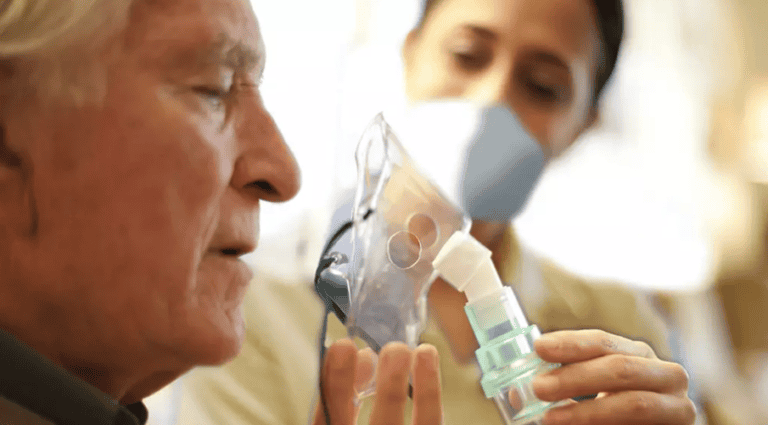
One of the most common side effects of the coronavirus that lingers long after the virus is gone is a breathing issue. Your respiratory system can get hit pretty hard since this virus attacks the lungs.
Depending on the severity of your illness, you might have had pneumonia, lung abscesses, or acute respiratory distress syndrome (ARDS). Other victims of corona have mild symptoms of the virus, but end up with symptoms last long after the initial infection is over.
Treatment for this starts with joining the support community, where you can find suggestions you might not have considered yet. In addition, you could be eligible for monoclonal antibody therapy. Antibodies are made naturally by your body to increase the effectiveness of your immune system.
2. General Malaise Recovery.
Do you feel like you’re tired all.the.time. since you had the virus? You can’t get enough sleep, no matter how much rest you get? And your body is always achy for no apparent reason?
This general fatigue and malaise are common with long term effects of corona. Recent studies suggest that getting vaccinated after the virus has run its course could significantly reduce these symptoms in at least half of those infected.
If you were vaccinated and still developed the disease, a double vaccination can counteract any long term effects before they kick in.
3. Mental Health Treatments.
The medical field isn’t the only industry that had to evolve to handle coronavirus patients.
Statistics on mental health diagnoses have skyrocketed since the pandemic began. Between isolation, financial problems, and relationship issues, depression and anxiety are in almost every home.
Insurance companies have adjusted their stance on mental health counseling as a preventative measure. Now, many private health insurances and Employee Assistance Programs offer counseling services free of charge or at significantly reduced rates.
In addition to counseling and therapy, another major change states have made is allowing easier access to medical marijuana. The positive effects of cannabis on anxiety and depression were already well known. However, getting approved for a medical marijuana card was a complicated requirement for those who wanted to use weed legally.
Not too long after the pandemic reared its head, it was clear that the forced quarantines and isolation were having serious impacts on our mental health.
As marijuana sales increased in state approved dispensaries in almost every state, and the applications for MMJ cards rose, the link was undeniable. The long term effect of pandemic related anxiety and depression became more widely accepted as a reason to approve the use of medical cannabis.
4. B12 Injections for Fatigue.
Physicians often prescribe B12 injections for people with low levels of this vitamin. Lack of B12 usually shows up as side effects like trouble sleeping soundly through the night and daytime fatigue. Low energy levels, dizzy spells, and “brain fog” are common indicators of insufficient B12.
In long haulers after dealing with the virus, fatigue is a common symptom. Researchers believe that B12 injections can help fight vitamin deficiency and reduce the impact of the virus.
If you’re dealing with tiredness that you can’t shake, talk to your doctor about B12 injections. Your insurance should cover them.
Or, if you want to try the treatment without the help of a medical provider, you can do that, too. B12 clinics specializing in IV therapy are popping up in busy malls and shopping centers all over the country.
However, we strongly advise to first consult with your doctor or a medical professional before you make any serious decisions regarding your health.
What you should remember?
You did your best to avoid the virus when corona hit the scene but ended up with it anyway.
The good news is that you successfully recovered and are on the road to better health.
With these four treatments, you may be able to shake the long haul effects of the virus and get back to your pre virus self.
Mary Meduna-Gross is one of the coaches that we found this month and we did a little interview with her. She has a Ph.D. and she impressed us with her ability to merge the mental and the emotional aspect when it comes to coaching.
She helps people gain clarity and focus on their purpose, but also, to uncover trapped emotions through hypnotherapy and release them. Once they do this, their beliefs naturally change to ones that support their purpose instead of sabotaging them.
Her approach helps her clients form new beliefs, mindset, and behavior patterns that are aligned with their purpose and how they really want to live their life.
She has a mental health and medical background, as we mentioned, so it’s her pleasure speaking about such topics. She has developed her skills in mindset and leadership and that’s exactly where she excels. Here is what she said.
Meet Life Coach Mary Meduna-Gross:
Name: Mary Meduna-Gross, Ph.D. Pillar: The Mind, The Heart Who is this coach for: Anyone who wants to gain clarity, focus, and release the energy that prevents them from following their purpose and living the life they love to live. How they can help: By using tools like energy assessment, hypnotherapy, in combination with the right self care and meditation.
First of all, how are you and your family doing in these Pandemic times?
Initially, minimal impact. I was working from home at the time coaching virtually, so I was a little busier just staying closer to my clients in the early months. Honestly, I was a little jealous that I didn’t get to join the great timeout.
How does the coronavirus pandemic affect your clients? Did it affect you at all?
I was serving real estate agents at the time and it impacted their businesses extensively, especially in the first 8 to 12 weeks.
Then, we were able to settle into the ways to continue business and then the market got hot and they were incredibly busy.
What are the biggest lessons that you learned in this pandemic?
The importance of flexibility.
I like routine, I like things to be predictable, but these routines can also limit us.
I was not comfortable with how comfortable I was with isolation. As I began to realize and believe in my own value, I wanted to connect with others more.
The Origin:
Tell us about you, your career, how you started with your coaching career?
I started in education, burned out from leadership roles.. this is when I learned that coaching was a thing and decided to become the coach I wish I had.
I didn’t know how to build a business, so I did consulting and coaching as a job. Worked my way out of a job and then had a chance to work as a contractor, coaching real estate agents.
One of the benefits for me is that I didn’t have to market or find clients, I could just focus on serving clients.
Did that for 2 years, learned how to build a business in the process. I didn’t want to be limited to real estate, and I didn’t feel like I was able to grow into the coach I wanted to be in that setting, so I left in September.
When I left, I needed to really dig into who I was, what I had to offer, who I wanted to work with and what I wanted to do for them.
This took a few months to come into clarity and now that it has, I have a clear vision that now directs my action.
What was your biggest obstacle that you had to overcome in your life that made you who you are today?
I wasn’t able to see and believe in my own value.
The Coaching Style:
How do you innovate with coaching your clients?
Tuning into the client and what they are wrestling with, hearing what their needs are.
I’m an avid reader and researcher, so I am always exploring what is possible? New strategies, new way of seeing a situation, or validating what I’m already doing.
What’s unique about your coaching approach?
I have the heart of an educator and I know how to assess a client, where they are and how they will learn best.
I also have a background in medical and mental health fields. This means that I am comfortable talking about physical and mental health topics.
Finally, I have developed my expertise in both mindset and leadership. This means that I can help individual clients get in alignment with themselves and then with others.
What benefits do your clients get after working with you?
They begin to really believe in themselves and what they really want. What we want it about purpose. This clarity leads to intentional focus on the right work.
As they take action, it’s like the path unfolds naturally for them. This creates space for life, to build relationships, to have fun, learn and enjoy the experience.
Do you use any specific tools to be efficient with your clients?
I recommend meditation and self care. We have to build a relationship with ourselves and that often starts with listening to ourselves and then giving ourselves what we need.
I use hypnotherapy to get to root limiting beliefs. The process I use guides the clients into a space where they can tap into trapped emotions and release them. When this energy is dissipated, new beliefs and behavior patterns can be rewritten.
I’ve just started using an assessment that helps clients see their preferences in how they use their energy. I’ve avoided assessments in the past because they can put people in a box. I set the expectation that this is a snap shot of your current preferences. This data is just a surface level of data, but it can give us more data on how others may perceive our behavior, giving us data that we don’t always get in a 1:1 situation.
The Impact:
If you had a super megaphone that, when you speak into, the whole world will hear your message, what would you say?
Choose yourself, Believe in yourself and Declare you are worth it.
What is the greatest lesson you have learned in your life?
The lesson I’ve learned in the past few years is that it’s true to say that we are all whole, complete and perfect now.
Since I didn’t experience this, I didn’t believe it.
Now I know that although I may not be experiencing myself that way, it is still true and I can lean into that even when I’m not feeling it.
Your final thoughts?
In order to align with our purpose, we have to let go of the parts of ourselves that are not aligned with this purpose. We have to get real with ourselves.
We need others. I don’t think that we can become who we really are and create the outcomes we are really capable of on our own. Just like an athlete or performer who wants to excel, we need community and coaches to guide our development.
We are creating a community for the conscious entrepreneur. These are entrepreneurs who are driven by purpose. For this community we are launching a free quarterly digital magazine in June called the “ConsciousPreneur”. (email me at [email protected] and I’ll add you to the waiting list)
We just learned that there is a growing movement around conscious entrepreneurship and we want to support this audience. This is our purpose. In the meantime, we have a podcast also named The ConsciousPreneur that we produce weekly.
Ultimately, it is to build to a mastermind community where we combine trainings and networking opportunities.
This community is great for new entrepreneurs who want support, but can’t afford 1:1 coaching and it is great for more experienced entrepreneurs to fine tune their growth and business development.
Where Can You Find Mary Meduna-Gross?
If you liked this interview and you would love to trim the parts of you that are not aligned with your purpose and best life, schedule a free 60 minute strategy session with Mary and see how she can help.
If you want to get a glimpse of her coaching, you can watch her YouTube video or follow her on Instagram. It was an honor having this interview with her.
Scott Moniz is one of the coaches that we found this month and we did a little interview with him. He is an Underdog Leadership Coach and he impressed us with his ‘one of a kind’ approach.
Scott has the ability to make you lose track of time when you hear or read his words. However, for his coaching he practices silence, to let his clients do the talking. It’s in those moments, when his clients feel an unconditional and judgment free environment where they open up and express themselves fully, without being interrupted, that the magic happens.
He follows the ICF Core Competencies for his coaching which include: active listening and powerful questioning. He is almost like an artist with his coaching, managing to balance the relaxed and serious state based on what the present moment demands to allow his clients to reach their desired results.
But the greatest part about him is that he is fully open about his own story. He tries to inspire his clients to also be fully open with themselves so they can find redemption, confidence, and a way forward as leaders of their organizations, families and life. Here is what he said.
Meet Life Coach Scott Moniz:
Name: Scott Moniz Pillar: The Spirit, The Mind Who is this coach for: Anyone who feels like an underdog and wants to find confidence, redemption, and feel empowered to move forward as a leader. How they can help: Through his 5 step framework and using various “tools” like Active Listening, Intuition, Calculated Risks, Empathy, to name a few.
First of all, how are you and your family doing in these Pandemic times?
It has been tough, that’s for sure. The nature of remote work and previously working a high producing, senior role in the IT industry was difficult. Giving “110%” in my career has been so detrimental to my family to the point of neglect. I valued things I did not have in my early life: money, title, fame.
This led to living life in a way that devalued and ignored who I am at my core. All of the stress got to me and I had a “coronavirus” scare. I ended up in the emergency room on Christmas Eve and struggled a lot with having to “cancel Christmas”. Christmas was always big for me and my family, so this was very difficult for us.
Thankfully, all was well, I just pushed myself too far and had a bit of a mental break. Oopsie! But, we had a wonderful makeup Christmas in February!
Through the pandemic and in my journey towards being more authentic and real, I have realized truly how much I love and miss family and how much full time, demanding jobs were interfering with this.
I have been visiting family more often, spending time dancing with my niece, having more lunches with mom and I feel we are all feeling more fulfilled in our familial life.
How does the coronavirus pandemic affect your clients? Did it affect you at all?
I think we are seeing this global shift. I am working with people trying to transition into IT or career change in general. A lot of them are fed up with failing education systems, harmful work culture, and this notion that they need someone to take a chance on them. It really shows the state of work in our society for me.
The fact that tenured professionals with a wealth of wisdom and skills are sometimes reduced to begging for a chance. I like to say a lot of my clients may feel a case of the UNs. Underappreciated. Underpaid. Undervalued. Unheard. Unseen.
The pandemic has pushed the IT industry to the forefront with its attractive salary, high demand, remote-first companies so it’s interesting to watch. A lot of the people I work with at the moment are students breaking into IT and career transitioners who are feeling this push to better their lives and work-life balance.
I think the pandemic is showing a lot of people that technology can be very powerful and that remote work is possible. No more commutes. No office politics. Quiet time. More time with family. I feel there’s a new found sense of freedom this flexibility can bring and that sometimes people can stagnant and long for change, challenge and new stimulus.
Bear with me here, but I feel some have become uncomfortable with “being comfortable in the uncomfortable.” They want something more than they currently have. They feel they are worth more. They are starting to see what other opportunities are out there. It’s a lot of fun to watch, hell, I even transitioned from tech to life coaching. Never would’ve called this 5 years ago.
What are the biggest lessons that you learned in this pandemic?
Family means everything to me and I had the power to better everyone around me.
Not being able to see my mother and sister during the pandemic, having to arrange medical tests, having to check in more often, remote family meetings, cancelling Christmas. I learned that we should cherish our time with those who love and support us because time is a finite resource.
My family deserves my energy, my family deserves my time, and I have the ability to choose for myself where my time and energy goes and who I choose to give it to.
My career is important, but I no longer feel loyalty to a company. Companies come and go, jobs come and go.
If I had to sum it up it would be doing my best to limit negativity and avoid distraction in a non-destructive way so that I can conserve energy and spend it and time on the things and people I value.
The Origin:
Tell us about you, your career, how you started with your coaching career?
It’s been an interesting journey that’s for sure!
I lost my father when I was 7 and this meant a hard life for our family. Throughout the years, we had our struggles, but my mom and sister were my rocks. They did everything they needed to do to ensure I could have a good life, even when I would disagree or push back. Sometimes I knew best, but a lot of the time they could see things I couldn’t.
My journey has taken me from video stores, to my first “marketing job” as a carnival games operator. “Roll the ball, that’s it, that’s all! Only 5$ to play!”, to my teenage years where I was a “rocker”, wore black, had spike chains and was bullied quite a bit. But, I had friends amongst all different crowds and loved people despite some of them acting downright awful.
During my high school days, I worked full time at McDonalds. This was tough, but I did what I had to do to help support myself and my family. High school, take a bus over to McDonalds, do my work in the study room and then work.
I ended up missing a lot of morning classes and dropped some of them along with the Art Program due to some very unempathetic and unsupportive teachers.
However, I had two very impactful teachers during this time, my high school gym teacher and my English teacher. I never felt judged by them, I always felt respected, empathized and cared for. They listened and I know I cried in front of one of them at least once. To this day, I am thankful for knowing them. These are some of the unsung heroes of our society.
At one point I was faced with a big life decision: $40,000 per year salary as a McDonalds Store Manager or going to college.
This meant money, it meant helping my family, it meant relieving pressure, but after discussion with my mom, and her encouraging me towards higher education we came to a compromise. I would work for 6 more months, save up, and then attend college.
I did just that and years later graduated from George Brown College with Honors and a degree in Computer Programming and Systems Analysis. This launched my IT career – I was excited!
I spent a lot of time in the industry, rose quickly and was admittedly a bad leader in moments. I’ve made my mistakes, but I truly know in my heart of hearts, I was trying to come from a good place – my approach was just less than ideal.
However, I feel our past is just that: our past.
I learned quickly and adapted and I continued with my IT and leadership journey. I knew at my core all I wanted to do was help some of these younger professionals and underdogs realize their TRUE potential. I loved to “take people under my wing” and did my best to be a good mentor and role model for those working underneath me in the corporate hierarchy.
I was always proud when someone got promoted, or got a raise. I loved sharing and celebrating in that excitement!
As time went on, my mental health started to wane and hold me back. Even though on the surface I seemed calm and well put together, even though I was a high performer, I was battling so many demons alone: self doubt, lack of confidence, anxiety, depression, fear of judgement and they would rear their heads often. It was exhausting.
This is when I took one of the scariest steps in my life. I swallowed my pride, realized I needed help, and I enrolled in Cognitive Behavioral Therapy and Psychotherapy. It wasn’t as bad as I thought, in fact, it was a very positive experience and I started to understand myself more and more with each session.
Through therapy, medication, self reflection and various techniques and mental work, I started to feel validated in who I was as a human being.
I started to become more aware of myself and my propensity for empathy and understanding. I started to become an observer of people and drawing all sorts of parallels. My mind literally felt like it was exploding.
I was learning as much as I could about anything and everything. Symbiotic relationships, mutualism, clown fish, aquariums, psychology, mental health, communication skills, leadership, digital marketing, reward systems, networking, addiction, dopamine, you name it.. and if I haven’t read about it, I most likely will.
All this new knowledge helped me feel a sense of rebirth and enlightenment.
We often see these concepts literally, but I believe them to be metaphorical. I really did feel like I just found this increased awareness and that I was a new person. I started to value wisdom over intelligence and I started to try and bring this wisdom to others.
In dealing with my own trauma, my own sense of self worth, my own lack of confidence and a feeling of being “fake”, I started to break from the cages holding me back.
I found I was better able to empathize and understand others and how they feel and communicate. I describe myself as an empath and it was hard to watch others suffer with self doubt, reluctance, hesitation, and desperation.
I saw and felt the entire spectrum of human emotion and in it, most of the time I could relate this back to a piece of my life. All I wanted to do was help, but I’ve learned some people may not want help. This is where coaching as a career came into play: I get to help people that truly are needing and wanting change in their life.
I started to become more open, sharing my story – not for pity or sympathy – but to help others who can relate.
To help others who truly want to talk about mental health, work culture, leadership and not just pay lip service. I will not agree with everything someone says unless I truly feel that way.
I started to take risks, I started my own practice, I started to decline interviews from big companies I would have given anything to be interviewed at 5 years ago. Some may call it crazy. “Why would you decline those?!” And the simple answer is: it’s just not right for me at the moment and I would prefer to have that position go to someone whose dream is to be there.
Currently, I am focusing on my ACC (Associate Certified Coach) designation through the ICF (International Coaching Federation) and continue to be inspired by leaders in tech, workplace culture and coaching.
There are so many names I can add to this list, but some standouts are: Adam Grant, Preston Junger, Julie Andersen, and Elizabeth Bentley. I feel these people resonate a lot with me and hold the values of empathy, understanding, empowerment and inspiration close. Time with them has been a pleasure.
I am also hugely inspired by the clients I work with, because I often watch in awe as they start to unravel their thoughts, come to profound realizations, and take actions to better themselves and their lives. Coaching works and it’s amazing!
What was your biggest obstacle that you had to overcome in your life that made you who you are today?
I think this is clear in my story, but definitely overcoming the death of my father and the lack of good male role models in my life.
I think I accepted the concept of death very early in my life, but, every once in a while something comes up that brings all the emotions of this event rushing back. Notably, “I like to move it, move it!” by Reel 2 Real because my father would dance and based on his poor English this became “I like to movie, movie!”.
I’m actually listening to it now and overall it’s a happy memory. I try to focus on that as opposed to some of the sadder ones.
Not having these role models in early life led me to be very confused by what society says a man should be. From a young age, I was taught to be caring, empathetic, say please and thank you and then when I got into the real world and had to deal with some of the male bravado, the messaging around how males “should” act, the inability to openly speak about feelings or do so at the risk of being bullied and called names, the internalization. I started to become very confused about who I was and how I should act and I started to question everything about my very being.
I think some of this messaging can be so harmful for the younger generations and breaking away from it has been pivotal for me. I now accept that I am human and that includes feeling and expressing a wide range of emotions regardless of my gender or age.
It’s hard to name my “greatest” obstacle as I feel they are all interconnected and where I am now is a culmination of overcoming all those obstacles. Tongue in cheek here, but my greatest obstacle has been seeing these obstacles as learning opportunities and a chance for growth. I will continue to face them, but absolutely one of the bigger ones was the loss of my father and the domino effect that has had. I appreciate it now because it has made me the man I am and I am proud of that.
The Coaching Style:
How do you innovate with coaching your clients?
In my first free 1 hour call, I am raw. I tell my story. I hear theirs. I take notes on some very important topics, I watch their energies, I watch their emotions shift, I watch a smile turn to a frown, I watch their eyes pop to the top of their head when they’re in a deep thinking state and most of all I shut up! When they are telling their story, I push my tongue to the top of my mouth, I drink tea, I resist the urge to interject and interrupt. I don’t always succeed, but I try to be very aware of this.
When I am open and honest, I receive it tenfold and when I provide these underdogs and/or leaders with something that I feel society seems to lack (objective perspective, active and empathetic listening), I watch as they laugh about some of their most intense struggles!
We sit in deep thought. We smile together. We laugh together. We unravel some of the societal messaging that has them feeling like they are not enough, we plan actions together, we plan accountability together and most of all, we celebrate together.
I’m not one to shy away from the range of human emotion: rage, hate, anger, sorrow, anguish, pain, calm, love, joy, happiness. I feel these emotions are a reaction to stimulus and when we start to understand them and learn the difference between how we react from emotion vs how we behave, we start to gain perspective and shift our mindset.
In my sessions, I literally watch as the gears turn and the emotions of anger, sadness, hopelessness bubble up and are redirected into deep thought, work ethic, challenge, then eventually to laughter, relief, even joy.
This process can be so helpful when applied to just about anything in life: relationships, finances, family life, careers etc.
I follow the ICF model that lists active listening and powerful questioning as pillars. I firmly come from the belief that my client knows what is best for them and I use my wealth of experience to help them to understand themselves as a whole human being who can impact their own lives.
Although my focus is on leadership, it’s very interesting because I feel that my sessions usually lead back to using a holistic approach to increase self awareness, build confidence, and bring the client into the present to take steps NOW that will build the future they want.
In terms of the various exercises I use, I tend not to lean too much on assessments, paperwork, and a more clinical approach, but prefer creative exercises that act as a catalyst to thought provocation, deep thinking, open discussion and realization. I focus on the client, the moment, and just go with the flow.
I’ve done everything from “spirit animals”, to “values”, to “inspiring people”, to “cooking up soup”.
I employ an understanding that based on someone’s experience they may frame or relate to something differently. If I know they’re passionate about football, I may tell them it’s 4th and 1, then ask “What does that play look like if you’re just trying to get that 1 yard to move the posts?” If they like rap, I might refer to a Kendrick or Eminem lyric and we laugh. If they like flowers, I will ask them what their version of “sun” and “rain” would be.
It’s all about being present with the client for me and meeting them on their terms and where they are.
What’s unique about your coaching approach?
I think I’m tough in the best way. I will challenge my clients. I will push them to think. We will dig. I will let them sit in their discomfort and feel it. I will point out the energy shift. I will point out the sadness, the darkness, I will relate to it. I do this because I know it passes and then something happens… we smile or laugh together.
I truly give them a lot of my being. They are here devoting something which I hold very dear to me lately: time. If they are willing to give me hours of this precious commodity, if they put that faith and trust in me as a coach, I feel it is my DUTY to give them every ounce of value I can.
I am currently the best version of myself and tomorrow I may be worse or better, but I will strive to improve and learn, then I will rest. I sit there and watch recorded sessions. I take notes. I iterate on my process. I am a helper. I am a mentor. I am a coach. I am a cheerleader. I am a critical thinker. I am a visionary. And I know that others have this in them once they are able to connect to their core values and live a more authentic life. My clients are all so powerful.
My practice takes a certain resilience, it takes a certain willingness to work, it takes a certain dedication, but I get results.
I am a product of therapy and understand how much being able to openly talk in a judgement free zone can benefit a person. In fact, I know next to nothing about my therapist and she has been one of the most wonderful positive forces in my journey!
I also study duality and I embrace that in my practice. There are moments where I am laughing and light hearted, but there are moments where I am dead serious and doing my best to ask powerful, impactful questions. I bring challenge, I bring rest. I bring passion, I bring calm. I bring seriousness, I bring humor. I feel very strongly that when we start to understand these concepts and their arguably subjective nature, we start to understand there are two sides to every story and we start to become better at empathizing, analyzing and making good judgement calls.
What benefits do your clients get after working with you?
You’d have to ask them! But, if I had to venture a guess: Self confidence. Realization. Inspiration. Empowerment. Redemption. The understanding that failure is necessary for change and that is okay. That failure is only failure if we do not learn from it. The power of deep thought. The power of sitting across from someone as they drink their tea and actually having a platform to let it all out. Cry. Scream. Laugh. Think. Spend the entire session venting. I got you!
With every powerful leader, mom, dad, student, immigrant, with every underdog or leader that has become an amazing person through their challenge and adversity, there seems to be one common thread: They are doing their best with what they know.
They fail. They pick themselves up. They try again. They learn. And they don’t stop trying. They do whatever it takes to survive and push forward.
Do you use any specific tools to be efficient with your clients?
A “wheel of life” assessment is a good place to start when someone is just feeling “stuck” or “trapped” and is unsure of what it is they actually need to work on. It can really open their eyes to areas of their life they did not know was dragging them down.
I follow the ICF model, and picked up bits and pieces from various coaches that I feel has made my practice fairly well rounded. A lot of it is intuition. I don’t speak to every client the same way. Some are more casual, some are more serious. It’s about reading the zoom (See what i did there?).
My framework looks a bit like this:
1. Introduction: A light hearted introduction. Let’s chat a bit, we don’t have to go into coach mode immediately. This can be very inviting and promotes social safety in the space. At a point where my intuition tells me it’s go time I tell the client I’m putting my coach hat on. I literally tell them this and we’re off.
2. Goal Setting and Exploration of Goals: What are your goals for this session? Focusing on one that they feel is important for this session. Followed by exploration of these goals, what do these mean to you? How do you feel this improves your life?
3. Successful Outcome for the Session: What is a successful outcome for this session? We discuss what this outcome would mean and why this outcome is important to them. There’s a certain light that flashes in their eyes when they actually discuss the results of obtaining this goal. It can be inspiring. THIS is my reason. THIS is why I want this. THIS is why it would make me so happy.
4. Exploratory Phase: Deep thoughts, deep exploration, thought provoking exercises, tough open ended questions that start with “how” or “what”. How do you feel about this? What does that make you think of? You have mentioned a few words a few times like doubt, and stuck. Can you tell me more about that? Consent and social safety is so important in this phase. If I am employing an exercise, I always explain the exercise in detail, I explain why I think the exercise would benefit the client, and I ask for consent with an open ended question: How do you feel about this exercise? More often than not, client’s agree, but when they do not I don’t take it personally. I say “okay, understood” and we move on. This is the bulk of my session and in fact I speak very little during this phase.
5. Wrap Up: We chat about the session, learnings, takeaways. We discuss possible action items, we touch on the successful outcome, the client reflects a little. We create something to move the client forward like a little game, an activity, a very small step. We discuss accountability. Sometimes there is a ton of brilliance and celebration here and sometimes there is an outcome of “We did a lot of discovery today and it sounds to me like you’ve learned a lot!”. Client’s sometimes realize they just need to relax a bit more, or rest a bit more, which can be celebrated as well! These are very difficult conversations and having an understanding that we will not be able to solve complex interconnected issues in a single session is very much understood.
To sum this up, a lot of my “tools” are not really what you would expect. They come from more of an internal position: Active Listening, Intuition, Calculated Risks, Passion, Empathy, Confidence and most of all SILENCE.
Imagine having a conversation with someone who talks 95% of the time? I think some may look negatively at that because our lives can be so hectic and sometimes we feel we may not have time for discussion. Honestly, in coaching some of my best calls my client talks 95% of the time. Sometimes I feel I’m not even working because I’m sitting there watching them slowly unravel their thoughts. It is so interesting!
A lot of my clients are people who feel those “UNs” that we mentioned, and when there is finally someone willing to sit, can truly listen from a non judgement state and give themselves fully to the moment, something happens I cannot adequately describe. I mean it’s the lightbulb moment. The sparks in their eyes. The vocal realisation of “….huh, never thought about it like that”. If you’ve seen it, then you know.
I don’t live for these moments, but they are definitely the cherry on top of the long winding journeys that happens throughout our calls. The closest I can come to describing these moments are: “Pure magic”.
The Impact:
If you had a super megaphone that, when you speak into, the whole world will hear your message, what would you say?
I can’t affect the entire world. It’s why I choose to primarily work 1 on 1. If I had to take a shot it would sound something like:
“YOU have the ability to change your life. YOU have the ability to choose what you will and will not accept. YOU can set BOUNDARIES. YOU can be the gatekeeper of your own domain. YOU determine your self worth, that is why we call it SELF worth. It will be difficult. There will be challenges. But in your heart of hearts, YOU know what you are. What will YOU… {pause for effect, silence is powerful} …CHOOSE to do?” Then I would put it down, wait, and have one on one conversations with anyone who needed additional insight.
Honestly, there is so much messaging out there in the news, in the media, on our devices, from our friends and all these things have their place, absolutely, but wading through it all alone can be so daunting.
I truly believe that sometimes we just need to sit with someone who will listen, sometimes we just need to talk, sometimes we just need to think and sometimes silence can prove itself to be a real thing of beauty.
What is the greatest lesson you have learned in your life?
See, I understand this question. We are seeking insight. But, I think outside the sphere.
Some of us tend to look for silver bullets that will take out all the little demons in our lives causing us anguish, pain, and dissatisfaction in one fell swoop. What I have learned is that they are all very different beasts and they may require very different approaches.
Building the life we want will take time. It will take effort. It will take a lot of consistency, work and self reflection. It will take inspiration, empowerment and support.
I tried to do everything by myself because “pride” and based on my dungeons and dragons campaigns, I learned that fighting a slew of monsters on our own rarely ends well. Everyone has their strengths and contributions and a solid support system is key to succeeding in our life campaign. (Sorlock Celestial if you’re wondering!)
The old saying “it takes a village to raise a child” rings true for me and it has taken multiple villages and communities to raise this child.
To boil it down, I think a lot of it comes down to mindset. Framing our challenge and adversity, the past, present and future as learning opportunities and having a support system who can rest with us, console us, teach us, and assist in moving us forward when we are ready is absolutely paramount for a healthy happy life.
Your final thoughts?
I am humbled and honored to be included in your publication. It takes a village to raise a child and I would just really like to thank everyone who is reading that is on a similar path because I feel we may share the same values.
I’m also thankful to everyone who has supported me on my journey, my mom, my sister, my mentors and my partner. Without them, I would not have been able to find the courage to find my purpose.
I’ll leave you with this final thought: Our story is ours and we get to write it. Thank you for reading mine.
If you like to get a glimpse of his coaching, make sure to check his TikTok or connect with him on LinkedIn. It was an honor having this interview with him.
Nelly Kwasinwi is one of the coaches that we found this month and we did a little interview with her. She impressed us with her experience in mental fitness, an ability that allows her clients to transform their mindset.
She helps people to optimize their emotional and mental wellbeing, to improve their performance and navigate different life challenges with a positive mindset, all while avoiding burnout.
Her approach focuses mainly on the root cause of the problem, she helps clients identify the core of their suffering and guides them into a more positive and empowering mindset.
She is armored with a degree in Counseling and Psychology, Master’s in social work, and she is an accredited Transformational Coach. Your negative mindset stands no chance against her expertise. Here is what she said.
Meet Life Coach Nelly Kwasinwi:
Name: Nelly Kwasinwi Pillar: The Mind Who is this coach for: Professionals who want to optimize their emotional and mental wellbeing, improve their performance, and update to a positive mindset. How they can help: By using mental fitness coaching techniques and a variety of tools like the life wheel, pq reps, just to name a few.
First of all, how are you and your family doing in these Pandemic times?
My family had the virus a couple of times and the experience was very unpleasant. Thanks goodness, we are doing great now.
How does the coronavirus pandemic affect your clients? Did it affect you at all?
The coronavirus pandemic seems to have affected everyone either directly or indirectly.
Without the pandemic, I might not have experienced ‘working from home’, work burnout and quit my corporate job to concentrate on working on my coaching business full time.
What are the biggest lessons that you learned in this pandemic?
Unexpected times call for extra measures.
I had to look within myself. I learnt that my inner powers are greater and more resilient than the external powers.
The Origin:
Tell us about you, your career, how you started with your coaching career?
I felt worthless for over a decade and unable to care for my children due to emotional abuse.
In search for answers, I worked in healthcare and mental health settings, local authority and social worker with children and families.
I hold a degree in Counseling and Psychology, Master’s in Social Work, accredited Transformational Life Coach.
I worked on my belief systems and mindsets, and rediscovered my inner power as an empath.
Due to work burnout, my employment ended in November 2021. I had enough time to focus on my business that I registered in February 2021.
Now I use coaching to help professionals to optimize their emotional wellbeing, performance and to manage life challenges with a positive mindset.
What was your biggest obstacle that you had to overcome in your life that made you who you are today?
The feeling of worthlessness after nearly two decades of emotional abuse.
The Coaching Style:
How do you innovate with coaching your clients?
Transformative. I have deep dive conversations using different tools and strategies to help my clients identify the core issues that is mostly different from the presenting problem.
What’s unique about your coaching approach?
I use the transformation and mental fitness approaches to help my clients identify the core of their suffering and provide strategies for change and sustainability.
What benefits do your clients get after working with you?
My clients will rediscover their uniqueness, optimize emotional wellbeing and performance, and shift from being fearful to empowered and be able to deal with life challenges with a positive mindset.
Do you use any specific tools to be efficient with your clients?
I use a variety of tools depending on my client’s presenting problem. For instance, the life wheel, anchoring, pq reps.
The Impact:
If you had a super megaphone that, when you speak into, the whole world will hear your message, what would you say?
Your imperfections and weirdness make you unique. You are perfect just the way you are.. embrace you.
What is the greatest lesson you have learned in your life?
No one would value you more than the way you should value yourself.
Your final thoughts?
To begin your transformational journey, you must be committed, ready for action, willing to challenge yourself.
Decide whether you want to change your current unwanted situation or remain the same. I will support and hold you accountable.
Where Can You Find Nelly Kwasinwi?
If you liked this interview and you want to change your unwanted situation, update to a positive mindset and optimize your emotional and mental wellbeing, go to www.clarifythyuniqueness.co.uk and see how Nelly can help you.
To see what she does and how she coaches, you can watch this video:
If you want to connect more personally with her, follow her Facebook and Instagram. You can also join her private Facebook group for additional support. It was an honor having this interview with her.
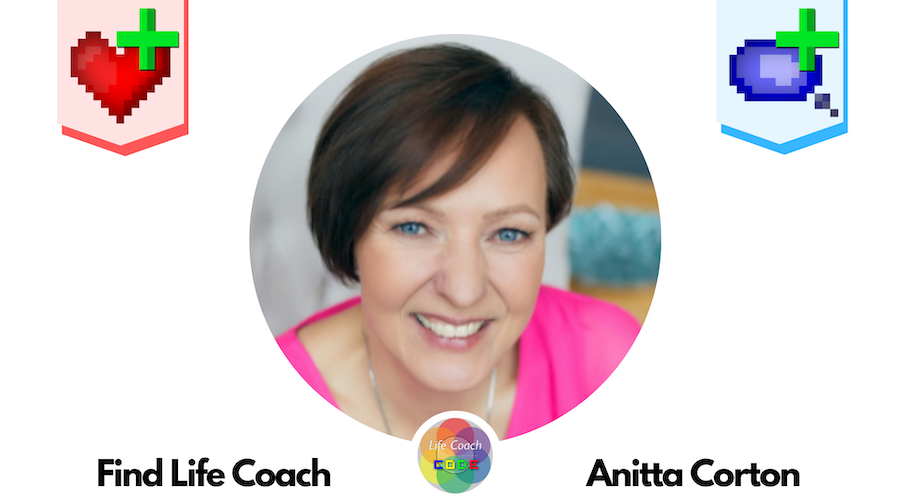
Anitta Corton is one of the coaches that we found this month and we did a little interview with her. She impressed us with the depth of her coaching.
She helps people remove negative thought patterns and emotional blocks to align with the life they want to live, the goals they want to achieve become part of their identity.
Her approach helps her clients uncover what’s been sabotaging them from the depths of their subconscious mind, they feel less anxiety, they are less triggered by situations that used to bother them and aligned with what lights them up.
First, she finds what the client truly wants out of their life. Then, she clears the mental and emotional blocks to create a smooth path to live the life they love. Here is what she said.
Meet Life Coach Anitta Corton:
Name: Anitta Corton Pillar: The Mind, The Heart Who is this coach for: Anyone who wants to remove self sabotage and align with what they truly want to do in life. How they can help: By clearing the mental and emotional triggers through conversations, self evaluation and using various tools like Rapid Recode Process, Mindvalley Life Coaching, EFT Emotional Freedom Techniques, just to name a few.
First of all, how are you and your family doing in these Pandemic times?
Thanks for asking! It has been a roller coaster especially with two school age children.
I have been keeping positive with them and looking at learning new tasks, having more family time together as well as checking in with them throughout their day.
I ask them ‘what their challenges are’, ‘how they are feeling’ and ‘how their friends are doing’. It’s been great to see their resilience and ability to change with the times.
As well, pre-pandemic I had been athletic with doing Judo and Crossfit. But as the months went by, my home gym sat idle.
I created a challenge for myself to walk 10K steps everyday and used an app to keep track and find great walking routes. I coupled this with my love for photography and this has helped to have a feeling of accomplishment.
How does the coronavirus pandemic affect your clients? Did it affect you at all?
I found that there are more heightened emotions in my clients as well as uncertainty.
With this being something that I can help clients with, to process what they are feeling and to navigate these circumstances, I feel my training has prepared me for these times. Along with that, I have added more skills to be able to help my clients achieve better, long lasting results.
What are the biggest lessons that you learned in this pandemic?
I lost a close family member due to heart failure during the pandemic and barely got a chance to see him during the 18 days he was in ICU.
I had to learn that with the things that are out of my control, I know that I did the best that I could with what I had.
I take time each day to allow whatever comes up around that loss, to acknowledge my feelings and thoughts so that they can be released and I have acceptance about the way things are.
The Origin:
Tell us about you, your career, how you started with your coaching career?
I began back in 2008 with an energy therapy practice that helped people with anxiety, panic attacks and trauma using methods such as Emotional Freedom Techniques (EFT) and Theta Healing.
Over the years I have added coaching certifications, so that I am able to coach clients with mindset, negative thought patterns and balancing emotional reactions to achieve more stability and joy in their personal life and business.
What was your biggest obstacle that you had to overcome in your life that made you who you are today?
The biggest obstacle that I’ve had to overcome from the past, is that I have been too much of a ‘people-pleaser’.
Being highly empathic and a healer, I have wanted to help people and come from a place of giving, but a time came when I had nothing left to give.
I had to learn to create boundaries and remain strong in beliefs in who I am and that it was time to put myself first.
When people didn’t understand the change in me, I endured the criticism, learned to let go and looked to find the people that I do resonate with and belong.
The Coaching Style:
How do you innovate with coaching your clients?
Along with being highly intuitive, I use questions as they arise to dig deeper into the source of core issues within the client that could be the reason why they are stuck moving forward at what they want to achieve.
My life experiences and challenges have been vast and so there is a lot to tap into. I also research and keep looking at a problem at hand from different angles to find a solution that works, keeping in mind that everyone is an individual and quite often, someone has tried many different methods over many years to shift a problem.
When we look at this together, I dig deep to find the right solution or therapy to shift the issue.
What’s unique about your coaching approach?
For the first half of the coaching session I discover what someone is truly aligned with that will light them up and bring them joy in life.
I take note of any negative thought patterns that could be causing resistance and keeping them stuck from moving forward. The client gives a number out of 10 that they feel is the intensity of the resistance of the beliefs, thoughts and emotions they have.
For the second half of the session, I look to uncover what could be lying in the subconscious.
For example, maybe they have feelings of being unworthy, insignificant, or not enough and that caused resistance or self sabotage to their dreams? Or perhaps being a perfectionist, a people pleaser, or having inner child wounds bring up fears to move forward. Are there core wounds or traumas caused from events, family history, inner conflicts or broken agreements?
I have a method that checks this and clears the intensity so that when checking back with the client at the end of the session, the resistance out of 10 has reduced or completely gone.
What benefits do your clients get after working with you?
The client feels lighter, more emotionally balanced and they feel in alignment with this new person, that their goals are now a part of their new identity.
They are no longer triggered in situations that used to bother them and they feel less anxious and more joyful.
Do you use any specific tools to be efficient with your clients?
Many of the past tools that I have learned from (EFT) Emotional Freedom Techniques, Theta Healing, being a Reiki Master and more, are rolled into the coaching methods that I use from the Magnetic Mind Method and Mindvalley Certified Life Coach.
The Impact:
If you had a super megaphone that, when you speak into, the whole world will hear your message, what would you say?
Life is a journey where the challenges and joy are enter-twined at every aspect, even if it seems one-sided.
To take the time for personal development and process difficult emotions or situations can leave a powerful impact that will change your life and all those connected to you, past, present and future.
What is the greatest lesson you have learned in your life?
That when I see recurring patterns in my life that have triggered me and caused reactions, I take the time to work through them, correcting the negative thought patterns and emotions until there is no more emotional charge.
After that, it seems I’ve ‘leveled up’ and feel more balanced in the way I look at life. The trigger doesn’t bother me and I see that life is happening for me, not just to me.
This leaves me to be at peace and happier, ready for the next challenge!
Your final thoughts?
Life is so mysterious, and there is so much to learn.
I have worked hard to stay open to discovery of what can truly change lives, while keeping in mind that everyone is on their own journey of lessons learned as well.
Where Can You Find Anitta Corton?
If you liked this interview and you would love to get rid of what’s holding you back in life, right from the depths of your subconscious mind, go to https://recodecoaching.com and see how she can help you.
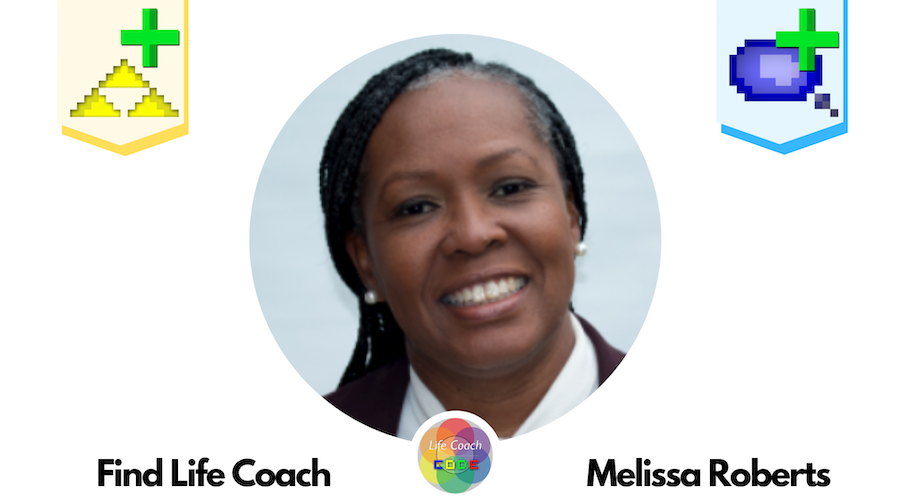
Melissa Roberts is one of the coaches that we found this month and we did a little interview with her. She is a relationship coach and she impressed us with her easy, simple, yet effective approach to coaching.
She is the CEO and founder of Living Whole, LLC, where she gets the opportunity to coach, train, and consult people to reach their goals.
Her approach is unique in itself. It’s simple, effective, and it almost feels like you speak with your best friend. Before and during each session, she uses God’s guidance and a pen and paper. As she says “less is more”. It’s up to the client to set the framework, she is just there to give guidance, care and unconditional support.
Turns out that through each conversation, the client becomes clearer and clearer of their path, and they feel immensely supported to start walking it. They feel safe and cared for, knowing they have someone in their corner who always advocates for their goals and keeps them accountable to take action. Here is what she said.
Meet Life Coach Melissa Roberts:
Name: Melissa Roberts Pillar: The Spirit, The Mind Who is this coach for: Women to get clearer on their life purpose while enhancing relationships so they can achieve their goals. How they can help: Through self directed learning and guidance by simply utilizing basic principles and strategies.
First of all, how are you and your family doing in these Pandemic times?
We are doing well, keeping the faith and continuing to walk out our purposes everyday.
How does the coronavirus pandemic affect your clients? Did it affect you at all?
Well, I have noticed the anxiety of clients has increased but it’s only because people forget to use what comes natural.
What I mean by that is, our brain is a very complex tool but even in all of its complexities, we were all made with automatic mechanisms to help us through difficult times.
We must choose what is the best and healthiest way to deal with all the unanswered questions we all have. We must guard our hearts and our minds, in that we speak positivity when it is needed.
Now with that being said, there are times where sadness, anger, feelings of uncertainty are necessary because we are responding in a natural way, but when we do not choose to release ourselves from the thoughts of anger, sadness, feelings of uncertainty, we are making a way for our bodies to always be operating from a fight or flight mode.
We must choose the healthier alternative always so our mind, body and spirit are aligned properly.
During the pandemic, much of what I do today in my coaching, speaking and consulting business, was birthed out of the pandemic.
I wanted to give from the places I felt isolated or hurt, and encourage women not to get stuck.
What are the biggest lessons that you learned in this pandemic?
People have something to say and a story to tell but often don’t know how to express it.
People want to be better but don’t know what their blind spots are.
People want to walk in purpose but find it scary and don’t know that sacrificing for something you are passionate about is what you should do for your peace.
The Origin:
Tell us about you, your career, how you started with your coaching career?
I am CEO and Founder of Living Whole, LLC where I get to coach, train and consult. I help women get clear on their life purpose so they can achieve their goals.
I also am a trainer and consultant. I lead executive training for organizations that want to look at ways to enhance the workplace and strategically map out ways to meet attainable SMART goals.
I must say that I have always been coaching, even when I worked in corporate America, I worked my way up the corporate ladder and was able to speak into the lives of the sales reps I was responsible for.
I began officially coaching in higher education through career services.
I later took a leap of faith and launched my own coaching business and I love every minute of inspiring, encouraging, and advocating for the women in my community.
What was your biggest obstacle that you had to overcome in your life that made you who you are today?
That would be when I was 6 months pregnant with my youngest son and I was told by my doctor to consider terminating the baby.
That day sparked the day when confidence was no longer a word I only dreamed for myself, but that was the day I modeled it for every woman and girl I know.
I said NO with assurance that I get to make this choice and I did.
The Coaching Style:
How do you innovate with coaching your clients?
Well I really feel this is an art. Coaching is an art.
Anyone can say they are a coach but are you passionate about your fellow man? Do you have a heart felt interest in helping people achieve their goals, dreams and making their visions become realities?
I bring to my clients a genuine and authentic heart to improve in all areas of life.
Mind, body and spirit are the 3 entities of life a focus on and they are all connected. If one is not aligned with the others or is weaker, the link can be easily broken.
The link of mind, body and spirit creates a strong life bond to rise to the standard of living your best life with a sense of peace and confidence that one is operating in their area of purpose.
My clients know I care. I am a lifelong learner and always looking for ways to serve my clients with new and creative information that works best for them, however, I love engaging in self directed learning, so my clients come to conclusion based on our interaction during session.
What’s unique about your coaching approach?
I make sure the individuals are comfortable and know they are in a safe space. I encourage them to be open, honest and transparent and that I will not force my beliefs on to them. Like I mentioned earlier, my clients set the agenda and I follow the vision of the organizations I choose to serve as we work together to achieve their goals.
I always let them set the agenda for the session and I always check their mind, body and spirit before we get started to ensure I know right off the bat how they are feeling in the space they are in.
Because I want my clients and those who attend my training programs to feel some level of accomplishment, I always end with asking them what is one takeaway from this session and what is one thing they can do TODAY to bring about a positive change in their situation.
What benefits do your clients get after working with you?
They get the benefit of knowing they have someone in their corner who will help them to be accountable to reach their goals and dreams. They also will leave their session or training with action items and takeaways for them to ponder, reflect and transform their way of thinking.
Do you use any specific tools to be efficient with your clients?
Less is more, I use a pen and notepad with some questions I ask at every session.
I choose this very simple way because I want my clients to know I am all in during our session.
The Impact:
If you had a super megaphone that, when you speak into, the whole world will hear your message, what would you say?
This is a fantastic question and I will have to use this one. It is awesome!
I pondered it for some time and I guess it would depend on if I only get one encounter with the world.
If I only get one time to speak to the world, I would say: You are uniquely and wonderfully made and you are not a mistake. You were created with gifts, talents and a purpose to fulfill. We walk this earth together with a divine purpose and we need each other to make them happen.
What is the greatest lesson you have learned in your life?
That I am enough because God is enough for me!
Because of the work I get to do, my clients hearts, mind and spirits are in my hands, so to speak, so I don’t take for granted that I need my faith and my spiritual walk in tack so I show up excellent for them, everyday.
Your final thoughts?
To walk in my God given purpose everyday, is absolutely amazing and sometimes overwhelming.
Overwhelming, because what I get to do is much bigger than me and I couldn’t do it without the foundation I have in my faith and the heart I have to continuously seek to grow and learn.
Where Can You Find Melissa Roberts?
If you liked this interview and you are a woman who wants to get clearer on her life’s purpose, as well as have someone on your side who will unconditionally support you to reach your goals, go to https://www.livingwhole-lifecoach.com/ and see how Melissa will help you.
You can also go at https://www.tohgriffin.com/life-coaching and set an appointment to get a life coach. If you want to get a glimpse of her coaching and connect more personally, make sure to follow her Facebook and Instagram. It was an honor having this interview with her.
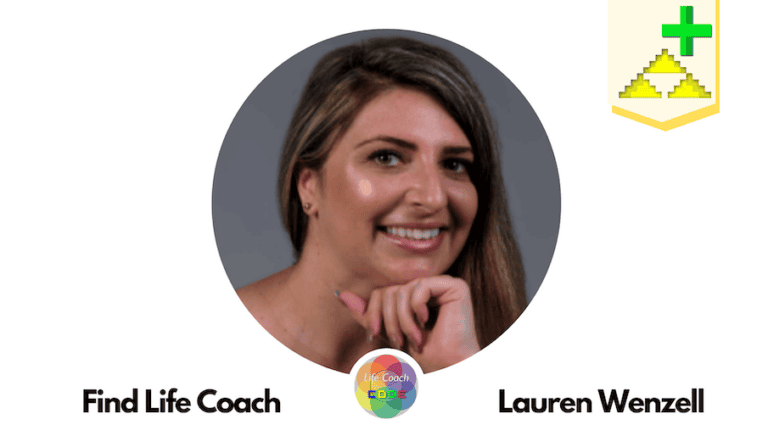
Lauren Wenzell is one of the coaches that we found this month and we did a little interview with her. She impressed us with her creativity, from being a coach, podcaster, published author.. to having a vast arsenal of modalities that she uses to help her clients, she is truly a visionary and, as she likes to call herself, a student of life.
She has also a super high intuitive abilities, she can connect directly to her client’s soul and help them meet the needs or find their gifts that they themselves are not even aware of.
Her approach is unique in itself. She allows complete freedom and a safe place for her clients to find the answers they were looking for.
Her greatest satisfaction is when she sees that magical moment in her client’s eyes, where they realize something unexpected and transform on the spot. It’s truly an innovation. Here is what she said.
Meet Life Coach Lauren Wenzell:
Name: Lauren Wenzell Pillar: The Spirit Who is this coach for: Anyone who wants to find, heal, and transcend limiting beliefs, discover what their soul’s gifts are and align with the life truly meat for them. How they can help: Through intuitive guidance and various modalities like human design, akashic record readings, energetic meditative processes, connecting them with their inner child, just to name a few.
First of all, how are you and your family doing in these Pandemic times?
Thank you for asking! There is definitely no doubt that this pandemic has been trying, at times vastly challenging, and a huge adjustment on the majority of society, our families, and how we relate to life.
Personally, the start of the pandemic was a huge wake up call for me and launched me into my career as a life coach.
Through these new and adapting times, I have found that aligning to purpose, community, and being of service has drastically shifted my mentality positively.
I noticed prior to the pandemic I was not really living my life the way I had envisioned for years and ironically during this global shift was able to see where I could put my efforts into bettering the whole (world) that feels in alignment.
I currently live in Austin, TX and my immediate family is in Southern CA so at the start of the pandemic it felt very isolating, unpredictable, and the fear of the unknown was present.
But as we are in it, going on 2 years now, I have found the importance of relationships, connection, and what we each individually need and agree to in those relationships.
A huge growing and learning experience! With any experience, there can be both positives and negatives to reflect on.
How does the coronavirus pandemic affect your clients? Did it affect you at all?
The coronavirus pandemic invited my clients to observe their environments, relationships, family dynamics, but most importantly their relationship with themselves.
It was great to time reflect and see what they were ready to agree to and let go of, and what no longer served them.
It challenged them in their workplaces and guided them to examine where they felt more suited. What I observed has been a period of huge growth, transformation, self love, healing, and breaking of certain patterns that had been holding them back in living life more aligned to their wants and needs.
The pandemic absolutely affected me as well.
Those periods of isolation, questioning if I was on the “right” path, doing the “right” thing, wondering if I was in the “right” place has tugged at me since the beginning (not so much as of recently). It has been a great moment in time where I got to do the same process as my clients too.
What are the biggest lessons that you learned in this pandemic?
With great risk comes great reward as cliché as that may sound.
Loving yourself first is how you get to love others better. Alone time, self care practices, meditation, and trusting your intuition can heal lifetimes of generational habits and trauma.
We are all connected, the most powerful thing one can do is focus on their inner world and see how it shows up in the outer.
The Origin:
Tell us about you, your career, how you started with your coaching career?
I am the owner and founder of Transfiguration Coaching LLC specializing in life coaching.
I use a range of different modalities that include a blend of spiritual and scientific methodologies to support my clients such as: akashic record readings, human design, mindset work, trauma healing, meditation practices, etc…
I am also a podcaster, channel, published author, content creator, visionary, but most important (and my favorite title) a student of life.
I was a previous behavior therapist with over 10 years of working with neurodiverse clients and their families.
Being someone who was also born with a unique ability (mild cerebral palsy or spastic diplegia) I felt like I could somewhat relate to my previous clientele, society’s limitations when we put labels on people, especially children. Fortunately, my parents did not label me, gave me the opportunity to operate as a whole, complete and capable person, and though my childhood was challenging, to say the least, I saw that I was born with a gift and not a curse that I had the previous limiting belief of.
What prompted me into coaching was when the pandemic hit, I found myself overwhelmed with where I found myself in life.
My intuition was telling me for years that I was meant to be elsewhere, and although I loved the clients I had worked with, there were many holes in the system.
I had just completed a certification to become an Akashic Records Reader (this is where someone is able to look up another’s soul information, gifts, past life karmic patterns, and able to clear these patterns) and felt the pull to take a leap of faith.
This was one of the greatest and most frightening risks I have taken without a clear path, a known outcome, but complete trust that it will all unfold as is meant to. That the intuitive messages I have been receiving from the previous years were finally time to take action on.
What was your biggest obstacle that you had to overcome in your life that made you who you are today?
There are definitely a few that stand out. In my short 33 years of life thus far I have experienced what feels like lifetimes.
I think one of the biggest obstacles I have overcome was healing my trauma. It is an ongoing process, yet I have been able to meet it, face it, feel the pain, love it, and find forgiveness.
I have the tools to continue to do the work, and have found acceptance in who I am when I experienced decades of ridicule from those to tell me I shouldn’t.
I binge drank for 17 years, survivor of different types of traumas, and had my father pass before my 30th birthday to name a few that stand out.
My sobriety and commitment to healing, self love, and empowerment for myself provide me to be the best I can be for the life I want to create, experience, and invite others to do the same.
Our past does not dictate what is our destiny. That is our choice and what has made me who I am today.
The Coaching Style:
How do you innovate with coaching your clients?
I meet them where they currently are and connect them to their vision.
I hold loving and nonjudgmental space, I open myself up to receive intuitive guidance from infinite intelligence, God, the universe, Source, my guides, their guides (whatever you would like to label it), and ask reflective questions.
At the end of the day, it is the client who has the answers they seek, but sometimes we just need a safe space for that to be reflected back and give ourselves permission to be who we were created to be.
I analyze their Human Design aura type and soul gifts to coach in specifics, but what is most important is that it resonates with the client.
There is a magical moment when something will come through that I could not imagine, I witness the transformation of a client’s being, and see them reclaim their power. That to me is true innovation, a blessing, and how I love to show up and serve not just my clients, but friends, family, and maybe a new acquaintance (all with consent of course).
What’s unique about your coaching approach?
I am not sure if this is unique, but I rely heavily on my intuition while I am in connection with each client and meet them where they need to be met. I trust what comes to me and what to focus on.
Whether it is going over their human design chart, focusing on some inner child healing, guiding them in a meditative process where they are connected to a higher dimension of knowledge, so they find their own answers.
It really has nothing to do with my opinion, what I think someone should do, it is what the client feels aligned with, empowered by, and trusts in themselves. I do not think I know more, and I sort of cringe at labels, even calling myself a life coach, but I understand it helps give people context.
The most empowering aspect of coaching I have found and believe to be part of my unique process is asking lots of reflective questions, that way the client can be in a space to find their own solutions and it dissolves any expectation of not trusting their own inner guidance or projecting their inner authority onto someone else.
What benefits do your clients get after working with you?
They find out a whole lot about themselves!
They understand their limiting beliefs, where they came from, how to heal them, what their soul gifts are, what their energetic and aura type are, how to align to their purpose, and most importantly a greater sense of freedom, self empowerment, and enthusiasm for life.
Do you use any specific tools to be efficient with your clients?
In terms of coaching I use different modalities I have listed previously like human design, akashic record readings, energetic meditative processes, connecting them with their inner child to support in trauma healing, how to reparent and create safety in their body, mindset work, creating powerful affirmations, etc.
I uphold safe boundaries where my clients can reach out to me if something comes up before a session and can receive laser coaching, so they feel supported along the way.
Being able to have that extra support can be imperative when we are dealing with huge shifts, past traumas, and challenging times.
I always want my clients to know that they are supported even after our sessions are over.
The Impact:
If you had a super megaphone that, when you speak into, the whole world will hear your message, what would you say?
Heal yourself, heal the world.
It is an ongoing process, so when you commit know it is a lifelong journey, a sacred journey that is the most beautiful quest you can choose.
What is the greatest lesson you have learned in your life?
That’s a tough question to answer since I have learned many valuable lessons! I think one of the greatest ones is that we truly are more powerful than we give ourselves credit for.
We live in a time where we have the most freedom and access to transformational tools that can shift our realities significantly.
Our minds can be our deadliest weapon or our greatest ally. With healing, forgiveness, and belief in what we are presented in our imagination (those big dreams and visions), we can be unstoppable.
We are given these visions for a reason! Our word, both spoken and mental, creates our reality. It is a practice to be mindful of that!
But we are 95% dictated by subconscious programming, so when we make certain things habitual (our thoughts, what we say and think, our actions, our habits) that are in alignment with what we want (a healthier lifestyle, happiness, feeling love, experience abundance, peace, etc.) we shift our life to be a match for those desired outcomes.
Your final thoughts?
We are living in a time where what we choose has dramatic effects not only on our lives, but the world’s.
We are given this opportunity to discover ourselves like never before. The more that we connect with our heart, our soul, and the expansive cosmos we will realize we can significantly impact this world in a positive way.
It is my mission to leave this planet better than when I entered it.
We all are worthy and deserving to align to our passions, live from the abundant state we innately have, and celebrate one another.
My hope is that we each see the importance of the self, love ourselves unconditionally, forgive, and be able to love others from that powerful place.
It truly is a miraculous experience and way of being.
Where Can You Find Lauren Wenzell?
If you liked this interview and you would love to see how Lauren can help you liberate yourself, find your soul’s gifts and live a life of meaning, go to mytransfiguration.com to discover your next step on your journey.
She is active on YouTube and she has her own podcast.
You can check her video here:
If you want to directly connect with Lauren, make sure to follow her on Facebook, Twitter and Instagram. It was an honor having this interview with her.
Even if the rider survives through some luck, they suffer accidental damage. The treatment for these injuries can be expensive and lead to a lot of downtimes.
In addition, the physical and emotional impact can also lead to serious emotional trauma. The emotional trauma most often leads to post traumatic stress disorder (PTSD) and depression.
In this article, we will talk about dealing with emotional trauma after a motorcycle accident.
3 Ways How To Deal With The Emotional Trauma:
1. Dealing with PTSD.
PTSD may develop in a person after undergoing or witnessing a traumatic event. Motorcyclists often develop PTSD after a serious accident. PTSD can branch out and also lead to depression and anxiety.
After going through an accident motorcyclists may notice symptoms like social withdrawal, inability to focus, irritability, or insomnia. If these symptoms persist for a long time, it is better to seek help and start treatment. PTSD is diagnosed through a physical and psychological evaluation.
While suffering from PTSD may be quite serious, there’s no need to worry too much. There are several treatments available. The most common and effective easy are medications and psychotherapy.
Psychotherapy takes several forms depending on the patient. Different types of treatment may be used in conjunction or individually.
Some examples include cognitive behavioral therapy and exposure therapy. The former helps the patient recognize and change negative thoughts. On the other hand, the latter teaches the patient to confront thoughts that cause irrational fear.
Further, the use of medications can be quite helpful too.
Numerous medications have been approved to treat PTSD symptoms. Antidepressants help patients deal with anxiety and depression symptoms. It can also help them deal with insomnia and concentration problems. But it’s always necessary to consult with your doctor first.
2. Dealing with emotional trauma due to financial problem.
A motorcycle accident can be quite traumatic. Not only for your mind and body but also for your finances.
In many states, accident victims are liable for compensation. Both economic as well as non economic. Economic damages include property damage, income loss, and medical treatment. Non economic damages include emotional distress, pain and suffering, and loss of enjoyment in life.
To deal with such financial problems and get fair compensation for your damage, make sure to avail motorcycle accident attorney legal services immediately after your accident. They are well educated in the case statutes and laws. They also know exactly the kind of evidence needed to prove these damages for compensation.
Depending on your circumstances, your motorcycle accident lawyer can use medical records, photos, financial records, deposition of medical and financial experts to seek damages.
Approximating the right compensation can be difficult. This is especially so if the driver has suffered some permanent injury. This is exactly why it is important to hire a good motorcycle accident lawyer to make sure you get your fair compensation. While it may not turn back time, you will at least be at peace knowing your finances are safe.
3. Dealing with Depression.
Depression is a common diagnosis after a motorcycle accident. It is quite common even in cases without any serious consequences.
The loss of confidence after going through an accident can be enough of a trigger to put the driver into depression.
Thankfully, depression is widely researched. As such, treatments for depression have advanced greatly in the last decades.
Depression is usually characterized by feeling loss, despair, sadness, or hopelessness. Suicidal thoughts, social withdrawal, feelings of guilt or failure are some common symptoms of depression. Physical or emotional response to injury can also contribute to depression.
Motorcyclists suffering from depression after an accident are treated with a combination of medication and counseling.
Some patients might not even need to take medications. Other things like exercise or acupuncture can help deal with depression too. It is important to remember that depression is a mental issue. The feelings associated with depression are purely in the mind of the patient. Effectively dealing with emotions can help deal with depression.
What should you remember?
Dealing with the aftermath of a motorcycle accident is not easy at all.
Even if you make it out with minor injuries, the unpleasant feelings stick around for a long time.
This can uproot your life after the accident and make it difficult to maintain your relationships and career.
Be sure to take proper measures after an accident. Go through the proper formalities and take a break to rest your mind.
Most important, don’t let such incidences keep you down forever.