A Holistic Approach to Addressing Freshwater Resources Restoration

Are you aware of the delicate ecosystem that is threatened every day?

Your planet’s freshwater resources are shrinking, causing serious concerns.

However, there’s no need to despair, in this article, you’ll see proven methods and strategies for addressing restoration efforts in a holistic way.

You will gain insights on the importance of freshwater, its revival mechanisms, biodiversity concerns, and much more.

So brace yourself for a deep dive into a critical subject concerning every inhabitant of Mother Earth.

The Importance of Freshwater

holistic-approach-to-freshwater-resources-restoration

Freshwater is not merely about satisfying your thirst or taking daily showers.

It’s about sustaining life on the planet.

Consider agricultural irrigation that feeds nations or the water dependent industrial processes that drive economies.

Ecosystems rely heavily on freshwater too, as do communities worldwide, it aids in generating power, supporting fisheries and ensuring human health.

And lakes, rivers and aquifers provide habitats for many species that enrich biodiversity.

Landscape Ecology and Hydrology

Your understanding of the restoration process intensifies when acknowledging landscape ecology and hydrology.

These two sciences combine to paint a comprehensive picture of water’s intricate journey from precipitation to return to the atmosphere or oceans.

Hydrological patterns can significantly alter or construct landscapes, steep slopes eroding or deltas forming are prime examples.

In turn, these landforms impact how water navigates through ecosystems.

Your Go To Place for Water Damage Restoration

If you’re dealing with water damage, whether it’s a municipality level problem like erosion at a stream bank or an individual dealing with post flood conditions at home, there are several resources to help you out.

Numerous websites offer free tutorials on simple DIY restoration projects, but this may be your go to place once you visit this water damage specialist.

Countless organizations specializing in ecosystem restoration, using state of the art technology and techniques.

These groups focus on target theoreticals grounded in scientific research to create sustainable solutions for restoring the health of freshwater resources.

Expression of River Connectivity

Rivers are an important aspect of the planet’s freshwater resources, providing critical habitats for numerous species and vital resources for human populations.

Living near water sources such as rivers can also have positive benefits on human health and wellbeing.

However, it’s not just about the river itself, its connectivity plays a crucial role in restoration strategies.

Remarkably, rivers connect diverse landscapes, ranging from mountainous highlands to agricultural plains down to coastal zones.

A thoroughly connected river system will effectively transport valuable materials like nutrients or sediments across different landscapes.

Looking at rivers holistically promotes the conservation of both aquatic and land ecosystems.

Maintaining river connectivity allows humans, animals, and plant life to reap the positive effects that water access provides.

Freshwater Biodiversity Concerns

Freshwater species face extinction threats.

Dam construction, pollution, overfishing, climate change and invasive organisms endanger critical habitats.

Survival necessitates more than damage control, ecosystems require regeneration.

The goal is environments where life flourishes.

Robust, biodiverse waterways depend on curbed external harms and proactive restoration.

If stewarded appropriately, freshwaters can rebound beyond sustainability to host thriving plant, animal and human populations.

But industrial pressures and climate disruptions first need mitigation for resilience.

With mindful intervention, freshwater systems can pulsate with renewed vibrancy.

Role of Climate in Restoration

Climate change disrupts water availability, increasingly causing floods and water damage.

Such irregular supply profoundly impacts water reliant ecosystems.

Climate considerations are thus critical for restoration strategies, disaster preparation, and resilient infrastructure.

As intensified storms and floods arise, professionals like the Water Damage Specialist help remediate destruction.

Managing shifting water patterns and amplified flood risks allows robust resource and ecosystem restoration solutions as the climate transforms.

River Basin Management Schemes

A healthy river ecosystem necessitates thoughtful management spanning all the way from its source to where it meets the sea, capturing entire river basins.

These schemes, therefore, encompass a range of tactics from promoting biodiversity and removing obstacles to water flow to protecting water quality and controlling invasive species.

Such coherent basin management approaches preserve balance within the ecosystem, allowing each component to do its job effectively.

These strategies ensure people aren’t just fixing one part of the system but comprehensively restoring whole freshwater ecosystems.

Ecological Restoration Techniques

To rectify the damages inflicted on freshwater resources and recover their ecological integrity, people should employ diverse restoration techniques.

These can vary from freshwater specific methods such as dam removal and river channel restructuring to general landscape management approaches such as controlled burns or reforestation.

In certain cases, it might be advantageous to reintroduce native species that have been displaced due to human activities or invasive species.

As with all restoration efforts, adaptive management is crucial, allowing for adjustments in methodologies based on ongoing monitoring and evaluation.

Policies Affecting Freshwater Ecosystems

The fate of freshwater ecosystems hinges not just on direct restoration efforts but also significantly on policies devised at local, national, and international levels.

Protecting these valuable resources necessitates regulation of industrial activities like mining and agriculture that can deteriorate water quality.

Policies need to favor the sustainable extraction of water resources, promote efficient irrigation and waste management practices, regulate fishing activities and mandate comprehensive environmental impact assessments prior to major infrastructure projects.

Threats to Freshwater Resources

Freshwater resources confront several threats, over extraction being the most common.

Excessive withdrawal from rivers for irrigation or industrial use can severely compromise natural flow patterns.

This jeopardizes aquatic life, while lowering groundwater levels result in land subsidence, a problem that’s proved devastating in many regions.

Besides that, pollution from agricultural runoff loaded with pesticides and fertilizers or untreated industrial wastewater discharge can inflict severe damage.

Invasive species represent another serious threat, they can destabilize ecosystems by outcompeting native species for resources.

Community Involvement in Restoration

For successful freshwater restoration projects, community involvement is paramount.

People constitute a fundamental part of the equation, they use water, live by freshwater sources and can observe first hand the adverse effects of compromised ecosystems.

Hence, local people’s knowledge about their environment can prove invaluable in identifying issues and developing recovery strategies.

Establishing a symbiotic relationship where local communities participate in decision making processes while gaining socio economic benefits from restoration can lead to enduring success.

Economic Value of Freshwater Resources

Freshwater enables healthy lifestyle habits and supports economic prosperity.

Directly, it irrigates agriculture, supplies food, and provides livelihoods from fishing.

Indirectly, freshwater ecosystems offer vital services like flood control and nutrient cycling that allow communities to thrive sustainably.

Abundant freshwater resources allow populations to stay hydrated and live productive lives.

Economically, freshwater counts far beyond its apparent utility.

Valuations must account for how clean, plentiful water resources enable healthy lifestyles, food production, jobs, and critical environmental services, all essential for human wellbeing and sustainable societies.

Future of Freshwater Restoration

The future of freshwater restoration will undoubtedly need more holistic approaches, taking into account all players involved in the system.

Technology will offer promising avenues, we are already seeing novel applications like remote sensing for watershed monitoring or biological engineering for river rehabilitation.

In addition, climate change adaptations will become increasingly important for the success of these efforts.

You will likely see a paradigm shift from an anthropocentric viewpoint to a more balanced achieved viewpoint, recognizing that humans are part of the system, not above it.

What You Should Remember?

Restoring freshwater resources is a complex process involving many inputs, from understanding scientific mechanisms, translating them into practical techniques, implementing relevant policies and engaging communities.

Freshwater holds enormous ecological significance and economic value that mandates safeguarding for sustainability and survival.

The future certainly holds challenges as people face growing stresses and fundamental resources like freshwater, but with increased awareness, scientific progress and community engagement, you can confidently tackle those obstacles.
Find Life Coach | Meet Hedi Schaefer: How to Gain Clarity, Cleanse, and Become a Conscious Creator of your Life?

Hedi Schaefer is one of the coaches that we found this month and we did a little interview with her. She impressed us with her creativity and expertise.

She is an inspiring coach whose path to guiding others towards transformation started in the depths of her own identity crisis. Born into a family of psychotherapists, she found her calling early, officially stepping into the coaching arena in 2010, specializing in innovation and agile work for large corporations worldwide. But it wasn’t merely about corporate strategies and market relevance for her.

She was always looking for something deeper beneath the surface. She was drawn to individuals seeking liberation from their own confines, yearning for authenticity and empowerment. What began as post training counseling sessions burgeoned into a profound exploration of personal development methodologies, spanning from systemic coaching to hypnotherapy. However, it was during a pivotal moment of crisis after becoming a mother in 2018 that she unearthed her true coaching essence.

She embarked on a quest for rapid, profound healing, amalgamating various modalities into her unique coaching approach. Today, her 3 C InnovationCanon Framework offers a transformative journey: from clarity to cleansing, culminating in creation, enabling her clients to transition from mere survival to thriving in their lives. Here is what she said.

Meet Life Coach Hedi Schaefer:

find-life-coach-hedi-schaefer

Name: Hedi Schaefer

Pillar: The Spirit, The Mind, The Heart

Who is this coach for: Anyone who wants to gain clarity, cleanse themselves from all the blockages keeping them to move forward, and become a conscious creator of their life.

How they can help: By using various tools and techniques like hypnocoaching, energetic work, and approaches like the Emotion Code (using magnets to transmute) or Yager Code (asking the system within for parts that block the desired outcome), just to name a few.

First of all, how are you and your family doing after these Pandemic times?

Very well, thank you.

We’ve had very rough years as a family of three: Me, my husband, and a six year old (today).

But because we ( my husband and I) used these crazy times packed with restrictions and fear, we were able to work through our triggers, (generational) traumas leading to these triggers and fears.

Today we could not feel stronger, more resilient, and at peace with ourselves.

How did the coronavirus pandemic affect your clients? Did it affect you at all?

“Corona” Spanish for the crown, to me was for many “crowning” something they did not want to live anymore.

Like having a senseless job or playing certain roles that feel inauthentic and drain personal energies.

And not in their fullest truth.

For many, it was when all dysfunctional patterns and many triggers (just trauma that comes up to be released) started to come to the surface.

It was a tough time because of all the fear and shadows but I believe in retrospect this was a big blessing so that people could heal it.

And start living more consciously and aligned with their truth through different and more aligned choices.

It was a classic crisis of the masses where you could choose to make the most out of it and grow and find out about your truest potential, light, and purpose you have within.

I was going through the same thing, created my business, and healed.

Although these times are challenging it’s the times when we grow the most.

What are the biggest lessons that you learned in this pandemic?

Crises are the best times to grow out of your limitations.

That human beings are incredibly resilient if they use these potent moments in our human journey to their advantage.

If they come back home to themselves and into their power.

I learned that a calm nervous system can keep you afloat from any outside chaos and uncertainty.

The Origin:

Tell us about you, your career, how you started with your coaching career?

I started young.

I can not remember not being a people pleaser.

I was born and raised in a family of psychotherapists and this combination became my foundation.

Officially I became a coach in 2010 for innovation and agile work.

I was mainly doing trainings and consulting large companies across the globe in innovating with products and services, their company, teamwork, and meeting culture.

And support them in becoming a relevant player in the market.

Inoffocially I was drawn to people in these companies who wanted to break free from their restricted company reality.

Who wanted more in life.

Who wanted to live more authentically and in their power.

So, I would do 1 on 1 counseling after trainings regularly.

Because it felt so natural, I knew, I was on to something.

So I trained in about 10 to 15 different personal development, coaching styles, from systemic to hypnocoaching, breathwork to energetic work.

But my true coaching nature came to fruition during a big fat crisis after becoming a mom in early 2018.

Working through and healing my own shadows, (generational) trauma and dysfunctional beliefs, patterns, and addictions, and searching for the most effective tools to break free of them fast, while getting to know who I really am without external expectations and programming, made me the coach I am today.

What was your biggest obstacle that you had to overcome in your life that made you who you are today?

It was my identity crisis when I became a mom at 35 years old.

When I was not able to run from my shadows anymore, but because I had a baby and was at home nurturing her, was confronted with my traumas, limiting beliefs, and dysfunctional patterns every single day.

I was very lost because the identity that kept me surviving: being a highly accomplished consultant, flying around the world, was collapsing, and now, as a new mom, I was not able to identify with what I was doing anymore (because I had no idea what I was doing here!) and more importantly and more painfully:

I had no idea who I truly was.

The Coaching Style:

How do you innovate with coaching your clients?

I use the most effective tools I was able to find and combine them with my intuitive healing abilities to create breakthroughs.

I adapted the Yager Code and the Emotion Code for example and tested and perfected innovation strategy tools like purpose, value, and vision creation.

What drives me here is the innovation process to refine and perfect what I use for the best outcome every single day.

I also use collaborative online tools such as Miro, a visual online whiteboard space for my clients to work visually on their clarity and homework and it’s the best way to document the process and outcomes of each session.

Because, when having breakthroughs you need to come back to what has happened and why to digest and fully integrate it.

I also use scales to measure the results like the map of consciousness by Dr. David R. Hawkins.

When clients jump from consciousness of 368 to 668 in one session it helps them to understand what emotional state they are operating before and after.

I do have a set framework of using the 3 Cs InnovationCode, but really every single client is so very different so it’s always an innovation.

What’s unique about your coaching approach?

My unique coaching approach has a history.

After being totally overwhelmed, depressed, in victim mode, and waiting for someone to save me during my crisis, I finally started to work with the tools that I had in my drawer.

In the process, I created frameworks for purpose, value, and vision creation that helped me out of this fog, and into clarity and a feeling of fulfillment and energy I never had before.

Then I worked through my blocks with tons of new tools and supervision and created my own for cleansing and reprogramming the subconscious mind and calming the nervous system from surviving to thriving.

While in my own process, I tested with clients, friends, and family.

And finally condensed everything into the unique and holistic 3 C InnovationCanon Framework:

The 1st C: CLARITY, is a fast forward into your truest light. You go on a treasure hunt to find and design your purpose, values, and visions about any role you play, the lifestyle, and the dream career you wish to obtain. It becomes your inner compass through times of change.

The 2nd C: CLEANSING is absolutely unique in the way I work with my intuition plus tools that intend breakthroughs. I work with the subconscious mind which is 95% and identify the blocks together with the clients. There are no limits in this space, sometimes we need to work on a block that was installed centuries ago. I know it sounds wild 😉 It really depends on what comes through and is aligned with what the client needs and can handle. It’s a miracle really and clients call it “magical.”

The 3rd C: CREATION is a set of future skills that help my clients move forward and test their new identity, new business ideas and work lifestyles in an agile and easy way. Learning at high speed from what works and does not and adjusting accordingly. My motto here: Life is a prototype and the faster we learn the faster we can create whatever feels aligned and thriving.

What benefits do your clients get after working with you?

My clients often claim that through the transformation they experience a rebirth.

They gain clarity about their inner compass, the confidence, energy, motivation, and stability to surf through their life.

They cleanse from deep blocks holding them back from their success and fulfillment and create a life that is authentic and aligned.

They stop surviving by fitting in and start to thrive.

They step out of victim mode and into their creator’s shoes.

Do you use any specific tools to be efficient with your clients?

As mentioned above I use a holistic mix of innovation tools, hypnocoaching, energetic work, and approaches like the Emotion Code (using magnets to transmute) or Yager Code (asking the system within for parts that block the desired outcome).

My intuition becomes a very big part of guiding my client and me through the sessions and into the release.

The Impact:

If you had a super megaphone that, when you speak into, the whole world will hear your message, what would you say?

LIGHT UP AND LEAD!

All power is within.

Stop looking for answers outside of you.

Stop wasting your time waiting for something to happen.

MAKE it happen.

What is the greatest lesson you have learned in your life?

Your desires are your future identity calling you.

Your dreams are very real.

And that everything you put your work and effort into becomes a reality.

Anything you put after “I AM” will help you shed what’s blocking you from it.

I can create my own identity and step into my truth every single day.

This power comes from no certificate or money.

It comes from within.

And when all the blocks vanish it shows big time and a new life begins.

Your final thoughts?

We are currently living in exciting times to transform ourselves and lives and the work we do.

We must know that everything is inside out.

I believe that the world as we know it, based on lack, fear, and constrictions will come to an end and that we enter a new earth based on love, flow, abundance, and peace.

It all starts with every single one of us making that change within first.

So it can manifest outside of us.

I strongly believe that we didn’t come to this earth to suffer and survive.

We came here to transform and thrive.

Start today, you deserve it.

Where Can You Find Hedi Schaefer?

If you liked this interview and you would love to see how Hedi can help you, go to www.hedischaefer.com and discover how you can get rid of the blocks that are not allowing you to move forward.

But that’s not all… Here is a special gift from Hedi for everyone reading this.

And STARTING SOON, don’t miss your opportunity to Find your Purpose, Values, and Visions. Join The Star in Me Mastermind and secure your spot today. On 13th of April, Hedi will show you a step by step, proven roadmap to overcoming these hurdles, guiding you into your fullest potential to discover your PURPOSE, VALUES, and VISIONS.

If you want to get a glimpse of her coaching, follow her YouTube Channel or listen to her podcast.

If you’d like to connect with her more personally, follow her Instagram, Facebook, LinkedIn, or send her a direct message on her Email [email protected]. It was an honor having this interview with her.

Find Life Coach | Meet Karen Sibal: How to Find Meaning and Purpose as a Senior?

Karen Sibal is one of the coaches that we found this month and we did a little interview with her. She impressed us with her passion and innovativeness.

She is a beacon of inspiration for those navigating the complexities of life beyond 50. Embarking on a remarkable career shift during the pandemic, she transitioned from the realms of publishing to the transformative world of coaching. Grounded in a profound desire to aid seniors in living their fullest lives, her journey epitomizes the fusion of passion, purpose, and perseverance.

She is driven by a deep seated commitment to holistic wellness. She draws from diverse disciplines, blending health coaching with Ayurvedic lifestyle teachings. Her own encounters with adversity, including personal loss and health struggles, serve as catalysts for profound empathy and understanding. With an unwavering belief in the power of self empowerment, she challenges her clients to transcend victimhood and embrace agency, guiding them towards profound shifts in mindset and behavior.

She empowers individuals to rediscover purpose, resilience, and joy, offering a guiding light towards a future imbued with balance, vitality, and meaning. What sets her apart is not just her expertise and innovativeness, but her innate ability to connect with clients on a soulful level. Grounded in heart centered compassion, her approach resonates deeply with the unique challenges faced by the Gen X. Here is what she said.

Meet Life Coach Karen Sibal:

find-life-coach-meet-karen-sibal

Name: Karen Sibal

Pillar: The Spirit, The Mind

Who is this coach for: Seniors who want to find purpose and meaning.

How they can help: By using a toolbox of Ayurvedic tips and positive psychology teachings, as well as her book “the Little Book of Grounding“.

First of all, how are you and your family doing after these Pandemic times?

We are in a better place.

With each passing year now, we seem to be finding our way out from the storm, like everyone else.

We were hit pretty hard by the pandemic and experienced the passing of 6 family members which created a big strain on our family relationships.

Like many other people, my hubby lost his job and my publishing business was forced to close.

My kids struggled with online school.

But, we’re in a better place today, moving forward with love, clarity, understanding and purpose each day.

How did the coronavirus pandemic affect your clients? Did it affect you at all?

I saw a tremendous deterioration in the mental and emotional health of seniors and within my own family members.

The social distancing and quarantine measures kept seniors isolated for a while, and many of them had no idea how to use technology to connect with family or friends.

And even when they did use platforms like Zoom or WhatsApp, it wasn’t a replacement for in person connections.

My parents found it hard to not only stay connected to family, but to do every day things like banking.

They were so used to going into the bank to pay their bills and would love to sit in a coffee shop together a few days a week.

It certainly wasn’t easy getting my parents set up to use technology, but it had to be done and they picked it up fairly quickly.

But, not being able to go out, socialize and do every day things, especially the things that gave them a bit of joy each day, really affected my parents.

And I saw similar patterns with seniors I was coaching.

As a result of feeling isolated and alone, fear and anxiety began to take over and I’ve been seeing a lot of people who are still dealing with a lot of depression, fear, PTSD, sadness, and the inability to move forward with any part of life.

It’s been quite heartbreaking, really, but I’m hopeful for my clients.

I get a lot of requests now for in person coaching and I’m currently quite busy speaking in person at seniors’ events across the Greater Toronto Area.

Nothing beats face to face interaction.

What are the biggest lessons that you learned in this pandemic?

The mind is the starting point of whole, vibrant health.

Guard it carefully and be selective of what you feed it each day.

Learn to reject fear at the entrance gate to your mind, and only allow in positivity, loving thoughts (especially self loving ones), good food, adequate sleep and healthy lifestyle habits.

Without a sharp, balanced, independent thinking mind, you are nothing.

The Origin:

Tell us about you, your career, how you started with your coaching career?

I began my coaching career during the pandemic when my publishing business was forced to close.

I’ve always been passionate about helping and inspiring seniors to live their best lives having worked with them for over 15 years.

So, I decided to get trained as a health coach and in Ayurveda lifestyle teachings, and I wrote a book about grounding.

I found grounding to be the key to keeping my mind and body health in balance during the pandemic, and I found myself informally helping friends, family and seniors.

It made logical sense to get certified.

Now, I’m on a mission each day to uplift and inspire anyone over 50 with finding their mind and body balance with a focus on mental and emotional health.

I’m also helping people navigate grief, which is complex to do on your own, and that’s been inspired by my own personal grief journey of losing 6 close family members since 2020.

What was your biggest obstacle that you had to overcome in your life that made you who you are today?

Learning how to step out of being a victim and to stop complaining about things.

I learned this lesson about 10 years ago when I hit rock bottom with an autoimmune disease diagnosis, which was immediately after I had a horrible car accident.

When it rains, it pours as the saying goes.

Instead of complaining about the rain, I grabbed a wide umbrella and found a way to keep dry.

No one came to “rescue” me, I had to pick myself up and find a way forward.

Now, I tell my clients this brutal truth too: that no one is coming to save them, irrespective of what they’re dealing with and how hard their life might seem.

It’s a personal choice each of us have to make, to step out of a victim mindset into one that’s truly empowering, each and every single day, and to keep doing it consistently.

The Coaching Style:

How do you innovate with coaching your clients?

I invite clients to dig deep, really deep.

They’re the ones doing the heavy work on whatever area of their life they want to change: I view myself merely as an impartial facilitator who helps them uncover what’s already there within them.

I use a series of “why” questions to get to the root of the change they wish to make, and I help my clients zero in on their pain points preventing change.

Then I get them to visualize the life they’ve always wanted, and we figure out how to bridge the gap with strategies that propel them into taking real, decisive action.

What’s unique about your coaching approach?

I have a heart centred way of connecting with people over 50 because I am over 50 and I understand the unique challenges people in this age group are facing:

We are the sandwich generation, caring for elderly parents and raising our kids, often adult kids who have it super tough right now and many of them are living in our basements.

We have concerns about our retirement nest egg and the high cost of inflation eating away at our savings.

I’m unique in that I have an academic and professional background in economics, business and government policy, and I’ve also coached women at midlife on their personal finances since the pandemic.

We are Gen X and we want to age well.

Many of us are also dealing with chronic health conditions.

My coaching approach is uniquely centred on the principles of grounding: the mind, body, spirit and finances.

I use a blend of positive psychology tips and ancient Ayurvedic teachings like pranayama (breathwork), meditation and lifestyle habits to help people reduce their anxiety and stress levels, so they can tap into their place of stillness.

Once you’re grounded and balanced, it becomes the focal point for all change to happen, at any level.

What benefits do your clients get after working with you?

A renewed sense of purpose is a big one.

A lot of people over 50 are empty nesters, or sort of, and their looking at their future with a lot of uncertainty.

They’re perhaps unclear on whether they’ll be able retire, or how they’re going to spend their golden years with a sense of stability, belonging, and meaning.

There’s also a sense of loss that comes along at this age, whether it’s because kids have gone off to college, or parents have passed away.

Or a loss of youth and good health.

I help my clients navigate what loss means, and how to find a way forward into the next chapter of life.

Do you use any specific tools to be efficient with your clients?

I have a toolbox of Ayurvedic tips and positive psychology teachings, and good old fashioned common sense that the world seems to be lacking.

My book, the Little Book of Grounding has 75+ unique tips that anyone can use to restore balance to their mind, body and spirit and they are the foundation of my work with my clients.

The Impact:

If you had a super megaphone that, when you speak into, the whole world will hear your message, what would you say?

Life is short.

Incredibly short.

Treat each day as if it was your last one.

Vow to live each day with joy, zest and vitality.

Happiness is already within You.

Find your light within because it’s there and never let it dim.

Don’t sweat the small stuff, focus on things that truly matter.

Leave the world in a better place and do your part each day to uplift yourself and humanity, in whatever way feels authentic and right to you.

What is the greatest lesson you have learned in your life?

Change is inevitable.

It helps you grow in infinite and interesting ways, especially when change is painful to do.

Nothing stays the same forever.

Learn to let go, go with the flow, just like a waterfall, and see where you land.

Resistance creates hardship, so when you’re fearing change, ask yourself why?

God always has a plan for you when you surrender and go with the flow, as nature intends us to do.

Your final thoughts?

One new area I’m venturing into is grief coaching.

I’ve come across many friends and clients who have lost a loved one over the past 4 years and their support systems have fallen apart.

I found myself in the same shoes after my father passed away a few months ago, and I was left caring for my elderly mom without much support.

My mom’s friends’ circle that she’s had for many decades has also dwindled with people passing on.

So, I’m in the process of launching a new grief coaching program aimed specifically towards helping caregivers and seniors who are dealing with the loss of a loved one.

The website is seniorsgriefcircle.com and it will be a membership platform where people can sign up and get access to group coaching, podcast episodes, local resources and a caring, supportive community.

Grief is a devasting, lonely and life altering experience to go through, and no one should be in a situation where they’re navigating it alone.

I offer people a free weekly grounding tip if they choose to sign up on my website, karensibal.com.

It’s my way of uplifting people as they begin their week.

People tell me it’s a good little read with their morning coffee that gets them in the right mindset for the week ahead.

I’d like to invite people to sign up and join my list at karensibal.com if they’ve enjoyed this interview.

And to check out the first chapter of my book, The Little Book of Grounding, on my website too.

People who are at midlife are facing tremendous uncertainty.

They’re a demographic that’s not talked about a lot.

We live in a society that prioritizes youth and creating opportunities for them.

But we, the Gen Xers and boomers, are the future.

Society is aging exponentially globally.

I’m on a personal mission to redefine what aging means and to make it cool, dare I say.

I have a brand new monthly newsletter on LinkedIn that’s free to subscribe to, called Redefining Aging and people can follow my musings there, because I always have a lot to say on the topic of aging.

I want to age well, and so do most people and I enjoy sharing how we can do that every single day.

Where Can You Find Karen Sibal?

If you liked this interview and you would love to see how Karen can help you, go to KarenSibal.com and discover how to navigate your way forward with meaning and purpose.

If you’d like to get a glimpse of her coaching, follow her Facebook and Instagram accounts.

If you’d like to connect more personally with her, you can do that through LinkedIn or by sending her a direct message on her Email [email protected]. It was an honor having this interview with her.

Find Life Coach | Meet Jasmina Egelnor: How to Achieve Success, Fulfillment and Become a Better Leader?

Jasmina Egelnor is one of the coaches that we found this month and we did a little interview with her. She impressed us with her professionalism and honesty.

She has robust foundation in leadership gleaned from nearly two decades in the corporate arena. She was very successful in the corporate world. However, catalyzed by life’s trials and her own metamorphosis, she forged a new path, leveraging her past to sculpt a coaching practice infused with empathy, resilience, and unwavering authenticity.

She emerged as a beacon of resilience, honing a coaching style imbued with empathy and understanding, drawing upon her own journey of self discovery to illuminate the path for others. As she reflects on her clients’ transformative journeys, she illuminates the profound alchemy of empowerment and fulfillment that awaits those who dare to embark on the voyage of self realization under her guidance.

She is not just a guide but a catalyst for profound metamorphosis. Through her unique fusion of coaching modalities and her indomitable spirit, she does not only offer a roadmap to success but a pilgrimage towards inner harmony and fulfillment, inviting her clients to transcend their limitations and embrace a life brimming with love, growth, and abundance.

Meet Life Coach Jasmina Egelnor:

find-life-coach-jasmina-egelnor

Name: Jasmina Egelnor

Pillar: The Spirit, The Mind

Who is this coach for: Anyone who wants support on their journey to success, fulfillment, and being better leaders.

How they can help: By using various coaching tools and techniques like mindset coaching, manifestation teachings and leadership.

First of all, how are you and your family doing after these Pandemic times?

We are doing well.

We are blessed with good health and also making a choice to have a positive experience of life, no matter external circumstances.

How did the coronavirus pandemic affect your clients? Did it affect you at all?

Not really, I was mostly focusing on corporate consulting during that period of time, and I did great.

What are the biggest lessons that you learned in this pandemic?

I’ve become even more aware of how fragile and short life can be.

We need to live in the present, enjoy every moment of our life, be grateful for all that we have and give as much love as we can.

The Origin:

Tell us about you, your career, how you started with your coaching career?

I have a background in the corporate world, about 18 years in leadership positions.

I love leadership and even coaching as a leader in corporations was a positive experience.

But I never loved my core area of competence, which was corporate Finance and I didn’t like the norms of the corporate world.

I am still very grateful for my past career, it taught me a lot, in different ways, and I also use that knowledge in my coaching business now.

Besides not loving my corporate (very successful) career, I’ve also been through some personal transformation journeys.

And after my divorce a few years ago, I decided that I would follow my heart and give the world the best of myself.

I started my own business, where I do corporate consulting and executive and life coaching.

What was your biggest obstacle that you had to overcome in your life that made you who you are today?

It’s almost impossible to choose one, since I’ve been through war, I am an immigrant and I was a very young female leader in the corporate world.

I’ve been through a divorce and relationships challenges, health challenges and financial loss.

All of that and more, has made me resilient, strong and humble.

It’s made me who I am today.

Still, if I would choose one thing, that was my biggest challenge in life, I would say that it was the impact of my childhood and my parents had made on me.

I grew up with domestic violence, mental abuse, and lack of love and attention.

As little I was in survival mode, most of the time, which shaped my beliefs and who I had to be.

For many years I wasn’t aware of what I was carrying inside of me, from my upbringing, and how that was affecting my whole being.

And then getting aware, piece by piece.

It’s been a challenging journey of deep inner transformation, of finding my true self and then falling in love with her.

The Coaching Style:

How do you innovate with coaching your clients?

My coaching is always customized to my specific client.

I give them the support they need at the moment, and in the area they most need it.

I have broad experience and coaching skills, and take my clients through a life transformation in one or several areas of their life.

I also help other leaders in their leadership and personal life.

What’s unique about your coaching approach?

My energy can’t be found anywhere else and I give from my energy and my heart to my clients.

I also have a very broad base of coaching tools, because of my experiences and skills.

I have also been through a lot of trauma, challenges and growth in my life, and it has given me a very strong capability to see different perspectives and to be able to understand my clients on a deeper emotional level.

What benefits do your clients get after working with you?

Those who do the work, from their side, can go through deep personal and life transformations.

They can have success in their careers or business, AND feel joy and fulfillment.

They can create the life they truly want to create, and live in love, growth and abundance.

Do you use any specific tools to be efficient with your clients?

Yes, a mix of coaching methods from life coaching, mindset coaching, manifestation teachings and leadership.

The Impact:

If you had a super megaphone that, when you speak into, the whole world will hear your message, what would you say?

There is a reason why you are here.

Understand who you are, become an even better version of yourself, and find your purpose.

Live your life in joy, love and abundance.

That’s what you are supposed to do.

What is the greatest lesson you have learned in your life?

To listen to my heart, my inner voice and to always choose love and growth.

Your final thoughts?

I was very successful in my career and also in life in general, and still I was suffering for many years.

I didn’t understand my true self, and I was also holding her back and trying to adjust to the norms of society and other expectations.

It was horrible, and I don’t want anybody else to suffer more than they already have.

It’s my life mission to help other beautiful souls to their true self, their purpose and a beautiful life experience.

Where Can You Find Jasmina Egelnor?

If you liked this interview and you would love to work with Jasmina, go to her LinkedIn or Facebook and connect with her. It was an honor having this interview with her.

Understanding Slipped Discs (Herniated Discs): This is A Common Woe in Asia

The humid air clung to Michael like a second shirt as he navigated the crowded MRT station in Singapore.

Balancing a heavy briefcase filled with his work tools and his lap top, he squeezed into a packed train as the train lurched forward, a searing pain shot through his lower back, dropping him to his knees with a gasp.

The briefcase clattered to the floor.

Tears welled up in Michael’s eyes as he tried to straighten, but a wave of dizziness washed over him, forcing him to stay hunched over.

It wasn’t just a simple muscle strain, it was something far worse.

Across the causeway, in Johor Bahru, Malaysia, Ah Ma (Grandmother) Lily shuffled carefully towards her herb garden.

The years spent tending to her lush patch of chilli padi and fragrant lemongrass had left their mark on her petite frame.

A dull ache in her lower back, a constant companion these past few months, intensified with every step.

As she bent down to pluck a rogue weed, a jolt of searing pain ripped through her back, leaving her breathless and frozen.

Her hands instinctively flew to her lower spine, a grimace contorting her usually gentle features.

It wasn’t the familiar ache but a new level of agony.

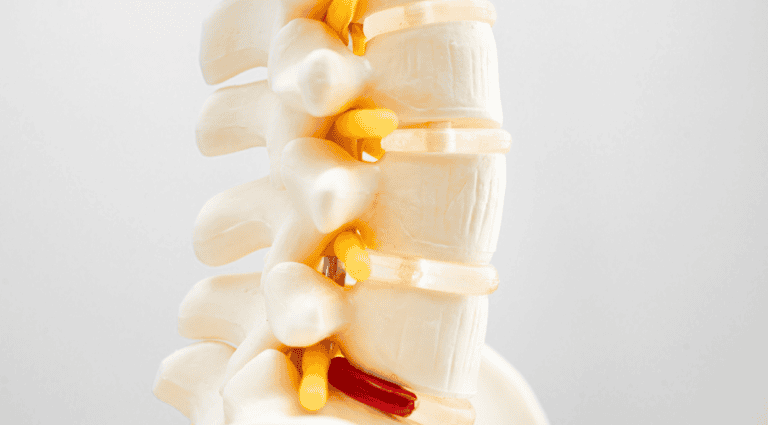
Michael, our young, ambitious editor, and Ah Ma Lily, the pillar of her family, are united by a common enemy, a slipped disc, also known as a herniated disc.

This seemingly minor spinal issue can cause excruciating pain, disrupt lives, and force a reassessment of everyday activities.

The stories of Michael and Ah Ma Lily highlight the widespread nature of slipped discs in Asia, affecting people from all walks of life and age groups.

The Power of Physiotherapy for Slipped Disc Recovery (Herniated Disc Recovery)

understanding-slipped-discs

Physiotherapy offers a non invasive and often highly effective approach to managing slipped discs (herniated discs), accelerating disc recovery time.

Here’s how it empowers recovery:

Pain Management:

Through techniques like manual therapy, ultrasound, and specific exercises, physiotherapists can significantly reduce pain and inflammation, allowing individuals to move more comfortably.

Improved Flexibility and Strength:

Targeted exercises address muscle imbalances and weaknesses contributing to disc herniation.

Strengthening core muscles, particularly those in the back and abdomen, provides crucial support for the spine.

This core strength training is a cornerstone of physiotherapy for slipped disc recovery.

Movement Re education:

Physiotherapists help individuals re learn safe and efficient movement patterns, reducing the risk of further injury and promoting long term spinal health.

This re education can significantly impact an individual’s slipped disc recovery time by preventing further aggravation.

Beyond Relief: Building Long Term Resilience

Physiotherapy doesn’t just address the immediate symptoms. It equips patients with the knowledge and confidence to manage their condition better and prevent future occurrences.

They include:

Postural awareness and ergonomics:

Learning proper posture and body mechanics during everyday activities like sitting, standing, and lifting helps prevent strain on the spine.

A physiotherapist can provide personalised guidance on ergonomics to optimise slipped disc recovery.

Maintaining core strength:

Regularly engaging in core strengthening exercises is essential for long term spinal health and stability.

Physiotherapists can design a safe and effective core strengthening programme tailored to your slipped disc recovery needs.

Lifestyle modifications:

Understanding the factors contributing to slipped discs, such as obesity and smoking, empowers individuals to make positive lifestyle changes for their overall well being.

A physiotherapist can be a valuable partner in creating a personalised plan to support your slipped disc recovery journey.

Strengthening the Case for Physiotherapy

While surgery may be necessary in some instances, especially for severe cases that don’t respond to conservative treatment, physiotherapy should be considered a cornerstone of treatment for most individuals with slipped discs.

Here’s a quick comparison:

Physiotherapy: Non invasive, promotes healing, shorter recovery time, lower risk of complications.

Surgery: Invasive, carries inherent surgical risks, longer recovery time, and potential for post surgical pain.

Exercises for Slipped Disc Recovery

While we recommend consulting a qualified physiotherapist for a personalised recovery program tailored to your specific needs and slipped disc recovery time, here are some basic examples of exercises that may be helpful:

Spinal Mobilisation: Gentle movements to improve flexibility and range of motion in the spine.

Core Strengthening: Exercises like planks and bird-dogs to strengthen the muscles supporting your spine.

Hamstring Stretching: Tight hamstrings can contribute to lower back pain, so incorporating hamstring stretches is essential.

Sciatic Nerve Flossing (if applicable): Gentle movements to glide the sciatic nerve and reduce irritation (consult a physiotherapist to ensure this is appropriate for your case).

Remember, these are just examples, and a qualified physiotherapist can design a safe and effective exercise program to optimise your slipped disc recovery.

Spinal Disc Prevention Tips

Here are some tips for preventing slipped discs in the first place:

  1. Maintain a good posture consistently: Stand tall with shoulders back and relaxed, and avoid slouching.
  2. Strengthen your core: Regularly perform core strengthening exercises as recommended by a physiotherapist.
  3. Proper lifting weight techniques: Always lift with your legs, not your back. Bend at the knees and keep the object close to your body.
  4. Maintain a healthy weight: Excess weight puts stress on your spine.
  5. Stay active: Exercise regularly helps keep your muscles strong and flexible.

By incorporating these tips and seeking physiotherapy if you experience a slipped disc, you can take control of your spinal health and promote a pain free, active life.

Here are some common questions people ask when they suffer from a slipped disc…

Diagnosis and Treatment:

How do I know if I have a slipped disc?

Symptoms like pain, numbness, tingling, or weakness in the back or leg can indicate a slipped disc, but proper diagnosis through a doctor’s evaluation and potentially an MRI is crucial.

Do I need surgery for my slipped disc?

Surgery is not always necessary. In many cases, physiotherapy, medication, and lifestyle changes can effectively manage the condition.

How long will it take for my slipped disc to heal?

Recovery time varies depending on the severity of the herniation, overall health, and treatment adherence. It can range from a few weeks to several months.

What kind of physiotherapy exercises will help my slipped disc?

A physiotherapist will design a personalised exercise programme based on your specific needs, but joint exercises may include spinal mobilisations, core strengthening, stretching, and nerve flossing (performed by a physiotherapist).

Can I still work or exercise with a slipped disc?

Light activity and exercise are often encouraged during recovery, but listening to your body and avoiding aggravating activities is essential. Consulting with a doctor or physiotherapist is recommended to determine appropriate activity levels.

Pain Management and Daily Life:

What can I do to relieve the pain from my slipped disc?

Over the counter pain medication, heat or ice therapy, and proper rest can help manage pain. A physiotherapist can also teach techniques for pain management.

What sleeping positions are best for a slipped disc?

Sleeping on your side with a pillow or bolster between your knees can help maintain spinal alignment. Consulting a physiotherapist for personalised sleep positioning advice is recommended.

Can I still travel with a slipped disc?

Traveling with a slipped disc is possible, but taking precautions like using a lumbar support pillow and avoiding prolonged sitting is essential. Discuss travel plans with your doctor beforehand.

What activities should I avoid with a slipped disc?

Heavy lifting, sudden twisting movements, and prolonged sitting in poor posture can aggravate a slipped disc. A physiotherapist can advise on specific activities to avoid during recovery.

How can I prevent future slipped discs?

Maintaining good posture, core strengthening exercises, proper lifting techniques, and a healthy weight can all help reduce the risk of future disc herniations.

How can I manage the pain and limitations caused by a slipped disc?

A slipped disc can be frustrating and limit daily activities. Talking to a doctor or physiotherapist can help you manage the emotional impact of the condition.

The Dr. Dolores Show: How to Show Up For You

 Dr. Dolores Fazzino, Nurse Practitioner, Medical Intuitive, Energy Whisperer

Do you show up for yourself? Do you make yourself a priority in your life? Or Are you not there for you and are not even on your to do list?

“Time to Show Up for You ” is an insightful episode on The Dr. Dolores Show, that focuses on exploring the transformative practice of prioritizing one’s well being and personal growth.

The Dr. Dolores Show: 6 Ways to Show Up For Yourself:

the-dr-dolores-show-show-up-for-you

In today’s crazy world, it’s easy to get caught up in the whirlwind of responsibilities, obligations, and expectations placed upon us by society, family, and even ourselves.

However, amidst the chaos, it’s crucial to pause and reflect on the significance of prioritizing ourselves.

Embracing Courage and Bravery

At the onset of the conversation, the notion of embracing courage and bravery was highlighted.

It’s emphasized that allowing oneself to step into these virtues is paramount, as they pave the way for personal growth and empowerment.

This sentiment underscores the importance of acknowledging one’s inner strength and resilience, even in the face of adversity.

Carving Out Time for Self Priority

The discussion in the episode also touched upon the notion of carving out time to prioritize oneself.

Amidst busy schedules and competing demands, it’s easy to neglect self care and personal well being.

However, it’s crucial to recognize that dedicating time to oneself is not selfish but rather a fundamental aspect of self preservation and holistic growth.

The Power of Self Awareness

A recurring theme throughout the conversation was the transformative power of self awareness.

By becoming attuned to our thoughts, emotions, and inner workings, we gain the ability to make ourselves a priority.

This self awareness serves as a catalyst for personal development and empowers individuals to take charge of their lives.

Overcoming Societal Conditioning

The episode delved into the societal conditioning that often impedes our ability to experience and express emotions authentically.

In a culture that values stoicism and suppresses vulnerability, it’s essential to challenge these norms and embrace our emotional authenticity.

By allowing ourselves to feel and process emotions, we liberate trapped energy and pave the way for emotional well being.

Cultivating Self Trust and Acceptance

A cornerstone of the discussion was the importance of self trust and acceptance.

By trusting the wisdom that emanates from within and embracing all aspects of oneself, individuals embark on a journey of self discovery and empowerment.

This journey towards self acceptance enables individuals to align with their true selves and live authentically.

Aligning with Your True Self

The conversation concluded with a reflection on the significance of aligning with one’s true self.

By identifying areas of misalignment in various aspects of life and releasing energy that no longer serves us, we create space for alignment and attract experiences that resonate with our authentic selves.

By embracing courage, self awareness, and authenticity, individuals embark on a transformative journey towards inner alignment and self acceptance.

It’s through this journey that true fulfillment and joy are found, allowing individuals to live life on their own terms and embrace their fullest potential.

Join Dr. Dolores as she delves into the essence of “showing up for you,” unraveling the layers of self care, resilience, and mindfulness.

Discover the power of self reflection as a tool for understanding personal goals, values, and emotions.

Learn to set and maintain healthy boundaries, a crucial aspect of fostering positive relationships and safeguarding your own mental and emotional space.

It advocates for a mindset shift, encouraging listeners to view challenges as opportunities for learning and personal development, leading to more inner peace, balance, and well being.

CLICK BELOW TO LISTEN TO “THE DR. DOLORES SHOW” PODCAST:


To donate to our podcast “The Dr. Dolores Show” please snap the QR code. Your donations will ensure our work continues to be produced and hosted globally.

Donate-QR-Code-Dolores-Fazzino

What to Look for In This Episode of The Dr. Dolores Show:

  1. Allow yourself to embrace what you need to do for you, for some of us it might be stepping into being courageous and brave. (02:28)
  2. I feel that you can carve out the time to make yourself a priority. (06:01) 
  3. When you become self aware you will start making yourself a priority. (08:50) 
  4. “You need to start being selfish in order to make yourself a priority instead of being shamed and guilted into feeling you are not worthy.” Dr. Dolores (11:33)
  5. When we talk about experiencing emotions we have been programmed into a society that doesn’t allow us to feel. (08:21:21)
  6. When we don’t experience our emotions we trap that energy. (21:45) 
  7. “Minding your thoughts – minding what you say to yourself in the quiet of your mind.” Dr. Dolores (25:54)
  8. Spiritual dimension means having a relationship with yourself and actually connecting with your higher self. (28:20)
  9. Self acceptance – embracing all aspects of yourself. (35:14)
  10. Look at areas in your life where you are out of alignment. (41:05) 
  11. You just need to remove that energy that is no longer in alignment with you so you can attract what is more in alignment with you you are. (41:55)
  12. Self trust is huge. It is about trusting that wisdom that comes from inside of you and allowing yourself to be led by that. (44:02) 

FIND THE DR. DOLORES SHOW WITH DR. DOLORES FAZZINO HERE!

All the top podcast locations. Click HERE

Apple, Google Play, Audible, iHeart Radio, Spotify ++++

SCHEDULE A FREE SESSION WITH DR. DOLORES: https://bit.ly/MeetGreet30

The Fascinating Psychology of a Gambler: The Weak and Strong Points

Gamblers can be categorised in a variety of ways.

While the numbers vary from study to study, it is widely accepted that around 96% of gamblers are classified as recreational gamblers while the label of problem gambler applies to the remaining 4%.

Both of these categories can be broken down further into an array of sub categories.

If you were to walk into a bustling casino and get to know all of the players, you would discover that those people are there for different reasons.

Even though a common denominator would be the prospect of winning money, you’d find that it goes much deeper than that.

In a lot of cases, the folks you meet will tell you that it boils down to entertainment.

They enjoy the adrenaline rush that comes with a win regardless of the size of it.

They are just trying to have a bit of fun.

Of course, those aren’t the only reasons.

The Fascinating Psychology of a Gambler:

psychology-of-a-gambler

Competition

You are also likely to run into players who partake in gambling activities out of a sense of competitiveness.

When they bet on sports or play games of skill like poker, making the correct reads and the right choices brings a lot of satisfaction.

It provides the player with a confidence boost.

However, in terms of gambling, a competitive nature can be both a blessing and a curse.

While a competitive personality might drive a person to hone their skills and improve their knowledge, it can also result in a win at all costs approach that can sometimes lead to unethical and irresponsible behaviour.

Socialising

For some people, gambling provides an opportunity to socialise with others.

Take a person who plays in a weekly poker game with the same group.

To that person, the poker game itself might take a backseat to the banter and overall camaraderie.

Interestingly, this applies to online casinos as well.

Just like one of our editors. Such individuals follow a familiar pattern: He selected casinos with accessible payment methods, like the ones here with bank transfers: https://bstcasinos.com/bank-transfer-casinos/.

Then, he headed to the live casino section, picked a game, blackjack, and engaged in chat with the live dealer, paying little mind to the game itself.

But, according to our editor, this train of thought also has drawbacks.

For instance, the player might concentrate too much on interacting with other players instead of paying attention to what’s going on in the game.

This can be costly (trust us).

An Escape

There’s nothing wrong with taking a short break from the pressures and obligations of everyday life.

For some people, this means going to a movie, participating in sports, or taking a much needed vacation.

Well, gambling offers the same type of respite.

The thing is, reality is always waiting for you when you walk out of the theatre or when you return from your holiday.

Sadly, some people prefer to keep their heads in the sand by continuing to gamble instead of solving their problems.

Compulsion

It doesn’t matter what your motivations for gambling are.

Anyone who does it risks losing control.

It can lead to the type of compulsive and obsessive behaviour that can ruin lives and careers.

On various platforms where experienced casino analysts write, like here: https://bstcasinos.com/author/jack-hamilton/, you often come across genuinely helpful advice on choosing a gaming budget, how to stop playing and who to turn to if gaming becomes a problem.

But the most important thing, even before starting to play, is to understand for oneself: gambling addiction is a real threat.

Gambling addicts have very little or no control at all over their destructive behaviour even if they know that it’s a serious problem.

Gambling is no longer fun when things reach this stage.

It’s worth noting that compulsive gambling is often a sign of other serious psychological disorders like anxiety or depression.

While gambling addiction and other compulsive behaviours have led many good and bright people down dark holes, they can escape the grip with the proper support.

What You Should Remember?

A person’s psychology influences their gambling behaviour although other factors like age, gender, and socio economic status also play a role.

Even though the overall percentage of problem gamblers is small, that seemingly minuscule 4% represents tens of millions of people all over the world.

These people started gambling for a wide range of reasons, but they all share one common characteristic.

They do not have control over their actions as far as gambling is concerned.

At least they don’t anymore.

If you or someone you know is showing signs of unhealthy gambling behaviour, just know that help is available. You can look and find addiction experts in our growing database of coaches here.

Everyone can use a helping hand when it comes to addiction.

This may be a cliché, but the message is as relevant as ever in an age in which gambling is so easily accessible and more socially acceptable.

The Five Stages of a Drug Detox: Here is what you’ll go through

0

For anyone who is about to start looking for help with their addiction to drugs, it can be a challenging time.

It’s a big step and a step that’s often into the unknown, with the only thing certain being that it will have a positive impact on your life in the long run.

The detoxification can be the most difficult time for many, especially the early stages.

But it’s worth persevering as when you get through it, you can enter recovery and learn to cope with the stresses and challenges, and then you can get your life back on track.

But what exactly is involved in a drug detox?

The Five Stages of a Drug Detox:

five-stages-of-drug-detox

1. Assessment and Evaluation

The process begins with a comprehensive assessment and evaluation of your physical health.

What’s more, you’ll also discuss the history of your substance use, and misuse, as well as your overall psychological well being.

This will involve interviews, examinations, lab tests, and psychological assessments.

This is an important stage as it will help determine the most appropriate approach to detoxification, as well as whether you are ready and strong enough for it.

A full plan will be put in place to suit each person’s needs when it comes to the detox.

2. Stabilisation

Once the assessment is complete, the next stage is stabiliasation.

This sees you going through medical monitoring and interventions to help manage withdrawal symptoms you may be experiencing.

It’s all about stabilising your condition amidst the symptoms you may start to feel.

Medication may be used to combat this in order to ensure the safety and comfort of you.

Essentially, this step is designed to provide the support needed to navigate the challenges of detoxification in a safe and stable manner.

3. Withdrawal Symptoms

This will allow you to manage withdrawal symptoms effectively, which are the most difficult elements of detoxification.

They can be incredibly severe in some instances and include nausea, vomiting, diarrhoea, sweating, muscle aches, anxiety, insomnia and, of course, cravings for drugs.

The intensity and duration of withdrawal symptoms can range from mild discomfort to severe distress, with peak symptoms typically occurring within the first few days of detox.

While withdrawal symptoms can be challenging to endure, they are a natural part of the detoxification process as the body adjusts to the absence of drugs.

Medical and psychological support is essential during this stage to help individuals manage symptoms effectively and prevent relapse.

4. Emotional and Psychological Adjustment

In addition to physical symptoms, drug detox often involves emotional and psychological adjustments as individuals confront the underlying issues driving their substance abuse.

Many individuals experience mood swings, anxiety, depression, and cravings for the drug as they navigate the emotional complexities of detoxification.

Therapy, counselling, and support groups play a crucial role in helping individuals address underlying trauma, negative thought patterns, and maladaptive coping mechanisms that contribute to addiction.

Through introspection, self reflection, and therapeutic interventions, individuals can gain insight into their addictive behaviours and develop healthier coping strategies for managing stress, emotions, and triggers in sobriety.

5. Transition to Treatment and Aftercare

The final stage of drug detox involves transitioning to ongoing treatment and aftercare to support long term recovery.

Detoxification alone is rarely sufficient to address the underlying causes of addiction or prevent relapse in the long term.

Therefore, it’s essential for individuals to continue their treatment journey with comprehensive addiction treatment programmes that address physical, psychological, and social aspects of recovery.

This may include residential or outpatient rehabilitation, individual and group therapy, support groups such as Narcotics Anonymous (NA) or SMART Recovery, and holistic therapies such as mindfulness, yoga, and art therapy.

Aftercare planning is also crucial to provide individuals with the support and resources they need to maintain sobriety and prevent relapse after detox.

This may involve ongoing therapy, medication assisted treatment, sober living arrangements, vocational training, and community based support services.

You can find coaches and experts that can help you here.