Take note that the likelihood for depression will increase by as much as 5% for every decrease in the hearing ability for adults less than 70 years old, according to a 2009 Internet based national survey.
Sometimes factors like high intelligence, social abandon and nutrient deficiency might play major role in mental illness.
When a person suffers from hearing impairment, the brain loses its capacity to process auditory signals, and this causes the brain to focus its activities to adapt.
When this happens, the neural pathways have to reorganize and alter the way they operate.
There would be an imbalance in different areas of the brain, such as memory and the regulation of depressive symptoms.
In short, the brain rewires itself due to hearing loss.
3 Things You Should Know About Helping Someone with Hearing Loss:
Based on the data discussed, treatment for hearing impairment should be done at the earliest time possible. Here are some ways you can treat it.
1. Hearing Aids.
The use of hearing aids allows individuals to process auditory cues.
This way, the brain does not have to work overtime, which decreases the need to alter neural pathways.
In fact, when used early, hearing aids can even help the brain adjust well with the auditory signals.
This is the reason why Helix Hearing Care recommends proper maintenance of hearing aids.
2. Auditory Training.
For those who want to improve how they can effectively communicate with other people, undergoing auditory rehabilitation can help mitigate the worsening of depressive symptoms.
Through different strategies, professionals can provide techniques on how they can improve their listening techniques.
This way, they don’t have to be socially withdrawn simply because they find it hard to keep up with conversations.
3. Counseling.
Aside from instituting interventions for hearing loss, individuals can also benefit from attending counseling sessions where they can talk about their feelings.
Therapy can be significant in giving people an emotional anchor to help them improve their health and wellness.
Having to live your life without one of your senses can be emotionally and mentally draining, which is why it is important to seek early intervention.
Vitamin Supplements are used abundantly in today’s world.
These are available in numerous sizes and shapes.
Even some food that we eat today is enriched with supplementary nutrients.
All vitamin supplements can be categorized into three main groups, Herbs, Vitamins and minerals, Targeted formulas.
These classifications are due to their varying manufacturing and administration.
How are Vitamin Supplements Made:
Vitamin supplements are essential for a wide range of nutritional needs of today’s human beings. However, all ingredients present in the supplements are not vitamins.
According to nutritionists, only 13 compounds are called vitamins. These consist of vitamin A, E, C, D, and K, along with various vitamin B complexes that are numbered.
Among these 13 compounds, the vitamin C and B complex forms are soluble in water, whereas the rest of the compounds are fat soluble.
It is essential to take into account the bioavailability and solubility in the manufacture of vitamin capsules and pressed tablets.
Also, manufacturers must investigate the validity of raw materials that they acquire from distributors. After this, manufacturers must ensure smooth blending of the ingredients as stated by the proprietary formula.
The vitamin supplements may also contain food binders or fillers, depending on the form of the vitamin supplement. Supplements can be in powder form, liquid form, or solid pills, capsules, or gummy forms.
While a healthy diet is the key to getting the best vitamins and minerals, supplements can help as well.
There is a wide range of products available when it comes to supplementary vitamins such as Immune Support, Nature’s Bounty and Gummies Garden, which are FDA approved high quality and reliable sources.
What’s The Difference Between Natural and Synthetic Vitamins:
Vitamins can be naturally sourced or made synthetically in laboratories as a dietary supplement.
However, the natural alternative is always the best source of acquiring nutrients in some cases.
In contrast, for vitamins having a simple molecular structure, like Vitamin C, both natural and synthetic sources are similarly effective.
In vitamin B9, also known as folate, synthetic supplements prove more effective than natural alternatives. This vitamin is present as a precursor known as folic acid.
The international journal of vitamins and nutrition research states that synthetic vitamin E produced in laboratories is safe but less effective than its natural counterpart. Both synthetic and natural vitamin E have a slight alteration in the molecular structure of the compound.
All vitamin supplements available in the market contain other active ingredients that act as fillers or binders. Due to these fillers, the supplements do not remain pure in form, even if the supplement company claims otherwise.
What are Various Forms of Vitamin Supplements:
Vitamin supplements are manufactured in various forms to suit the varying needs of consumers.
The different forms vary from convenient pills to yummy gummies and easy to take syrups. Here are some of them.
1. Manufacture of Vitamin Pills.
Pills are the earliest form of vitamins available.
These are engineered by pressing the ingredients together.
Manufacturing pills is the easiest among all other vitamin forms as it is possible to administer the amount of blends easily.
Some pills are manufactured to be soluble to make it easier to take.
For soluble pills, you should look for the label of USP on the vitamins. USP label ensures that the soluble vitamin is safe for digestion in your stomach.
2. Manufacture of Vitamin Powders.
Vitamin powders are available in the market, usually with other additional nutrients like herbs or proteins.
These are more convenient than vitamin pills as they can be easily sprinkled on food.
Some people prefer to add these to their drinks.
These are also manufactured by measuring the correct blend of ingredients.
Usually, powders are the purest form of vitamins as they do not need any fillers.
3. Manufacture of Vitamin Capsules.
Vitamin capsules are composed of gelatin that is soluble and can quickly dissolve as compared to the pressed pills.
Some vitamins are available solely as liquid capsules, such as vitamin E.
These are clear and swallowable and can prove to have miraculous effects on your skin for the treatment of anti aging.
Capsules covers are made up of gelatin which makes your supplement impure with added fillers.
4. Manufacturing of Gummy Vitamins.
Gummy vitamins have brought forth a revolution in the supplement industry.
Although it has active ingredients, which make it not entirely composed of the nutrients mentioned on the label, it is still the most popular form of vitamin supplements.
The base of the gummy vitamins is chewy gelatin which gives it a candy like structure and taste.
This is also the reason that it is favored by children and adults alike.
It is the easiest to consume vitamin supplement, but there is a possibility of overdose due to its pleasant taste.
5. Manufacturing of Liquid Vitamin Supplements.
Liquid vitamins are simple and easy to mix and digest.
They can be conveniently included in foods and drinks.
These are manufactured without much use of binders and fillers, making them one of the purest forms of vitamin supplements.
For the convenience of the consumers, manufacturers are offering ampoules for singular use.
Also, droppers are supplied along with these liquid supplements for measurement accuracy.
What You Should Know:
Generally, upon prescription from a certified physician, vitamin supplements are safe for the purpose of consumption.
However, precautions should be taken during consumption. Vitamin A, K, D, and E should be taken with intervals as they remain in your system for longer.
Consecutive consumption can cause a buildup that could be harmful to your tissues.
This is why a medical practitioner’s advice is a must. Also, if you are Vegan you might want to read this article about Vitamin B 12 and how to get it.
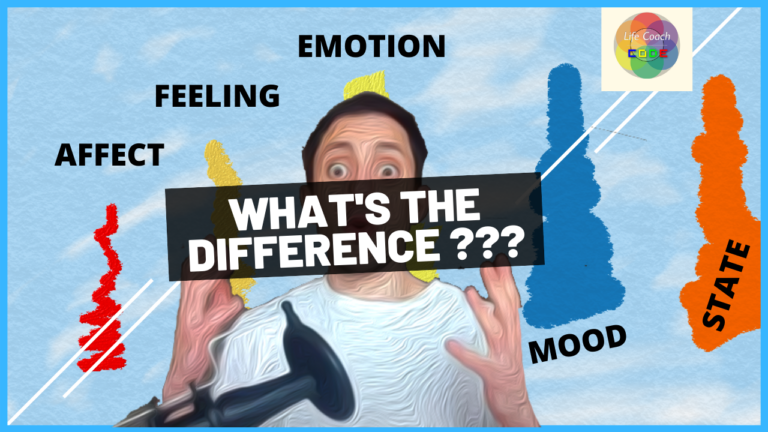
The main difference between affect, emotions and moods is the amount of time they last. I mean that’s the obvious difference.
But to say that’s the only difference is to be carelessly ignorant!
Albert Einstein said “Everything should be made as simple as possible, but no simpler.”
That’s why we need to speak about ALL the differences between affects, emotions, moods, even states of being.
I reveal everything in this video in a simple animated way, but not simpler, 😁
What is The Difference Between Affect, Emotions, Moods and State of Being:
What is an Affect?
When you walk and somebody honks behind you, the response you make, that’s an Affect.
Most likely you’ll get startled, you’ll shake or jump.
This is because you are Affected by the situation, that’s the Affect, the unconscious response you have.
What’s the difference:
It lasts really short. It happens mostly automatically and through the limbic network within the brain, the system responsible for primal emotional responses to external stimuli.
What is an Emotion?
Emotion is short for Energy in Motion. If you want to learn more about Emotions I would like to invite you to read this article.
After you get Affected, after you jump, you will most likely feel Angry toward the person honking at you.
What is the difference:
The emotion is the energetic communication your subconscious mind makes with you. It happens in the limbic or Mammalian Brain, but also other places in your brain, it includes more of the Rational Brain and uses a little of the conscious part of your mind. Also, it takes longer to occur and it lasts longer. It carries a deeper message about the situation and the event arising it. Anger, for example, might tell you that this person crossed your boundaries, it messed up your peaceful walking by its loud HONKING. Anger arises to signal you that you might need to defend your personal boundaries. Here is a bigger guide about what each emotion is trying to tell you.
What is Mood?
If you hold on to this Anger, your mind will create a certain relationship with this emotion and it will start to filter out your reality through this emotion.
You might go to work and pick up more on your colleague’s annoying questions, or your slow PC. And these things will reinforce the emotion of Anger you are holding on to. You will perceive these details because your mind filters everything through the emotion of Anger.
What is the difference:
Mood lasts longer than an Affect and an Emotion. It also takes a lot longer to be formed. It’s the result of an emotion taking hold of your mental perception and filtering the world around you through its colors.
What is State of Being?
In the example above, it might be that you hold on to Anger for days.
And every day, no matter what happens, no matter if you get happier, or sadder, bored, or excited, you will get back to being angry, to seeing what’s wrong with the world, and reinforcing this emotion.
That’s a state of being and it determines the reality you live in.
What is the difference:
State of being is your default emotion. This is the average emotion you feel every day. It’s your default emotion you get back to no matter what happens. It shapes and colors your reality and determines most of the details you will pick up from the world around you. That’s why a good Emotional Hygiene is crucial, so you ca clean your Emotional Debris and change your reality to be aligned with higher emotions. If you want to learn how to have good emotional hygiene check this out.
Most people argue that student life is one of the best times of their lives.
Whether you agree with it or not, one thing is for sure. There are many things you wished you knew earlier when you were a student, but you learn those things later in life through trial and error.
You might lack the experience, expertise, money, and skills, but you also have no responsibility on your shoulders, which gives you more freedom.
It also lets you concentrate only on your studies, which is precisely what your parents want. When you are a university student, you might be living in a hostel and sharing a single room with multiple classmates.
It means that you have limited space to store all your items, so you decided to store a few items in a storage unit.
Since you don’t have too much extra money, you also want to get a great deal.
How can you do that?
By using storage hacks. If you are interested in knowing about these hacks, then continue reading. In this article, you will learn about 12 proven storage hacks that university students can use.
12 Best Storage Hacks for University Students:
1. Use a Mini Shelf.
If you are a student, you might have a desk in your room or a study table.
If that is the case, then you should never clutter it or create a mess on it.
Most of the students commit this mistake, especially when they are working on multiple assignments concurrently.
Their desk starts to look messy, and they struggle to stay organized.
Instead of cluttering your study table, you can use a mini shelf to keep your papers organized or move them to a storage unit that offers document storage services.
It can save a lot of time which would be spent on finding essential documents on the messed up study table.
2. Store Stationary in a Jar.
Two of the most common pieces of equipment a student needs are a pen or pencil.
These stationery items are the most accessible and most annoying things to lose, especially when you want them the most.
It is highly recommended that you organize all your stationery items and place them into a jar, so you know exactly where they are, and you can easily access them whenever you might need them.
3. Mount the Desk on A Wall.
Nobody can deny the fact that a desk or your room study table is an essential piece of furniture for a university student, but it can occupy precious space in your hostel room.
If your desk is too large, then it can become a severe problem as it can occupy a significant space of your room.
You can replace the desk with a smaller one, move it to a storage unit or buy a desk that can easily be mounted on a wall.
4. Invest in a Bedside Caddy.
There are instances when you get so tired that you come to your hostel room to relax, but you also want to read your course books while relaxing on your bed.
Sadly, your books are placed on another side of the room.
You have to get up and reach out for them to get access to them.
Instead, you can invest in a bedside caddy that stores all your favorite books accessible.
Just because you are a college or university student does not mean that you should ignore style and aesthetics.
Of course, you can still make a style statement by giving your rooms a classic look that your roommates and other students will appreciate.
That is not all.
You can store items that are taking up your room space in a storage unit and place a mirror and all the tools you need to make a style statement in the drawer, so look your best whenever you leave your hostel room.
6. Hang Your Shoe Rack On The Door.
Some students love shoes, and if you share a room with one of them, there are chances that they might have dozens of pairs of shoes.
It can make your room look messy and take up valuable space in the room, which can be used for any other purpose.
Ask them to keep all the shoes organized.
The best way to do that is to invest in a shoe rack.
It will save your hostel room from looking bad while keeping all shoes arranged neatly in a rack. If you can find a shoe rack which you can hang on your door, this can be even better as it can free up more space in your room.
7. Rolling bed cart For Blankets.
When you leave your home to live in a university hostel, your parents might have given you a blanket that can save you from biting cold winters.
The problem is that when the winter season ends and the summer season starts, these blankets will no longer be in use.
As a result, they might be taking up space, so you can consider moving them to storage units during the summer months or invest in a bed cart that can be rolled and kept under your bed.
8. Keep Shelf With Your New Bed.
Another essential storage item that most students have in their hostel rooms is a shelf.
Few of the students might use it to store their books, while others might use it for storing different items. Sadly, there is limited space for students to play around.
If you have multiple shelves in your college dorm, you can move one to the storage unit or replace it with a smaller one, which takes up less space.
9. Organize Your Desk With Clip Binders.
You would be hard pressed to find a university student who doesn’t own any gadgets.
Most students have computers, which have dozens of wires.
It can create wire chaos on your table or in your room.
To keep everything organized and give your desk a clean and clutter free look, you should use clip binders to group wires together.
You will never have to deal with tangled wire again, which is a massive pain in the neck, especially if there are too many computers or other wired gadgets in your hostel room.
10. Use Your Closet For Storing Books.
Have you ever looked at the closet you use daily?
There are chances that you might have never thought about taking advantage of the backside of the closet as a bookshelf.
You can store your books there and access them whenever you want. You can also store items that you frequently use and move items that you rarely use to the storage unit.
It can come in handy, especially if you have fewer clothes inside the closet and you get a lot of free space. You can put this space to good use and store books and other items there.
11. Use Your Bed Riser For Multiple Purposes.
Most university students have bed risers in their college hostel or university hostel rooms or dorms.
It is usually used for single purpose, but you can also put it to good use and make it serve multiple purposes.
For instance, you can purchase a bed riser that can double as a charging station.
These bed risers are readily available in the market and can deliver the functionality of both bed risers and the charging station.
12. Explore Affordable Storage Options.
Despite all these hacks, if you still find yourself short on space then, you can look for cheaper storage options such as cheap storage units by SSO.
These storage units are a great choice when it comes to storing seasonal or rarely used items.
If your college or university hostel room is still presenting a messy look, you can spend a few bucks and move some of your items to these storage units.
It will make it easier to organize your room as you have fewer items left behind, which you can easily arrange.
These storage units give you peace of mind with security and accessibility and have specialized machines to move items from one place to another.
In addition to this, they have highly trained staff who are well versed in the art of moving items safely.
Some storage unit providers also offer move and packing services which give you more convenience.
These were the proven tips for efficient student storage. But every student has his own way of placing belongings. Which storage hacks do you use as a student?
Probably one of the biggest stresses in the life of a modern human is credit card debt.
No matter how good you are at managing your stress, this can be something that is continuously adding more stress into your life.
Debt relief can be a solution for you since it can help you get your debt cleared by forgiving a portion of the fees or repaying the loan with lower interest rates.
However, it’s a god idea to take some time to get acquainted with the pros and cons of credit card debt relief if you are considering enrolling in a program or holding personal negotiations with creditors to explain your current financial state. You can see here more information about that.
On this website we are always trying to give you the best and quickest solutions, especially when it comes to managing the modern world’s stress.
Sometimes, instead of managing your stress, it’s more effective to get rid of the stressor in the first place. In this article we are going to weigh both the good and the bad sides of debt relief, so you can decide what’s best for you.
3 Biggest Pros and Cons of Credit Card Debt Relief:
THE ADVANTAGES
1. Relief from the overwhelming amount of debt.
The obvious reason you might consider credit card debt relief is if you are unable to settle the whole amount within the stated payment period in the loan agreement.
The debt settlement program can work to your advantage in the sense that the service provider can successfully negotiate for lower interest rates or adjustments of payment plans to give you more time to repay the credit card loan according to the levels of your income streams.
2. Prevents Bankruptcy.
Bankruptcy can affect your credit score and report for over 10 years.
Getting credit card debt settlement service providers can help you to avoid bankruptcy status and the tough financial consequences that come with it.
The debt settlement firm can also prevent you from facing charges of fraudulent cases linked to unpaid and due credit card loans.
3. Reduced time to repay the credit card debt.
With a professional and skilled debt repayment service provider, you can repay your loans in less time than it was originally stipulated.
The reduced time frames of settling the debt will give you ample time to plan your finances and clear the loans conveniently.
Without the debt settlement program, it might take you more years to repay your outstanding debt.
THE DISADVANTAGES
1. Low credit score.
The process of negotiating to settle the debt with less interest or principal amounts can affect your credit score.
Given the fact that all financial creditors are keen on their debtor’s credit score, if you pay less than what you owe them, it can be perceived as an unwillingness to settle the full amount.
The creditors might award you a low credit score that will make it difficult for you to get bank loans and car loans, mortgages, and credit cards in the future.
2. Taxes on the loan.
The Internal Revenue Service considers forgiven debt as income on your part, you might be required to pay income taxes tied to the remaining loan balance you failed to clear.
This can sometimes accumulate without your knowledge, especially if you don’t file your tax returns.
When the forgiven loan amount becomes taxable, you become vulnerable to tax related lawsuits.
If you enroll in a credit card debt relief program to get a lower debt settlement agreement, it will be wise to ensure your service provider understands the IRS regulations to prevent your scrapped off debt from becoming taxable.
3. Potential Fees.
Hiring a debt settlement service provider or firm can become costly due to the fees they might require.
Some debt settlement firms advise against making more payments to your creditor until they strike an agreement with them.
This is a very risky financial move on creditors that don’t negotiate with debt settlers and can lead you to more financial burden in terms of penalties, interest rates, and late fees.
Ultimately, you must decide whether the pros and cons of debt relief balance out for you.
Debt relief can be the right strategy in certain instances.
You just have to make sure you manage the downsides carefully.
The gap between science, technology, engineering, and math, or as it is called STEM, career fields and jobs is widening.
In fact, there are currently more than half a million open computing related jobs, and the demand exceeds the supply for qualified candidates.
In today’s world the classic education is paused due to the pandemic. The good news is that kids these days are getting a jump on the future with online coding classes.
Online coding classes give students hands on experience with learning how to code software through beginner coding tutorials in languages like Python, Java, or JavaScript.
Students learn to code while also developing critical problem solving skills that will help them succeed in any STEM field or any career path they choose.
There are plenty of online coding classes available which provide students with quality education and teaching material on how to code.
One of them is Cuemath, where through interactive games and visuals, they teach children the basics of computer programming in a language that they can understand.
Children can learn these languages at their own pace by clicking on various commands or game pieces that teach them new skills in an intuitive way.
Cuemath’s unique approach to teaching coding, which is essentially an engaging and interactive way of learning, helps to reduce the barriers that exist in conventional coding classes where students must memorize methods and commands and follow the precise syntax.
The website’s interactive elements make it easier for children to learn by themselves, faster and more efficiently.
One can easily book a free trial class online to understand the teaching methodology and the course structure to be followed.
With different course options, the students have the benefit of choosing the one which really interests them.
What makes Cuemath so unique is that it uses intuitive metaphors and games that help children understand how to use programming languages such as Python, Javascript using simple drag and drop exercises. Apart from making children future ready, cuemath helps children to develop critical thinking skills.
The tutors at Cuemath make sure that they take forward a child’s thinking process by giving appropriate cues rather than dictating them what to do next. This helps children use their logical thinking to understand things at their own pace regarding how these languages work by playing around with different game pieces and making sense of the display’s information using a trial and error approach.
Cuemath also provides the student with a course structure that breaks down what they are learning so they can easily absorb it.
Kids are motivated to learn how to code because they enjoy the challenge of solving problems, taking an idea from concept to realization, and seeing their projects come to life.
They also want to gain the skills they’ll need in a job market that increasingly demands a deeper knowledge of technology.
Since online coding classes allow students to focus on individual projects and tutorials at their own pace, many view it as a fun way they can explore new interests and develop the new century skills vital for future success.
Coding helps refine and improve a child’s math and reading skills, as well as develop their critical thinking skills.
In addition, kids who learn to code are more likely to feel engaged in school work, especially related to math and science. And online learning doesn’t have to be hard. It can be actually more effective if done right.
According to some learning programming online is easier than in the traditional in person manner as it makes people more focused in the comfort of their homes.
And no, programming is not just for grow ups. In fact, studies show that children who are exposed to computer programming at an early age have a higher chance of thinking logically and critically.
This is because learning coding provides an entry point for children to think systematically while solving problems. As they progress through the levels of difficulty, they begin to understand the logic and the patterns of coding that make learning even easier.
Coding is a versatile skill set that can be used across multiple industries, from video games and movies to business software and websites, hence opening many avenues for one’s career in the future.
With social media, we are exposed to wholesome things every day. But some of those videos or memes, feel just kind of weird. Like there’s something off about them.
They seem wholesome, but there is this invisible toxic undertone that gets overlooked by many.
It’s nothing new for our human ugliness to mask itself with noble pursuits or achievements.
Our very fragile ego, the one that’s in constant need for approval from others, will always find a way to hide its true selfish and shallow desires behind “goodness”.
In this article you will find the top 7 “wholesome” things that are actually extremely toxic in today’s society.
7 “Wholesome” Things that are Toxic:
1. Family Vlogging on YouTube.
We have all watched a family filming their day on YouTube. They are called vloggers and they are filming videos of their day, every day.
And I understand that for most that’s their profession, but, we must discuss about the toxicity of such lifestyle.
I mean just think about it, every day, EVERY DAY someone is filming your whole family, they are organizing events, planning how to make the videos even more interesting, and instead of living their life with their family, they are not really there.
Their mind is lost in how the video will look like and what will be even more epic to include. People like them for that, they look up to them, but do you really want such lifestyle?
To be around your family but not really there, ever? To think about the video instead of being immersed in the spontaneous beauty of life experiencing your family as a human?
Watching their videos with that beautiful background music seems “wholesome” they seem happy, but in reality, behind the scenes that kind of life is pretty toxic.
2. Filming Yourself Helping Homeless People.
Now the word you should consider here is “filming”. I am not against doing nice things, I am not against filming videos, we also have a YouTube channel, but I am against helping others just because you want to make a viral video and get approval.
It’s not honest, and it shows. Yeah, you will help the person you are filming, but you will also exploit their situation to make a viral video.
You might help them momentarily, but their life will get back at what it is, and they will not live in a better world with good people because you did not become good by helping them once.
Goodness will prevail when doing good is something you do naturally, and not something that’s so rare that you should film yourself doing it.
3. Big Companies Advertising About Their Charity Accomplishments.
Let me ask you something, who spends millions on advertising just to show that they spent 100s of thousands on charity?
Big companies.
And why is that?
Because for them it’s not about making a positive change, primarily it’s about publicity, and their spending shows it.
4. Fake Animal Rescues.
Do you know that close to half the animal rescue videos you watch online are actually fake?
Yeah, people who do them will tell you it’s to raise awareness.
But why would you torture an animal to raise awareness for tortured animals?
Wouldn’t it be better to plan how to help them, not to just raise awareness?
Why your result and action taking is not something you raise awareness with, but faking animal rescues?
Oh, I know. It’s because most people don’t really care about the animals, they care about the views, and looking as they care about animals in front of the eyes of others.
5. Sacrificing Your Life for Your Children.
We all know that we would do anything for our children.
But that’s not what I am talking about here.
I am talking about sacrificing your life, making your children the most important subject in your life and giving them the unnecessary burden of your sacrifice as a guilt trip all their life.
Something they did not even agreed on.
How about having a purpose, and having a direction in your life, one where your kids can spend time with you, one where you will be satisfied and happy, one where you will allow your children to develop and thrive into independent human beings?
But it’s easier to bail on your life, and live your unlived experiences through your kids.
6. Positivity Culture.
This goes all the way from “Hustle 24 hours per day” to positive thinking and forcing happiness.
It seems “wholesome” when you see a meme on Instagram that you should be miserable, suffer, and pile through the mud to reach your dreams, or that thoughts are powerful and you should only think positive thoughts.
But we forget one really important fact here, you are mortal human, and nothing that you achieve will bring you back the time you lost trying to reach your dreams.
You are human and forcing happiness is not natural. Every emotion on the palette of emotions is there for a reason. Forcing happiness is turning your back on most of your self.
Why not do this, and bare with me, this is a crazy idea, especially in today’s society… why not, let go of over controlling things and experience being alive, here and now, in the present moment?
Why not accept yourself fully where you are, right now, and stop trying to escape yourself and your life to some “perfectionland” that doesn’t exist?
Nothing you achieve will be better than where you are if you don’t accept where you are fully and wholly.
Stop living as a flawed version of you, always in rush, like you are not DOING enough things, neurotic and on edge. That’s toxic.
Just slow down and realize that you are already whole.
7. Telling Someone to “Feel Better”.
As we said, we are all human.
Sometimes you just want to feel down. Sometimes you just NEED to feel whiny, and bored, and lazy. There’s nothing wrong with that.
Who knows why your body produces such chemicals, maybe it needs a rest, and you are creating a narrative around these natural bodily chemical responses believing there’s something wrong with that.
You are human, you don’t have to pretend to be perfect, just be.
And when you see someone being sad, or angry, or not in a good mood, don’t tell them “oh just stop thinking like that” or “hey, just smile, think positive” or even worse “what’s wrong with you, why do you bring all of us down with your mood”.
That’s terrible.
Just be their friend.
Sometimes all we need in such moments is honest attention, for someone to accept us, in all of our negativity and whining.
Other places that stay cool during the summer are Alaska, parts of Russia and Mongolia, and of course, Canada.
You can bet people in these countries have outdoor fireplaces and probably use them on a daily basis.
2. Some fire pits double as grills.
Have you ever grilled outside in the summer?
Of course. Who hasn’t? Barbecue grills and pits are useful, but they’re not that fun to look at.
The only people who will gather around your grill are hungry people wondering when the food will be ready.
When you get a barbecue grill that doubles as a fire pit, you can actually invite everyone over to sit around the fire as the food cooks.
3. Outdoor fireplaces are relaxing.
If you’re into meditation, you know how relaxing it is to stare into the flames of a fire and allow your mind to be carried away into nothingness.
It’s a refreshing feeling to meditate while staring into a fire.
You’re relieved of all the stresses of the day and it’s easy to lose track of time.
If you’re going to sit on your porch during the summer to meditate, you may as well light up your outdoor fireplace and stare into the flames.
4. An outdoor fire won’t overheat your body in warm weather.
If you normally host outdoor gatherings in your backyard during the summer months, firing up the flames can add ambiance to your gathering without overheating you and your guests.
The lack of heat from an outdoor fireplace is unfortunate during cold weather, but consider it a blessing in warm months.
5. You can simulate a camping trip.
Nothing beats a real camping trip, but if you can’t take a week off to head out into the woods, an outdoor fireplace or fire pit will make you feel like you’re camping in your backyard.
If you have kids, take them on a backyard camping adventure by setting up a tent and spending the night outside.
The warm weather will be ideal for camping and adding a fire is just icing on the cake.
The best part about camping in your backyard and using a fire pit is that you won’t need to worry about starting a brush fire, disturbing the ecosystem, or trying to build a fire that leaves no trace.
6. You’re a fireplace addict.
If you’re a fireplace addict, you don’t need a logical reason to use your outdoor fireplace year round.
There’s nothing wrong with being addicted to sitting in front of a fireplace.
In addition to creating a sense of calm, the infrared heat produced by the flames is extremely therapeutic to the body.
The therapeutic effect of infrared heat brings up the next reason to use your outdoor fireplace or fire pit regularly.
7. Fire produces infrared heat.
When you build a fire, you’re generating infrared heat.
Infrared heat is critical to life. It’s produced by the sun, but also by the flames in your fireplace, provided you’re burning real wood and not using a gas fireplace.
Although most people know that infrared heat is absorbed deeply by the skin and retains warmth better than convection heat, there’s another reason infrared heat is superior, it turns the water in your cells into batteries.
This process allows the body to distribute life sustaining electricity to all of your cells.
In other words, your body is literally powered by electricity generated by infrared heat.
Sitting around an outdoor fireplace, even in warm weather, is a great way to recharge your physical body.
You don’t need a reason to enjoy your outdoor fireplace
Although there are plenty of good reasons to use your outdoor fireplace year round, you don’t need a reason. If building a fire in the summer makes you feel good, there’s no reason to hold back.