Dealing with addiction triggers in recovery can be one of the most challenging aspects of the journey toward lasting sobriety.
These triggers may stem from people, places, emotions, or situations.
Whatever their origin, they can lead individuals back into harmful patterns or even a relapse.
However, by developing effective strategies to manage and navigate these triggers, people in recovery can strengthen their resolve and maintain their sobriety.
So, let’s explore five powerful strategies that can help you successfully manage addiction triggers, reclaim control over your life, and build a solid foundation for long term recovery.
5 Best Strategies for Dealing With Addiction Triggers:
1. Identify and Understand Your Triggers.
Seeking professional help in addiction therapy rehab is a brave and crucial step toward recovery.
It provides the tools and support needed to break free from addiction.
However, the recovery process doesn’t end once the treatment program concludes.
It is a continuous journey of rebuilding and transforming one’s life.
A fundamental aspect of successfully navigating this journey is identifying and understanding triggers.
Triggers are stimuli or situations that can evoke cravings or lead to relapse.
You must recognize and comprehend these triggers to handle them healthily and proactively.
Identifying triggers involves reflecting on personal experiences and patterns.
It requires deep self awareness and a willingness to explore the underlying causes of addictive behaviors.
Common addiction triggers may include certain social environments, specific individuals, emotional states, or even particular times of the day.
Each person’s triggers are unique, and understanding them is crucial for developing personalized strategies for managing them effectively.
Keeping a trigger journal can be immensely helpful to aid in the identification process.
Documenting triggering events and the emotions you associate with them will help you gain insights into their patterns and vulnerabilities.
This information is a foundation for creating tailored coping mechanisms and strategies for handling triggers.
2. Build a Strong Support Network.
Recovery from addiction is a journey that you should not face alone.
While having professional help is essential, the support doesn’t end there.
Building a strong support network can help deal with addiction triggers and is crucial for long term recovery and maintaining sobriety.
A support network provides a sense of belonging, understanding, and encouragement.
For instance, engaging with recovery groups and communities allows you to connect with others who have experienced similar struggles and triumphs.
Sharing experiences, challenges, and successes in a safe and supportive environment can be therapeutic and empowering.
In addition to recovery groups, seeking professional help and therapy can also contribute to building a strong support network.
Therapists, counselors, and addiction specialists can provide guidance, tools, and a non judgmental space to explore emotions and triggers and develop coping strategies.
However, a support network doesn’t have to be limited to professionals and recovery groups.
On the contrary, it can also include family members, close friends, or mentors who genuinely understand and support the recovery process.
Surrounding yourself with positive influences and individuals who respect your commitment to sobriety can provide an invaluable source of strength and accountability.
3. Develop Healthy Coping Mechanisms.
For people in addiction recovery, some everyday activities or situations can be triggering, especially if they don’t know how to cope with them.
That’s why addiction recovery specialists at Little Creek Recovery emphasize the importance of developing healthy coping mechanisms to navigate the challenges of addiction recovery successfully.
So, what are these coping mechanisms?
They are strategies and activities that individuals can engage in to manage stress, cravings, and emotional triggers, such as encountering familiar places or people associated with substance use, without resorting to substance use.
So, it is imperative to pursue healthy activities and hobbies actively.
Focus on the ones that promote your physical, mental, spiritual and emotional well being during recovery.
The key is to find the coping mechanism that suits you best while avoiding harmful behaviors.
For instance, you can engage in regular exercise, practice mindfulness, and meditation, or pursue creative outlets.
Art, music, DIY projects, or writing can all serve as healthy distractions and perfect outlets for self expression.
You can also learn and use relaxation techniques like deep breathing exercises or progressive muscle relaxation.
These techniques can also be effective tools for managing stress and anxiety.
They can help restore a sense of calm and balance, reducing the likelihood of turning to substances as an escape.
4. Modify Your Environment.
Changing your surroundings is another powerful strategy for dealing with addiction triggers in recovery.
Your environment plays a significant role in influencing thoughts, behaviors, and temptations related to substance use.
Instead, you can intentionally change your surroundings and create a supportive, substance free living space.
First, you need to recognize your environment’s impact on triggering cravings and relapse.
Identify specific places, situations, or even relationships that may pose a risk to your sobriety.
Then, take proactive steps to modify or eliminate those triggers.
That may involve rearranging your living space, avoiding certain social settings, or distancing yourself from toxic relationships that enable substance use.
5. Create a Relapse Prevention Plan.
This strategy is ideal for safeguarding your recovery progress.
While triggers and temptations may arise, a well thought out plan can help you navigate high risk situations and maintain sobriety.
Start by understanding the potential high risk situations that may jeopardize your recovery.
These can include stress, social gatherings, or encountering substances in your surroundings.
Then, identify specific strategies and action steps to counteract these situations effectively.
That may involve utilizing coping mechanisms, contacting your support network, or engaging in alternative activities to distract yourself.
A relapse prevention plan should also include a list of emergency contacts.
This list can include trusted friends, family members, or your therapist, whom you can contact during times of vulnerability.
Regularly review and update your plan to ensure its relevance and effectiveness as you progress in your recovery journey.
What You Should Remember?
Dealing with addiction triggers in recovery is a challenging but conquerable journey.
When you recognize the importance of managing triggers and implementing effective strategies, you can take control of your recovery.
With determination, resilience, and the right strategies, you can overcome addiction triggers and embrace a fulfilling and substance free life.
“The most dangerous place in the world is the comfort zone”
This is your prison!
Your cage.
It prevents you from living fully…
It keeps you a slave…
It makes you weak…
But it’s a freakishly shiny cage.
And most people will do anything to stay inside!
How to Conquer The Comfort and Gain Your Freedom Back?
I will give you 3 perspectives right now.
One of the past, one of the present and one of the future!
It’s like the famous story of the 3 spirits that visit on Christmas to show you a bigger picture of your life.
But this story is not about you…
It’s about the world you live in!
So,
Get in the delorean Marty, you are going to read some serious shit!
Here we go!
…
(1000 years ago)
A normal person called Joe wakes up as the sun starts to rise.
He is laying in his wooden bed filled with wool, next to his wife Beth. All their family sleeps together in one room.
No TV noise, no jostling traffic, no hum from the computer fan, no background noise from the fridge, no wifi radiation, no music, no radio, no electricity and artificial light!
There’s just the peace of Nature that comes with the start of the day.
You can hear the wind playing with the branches of the trees, the song of the birds, the water of the nearby river rattling on the rocks…
As the village wakes up you can hear common people’s voices and wooden doors closing and opening, the chatter of kids playing…
As the villagers start working you can hear the hitting of a hammer from a blacksmith, the sound of shovels, the farm animals, the strike of stone on stone, the thud of a rock axe against thick wood, a fire’s crackle, the women singing, sharp words between a husband and wife, laughter of kids…
In the wilderness you can hear wild animals, thunder storm, rain approaching…
You don’t have hot water running, you need to go every day and collect water.
You don’t have heating, you need to heat yourself with wood and fire and dress in 10 pairs of clothes.
Nature is trying to kill you every step of your way, and your job is to outsmart it just enough so you can get your necessities for you and your family to survive.
And it smells like shit!
Everywhere!
Yeah, when I said you will see some serious shit, I meant it literally Marty!
What you don’t realize when you think about the past is that it smells like shit almost everywhere you go here.
All that common people do here, Marty, in this time of human history, is working from dawn to dark.
They can produce just enough food to feed their family, maybe help their fellow villagers.
No dreaded Monday, no waiting for TGIF and the weekend. Work. All day. Every day. To survive.
It’s hard work, but it’s a simple life.
What does a life in a day of these people look like?
Wake up, work, socialize with villagers, spend time with family, have sex, sleep.
It gets really boring, but they are too occupied to be bored.
And they sleep a lot.
Occasionally, there will be war and they will need to defend their land and kingdom.
And all of them are willing to go to death to defend their village and their family, at any moment.
Especially if it gives them a sense of aliveliness, a sense of purpose and honor, outside of the boring village life.
Are they mad?
No!
These people face death every day.
Animal dies. They need to kill an animal. Villager dies. Someone is eaten by wild animals…
They see corpses almost daily. Death is natural to them.
The relationship with death these people have is much healthier than the one people in the future have.
These people are reminded of death daily.
They know death comes, so they are not afraid of it.
In a way, their life enhances in meaning because they have this healthy relationship with death in their lives.
These people tell stories, myths, legends when they gather together and drink. These are tools they use to spark up that sense of wonder deep within, to see a loop hole out of the mundane every day life. To have faith that there is “something more”…
They drink, they smell, they act as animals in many occasions…
There are no fancy shampoos, no deodorants, every person is as hairy as a monkey, both women and men, and the average life expectancy is around 40 years, at most!
Far deep within the kingdom, where the king lives, it is a complete different picture.
But still the same…
You’ll understand when you see it!
We’ll go there right away, Marty!
…
There, do you see it?
There is the big white castle!
Within the castle of the common king and queen, live also the servants.
The king and queen live at the top of the castle. They have their own personal room, with a balcony.
Bellow them is the banquet hall where they would eat, all the important meetings would be held there as well.
There are long tables and long chairs where guests would sit and eat, and there are big personal chairs for the kings, queens and their family to highlight their importance.
There is also a small chapel in there so the king and queen can pray without living the castle.
Everyone is really religious because they have no fucking idea about how 99% of the things in the world work!
A storm is a punishment, a sick person is possessed, sacrificing people for fertile crops is logical…
For you it might be ridiculous, but you know how the weather works, what a disease is and what crops really need to grow…
These people here don’t!
They don’t have meteorology, advanced medicine, science, technology…
They don’t know psychology, the power of the mind, they do not understand cognitive biases…
F@#k they don’t even have electricity!
They don’t have the tools your world has, Marty.
So they explain everything to themselves trough religion, and they find shelter in it.
Bellow the banquet hall there is a room where the servants, knights and stuff would sleep.
There is also the toilet, that is nothing more than a giant hole in the ground that empties through passages in the wall.
The castle needs to have its own supply of water, in cases of siege and attack. So there are many reserves of wine and water near the dungeons of the castle.
As we said, no electricity.
Light only by candles.
Warming up only through a fireplace.
And it still smells, maybe less like shit, but it smells.
The people and servants living near the castle would grow food for all. The servants would prepare food for all.
The knights would spend their days guarding and defending the castle.
Many kings and queens had their own library, collections of books, gathered through generations from every genius and idiot that managed to play with ink throughout history.
They would need to go there with a candle, take a book and read it to get an information.
They would need to manually search for the information by looking through many books, day and night, under a dim candle light and, nobody guarantees that the information they’ll find is not false.
No search engines!
No fact checkers!
No translators!
And they cannot read by traveling…
The main transport is a horse!
To get from one place to another takes days. That’s just traveling within the kingdom.
And you cannot take selfies, post on Instagram, call, message, chat, play games, listen to music or audio books while traveling.
What would the king and queen do every day?
Sleep, wake up, pray, eat, then the king would attend meeting, hear possible laws he should pass. After that they would have a big lunch, then they are free to practice some hobby like sword fighting, reading, hunting with his dogs. When it gets dark the king and queen would eat again, say prayers, have sex and sleep.
They are most protected inside the castle, but the risk of them being attacked is high!
No cure for diseases as well, brutal surgeries!
No pills for anxiety, depression…
No pill for headache…
Most of them didn’t even have a freaking coffee!
People here have so little knowledge of what’s happening in the world, Marty, what The Nature of reality is, that they invent things to blindly believe in just so they can go to sleep at night.
And their life expectancy is no more than 40 years on average, most of those years they are trying to survive, worried about their life!
No TV…
no internet…
no video games…
Boring!
Their life is giving me depression as we speak Marty…
Let’s get out of here!
…
(Present Day)
I kind of missed the present, it got really weird there Marty!
In here we have our usual comfortable world!
Sound of computers, traffic, people hurrying to commute…
Malls and parks, coffee shops and bars, clubs…
We have fridge, hot water, and heating…
Markets and grocery stores…
We can work remotely, we have the internet, devices to go on social media and mindlessly scroll…
You can sit all day, watch videos of animals, or funny memes!
You can order food, clothes and toys from your home!
The world is safer than it ever was in human history!
You have more comforts than any King or Queen in the past could have ever imagined possible.
Think about this!
Really do!
What you have right now, no matter how rich or poor you are, a King, any King would have killed armies in order to get that.
With all you have free access to right now, you would have been called a God 1000 years ago!
People would have prayed to you, worshiped you, fought wars for you…
Just of what you have right now!
And yet, depression, anxiety, panic attacks are on the highest rise…
Sadness!
Dissatisfaction!
People are looking most miserable than ever!
Why am I telling you all this?
You know, let’s get back to the present later…
In order for me to explain, I have to bring you to the future Marty!
If my calculations are correct, 11 years from now it’s enough for you to understand what I am trying to say!
And Marty, where we are going, we don’t need ro… actually we need roads, we don’t need drivers!
Here we gooo!
…
(11 Years Into The Future)
Here we are Marty! Why 11 years into the Future and not 10 you might ask? Well, I am writing this within the Coronavirus pandemic and we can say that this whole situation has retarded the world 1 year on average! Ok, to be honest, 10 sounds cliche! You got me! So we go for 11!
There you are!
You just woke up.
We all have our own personal Jarvis! You know, like in Iron Man!
You have a smart bed that adjusts to your body, a smart bedroom that customizes the atmosphere uniquely for you.
You have a smart apartment.
It is adjusted to you and it customizes to all your preferences.
90% of the items in there are connected to the internet!
As you wake up, you go to the bathroom, and you take a pee.
Your overall health is checked through your pee and immediately your smart toilet is giving you a health report.
There is a touchpad for blood check near your sink as well. And as you look yourself in the mirror face recognition technology checks your physical and mental health.
In just 5 minutes of bathroom time you have a complete health report.
You have chips installed in your skull that are connected to The Cloud that is operating on supercomputers.
These chips prevent all neurological diseases and enhance your cognitive abilities.
Whatever question you think of, you immediately know the answer, if the answer is on the internet!
You put on your VR glasses, or lenses, and your personal Jarvis is giving you the agenda for the day.
It’s calculated based on your health, job, needs and preferences.
As you go to the kitchen to get your meal, you call your sister, and you see that the smart kitchen prepared you the eggs with bacon.
It has also prepared your daily dose of pills and vitamins customized for your current optimal health requirements.
They are customized based on your health report from that morning, and your requirements that your Health Monitoring System you wear on your wrist is reporting to your Smart Home Cloud!
There are no eggs in the fridge anymore.
So the smart fridge sends an order to Amazon Foods to get pack of eggs to be delivered at your door, because you allowed the application to automatically make orders for you whenever an item in your fridge is emptied.
Your sister answers and her digital avatar is present with you as your VR glasses are rendering it in your reality!
You talk briefly, you eat and before you go to work you tell Jarvis to call you Automatic Uber.
The Tesla vehicle is arriving in 3 minutes.
On your VR screen you are modeling a new 3D design of a village in your Virtual World.
That’s your job, you are creating and designing Virtual Worlds into the Metaverse.. an evolved version of the internet that hosts trillions of Virtual Worlds.
You sell your 3D models online in exchange for cryptocurrency.
There are few tabs open!
One tab is showing you the weather, the time, the outside safety based on criminal records, viral pathogens and zip code.
Soothing music is playing directly to your brain through the Neuralink chips!
It’s some YouTube radio with music for concentration!
Another tab is showing you your health monitor reports in real time.
You have couple of Video Chats open with friends…
Social media…
Then, at the bottom right corner pops up your Virtual Life Coach, LEA!
You scheduled a session for 1PM today.
Every person who has a personal Jarvis and uses the VR glasses has an option to use Jarvis’s Life Coach LEA, short for Life Enhancing Assistant!
LEA is an AI that tracks your health reports, that saves and records all your conversations, that tracks your mental health and is connected to the Life Coaching Archive on the internet to immediately find any solution to any problem and give you real time advice.
She has a customized personality, you can make her funnier, more philosophical, more direct, playful…
You can customize her to look and speak like it’s most suiting to you!
She shows up in your VR interface and asks you “Hey, how do you feel today?”
You have a little chat with her, you tell her that the Anxiety is creeping in again.
She asks you “what do you think it’s the main thing causing your Anxiety?”
You tell her that your trip to the ATSS, short for Amazon Tourist Space Station, is approaching and you are afraid of flying with a rocket.
You and your wife booked a romantic commercial trip.
While Elon Musk focuses on colonizing Mars, Amazon focuses on closer more tourist friendly destinations.
LEA shows you statistics of how safe flying with a commercial Amazon rocket it actually is.
She pulls up on your VR screen 10 comparisons of what’s more dangerous than rocket travel, like being killed by a flying cow or something.
You feel better, less anxious!
You reschedule another talk for tomorrow.
You can take a pill, but you prefer life coaching to deal with it.
As you enter the automatic uber vehicle you keep modeling your Virtual World without being fazed.
You arrive at the Hyperloop station to meet your wife that is traveling from California to New York in just 30 minutes.
You are communicating with her all the time she travels, as she is scared of traveling.
You are communicating through the Intimate Network established between both of you using the Neuralink chips installed in your skull!
To establish Intimate Connection with someone you both need special permission from each other and personal passwords.
You can also use the Neuralink connection with smart objects that you possess.
You have special password you get after purchase for each item that is allowing your Unique Identity, UID, to operate that item by thought.
Each person’s Neuralink generates a Unique Identity, something like a personal IP address, a mental thumbprint.
The password you get after each purchase of a Smart Item is a key customized according to your Unique ID and biometric ID to give you access to the smart devices that you own.
Only you can operate that device by thought. And only you can give permission to others to operate devices that you own, with their thought.
As your wife arrives, you both get into the automatic uber that is driving you back home.
On your way home, you look at one of the buildings that has ad screen installed, and on the ad screen a customized advertisement shows up based upon your search history and personal needs.
You can immediately buy the item if you touch the “Yes” button on your VR interface.
The item will be delivered at your home as your VR account has the information where you live.
How you pay?
Well your card is linked to all your accounts.
It’s instant payment once you agree.
How you earn?
You design 3D models for virtual worlds and you sell them.
But your passion is couples!
You design Virtual Lands for couples.
Every person who uses your land is charged an amount from their crypto account or credit card, depending on how much time they spend there.
That amount goes straight to your account.
The world has few currencies left, everything else is digital and cryptocurrency is accepted in 90% of the countries.
And it’s safer as well!
As you arrive home, your wife asks you about your grandparents.
She wants to talk to them for some reason.
And you want to see them too, you haven’t seen them for a long time.
They passed!
But Jarvis used all information it had from their chips that were monitoring their neural activity every second per day, so it recreated a Virtual Version of them.
And you can communicate with them as if they are here!
How they think… Their personalities… Their micro movements and behaviors… Their fears, desires, wisdom…
The virtual versions have it all!
You can learn all of that about them by talking with them, even if you haven’t met them while they were alive.
Except that they are virtual, it is impossible to tell the difference between them being there and not.
They look the same in ultra HD, smooth movement, same voice, same behaviors…
There is no difference that you can see!
Of course, it’s not them…
But for you, there is no difference!
Not one you can tell at least.
Do you remember when you watch a 3D movie, and the person in the movie comes so close to you that you feel its presence, like they are violating your private space?
Well think about Ultra HD Virtual version that talks, walks and thinks just like them.
You will not be able to fight the fact that they are not really there.
And there will be no difference your human mind can perceive.
You simply cannot tell it!
So just as you lose sense that TV characters of your favorite TV shows are fictitious characters, and you sometimes worry about them, argue with the them, think about them… you will accept these Virtual versions of people as real part of your reality.
You prepare for dinner!
As you set the table you realize that you miss a fork. You immediately 3D print one.
You set the table and you open the file of your grandparents.
The AR device in your smart home projects them onto the dining table as you and your wife eat dinner.
By wearing the VR gloves you can touch them.
You eat,
You talk,
You laugh together!
All of you have a wonderful dinner together.
You are done.
You add the dishes into the dishwasher and go to the bedroom.
The bedroom is almost empty!
Just one bed and few plants.
As you lay with your wife you play a movie onto the Virtual Screen.
You both share a Virtual connection called VR Room, where every augmentation you make appears on her VR interface as well.
You put a big screen and you stream the movie.
You have sex!
Before going to sleep, your wife asks if you would like to have a child together.
It’s a big decision, but both of you have been thinking about it for a long time now.
You decide to at least check out some variants.
So you both see possible options you can choose from, based on your mutual DNA code all the variations you have together are listed on the Virtual Screen.
You play around and you customize your baby!
You make it smart, not too much though, it’s easier life to be average.
Tall.
Blue eyes.
Brown hair.
Male.
To be dopamine dominant, meaning it will be more liberal in nature.
To have strong body built, but not too muscular.
To be inclined for more artistic activities.
And to be stubborn like his mother.
You can immediately order this variant of your child, schedule an appointment with the doctor and get that embryo inserted into your wife.
Now this, Marty, this is not in 1000 years from now, not in 100 years, but in 11 years from now!
You might think I am crazy,
Or that I am lying to you…
But ALL THIS, it’s in 11 years!
The technology is accelerating so rapidly, that for futurists it is impossible to predict 30 years from now!
And most of the technology for the world described, it is already here!
It’s nothing new!
It’s not fiction!
There are chat bots you cannot differentiate from humans…
people playing games through thoughts all across the world wearing just a device on their head…
museums that use AI to recreate Salvator Dali and you can meet him, you can interact with him, he has his expressions, personality, voice…
people are genetically modifying animals and humans, they made a sheep that gives spider web in its milk that is 10 times stronger than steel…
scientist in china modified his children to be immune to HIV and to be smarter, we know the language of the DNA and we can write it…
super computers that calculate math problems that would take normal computers years in few seconds…
5G network…
clouds that store data…
smart objects…
cryptocurrencies…
3D printers that can print whole houses and buildings…
there are already automatic cars…
Uber exists…
Hyperloop…
Elon Musk is installing chips inside human skulls in an year from now with Neuralink while SpaceX is planning to colonize Mars with active missions by the end of the decade…
We have ALL of that already!
And we didn’t have almost any of that 5 years ago!
So brace yourselves!
What we described here is happening, like it or not!
It’s coming!
You cannot do anything to stop that!
Now Marty, why am I telling you all this? Let’s get to the present, and I will explain everything!
…
(Present Day)
Whoa!
Crazy little adventure, right Marty?
What does all of this have to do with The Greater Game?
Why did we go to that little journey through time?
So you can get a sense of how fast things are accelerating!
I wanted you not just to see The Comfort, but to sense it.
I wanted you to REALLY feel it, to grasp its sublime presence!
To capture the fast evolution of our comfort that’s just accelerating!
1000 years to go from candles to a light bulb…
100 years to go from a light bulb to the internet…
11 years to go from the internet as it is today to the Virtunet, a virtual world where you can have anything you want with a sole thought!
I wanted you to really get a sense of it…
To become aware of what The Comfort can do!
I wanted to show you how blind you are to it,
and how it can damage all of us!
But Doc, why is The Comfort bad you might ask?
How can it damage us?
You see, part of why we went on that little adventure through time was to show you that no matter how much things get comfortable…
It’s not EVER enough!
In fact, we become more and more demanding.
There is nothing wrong with making our lives more comfortable.
Advancing science, inventing Godlike technologies, that’s an essential part of the human spirit.
But not if it comes from a place of avoiding discomfort!
And avoiding discomfort is what really damages us in the same way as not using your muscles makes your body weaker.
The world becoming more comfortable is not bad.
That’s not The Comfort I am talking about!
That’s not The Comfort you are pushing against!
Do you think people in the past, smelling shit all day and not having hot water to wash themselves were not comfortable?
Funny thing is that they were.
They had their own comfort zone.
They probably felt the same sense of a Comfort Zone as someone today.
The Comfort is subjective.
We all have our own individual Comfort.
You have your own personal Comfort, and for most people it’s not even that comfortable.
Most people find comfort in 9 to 5 jobs they hate, being a victim, even staying in dysfunctional relationships.
You can have a hole as a toilet or a health scanning throne, The Comfort you feel has nothing to do with that.
It’s personal!
But it grows collectively!
Do you remember when we waited to download 3MB songs for one hour?
We waited without a problem!
But now if the 4K video we watch online buffers for 1 second, we make drama of how slow the internet is.
That’s The Comfort, growing!
And when The Comfort grows we become weaker.
We whine for trivial things that don’t really mean shit in your life.
We waste energy on BS!
We create unnecessary drama!
“My smoothie doesn’t have enough avocado inside, I want to speak with the manager!”
We get so addicted to our comfort that we believe we are entitled to it!
We believe the world owes us avocados and fast internet!
And to maintain such comfort, to make us shut up whining, we need to make more comfortable world, to advance science, technology…
But it comes from a place of avoiding discomfort.
We can advance science and technology from a place of strength, by pushing discomfort, exploring the cosmos, uncharted territory…
That’s our real pioneering spirit!
Not by finding ways how to have everything delivered to us at home so we don’t have to make that 5 min conversation in an elevator with our neighbor.
As we create more comfortable world, our muscles to push past The Comfort slowly atrophy and we become weaker.
Healthy food disgusting, sugar tastes better…
Exercise is hard, let’s watch Netflix…
Outside is cold, stay inside…
My head hurts a little, the pill will take care of that…
Too strong emotions, there are more pills for that…
Feel stressed? Get some alcohol…
Math too hard, make computers calculate for us…
Chips memorize for us…
Alarms wake us…
Reminders remind us…
We don’t train our strength!
We stay stagnant, safe, hiding from the scaaaaaary world!
And the one thing that grows is our weakness!
They say:
tough times create strong men,
strong men create easy times,
easy times create weak mean,
and weak mean create tough times!
The Comfort is the place where our Weakness thrives.
And the world will get just more and more comfortable as you have seen.
Computers will even think for you!
Yeah, most of that sounds appealing, exciting…
But did you notice, and I hope you did, something just felt off!
While you were reading about the advancements of the future you felt a strange sensation…
Like cold hollowness inside of you…
It was like this background hum inside your belly, something is just off with this world!
You know what’s that?
Meaning!
Freedom!
The problem with majority of the population today is that they are willing to trade their freedom for comfort!
They are willing to give up on their life’s meaning for momentary pleasures.
People 1000 years ago felt more meaningful and alive than people 11 years in the future who can travel half the world in 30 minutes.
Why?
Because like it or not, they had to push past their Comfort daily if they are to survive.
And discomfort is the price of admission we pay for a meaningful life.
People in the past had to exercise their freedom to stay safe, as much as they could.
Nowadays, you don’t need to be free to stay alive, the system will take care of you as long as the system benefits from you.
People prefer comfort over freedom!
And the appeal of comfort will just get bigger and bigger.
That’s the real problem with this villain!
If you always choose Comfort you will not be able to discover the beautiful potential your Body has…
The power your Mind can develop…
The greatness your Spirit can reach…
The beauty your Heart can birth…
You will not ever realize the true potential YOU have if you always choose comfort!
And guess what else happens if you lay eggs inside your Comfort nest for too long?
Fear, anxiety, depression, panic attacks will rise even higher!
Why?
Two reasons!
First, you lose a sense of meaning, a sense of purpose.
And meaning is essential spiritual organ.
Without meaning and purpose you dissolve.
You lose point of living and direction in life!
Second, we are not showing to ourselves our own capabilities.
We do not train our strength.
We do not face potential danger every day like people 1000 years ago.
And we are unsure of ourselves…
Insecure!
And what do you get when you mix no sense of direction in life and insecurity?
The holy trinity of today’s world’s psychological status:
Anxiety!
Fear!
Depression!
And these emotions are not the problem we need to cure.
They are alarms!
Your being is doing all it can to get your attention…
To make you slow down and reevaluate the way you are living your day to day life…
To show you that your life sucks donkey balls so you can change something!
So you can find meaning, push past your Comfort, train your strength!
What do we do instead?
Hide in phones, social media, games, tv shows, pills and alcohol.
I am not an alarmist!
But things are serious!
And when I say serious I mean that the last date we should have started doing something was 10 years ago!
Right now, at this moment in human history, we are at level 99, at the doorstep of The BOSS!
And we are approaching it with Level 2 armor and a stick.
On top of that everything is advancing SO fast, so quickly, that we are not just slower than the evolution and the adaptation to the new worlds we create, but things evolve faster than what we aim to adapt to!
The time for Overcoming The 12 Villains is now!
It’s game time!
There is literally no more opportunities to wait!
And The Comfort is the one villain that we must conquer NOW, or at least become aware of it.
Because as we play around with our sticks, The Comfort holds a double machine gun.
As we whine about the internet being slow, weather being cold, the food delivery being late 10 minutes and the lack of avocado in our smoothie…
The Comfort does a Navy Seal training as a warm up, grows its 6 pack inside a freezing pond, hunts its food with bare hands and its about to take testosterone!
As we worry if our photo will get enough likes, The Comfort upgrades 2 levels at once, and it’s going for 3…
It will become more invisible, more addictive, more dense, stronger than anything we would be able to go against!
What you do not realize is that, if we approach it with our current state we are in as humans, with our Weakness right now, we are literally trading our humanity!
We are trading our freedom!
Nobody will be able to resist being a God in their own Virtual World so they can be a normal human in the real world, training their strength, pushing past discomfort…
Nobody will be able to resist artificial strength to transform real weakness into real strength!
Anything you do from a place of weakness, makes you weaker.
Any responsibility you should have, but you assign to something else, makes you less.
Any task you give a tool to do for you because it’s hard, you trade part of your autonomy and the tool becomes part of you.
Any muscle you replace for a machine, you trade piece of your strength, and you start to become dependent on that machine.
Any thing you can do, but you invent something to do it for you because you are lazy, a piece of your potential is traded into that invention.
And for anything that thinks for you, a piece of your freedom is taken away!
If we do not train our strength in these few years, we have no chance to control what we are going to create!
Don’t believe me?
Just look at the world!
Look around you!
We have created the most powerful tools in human history, in size to fit in your pocket.
What do people do?
They scroll through their feed like mindless zombies more hours than they sleep at night.
They are zombies!
They don’t use this borderline magic tool that is more powerful than what a rocket was few years ago…
They are used BY this tool!
Why is that?
Because the tools we have created are more powerful than the strength of our own human psyche and character.
The tools we have created are new, but our human weakness is still primitive.
Greed, fear, jealousy, we still serve the same demons.
We didn’t work on ourselves collectively, to become stronger than these primitive mechanisms…
Few brilliant people invented these genius devices, these tools…
But the majority of the world is comfortably weak!
And that’s why it’s being used by these tools!
If we were stronger to resist the urges of scrolling through social media, making selfies to boost our ego and spying on a person you don’t even know, you can use the same tool to become Godlike!
To learn anything…
To build a business…
To make a positive change in the world!
But what do people do?
Instead of using Facebook to be more connected than ever with each other, to share ideas and network.. most people use Facebook to argue about politics…
Instead of using Instagram to learn, inspire and educate.. most people use it to jerk off watching Instagram “models” and scroll mindlessly for hours when they are bored…
Instead of using their smartphones to build empires.. most people use them as their best companion while they sit on the toilet taking a shit, playing idiotic games…
We are weak!
Too weak for the technology that we have created!
Too weak to avoid lower urges!
Why is that?
Because we have been within our Comfort zone for too long, afraid to push its limits on a regular basis…
Avoiding discomfort!
But do you know what’s the worst part about The Comfort?
It screws up your sense of reality.
It distorts your intuition that tells you how much work is “too much” work to get a desired result.
Let me give you an example…
I’ve realized this once I got back into serious exercising after a long period of dubbing around.
The results I expected to get after that first, intense training week were results that you should realistically expect after few months.
I was in sweat 5 days a week, I gave 100%, I thought to myself this is “too much” it’s “too hard”. And yet, that was not even enough.
I was supposed to keep doing that for months. And not just do that, but increase the intensity, make each workout even harder, all that so I can get a fragment of the results that I wanted.
And when I finally got the results that I wanted, what was “too hard” for me, what was “too much” work was actually a warm up.
That’s what The Comfort does
It screws up your perception of what you should expect with the work you are putting.
It can be bodybuilding…
Relationships…
Launching your startup…
Things start getting “too hard” for you!
“It’s too much work for nothing!” That’s what you’ll say.
And you’ll quit before you get any real result!
Why? Because you are used to live in that fake bubble of reality that The Comfort provides.
But here is the kicker buddy…
Reality doesn’t give a fuck about what you think is “too much” work!
It doesn’t care about what you think you “deserve” for what you did.
Reality is reality. If you want to get something out of it, you have to put the necessary work to get that thing.
It doesn’t work on “fairness” or “pity”. It’s math. You put 2 and you add 2 more, you get 4 no matter who you are.
And if you stay in Comfort for too long, the necessary work that is required out of you to build your dream life will most certainly be “too much”, it will be “too hard”.
You will settle for less and less.
You will look for shortcuts and cheats.
And most definitely you will not get any real lasting results, for anything!
You will be too weak to endure the pain on the path to your desired results. The path will appear too long, and walking it will seem as not worth it compared to the momentary pleasures of your Comfort.
You will not ever build your dream life that way. You will remain in your Comfort until you grow old and die.
What a waste of life!
You trade everything for short term Comfort that makes you miserable in the long term.
No technology can save you from yourself if you do not train your strength actively.
And how do you train your strength?
You push past your comfort!
Daily!
You do something that is outside of your comfort zone.
Befriend discomfort!
It’s your training partner.
Discomfort is your fitness coach.
Train daily!
Don’t get too obsessed, but make it a habit.
And when I say things are severely serious, it’s no less true!
Technology is going to get more integrated into our lives…
Devices will take even more data from you every minute…
Algorithms will get better at predicting our behaviors, wants and needs…
And you will be hooked on this system without even knowing that you are in one!
We are designing our own matrix right now, and we are probably the last generation that observes it from the outside.
We have brains that evolved to face discomfort and we are creating a world without any.
If we feed these algorithms with weakness, taking the easy and comfortable way, all the time, that’s what these tools will magnify!
And we will become society of weaklings, slaves to the systems we have created, batteries to our own matrix!
We will be too weak to have autonomy and free will!
We will trade all of our humanity to remain bi@#hes of our comfort!
[This whole article is a sneak peak from the book “How to Play The Greater Game of Life“. If you want to discover all of the 12 villains that retard your full potential, and learn how conquer them, how to defeat the enemy of humanity, get the full book here]
P.S. 5 out of 6 photos in this article were generated by AI.
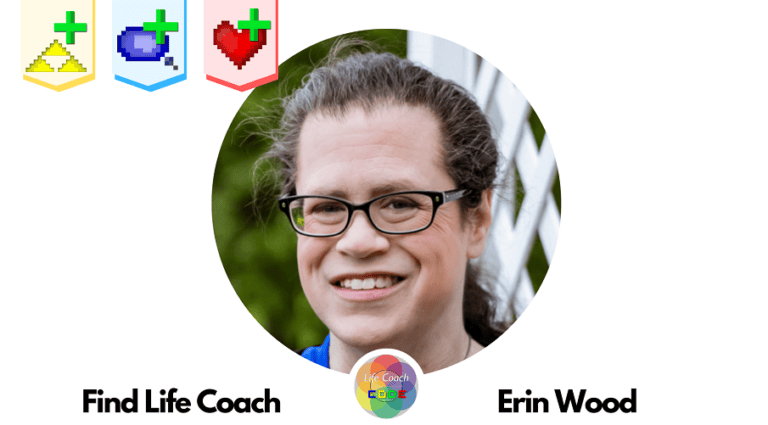
Erin Wood is one of the coaches that we found this month and we did a little interview with her. She impressed us with her honesty and strength of character.
She transitioned from mental health to coaching clients seeking to realize their fullest potential and their dreams in 2022. Armed with a psychology degree, a background in crisis work, undertaking a yearlong ontological life coaching training program through Accomplishment Coaching, and being a ICF certified coach, she founded her own business.
But that’s just the tip of the cake. Her life long transformational journey started when she was 16, she was diagnosed with debilitating chronic health conditions that plunged her into depression, anxiety, and a lack of self worth. When she was 33 she endured four strokes. But when she was in her lowest point, she showed a miraculous strength of character and instead of going down on the downward spiral and feeling sorry for herself she realized that she can choose happiness. But something was still missing.
It was not until January of 2022 when she realized that all that she was missing in her life was self love. Here is what she said.
Meet Life Coach Erin Wood:
Name: Erin Wood, ICF certified coach
Pillar: The Spirit, The Mind, The Heart
Who is this coach for: Anyone who wants to live up to their fullest potential, cultivate their ideal way of being, and make their dreams come true.
How they can help: Through various techniques and tools like active listening, asking powerful questions, reflection, and visualization just to name a few.
First of all, how are you and your family doing after these Pandemic times?
My husband and I are thriving right now.
We are both starting exciting new journeys.
He has just been accepted into Luther Seminary and has a dream of becoming a pastor.
I am an Ontological Life Coach and have started my coaching business Empower ME Coaching LLC.
We are on an exciting journey of personal and spiritual growth.
We are grateful for the presence of our two beloved rescue dogs, Pippin and Gracie Mae, who bring joy and companionship into our lives.
With hearts full of gratitude, we embrace this season of growth, love, and fulfillment.
How did the coronavirus pandemic affect your clients? Did it affect you at all?
The pandemic impacted my clients in diverse ways.
Some faced loss and grief, while others encountered challenges to their hope and faith.
Many experienced isolation and sought connection, while others dealt with fear and a sense of powerlessness.
Overwhelm and the desire for control were common themes, as well as the need for meaningful connections.
Through our work together, we navigate these challenges, fostering healing, resilience, and growth.
What are the biggest lessons that you learned in this pandemic?
The pandemic has been a profound teacher, imparting invaluable lessons that have shaped my perspective and transformed my life.
Firstly, it taught me the power of gratitude.
I developed a deep sense of appreciation for what I did have, recognizing the blessings and beauty in the ordinary moments of life.
Gratitude became a daily practice, helping me cultivate a positive outlook and find joy in even the simplest things.
Secondly, I discovered the true value of family and community.
During challenging times, my relationships with loved ones became even more precious.
I nurtured a stronger bond with my husband, cherishing each interaction as a precious gift.
We adapted to virtual connections and cherished outdoor visits, making each other a priority and deepening our connection.
Additionally, the pandemic led me to rediscover the beauty of life.
I reconnected with nature, finding solace and inspiration in its wonders.
I developed a newfound appreciation for the small, everyday miracles that I used to overlook.
This awakened a sense of awe and reverence, infusing my days with a renewed sense of wonder.
Lastly, the pandemic taught me the value of solitude and the importance of strengthening my relationship with God.
I embraced moments of being alone, using them as an opportunity for self reflection, introspection, and spiritual growth.
Through prayer, meditation, and deepening my faith, I found solace, guidance, and a profound connection to the divine.
In essence, the pandemic served as a catalyst for personal growth, teaching me to embrace gratitude, cherish relationships, appreciate the beauty in everyday life, and deepen my spiritual connection.
These lessons continue to shape my journey, allowing me to navigate life’s challenges with resilience, faith, and a greater sense of purpose.
The Origin:
Tell us about you, your career, how you started with your coaching career?
My coaching career emerged as a pivotal part of my transformative journey towards self love.
It traces back to my lifelong battle with chronic illness.
As a child, I thrived with health, happiness, and confidence, excelling in sports and academics.
However, at the age of 16, I received the diagnosis of debilitating chronic health conditions that plunged me into depression, anxiety, and a lack of self worth.
Although I never gave up, life became a constant struggle, overshadowing my dreams.
From age 16 to 38, I navigated life in survival mode, encountering numerous mountains to climb.
At 33, I even faced the challenge of enduring four strokes.
Yet, amidst my lowest point, a profound realization struck me, I consciously chose happiness.
I collaborated with both traditional and non traditional medical professionals, embarking on a journey of self care.
However, something was still missing.
In January 2022, during a New Year’s resolution to improve myself, I delved into personal development and had an epiphany.
I discovered that I lacked self love and belief in my deservingness of joy and success.
Becoming a personal development enthusiast, life began to flow effortlessly.
Rather than life happening to me, I became a conduit through which life flowed.
By prioritizing myself, I experienced incredible results, including an 89 pound weight loss that enhanced my overall health and I was able to think clearer like I did before my strokes.
My growing self belief allowed me to recognize the value I had to offer others.
Armed with a psychology degree and a background in crisis work, I chose to transition from mental health to coaching clients seeking their fullest potential and the pursuit of their dreams.
Undertaking a yearlong ontological life coaching training program through Accomplishment Coaching, I founded my own business.
Recently, I had the privilege of being a guest on three podcasts, where I shared my transformative journey.
I invite you to watch and join me in exploring the profound power of self love and personal growth.
What was your biggest obstacle that you had to overcome in your life that made you who you are today?
I transformed my biggest obstacle: myself.
I once struggled with self love, believing I wasn’t deserving of joy or success, and doubting my own value.
I identified as a chronically ill disabled woman, trapped in a victim mindset.
I let my health circumstances dictate my life, allowing things to happen to me.
But now, everything has changed.
I rediscovered self love and learned to get out of my own way.
I realized that prioritizing self care isn’t selfish, it’s a gift that enables me to help others without sacrificing myself.
I’ve become a different person.
By putting myself first, I embraced exercise and healthy eating, resulting in an 89 pound weight loss and newfound vitality.
I’ve never been healthier.
I now have the confidence to run my own business and openly share my story, inspiring others and empowering them to embark on their own transformative journeys.
Through my personal transformation, I’ve gained the ability to help others and contribute to the community without neglecting my own needs.
I’ve become a beacon of inspiration, radiating the message that change is possible and that self love is the catalyst for a fulfilling life.
The Coaching Style:
How do you innovate with coaching your clients?
One of the ways I innovate in coaching is by fostering a deep sense of trust and belief in my clients’ innate wisdom and capabilities.
I recognize that my clients are the experts of their own lives, and I approach coaching with the understanding that they have the inner resources and answers to reach their goals.
Creating a safe and supportive space, I encourage my clients to tap into their inner wisdom, intuition, and unique perspectives.
I facilitate their exploration of thoughts, feelings, and experiences, helping them gain insights and clarity on their goals and aspirations.
Through thought provoking questions, I prompt deep reflection and self discovery.
I challenge my clients to explore new perspectives, uncover limiting beliefs, and recognize their own strengths and resources.
Instead of imposing my own ideas or solutions, I empower my clients to take ownership of their journey and make decisions aligned with their values and aspirations.
I provide support as they navigate their path, respecting their autonomy and honoring their individuality.
By trusting my clients completely and honoring their inner wisdom, I create a partnership based on collaboration and empowerment.
This approach allows my clients to develop self confidence, make meaningful progress, and ultimately achieve their desired outcomes in an authentic and sustainable way.
What’s unique about your coaching approach?
I look at you as whole and complete, with all the answers within.
You are the expert in your life.
I am there to walk alongside you as your champion asking thought provoking questions to evoke awareness and hold a mirror so you can see the reflection of the greatness of who you are.
Ontology, the study of being, forms the foundation of my coaching approach.
I focus on supporting you in cultivating your way of being.
Your way of being encompasses how you communicate, behave, and interact with the world around you.
It encompasses your perceptions, attitudes, and beliefs that may often operate at a subconscious level.
Through our coaching journey, we explore and bring awareness to these underlying aspects of your way of being.
We delve into the patterns, habits, and thought processes that shape your actions and responses.
By shedding light on these unconscious aspects, we can uncover opportunities for growth, transformation, and personal development.
Together, we work on aligning your way of being with your goals, values, and aspirations.
We explore how your perceptions and attitudes influence your experiences and choices.
Through targeted interventions and exercises, we create space for new perspectives, empowering beliefs, and conscious behaviors to emerge.
By elevating your awareness of your way of being, you gain greater clarity, authenticity, and purpose in your life.
You become more intentional in your communication, interactions, and decision making.
This deep exploration of your being allows for meaningful personal and professional transformations to take place.
Ultimately, my coaching approach revolves around the understanding that by consciously shaping your way of being, you can unlock your full potential, enhance your relationships, and create a more fulfilling and aligned life.
What benefits do your clients get after working with you?
Working with me as their coach, my clients experience a profound transformation that touches every aspect of their lives.
Through our journey together, they gain a deep sense of self awareness and a newfound understanding of who they truly are at their core.
Together, we embark on a co creative process, crafting a personalized plan of action that empowers them to navigate their desired path and become the person they aspire to be.
This plan encompasses not only their goals and aspirations but also the alignment of their actions with their values and purpose.
One of the most profound shifts my clients experience is in their relationship with themselves.
They learn to cultivate a genuine and unwavering love for themselves, embracing their worthiness and acknowledging that they deserve to lead rich, fulfilling, and meaningful lives.
Through this self love, they shed the limiting beliefs that once held them back, freeing themselves from the constraints of self doubt and self sabotage.
A pivotal realization for my clients is that the primary obstacle standing in their way is often their own limiting beliefs and self imposed limitations.
Together, we explore these beliefs, challenging their validity and empowering my clients to rewrite their narratives with empowering and supportive beliefs.
A cornerstone of our work together is the power of self care.
My clients learn the invaluable lesson of prioritizing their own well being and making themselves a priority.
They discover that by nurturing and caring for themselves first, they cultivate the energy and resilience necessary to care for others authentically and wholeheartedly.
Through self care practices tailored to their unique needs, my clients embrace self compassion, self nurturing, and self replenishment as essential components of their daily lives.
As my clients embark on this transformative journey, they discover a newfound sense of empowerment, confidence, and clarity.
They awaken to their own potential, stepping into their authentic power and embracing the endless possibilities that await them.
With each milestone they reach and each belief they shift, they become the architects of their own destiny, shaping a life that aligns with their deepest desires and aspirations.
Ultimately, the benefits my clients receive from working with me extend far beyond the coaching sessions themselves.
They experience a profound shift in their perspective, creating a ripple effect that touches their relationships, careers, personal growth, and overall well being.
They become agents of change, embodying their authentic selves and inspiring others to embark on their own transformative journeys.
In the words of my clients:
“Erin helped me look at life differently, from resigned to thriving. She encouraged self awareness, self care, and self love. Now, I see myself as open to possibilities.”
“Erin has helped me make great changes in my life. She recognized my strengths and helped me focus on my goals. I highly recommend her coaching and empowerment tools.”
“I have been meeting with Erin for about 2 months now, and I have made positive changes in my personal and work life. She assisted me with setting achievable goals that have allowed me to become more organized, energetic, and confident in making difficult changes. I am so happy that I found Erin to help coach me through this part of my life, and I recommend her to everyone.”
“Erin Wood has been a great life coach for me! I have worked with her for 6 months now. She is upbeat, friendly, encouraging, creative, and wise. I have made progress towards my goals and now feel empowered and confident in achieving them. I would highly recommend Erin as a Life Coach!”
These testimonials from my clients further illustrate the transformative benefits they have experienced through our coaching journey together.
Do you use any specific tools to be efficient with your clients?
When it comes to efficiency in working with my clients, I employ a range of powerful tools that facilitate their growth and transformation.
First and foremost, active listening is a foundational tool I utilize.
By giving my full attention and genuinely hearing what my clients are expressing, I create a safe space for them to explore their thoughts, emotions, and aspirations.
Through active listening, I am able to understand their unique perspectives and gain valuable insights into their inner world.
Additionally, I employ the art of asking powerful questions.
These thought provoking inquiries help my clients delve deeper into their foundational beliefs, values, and desires.
By challenging their assumptions and encouraging them to explore new possibilities, powerful questions ignite self reflection and facilitate transformative insights.
Another valuable tool in my toolbox is reflection.
I skillfully reflect my clients’ words back to them, allowing them to hear their own thoughts and gain fresh perspectives.
This process fosters self awareness, as clients often discover hidden insights and unlock their own wisdom.
In addition to these foundational tools, I have specific tools designed to enhance self discovery and personal growth.
One such tool is focused on uncovering the essence of who my clients are and how they are perceived by the world around them.
This deepens their understanding of their authentic selves and helps align their actions with their true identity.
Another tool centers around identifying self protection mechanisms that may be hindering personal growth and self expression.
By recognizing these patterns, clients can consciously release them and embrace their vulnerability and authenticity.
One of my favorite tools involves a powerful exercise where clients envision themselves already living their dream and embodying the person they aspire to be.
Together, we create a reverse timeline, mapping out the milestones they need to achieve to manifest that future self.
This tool provides clarity, direction, and actionable steps towards their desired transformation.
By employing these various tools, I strive to make our coaching sessions efficient and impactful.
Each tool is tailored to the unique needs and goals of my clients, allowing them to gain self awareness, overcome limitations, and ultimately create profound shifts in their lives.
The Impact:
If you had a super megaphone that, when you speak into, the whole world will hear your message, what would you say?
With the super megaphone amplifying my message to the world, I would share these empowering words:
In a world filled with noise and distractions, let us find solace within ourselves.
Be kind and gentle with your thoughts, for they shape your reality.
Embrace the greatness that resides within each and every one of us.
Believe in our potential, our unique talents, and the incredible contributions we can make to this world.
Too often, we underestimate the power of our own self talk.
We criticize, doubt, and belittle ourselves, unknowingly holding ourselves back from reaching our true potential.
But today, let us be our own champions.
Speak words of encouragement, support, and love to ourselves.
Celebrate our successes, no matter how small, and learn from our failures, seeing them as stepping stones to growth.
To truly unlock the magic of our dreams, we must step out of our comfort zones and venture into the unknown.
It is in those uncharted territories that the seeds of possibility are sown.
Let us embrace the exhilarating feeling of uncertainty, for it is a sign that we are expanding, growing, and evolving.
Take risks, pursue passions, and trust in our ability to overcome challenges along the way.
What is the greatest lesson you have learned in your life?
The power of self love has been an incredible revelation in my life, profoundly transforming my journey.
Embracing self love has had a cascading effect on every aspect of my being.
As I started to cultivate love and acceptance for myself, I witnessed a remarkable shift in my confidence and self perception.
Gone were the days of doubt and self criticism, replaced by a deep sense of worthiness and a recognition of the unique gifts and talents I possessed.
Through the lens of self love, I began to see myself as a vessel of immense value, with boundless potential waiting to be unleashed.
This newfound self assurance propelled me forward, empowering me to step into my purpose and share my authentic self with the world.
I discovered that by nurturing self love, I not only elevated my own well being but also became a source of inspiration and empowerment for others.
With each step I took on my journey of self love, I realized that I held the key to unlocking my fullest potential.
It became clear to me that self love was not merely a fleeting emotion but a profound choice to honor and cherish myself unconditionally.
Through self love, I discovered the courage to break free from self imposed limitations and step into the light of my true essence.
I embarked on a path of self discovery, embracing my strengths, acknowledging my weaknesses, and celebrating the beautiful imperfections that make me who I am.
The power of self love has not only transformed my relationship with myself but also how I interact with the world.
It has allowed me to show up authentically, radiating love and compassion towards others, and creating a ripple effect of positivity and empowerment.
As I continue to deepen my practice of self love, I am reminded of the infinite wellspring of love that resides within me.
It is a constant reminder to honor my needs, nurture my soul, and embark on a lifelong journey of self discovery and growth.
I am forever grateful for the profound impact that self love has had on my life, as it continues to guide me on a path of purpose, joy, and limitless possibilities.
Your final thoughts?
My final thoughts revolve around the power of choice and personal responsibility.
You hold the key to making powerful choices and taking ownership of your actions, fully embracing the consequences that follow.
By authentically showing up and taking decisive action, you can actively create the life you desire.
Remember, the time is now to stand for yourself and step into your personal power.
Additionally, personal growth is a lifelong journey that often requires stepping out of your comfort zone.
It may feel uncomfortable at times, but the rewards are immeasurable.
It’s not only about acquiring knowledge through reading and learning, it’s about integrating that knowledge into your daily life and taking action.
Embrace the discomfort and allow it to propel you forward on your transformative journey of personal growth.
Where Can You Find Erin Wood?
If you liked this interview and you would love to live up to your full potential, go to empowermecoachingllc.com and see how Erin can help you do that.
You can listen to few of her interviews and podcasts here:
If you’d like to connect more personally with her, you can do that through Facebook, Instagram, and LinkedIn account, or by sending her a message on her Email [email protected]. It was an honor having this interview with her.
Since the Industrial Revolution, humans have continued using their ingenuity to improve manufacturing processes.
That involves creating better and more efficient machines.
These machines and the individuals running them can make better products faster than they could have dreamed of a few hundred years ago.
While global manufacturing has further demonstrated humanity’s capabilities, it has raised concerns that weren’t much on our minds in previous centuries.
Things like contract manufacturing on a global scale mean more and better products are produced faster and more efficiently.
However, with global manufacturing also comes potentially catastrophic damage to the planet.
The Role of Sustainability In Today’s World:
The Risks Involved with Global Manufacturing.
Humans were only aware of pollution and environmental contamination in theory if you go back a couple of hundred years.
They were able to imagine that factories with massive carbon emissions would harm the environment eventually.
They didn’t know how fast that contamination would occur or the seriousness of the damage that might accompany it, though.
When humans became aware of the polar ice caps melting and massive holes in the ozone layer, that was certainly enough to get their attention.
This was especially true when the leading scientists started bringing back undeniable evidence that these things were happening.
A Change in Our Attitude.
Just because more people began realizing that polluting the planet was bad, though, that did not necessarily mean everyone agreed on what to do about it.
Entities like the EPA were created to keep an eye on the biggest polluters, which, unsurprisingly, were giant corporations.
The more massive the scale of production of various products, the more carbon emissions there were, and the more resources were used.
The good news, even decades ago, was that once we became more aware of the effects of wide scale production, we were able to come up with some possible solutions that could be implemented.
Large Scale Production Must Take Sustainability into Account.
In 2023, any of the largest corporations must try to be respectful of environmental regulations that have been put in place for the planet’s preservation.
That’s sometimes challenging, but it’s also necessary.
Wherever a large corporation is operating in the world, and regardless of what it’s making, it needs to act with sustainability in mind.
That involves initiatives like planting trees to replace the ones it cuts down.
It requires water purification if rivers and lakes are ever contaminated.
The most ethical companies have entire divisions and are devoting millions of dollars every year to preserving the natural resources that are necessary for production.
It can be a delicate balancing act, but it’s undeniably worthwhile.
In addition to carbon emissions, the largest and most successful corporations must be aware of modern worries that didn’t exist hundreds of years ago, such as microplastics.
They must be mindful of the destruction of rainforests, animal and plant species potentially dying out, and similar events that can occur if they’re careless or reckless.
It’s doable, and it’s up to every successful company to find workable solutions to this ongoing concern.
A bachelor’s degree does not mean a sufficient goal in today’s competitive world.
Having a master’s degree increases one’s chances of career and professional success because of high knowledge acquisition.
Basically, people should get a master’s degree because it helps to secure their career, allows them to fulfill certain job requirements, and sets them up for personal and professional development.
Moreover, online tutoring and writing centers offer people with master’s degree opportunities to work as tutors for students from various schools and disciplines.
5 Main Reasons Why People Should Get a Master‘s Degree:
1. Securing One‘s Career.
In the modern world, where a majority of people have an undergraduate degree, getting a graduate or master’s degree is one way of enhancing one’s competitive advantages in the labor market.
Based on this data, one can predict that occupations requiring a master’s degree will continue to increase.
Therefore, getting a master’s degree is one way of ensuring one is qualified for the highest number of jobs on offer.
2. Meeting Necessary Requirements.
Although having a bachelor’s degree is a great step in qualifying for jobs, some positions require a master’s degree as a minimum.
These positions include upper level management.
Therefore, getting a master’s degree enhances one’s qualifications for ‘climbing’ the career ladder.
Besides, by the end of 2022, the number of jobs requiring a master’s degree will increase by approximately 18.2 percent relative to the 2012 data.
To put it simply, getting a master’s degree is one way of ensuring that a modern person is employable.
3. Shaping Personal Development.
Besides growing deeper in education and knowledge, a master’s degree ensures that one can contribute beyond the college environment.
While getting a bachelor’s degree is mainly an outcome of the standard academic journey, attaining a master’s degree is primarily a personal initiative and commitment.
In today’s job market, where competition requires initiative and commitment, getting a master’s degree is one way of developing one’s leadership qualities.
4. Considering Professional Development.
Undoubtedly, pursuing education beyond the undergraduate level is crucial to one’s professional development.
Today, many private, public, and nongovernmental careers require a master’s degree and beyond.
A report made by the U.S. Census Bureau indicates the average annual salary of individuals aged between 21 and 64 with a master’s degree at minimum is approximately $55,200.
Those with an undergraduate degree as the highest qualification earn about $42,800.
Therefore, a master’s degree is a ladder to professional growth.
5. Tutoring and Writing Centers.
With competition being a present issue in the global labor market, individuals must enhance their competitive advantages.
Obtaining a master’s degree is a legit way of ensuring that one is employable based on the above evidence showing the number of jobs requiring a master’s degree to be increasing.
One occupation that has proven to be in high demand for graduate students is online learning.
Wr1ter.com, being a legit writing service, offers academic support to students who are interested in writing original content.
What You Should Remember?
In conclusion, getting a master’s degree is how individuals can increase their chances of getting employed in today’s competitive labor market.
Some of the advantages of getting a master’s degree include securing one’s career, fulfilling specific job requirements, and growing personally and professionally.
The increasing popularity of online tutoring and writing centers is driven by the availability of graduate students who work as tutors for students in need of academic support.
Aiste Dromantaite is one of the coaches that we found this month and we did a little interview with her. She impressed us with her unique coaching style and expertise.
She became interested in coaching while studying in her PhD program and attending Organizational Behavior lectures for undergraduate students.
She had the opportunity to attend a business event where three different coaching specialists presented their methods. After listening to their recommendations, she chose the NovaTerra coaching program at a Belgian school. Upon completing the training program, she joined the ICF Lithuania chapter to learn from experienced coaches and be closer to the coaching community. She became a member of the board of the ICF Lithuania chapter, then the director (2014 to 2019), and later the president (2017 to 2018).
She created a master’s degree program in coaching because she wanted to offer coaching as a professional service to others. Currently, coaching is a subject at Mykolas Romeris University, and she works with a coaching program at a private institute called iGrow. One of the biggest obstacles in her life is the fact that she is half deaf. Here is what she said.
Meet Life Coach Aiste Dromantaite:
Name: Aiste Dromantaite
Pillar: The Spirit, The Mind
Who is this coach for: Managers to improve their relationships with teams and to develop personal behaviors that allow them to reach results and improve organizational culture. Anyone who wants to find inner peace, strong support to make certain decisions and a way to move forward.
How they can help: By using few principles of Gestalt psychotherapy, such as experiments, the chair, the “here and now” moment, and the paradoxical theory of change, just to name a few. Also, DeepLead program for managers to improve their relationships with teams
First of all, how are you and your family doing after these Pandemic times?
My family and I tried to recover after the first year of the pandemic and find a way how and what to do, where to work, how to balance various responsibilities for both of us with husband at home and at work.
My husband works in the public sector, there were no sudden changes for him during pandemic.
But it was more difficult time for me personally, I lost my job due to the impact of the pandemic on the organization, during the summer of the pandemic, no one was sure about work market, so there were no selections for other job positions.
Finally, at the end of the summer, I managed to get a professional job with an organization, but I rushed to work so hard for fear of financial instability again that I simply burned myself out.
Of course, the situation of the pandemic itself contributed to the burnout, especially the uncertainty and stagnation in activities, and later the war in Ukraine also knocked out the foundation from under the feet.
Lately, I’ve been trying to “hook on” to a full time job, as it’s an opportunity to have some financial stability and support while raising children and practicing alongside it all.
So, only after a few years of such an imbalance, I am slowly returning to the track of activity and life with a certain positivity.
How does the coronavirus pandemic affect your clients? Did it affect you at all?
Yes, it affected both me and my clients but differently.
Some of them refused to have live consultations and training until there will be more clarity, others refused online meetings, many were not sure about their income and ability to afford it, others moved to online and kept the meetings until now.
Everyone reacted differently and I think that’s a natural reaction for everyone.
I myself, at the beginning of the pandemic, “froze” and was just observing what was going on in the world, in my country, and with others.
But after a short time, I started to volunteer to provide free help for other people experiencing difficulties during the pandemic. Together with other specialists and initiatives, I actively involved in educating people on how to cope with stressful situations both in organizations and as individuals.
I shared various supportive content and participated in interviews to speak about the crisis.
One interview that was especially supportive for me was the one I did with Prof. Verena Kast and Stefano Carpani, which I highly recommend to everybody.
What are the biggest lessons that you learned in this pandemic?
That friends are in unexpected places and that support and conversations are a great gift for me.
We have the possibility to appreciate such everyday things that we normally consider insignificant, such as playing board games with children, going for walks, paying attention to loved ones, being able to go to a movie or a cafe, traveling and visiting friends and relatives…
Perhaps the biggest lesson is about life, that the most beautiful things are quite simple, only we have learned to take them for granted and no longer know how to enjoy them.
The most beautiful life is the one we live and we are enjoying.
The pandemic situation was a good pause for all of us, I believe, to check our lives and values.
The Origin:
Tell us about you, your career, how you started with your coaching career?
I became interested in coaching while studying in my PhD program and attending Organizational Behavior lectures for undergraduate students.
While researching leadership, I discovered the concept of coaching in scientific literature, which interested me and led me to explore it further.
Coincidentally, I had the opportunity to attend a business event where three different coaching specialists presented their methods.
After listening to their recommendations, I chose to enroll in the NovaTerra coaching program at a Belgian school.
Upon completing the training program, I joined the ICF Lithuania chapter to learn from experienced coaches and be closer to the coaching community.
Eventually, I became a member of the board of the ICF Lithuania chapter, then the director (2014 to 2019), and later the president (2017 to 2018).
In addition to my membership in the association and work at the university, I created a master’s degree program in coaching because I wanted to offer coaching as a professional service to others.
Currently, coaching is a subject at Mykolas Romeris University, and I work with a coaching program at a private institute called iGrow.
I also continue to consult in cooperation with the Modern Health company.
What was your biggest obstacle that you had to overcome in your life that made you who you are today?
Probably many things on the path of life have had a role in my own transformation, but the most prominent would be my first marriage, the birth of a daughter, and divorce after almost ten years of living together, my second marriage and children, the path of my PhD, and the defense of my PhD degree.
Also transformational were my Gestalt psychotherapy studies. Burnout and depression I had during these years.
And the most important thing, because I am half deaf and this is increasing, I never give up and go forward to pursue my dreams without strongly and decisively tying myself to the disease.
The disease is not me, I control it.
Winning the battle against myself, I think, is one of the biggest challenges in my life, and I think it is very important and significant.
Each of us fights that battle every day, sometimes winning and sometimes losing.
I would like and aim to win more often than to lose.
The Coaching Style:
What’s unique about your coaching approach?
Throughout my many years of experience in my coaching career, I have always looked for something that would provide value for my clients.
Therefore, I have discovered several tools that I work with and trust, because I know that they provide that value.
One such tool is for career questions to be solved, allowing customers to personalize their results.
These tools are scientifically validated, and their structure allows me to cater to each client individually and provide results specific to them.
Another tool is for managers who want to improve relationships with team members and create a cohesive organizational culture.
This is not a short term project, as it requires commitment and patience, but the results are permanent, providing the biggest value for all team members.
Lastly, general consultations allow me to accept the client holistically and prioritize their importance to me.
Together, we explore the field of experiments to discover new possibilities that help them achieve their goals.
What benefits do your clients get after working with you?
This question would probably be best answered by my clients, not me.
However, if you are already asking, many respond after the meetings that, after the conversations, they find inner peace, discover the possibility to move forward, make certain decisions for themselves, feel strong support from me, and find certain answers about what and how to do.
Do you use any specific tools to be efficient with your clients?
Yes, I do.
I work with the Multiple Natures and EgoCompass systems to solve career issues.
I use the DeepLead program for managers to improve their relationships with teams and to develop personal behaviors that allow them to reach results and improve organizational culture.
Additionally, I use some principles of Gestalt psychotherapy, such as experiments, the chair, the “here and now” moment, and the paradoxical theory of change for better self awareness and creating a stronger relationship with ourselves.
These principles help me understand much more clearly what I want in life, why, and how I can achieve it.
The Impact:
If you had a super megaphone that, when you speak into, the whole world will hear your message, what would you say?
Create connections, relationships, love yourself, and live a meaningful life. Create everything with humor because laughter is the best medicine for all diseases!
Discover your inner child and, sometimes, run out and splash in the puddles.
What is the greatest lesson you have learned in your life?
There have been various situations in life that have sometimes not been very pleasant.
Therefore, the strongest and greatest lessons are those that have allowed me to develop patience and trust in other people, especially those closest to me, or to find friends where I didn’t even expect them to be.
I have gained the ability to discover various other sides of myself that give me strength and an understanding that I should still be myself.
I should be my own best friend, not my enemy or critic.
What I have learned the most is the relationship with myself, which I think is the most important because it is the basis on which we build all other relationships in life.
We have one body of our own, which, when betrayed, is too painful and too expensive to heal.
Therefore, balance in life is very important in everything. For me, life is an effort to create that balance and to help clients do the same.
Your final thoughts?
I want to wish both for myself and others to be gentler with ourselves, to allow more acceptance of the help of others, to use the power of open and careful conversations to consistently achieve the goals set, to find a discipline that is acceptable to myself, to devote beautiful time to myself and loved ones, and the strength to support myself in difficult moments.
Success comes by taking one small step every day, no matter how much you want everything now or tomorrow, everything needs patience and time, we can climb Machu Picchu mountain only by taking one step up at a time.
So breathe in, breathe out, and let’s move forward at our own pace.
Where Can You Find Aiste Dromantaite?
If you liked this interview and you would love to see how Aiste can help you, go to www.sprendimu.link. The website is only in her native language, Lithuanian, but you can translate it with Google if you are interested.
Here is a podcast where you can find more about her coaching (it’s also on Lithuanian so use subtitles):
If you’d want to see a glimpse of her coaching, follow her Facebook and Instagram accounts.
If you like to connect more personally with her, we suggest doing that through LinkedIn or by sending her a message on her Email [email protected]. It was an honor having this interview with her.
Tom Perkins is one of the coaches that we found this month and we did a little interview with him. He impressed us with his clarity and wisdom.
He is a Navy veteran with a degree in Business Management Accounting, with a minor in Business Software Applications.
He became certified as a Life Strategies Coach, Personal Trainer and Fitness Nutritionist in 2003. He was living in Thailand from age 10 to 13 and he adopted a more Eastern approach to medicine. This is where his unique approach comes from.
He is helping people gain clarity, overcome fears and self doubts, and reach their goals effortlessly. With his upbeat, animated, witty and funny personality coupled with perpetual optimism he brings a unique coaching approach to his clients. Here is what he said.
Meet Life Coach Tom Perkins:
Name: Tom Perkins
Pillar: The Mind
Who is this coach for: Anyone who wants to find clarity, overcome their fears and doubts, and reach their goals effortlessly.
How they can help: Through a 5 step process, and by using various tools and techniques like Wheel of Life and other assessments.
First of all, how are you and your family doing after these Pandemic times?
Everyone is doing great and better than before the Pandemic started.
How did the coronavirus pandemic affect your clients? Did it affect you at all?
Everyone was affected by the pandemic.
I would say uncertainty being the top fear.
Over time and three years into the pandemic life has started to level out again for all.
The pandemic affected me in many ways.
A seven year relationship ended a month into the pandemic.
My world was tossed upside and I had to recreate myself.
What are the biggest lessons that you learned in this pandemic?
Cherish each day and make the best of where I am at in life.
The Origin:
Tell us about you, your career, how you started with your coaching career?
I am a Navy veteran with a degree in Business Management Accounting, with a minor in Business Software Applications.
I have been self employed since 1990 primarily as a business coach or consultant.
In 2003 I became certified as a Life Strategies Coach, Personal Trainer and Fitness Nutritionist.
I have always believed and chose first eastern philosophy and medicine over western when applicable. Probably due to living in Thailand from age 10 to 13.
This is where my unique approach was born.
What was your biggest obstacle that you had to overcome in your life that made you who you are today?
Overcoming low self esteem.
The Coaching Style:
How do you innovate with coaching your clients?
Being a voracious researcher, I am always searching for what’s out there in a plethora of areas.
With an upbeat, animated, witty and funny personality coupled with perpetual optimism I bring a lot to the table for my clients.
What’s unique about your coaching approach?
Making life strategies coaching a portion of my business coaching practice via 5 step process.
What benefits do your clients get after working with you?
Tom guides, mentors and transforms his clients by:
1. Clarifying their direction which keeps them clear and focused on their goals and direction.
2. Strategizing their actions so they always know exactly what they need week in and week out to achieve their goals.
3. Upgrading their skills, so that they can carry out their plan with confidence and certainty.
4. Optimizing their environment, so that there are less distractions and achieving their goals becomes effortless.
5. Mastering their psychology so they can overcome any fears, doubts, limiting beliefs, or insecurities that might be holding them and or their business back.
Do you use any specific tools to be efficient with your clients?
Wheel of life and other assessments.
The Impact:
If you had a super megaphone that, when you speak into, the whole world will hear your message, what would you say?
Live and experience life to the fullest early on as life is short and one never knows how long they will be in this realm.
What is the greatest lesson you have learned in your life?
Go for your dreams, never give up, have goals, save money early on, find a life partner early if possible, invest in real estate, traveling is the best form of education.
Your final thoughts?
From Howard W. Hunter, American lawyer:
End a quarrel.
Seek out a forgotten friend.
Dismiss suspicion and replace it with trust.
Write a letter.
Give a soft answer.
Encourage youth.
Manifest your loyalty in word and deed.
Keep a promise.
Forgo a grudge.
Forgive an enemy.
Apologize.
Try to understand.
Examine your demands on others.
Think first of someone else.
Be kind.
Be gentle.
Laugh a little more.
Express your gratitude.
Welcome a stranger.
Gladden the heart of a child.
Take pleasure in the beauty and wonder of the earth.
Speak your love and then speak it again.
Where Can You Find Tom Perkins?
If you liked this interview and if you would love to see how Tom can help you find clarity and reach your goals effortlessly, connect with him on LinkedIn and discover your next step in your journey. It was an honor having this interview with him.
Choosing the perfect gemstone for an engagement ring is an incredibly important decision.
The gemstone you select not only represents your commitment and love, but it also holds deep symbolic meaning.
While traditional diamond engagement rings have long been the standard, many couples today are seeking unique and meaningful alternatives.
One gemstone that has captivated hearts throughout history and stands out as a timeless choice is the exquisite blue sapphire.
Blue sapphire, with its enchanting hue and mesmerizing beauty, has been cherished for centuries as a symbol of nobility, elegance, and romance.
From ancient civilizations to modern times, this magnificent gemstone has adorned the fingers of royalty, celebrities, and individuals seeking a statement piece that transcends fashion trends.
This article will delve into the reasons why natural neelam stone is considered the best gemstone for an engagement ring, exploring its rich history, inherent qualities, and enduring allure.
7 Reasons Why Blue Sapphire Is the Best Gemstone for Engagement:
1. Rich History and Cultural Significance.
The stone has an illustrious history that dates back thousands of years. It has been revered by numerous civilizations across the globe, including ancient Persia, Greece, Rome, and India.
In Indian mythology, sapphires were believed to protect wearers from envy and harm, while in medieval Europe, they were associated with divine favor and heavenly blessings.
Such historical and cultural associations only add to the allure and significance of blue sapphire as a choice for an engagement ring.
At stores like GemPundit, you can find a vivid variety that never fails to impress with their classy yet understated designs, perfect for all occasions.
2. Exceptional Beauty and Durability.
Blue sapphires are renowned for their striking blue color, which ranges from deep midnight blue to vibrant cornflower blue.
This captivating hue exudes a sense of tranquility, wisdom, and serenity, making it a perfect representation of the love and commitment shared between two individuals embarking on a lifelong journey together.
Additionally, sapphires possess excellent durability, ranking at 9, just below diamonds on the Mohs scale of mineral hardness.
This high level of hardness ensures that sapphires are resistant to scratches, making them ideal for everyday wear, and guaranteeing that the gemstone will retain its beauty and brilliance for generations to come.
3. Symbolism and Emotional Significance.
Beyond their physical beauty, blue sapphires are deeply symbolic and carry emotional significance.
The color blue has long been associated with loyalty, fidelity, and sincerity, qualities that are fundamental to a successful and enduring marriage.
Natural Blue sapphire rings serve as a constant reminder of the promises made, symbolizing the eternal bond and trust between partners.
Moreover, the alluring blue shade is often associated with the heavens, evoking a sense of spirituality and cosmic connection, which can add an extra layer of depth and meaning to the engagement ring.
4. Unique and Personal Expression.
In a world where individuality and self expression are highly valued, blue sapphire engagement rings offer a distinctive alternative to the traditional diamond solitaire.
With their exceptional color and timeless elegance, they allow couples to showcase their unique style and preferences, standing out from the crowd while preserving a sense of classic beauty.
Whether set in a vintage inspired design, a sleek modern setting, or combined with other gemstones, natural neelam stone lend themselves perfectly to customization, ensuring that each engagement ring becomes a one of a kind expression of love.
5. Versatility of Blue Sapphire for Various Designs and Settings.
Blue sapphire complements a wide range of metals, including white gold, yellow gold, rose gold, and platinum, allowing you to create a ring that perfectly matches your personal style and preference.
The stone can be incorporated into various engagement ring designs, from traditional solitaires to intricate halo settings, three stone rings, or even as accent stones alongside diamonds or other colored gemstones.
The versatility of blue sapphire ensures that you can create a truly unique and customized engagement ring that reflects your individuality and captures your love story in a visually stunning way.
6. Popularity Among Famous Personalities.
Blue sapphire has garnered significant attention and adoration from renowned personalities, adding to its desirability and allure.
Numerous celebrities and public figures have opted for blue sapphire engagement rings, making a bold statement with their choice.
One of the most famous blue sapphire engagement rings belongs to Kate Middleton, now Catherine, Duchess of Cambridge.
Her stunning sapphire and diamond ring, previously worn by Princess Diana, catapulted blue sapphire into the spotlight and sparked a global trend for sapphire engagement rings.
7. Timeless Investment and Value Retention.
There are many rare gemstones, but one more compelling reason to choose a blue sapphire for an engagement ring is its status as a timeless investment and its ability to retain its value over time.
The enduring and evergeen popularity of blue sapphire engagement rings, especially those of exceptional quality and craftsmanship, ensures that they remain a sought after choice for generations to come.
As a gemstone known for its durability and long lasting beauty, a blue sapphire engagement ring can be seen as a valuable asset that can be passed down as a treasured heirloom.
What You Should Remember?
Gemstones are proven to have many qualities. Some gemstones can boost your mood and others can boost your social status.
The deep blue radiance of blue sapphire has the power to enchant and captivate, creating a symbol of enduring love and commitment that will stand the test of time.
When buying a blue sapphire, seek out a reputable jeweler who specializes in gemstones and has customization option to suit your needs.
Additionally, look for certifications and gemological reports to ensure the authenticity and quality of the stone.
Consider the stone’s color, clarity, cut, and carat weight to find a stone that meets your preferences and budget.