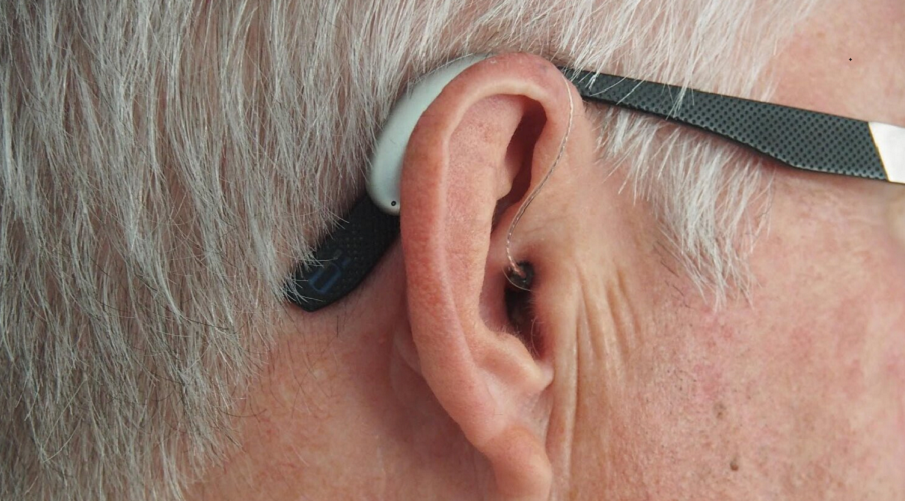
However, their small size may limit the inclusion of advanced technologies and they may be susceptible to moisture or wax accumulation.
4. ITC and CIC Hearing Aids.
These devices are extremely small and fit into the ear canal.
The extent to which they do depends on which style is selected.
ITC devices sit in the lower portion of the outer ear canal, while CIC devices are the smallest and sit deeper inside the ear canal.
They are almost invisible and reduce wind noise, but they are also limited in features.
5. Extended Wear Hearing Aids.
Extended wear hearing aids are an innovative option that allows users to wear the device continuously for several months without removal.
These aids are inserted deep into the ear canal by a professional and can be worn while showering, exercising, or sleeping.
Extended wear hearing aids provide natural sound and eliminate the need for daily insertion and removal.
However, they may not be suitable for everyone, and follow up appointments are necessary to ensure optimal performance.
6. BAHA Hearing Aids.
BAHA devices are suitable for individuals with conductive hearing loss or single sided deafness.
They work by transmitting sound vibrations through the skull bone directly to the inner ear.
BAHA devices consist of a small implant surgically placed behind the ear, which attaches to an external sound processor.
They offer excellent sound quality and are beneficial for those with specific hearing conditions.
However, they require a surgical procedure for implant placement.
How to Choose the Right Hearing Aid?
When selecting a hearing aid, several factors should be considered.
These include the degree and type of hearing loss, lifestyle requirements, cosmetic preferences, dexterity, budget, and any additional features required.
It is crucial to consult with a qualified audiologist who can conduct a thorough assessment and provide personalized recommendations based on individual needs.
Choosing the right hearing aid is essential to regain and improve one’s hearing abilities.
The decline of someone’s hearing abilities can have a direct effect on many aspects of the individual’s life, even to their mental health.
Understanding the different types of hearing aids available, along with their respective advantages and limitations, is crucial in making an informed decision.
With the right hearing aid, one can enjoy a better quality of life, reconnect with loved ones, and actively engage in the world around them.
Annet de Zwart is one of the coaches that we found this month and we did a little interview with her. She impressed us with her expertise and experience.
She is a highly dedicated coach with a passion for empowering others. Embracing her uniqueness as a Highly Sensitive Person (HSP), Annet believes that everyone has exceptional qualities. Her coaching journey began after completing her training at iPEC, a renowned coaching institute in the USA and Europe. Returning to the Netherlands, she found her calling in coaching HSPs, focusing on areas like boundaries, self care, burnout, and stress management.
She is committed to continuous growth, as it is evident in her PCC credential from the International Coaching Federation, backed by over 500 hours of coaching experience. She equips herself with diverse tools to address the unique challenges faced by HSPs. As a highly sensitive individual herself, she empathizes with her clients’ struggles and emphasizes the importance of self-care and authenticity.
Her coaching approach revolves around embracing challenges as opportunities for growth. Guiding clients to discover their desires and align actions with core values, she helps them experience increased happiness, reduced stress, and improved focus. Here is what she said.
Meet Life Coach Annet de Zwart:
Name: Annet de Zwart
Pillar: The Mind, The Heart
Who is this coach for: Highly Sensitive Persons (HSP’s) who want to find clarity, learn how to take care of themselves better so they can unleash their true power and live happier lives.
How they can help: By using Positive Intelligence, as well as other various tools and techniques.
First of all, how are you and your family doing after these Pandemic times?
We are doing fine, so happy everything is back to a new normal.
Things have obviously changed, I feel everyone became more aware of our vulnerability, which has made me work more actively on my health.
Working out more and eating healthier.
How did the coronavirus pandemic affect your clients? Did it affect you at all?
In my coaching I find that the pandemic has opened up the willingness to work online more.
At the start of my career as a coach I always worked via phone and in person, but the last five year more and more via Zoom or other online meeting platforms.
I am happy that people are more open to online coaching because I think it does not influence the results you can get from coaching and it saves so much travel time.
And you get to find that specific coach you really want to work with instead of having limited choice in your area.
For me personally it means I work more alone, and I have learned to also find balance in this by actively seeking more contact with colleagues and friends so I also have enough joy and fun in my life.
What are the biggest lessons that you learned in this pandemic?
The pandemic has taught me that there is a big world outside, in which so many great people live, and I’ve gotten to meet so many of them that I wouldn’t have met otherwise.
People and information became even more accessible than they were before.
The Origin:
Tell us about you, your career, how you started with your coaching career?
I started coaching career after doing my training at iPEC (one of the best coaching institutes in the USA and Europe, according to several studies, among one done by Forbes).
I was living in the USA at the time, and I always known I wanted to work with people, and back then, coaching became more known and I was fascinated by the combination of empowering people and helping them to create a better life and so I decided to go for it.
I am one of those people who has done so many different things in life but never found my ‘thing’ until I was a bit older, which happens to a lot of highly sensitives, which is one of the things I identify as, and also what became naturally my niche.
After my coach training we moved back to the Netherlands and although I started with general life coaching, most people who came to me where Highly Sensitive Persons (HSP’s).
I found out I am an HSP when I was in my early twenties so I have known for a long time.
Slowly I started to learn more and more about this temperament trait, and along the way I did all kinds of different trainings and learned more and more how people can thrive.
One of them being a training in person from Dr. Elaine Aron, who named the HSP trait and who has done a lot of scientific research on this topic.
At this moment I am coaching for over a decade and hold a PCC credential (Professional Certified Coach) by the International Coaching Federation.
Which means I have over 500 hours experience and follow their code of ethics and continuously do new trainings to further grow my knowledge of coaching.
I love learning new things so this is something I enjoy very much.
I am committed to helping clients learn new things and in doing so, guiding them to a more thriving life.
I work mostly with HSP’s on themes such as boundaries, self care, but also on burn out and stress management.
This can be work related, but also personal or relational coaching.
I believe everyone ultimately knows what is best for themselves, sometimes it is less clear and maybe even you feel you don’t know, through coaching you can learn how to uncover and access your intuition and follow your inner voice.
What was your biggest obstacle that you had to overcome in your life that made you who you are today?
My biggest obstacle in life was being a Highly Sensitive.
When I was younger I had so many struggles with fitting in, I often felt alone and weird because as a sensitive you see and experience the world very different than others.
Over the years I learned how to take care of myself, to know what is important to me and to create the life that I want to lead, without feeling anxious and stressed about and by others.
These days my sensitivity is a great addition, I feel it gives my life an extra dimension that not everyone has, and I would’t trade it for anything!
The Coaching Style:
How do you innovate with coaching your clients?
As I mentioned, I love expanding my own knowledge, which has given me a very varied toolbox over the years which I use with clients, and great insights to what HSP’s often find challenging in life and how to help them overcome them.
I have learned over the years to be very flexible and to help clients find their own manual so to speak.
Often we have not learned in childhood to take care of ourselves in the most effective way, often our parents did not know how to take optimally take care of ourselves and so could not teach us as well.
Which is why we often seek knowledge later in life, how to create a happier life.
I believe every person is unique and I help HSP’s find their own personal values and create a life according to those.
What’s unique about your coaching approach?
My coaching approach is unique in that I see each person as a unique being who is awesome.
All challenges and problems we experience in life are here to teach us something, we can learn and grow from them.
If we accept and validate what is, we can start to really look at what we want different and start making changes.
This can be an overwhelming and confusing time, in which I support my clients extensively so they can take small steps to get where they want to be.
And over the years I have accumulated so many tools and insights and that gives me flexibility to guide others and teach them also how to have a more thriving life.
What benefits do your clients get after working with you?
The benefits my clients have when working with me is they gain more clear insight on what is not working well in their lives, and from that, also see clearly what they do want more of in life, what they want and need, based on their values.
The result of that is that they feel happier, are less stressed and feel less anxious, and they have more focus in life.
Do you use any specific tools to be efficient with your clients?
In my coaching I love to use Positive Intelligence, which is a way to gain more mental fitness, which means you have more resilience to deal with everyday challenges in life.
You can train the brain just as you would train your body at the gym.
With Positive Intelligence you’ll gain more insight into what is keeping you from thriving, what your inner voices are saying, how this effects your life, and how to make changes in this. We all have our inner critic that guides our actions and feelings.
Positive Intelligence gives us the way to have more conscious choice in life, to choose more actively what happens in life and how we feel about it.
The Impact:
If you had a super megaphone that, when you speak into, the whole world will hear your message, what would you say?
My most important message to everyone is that the trait of High Sensitivity is a great characteristic.
Wether you are one or not, it is something the world as a whole needs to thrive.
About a fifth of all people are HSP’s, and this group has some pretty amazing qualities that can be put to use for the whole population.
So being a Highly Sensitive Person is great!
Once you have learned how to take care of yourself it is a wonderful trait that you can use to thrive and support others as well.
What is the greatest lesson you have learned in your life?
The greatest lesson that I learned in life is that it is ok to follow your own passion and heart, it is even important and necessary for my thriving.
If I don’t, I suppress part of myself which will make me unhappy.
And I found out that when I do follow my own joy and values, I am also of greater value to others, which makes it a win win situation.
The more I follow my own heart, the more I have to offer to others.
Your final thoughts?
I love connecting with others on topics as this and if you are interested, connect with me through one on my social media, or email me with questions you may have.
If you want to hear more from me, listen to my podcast Sensitive and Strong, or watch a video on Vimeo.
Where Can You Find Annet de Zwart?
If you liked this interview and if you are a sensitive that would love to find guidance and unleash their true potential, go to https://highsensitivecoaching.com/ and see how Annet can help you.
If you’d like to find out more about her coaching, follow her on Facebook and Instagram, you can also follow her LinkedIn Page.
If you’d like to connect with her more personally, you can do that via LinkedIn or by sending her a message on her Email [email protected]. It was an honor having this interview with her.
Hayley Todd is one of the coaches that we found this month and we did a little interview with her. She impressed us with her discipline and experience.
She is a 34 year old fitness and lifestyle coach from New Zealand who moved to Australia at the age of 21. Starting her career in the fitness industry as a sales consultant for fitness centers in Melbourne, she later transitioned into personal training and sports marketing.
She achieved success as a bodybuilding athlete, winning titles in Australia and New Zealand. Afterward, she worked with the Gold Coast City Council to design and implement fitness centers. When the pandemic hit, she shifted her focus to online coaching, building a successful online coaching business in the fitness industry.
Her coaching approach is focused on helping individuals transform into their best selves through fitness, diet, and mindset. Her greatest obstacle in life was to keep moving forward no matter the setbacks, and that taught her a lesson of resilience, dedication and discipline that she is now using to inspire others to overcome their own challenges. Here is what she said.
Meet Life Coach Hayley Todd:
Name: Hayley Todd
Pillar: The Mind, The Body
Who is this coach for: Anyone who wants to transform into the best version of themselves through exercise, nutrition, and the right mindset.
How they can help: Through private coaching, fitness training programs, food guidance, workouts, goal setting, lifestyle and habits coaching, just to name a few.
First of all, how are you and your family doing after these Pandemic times?
I am doing great and my family are all well after the pandemic.
We are all safe and back to normal after a few years of living in the unknown.
How did the coronavirus pandemic affect your clients? Did it affect you at all?
During that stage I was just entering the online coaching space, so the pandemic did not affect my business, rather it gave me an opportunity to explore and build in the online space.
What are the biggest lessons that you learned in this pandemic?
To always be adaptable and to continue to look for opportunities to build and grow yourself.
The Origin:
Tell us about you, your career, how you started with your coaching career?
I am a 34 year old fitness and lifestyle coach, originally I am from a farm in the South Island of New Zealand where I grew up.
I moved to Australia at the age of 21 years old to start my working career in the fitness industry.
I started as a Sales consultant for fitness centres in Melbourne and later moved into other areas in the fitness industry, including personal training.
After 2, 3 years, I then went into sports marketing where I travelled around Australia, generating revenue and working for different sporting campaigns across the country.
From there I moved to the Gold Coast Australia, where I got back into personal training and coaching, whilst starting to compete in Figure Body Building shows where I became successful as an athlete winning titles in both Australia and New Zealand.
After having some success as a Body Building athlete, I was offered a role with the Gold Coast City Council, where I helped design and implement fitness centres for the council.
I worked full time managing and working across 3 fitness centres to help them get established and up and running.
After the pandemic hit I decided to transfer my skills across to the online coaching space, and continued to build an online coaching business around the fitness industry.
I now currently work from home and also part time for a fitness studio.
I am continuing to build and grow in the online space and to work for myself as a fitness and lifestyle coach.
What was your biggest obstacle that you had to overcome in your life that made you who you are today?
The biggest obstacle to overcome was to continue to keep moving forward regardless of the setbacks.
Also to remove people that are not of high value to your goals and success.
The Coaching Style:
How do you innovate with coaching your clients?
I innovate with my clients by offering a number of services including 1 on 1 private coaching, fitness training programs, food guidance, workouts, goal setting, lifestyle and habits coaching and business consulting and collaborations.
These are offered both online and face to face.
What’s unique about your coaching approach?
The unique thing about my approach is I allow people to tap into their own authentic potential.
My approach is very honest, direct, authentic and real.
My client relationships are built on genuine trust.
What benefits do your clients get after working with you?
The benefits they receive are long lasting whether it is a mindset change, improvement in their relationships, improvements in their bodies and eating habits, self confidence, lifestyle look, or their daily goals and discipline.
The benefits are usually long term for most of the clients I have worked with.
Do you use any specific tools to be efficient with your clients?
I use some tools such as fitness apps, email, messaging, social media, website, and some goal setting and coaching schedules.
The Impact:
If you had a super megaphone that, when you speak into, the whole world will hear your message, what would you say?
My message would be to live a healthier lifestyle that is authentic to you.
I am a believer in living a life that is healthy in your mind, body, and soul.
Fear is what stops you, but courage is what will keep you going.
What is the greatest lesson you have learned in your life?
To never ever give up on your goals, trust yourself first, stay patient and keep moving forward.
Your final thoughts?
The coaching industry has evolved so much and is a space that I have worked in for 13+ years.
I believe that having a coach in your life can make a huge difference between where you are now and where you want to go.
Where Can You Find Hayley Todd?
If you liked this interview and if you would love to transform into the best version of yourself through fitness and mindset, go to https://htoddhealthylifestylecoaching.com and see what’s your next step.
If you’d like to take a glimpse of her coaching, follow her on Instagram and Facebook.
If you’d like to connect with her more personally, you can do that by sending her a message on her Email [email protected]. It was an honor having this interview with her.
Leonie Raffaelli is one of the coaches that we found this month and we did a little interview with her. She impressed us with her expertise and experience.
She started her coaching and mentoring career long ago. Today she is a certified business coach, certified life coach, and NLP practitioner. She is close to becoming a Reiki master. And that’s not even her full time job.
She is the Head of Service during official royal meetings and dinners in Norway, the Nobel Prize ceremony, NATO meetings, state dinners, etc. She is also the Branch Director for “Europe at Business in Heels”, a large worldwide company based in Australia that supports, coaches, mentors, and teaches women in business to grow, develop, and support each other. And if that’s not enough, she started writing her own book and will soon be a published author.
Her achievements and career speak a lot about her, but she was not always that successful and confident. In fact, one of the greatest obstacles in her life was her self doubt, believeing in her own self. Here is what she said.
Meet Life Coach Leonie Raffaelli:
Name: Leonie Raffaelli
Pillar: The Spirit, The Mind
Who is this coach for: Anyone who wants to build trust and achieve a better work and life balance, managers who want to become better leaders.
How they can help: Through coaching, goal setting and following customized plans taylored to the specific needs of each client.
First of all, how are you and your family doing after these Pandemic times?
Our family is doing fine after the pandemic.
How did the coronavirus pandemic affect your clients? Did it affect you at all?
During the pandemic, I continued working, adapting to online sessions, although I had fewer clients initially.
As the pandemic continued, I gradually gained more clients.
What are the biggest lessons that you learned in this pandemic?
I noticed that many people were thankful for my work and talked about the time and effort I dedicated to them, truly listening to their needs.
The Origin:
Tell us about you, your career, how you started with your coaching career?
I come from the Netherlands and live in Norway with my husband (he is from Argentina).
I am a certified business coach, certified life coach, and NLP practitioner.
I provide training, coaching, and mentoring.
I am also close to becoming a Reiki master.
Not only do I want to help my clients, but I also want to teach and learn from other coaches, sharing my skills to help them grow.
I am the Branch Director for Europe at Business in Heels, a large worldwide company based in Australia.
We support, coach, mentor, and teach women in business to grow, develop, and support each other.
I will soon be a guest speaker at a major summit, where I will give a workshop on empowering employees.
Additionally, I have started writing my own book.
In addition to my work as a coach and mentor, I also have a full time job.
I am the Head of Service during official royal meetings and dinners in Norway, the Nobel Prize ceremony, NATO meetings, state dinners, and more.
What was your biggest obstacle that you had to overcome in your life that made you who you are today?
One of my biggest obstacles was believing in myself more, but I worked on building that confidence and belief.
The Coaching Style:
How do you innovate with coaching your clients?
I began my career as a coach and mentor many years ago.
During my work, I provide training and act as a mentor, continuously developing myself to better guide my clients and expand my own knowledge.
What’s unique about your coaching approach?
I approach my clients with respect, regardless of their needs.
All individuals are equal to me, and I listen to and respect everyone, offering my help.
I work together with them, guiding them to find their own way.
After our sessions, I always maintain contact with my clients if they wish to do so.
They are my number one priority, and I continue to assist them as if they were family.
What benefits do your clients get after working with you?
I help them build trust, achieve a better work and life balance, and assist managers in becoming better leaders.
Do you use any specific tools to be efficient with your clients?
I don’t use special tools.
I create customized plans for each of my clients.
These plans are tailored to their specific situations.
I set goals and guide them, adjusting the plan as new issues arise during coaching, remaining flexible in order to establish new goals.
The Impact:
If you had a super megaphone that, when you speak into, the whole world will hear your message, what would you say?
My message to the world is that people should be true to themselves instead of trying to be what others want them to be.
By embracing their true selves, they can stand with confidence, self esteem, and find happiness naturally.
What is the greatest lesson you have learned in your life?
The most important lesson I have learned in life is that nothing comes without effort.
We need to create our own happiness, our own life, and our own social connections.
By doing so, we become more authentic.
Your final thoughts?
Nothing to add.
Where Can You Find Leonie Raffaelli?
If you liked this interview and if you would love to learn how to build trust, achieve a better work and life balance, or maybe even become a better leader, go to www.heemskerkconsulting.com and see how Leonie can help you.
If you’d like to connect more personally with her, you can do that through Facebook or by sending her a message on her Email [email protected]. It was an honor having this interview with her.
Abraham Joseph Ajenifuja is one of the coaches that we found this month and we did a little interview with him. He impressed us with his straight to the point answers and expertise.
He is a person that has a beautiful combination of critical thinking, he can give practical advice, mixed with deep wisdom and kindness.
He has more than 30 years experience in business and faith leadership, and that naturally led him to leadership mindset coaching. He is focused on the mindset and leadership, but that’s just the tip of the mountain.
His coaching approach is focused on helping people find certainty, simplicity, become healthier, stronger, and live a happier life. In his life he struggled with his own faith, and his greatest obstacle was crossing the bridge from being an unbeliever to believer. Here is what he said.
Meet Life Coach Abraham Joseph Ajenifuja:
Name: Abraham Joseph Ajenifuja
Pillar: The Spirit, The Mind, The Body
Who is this coach for: Anyone who wants to find certainty, simplicity, become healthier, stronger, and live a happier life.
How they can help: Through his own proprietary framework of coaching.
First of all, how are you and your family doing after these Pandemic times?
Better than coping.
How did the coronavirus pandemic affect your clients? Did it affect you at all?
Stalled operation.
What are the biggest lessons that you learned in this pandemic?
The brevity and fragility of life.
The Origin:
Tell us about you, your career, how you started with your coaching career?
My more than 30 years in business and faith leadership led to leadership mindset coaching.
What was your biggest obstacle that you had to overcome in your life that made you who you are today?
Crossing the bridge from unbeliever to believer in Jesus Christ.
The Coaching Style:
How do you innovate with coaching your clients?
Study, research, test and prove, implement.
What’s unique about your coaching approach?
It is not based on best practices.
What benefits do your clients get after working with you?
Certainty, Simplicity, Healthier, Stronger and Happier Life.
Do you use any specific tools to be efficient with your clients?
My proprietary framework.
The Impact:
If you had a super megaphone that, when you speak into, the whole world will hear your message, what would you say?
Do not let the clock run out on you, before you decide to change.
What is the greatest lesson you have learned in your life?
All problems are solvable.
Your final thoughts?
You only have one life to leave under heaven.
Live it to the fullest.
Where Can You Find Abraham Joseph Ajenifuja?
If you liked this interview and if you would love to see how Abraham can help you find certainty, simplicity, help you to be healthier, stronger and live a happier life, go to Peace Profit and discover your next step.
If you would like to connect more personally with him, you can do that through Facebook, LinkedIn or by sending him a message on his Email [email protected]. It was an honor having this interview with him.
Conducting an intervention can be a powerful way to help an addict recognize the severity of their addiction and motivate them to seek help.
When done with care and preparation, an intervention can provide a supportive and structured environment for expressing concerns and offering support.
5 Steps How To Conduct an Intervention:
1. Planning and Preparation.
Choose a group of individuals who are close to the addict and have their best interests at heart.
This may include family members, close friends, and even a professional interventionist, if necessary.
Research the specific substance or behavior the addict is struggling with, as well as the available options for addiction treatment in orange county.
This knowledge will help you communicate effectively during the intervention.
Determine the logistics of the intervention, including the date, time, and location.
Plan what each team member will say and decide on consequences if the addict refuses help or does not follow through with treatment.
2. Express Concerns and Share Impact.
Begin the intervention by expressing love and concern for the addict.
Use “I” statements to avoid sounding accusatory or confrontational.
Each team member should take turns sharing specific instances when they observed the negative impact of the addiction on the addict’s life and relationships.
Use concrete examples to illustrate the consequences of their behavior.
It may be beneficial to write down notes before the intervention begins, as it can be highly emotional and difficult to remember everything that needs to be said.
Research reputable treatment facilities, therapists, or support groups in advance, and provide information about these resources.
Emphasize that treatment is available and that the team is ready to support them throughout the process.
Offer to assist with logistics, such as arranging appointments, transportation, or childcare, if needed.
When possible, provide information about the benefits of specific treatment options to make it easier for them to make a decision that is going to be right for them.
4. Set Boundaries and Consequences.
Clearly define the boundaries that will be set if the addict refuses help or fails to follow through with treatment.
These consequences should be meaningful and enforceable, such as limiting contact, withdrawing financial support, or no longer enabling their addictive behavior.
It is important to follow through with the consequences if the addict does not seek help.
Enabling behavior can prolong the addiction and hinder recovery.
5. Remain Supportive and Seek Professional Help.
Reiterate your love and support for the addict throughout the intervention.
Encourage them to take the opportunity to seek treatment and make positive changes in their life.
Be prepared for different reactions, including denial, anger, or defensiveness.
Remain calm, compassionate, and focused on the goal of helping the addict.
If the addict refuses help or the intervention becomes emotionally charged, it may be necessary to involve a professional interventionist who can guide the process and provide expertise in managing difficult situations.
What You Should Remember?
Remember that conducting an intervention can be emotionally challenging for both the addict and the team members.
It is essential to prioritize safety, open communication, and empathy throughout the process.
The goal is to motivate the addict to seek help and begin the journey toward recovery.
After the intervention, continue to provide support and encouragement as they navigate their treatment and recovery process.
Elizabeth Garvey is one of the coaches that we found this month and we did a little interview with her. She impressed us with her expertise and vast arsenal of skills and techniques.
She was a business coach and vice president of a Mexican corporation when she suffered an abusive marriage and had to return to the US with her 2 children.
There, she started learning about Hypnotherapy, Emotional Freedom Technique, TIME techniques, Emotional Intelligence, NLP, she became board certified and developed the Removing Heart Blocks Program that helps people identify and remove emotional blocks that are preventing them to be happy and live the best life possible.
She grew up in a household with a war veteran who was constantly battling the war decades after transitioning to civilian life, that’s why after her father passing in 2022 she decided to honor him by focusing on helping veterans and military families sleep better at night.
She developed the U Sleep Now Program and now she is also working with the veteran focused non profit, “Warrior Transition Outdoors”, to help veterans and families transition to civilian life. Here is what she said.
Meet Life Coach Elizabeth Garvey:
Name: Elizabeth Garvey, CCHt, NLPP, EFTP, TTP, CSLC, EILC
Pillar: The Spirit, The Mind, The Body, The Heart
Who is this coach for: Anyone who wants to remove emotional blocks, reframe negative beliefs, and find clarity on how to achieve their goals and live the best life possible. Veterans and military families who struggle with sleep at night.
How they can help: Through the Removing Heart Blocks Program, the U Sleep Now Program, and by using various tools and techniques like Hypnotherapy, Emotional Freedom Technique, TIME techniques, Emotional Intelligence and NLP, just to name a few.
First of all, how are you and your family doing after these Pandemic times?
My family and I are doing well.
The pandemic had little effect on us personally, as we already had experience living in a foreign country with little interaction with others due to language barriers and work schedules.
So, we experienced less of the negative effects when the quarantine happened.
We already knew how to entertain ourselves and spent a lot of time in nature.
The hardest part for my sons was online school and the lower level of interaction with teachers.
How did the coronavirus pandemic affect your clients? Did it affect you at all?
The pandemic did not affect my coaching and hypnotherapy business at all, as I was already working remotely.
I saw an uptick in depression and anxiety among my clients, but that was quickly resolved during sessions.
What are the biggest lessons that you learned in this pandemic?
One of my biggest life lessons wasn’t learned in the pandemic, but I practiced it during the pandemic.
While living in Mexico, I learned if you ask someone how their day is, you had better stop to listen to their honest and complete answer. Unlike the US, where we say “fine” in passing, Mexicans value honest interactions and compassionate conversation.
You are expected to have a conversation on the street about how a person is honestly feeling.
So, when the pandemic hit, I made it a point to ask how a person was doing.
When the US standard response of “fine” came, I pressed in a little further.
What does fine mean? How are you really feeling?
Being that compassionate listener gives a person a moment to focus on themselves, be mindful of the sensations in their body, and feelings they may not have noticed.
The Origin:
Tell us about you, your career, how you started with your coaching career?
I was working as a business coach and vice president of a Mexican corporation when I left an abusive marriage and return the USA with two small sons.
After returning, I increased my skill set, studying Hypnotherapy, Emotional Freedom Technique (EFT), TIME techniques, Emotional Intelligence or EQ, and more.
After becoming board certified, I started working with others who were unhappy and ready to make a change.
This program helps clients pinpoint specific Heart Blocks (stressors) causing problems in their life.
We then work together to remove the blockages and transform his or her life.
When my father passed away in December 2022, my passion for helping veterans in my youth was reignited and I founded the U Sleep Now Program, helping veterans and military families sleep peacefully.
Often addressing poor sleep habits can fix issues.
Other times, negative emotions and events must be reframed or eliminated.
Now, I am also working with the veteran focused non profit, Warrior Transition Outdoors, to help veterans and families transition to civilian life.
I have joined their 2% initiative to help provide services to those who cannot afford them.
What was your biggest obstacle that you had to overcome in your life that made you who you are today?
The biggest obstacle in my life was overcoming Post Traumatic Stress Disorder (PTSD).
I had several instances in my childhood that were traumatizing, like growing up with a Vietnam Veteran who was constantly battling the war decades after transitioning to civilian life.
Couple that with a mother who was undiagnosed bi polar, and it was a perfect storm for trauma.
Then my life choices led me into two abusive marriages, dealing with life threatening circumstances in Mexico, and the struggles of becoming a single mother to two small children with no family support.
The compounded trauma had to be dealt with and wasn’t being relieved through traditional talk therapy.
So, I looked for alternative methods to heal myself.
It was a natural progression to help others as well.
The Coaching Style:
How do you innovate with coaching your clients?
Every client is unique and has a story, so each person gets a plan tailored to his or her needs.
While certain issues have specific tools that work best for resolution, I consider each person’s background.
While hypnosis may work for one person, another may not be comfortable with traditional trance work and may need to have a conversation instead.
That’s where NLP comes in.
The point is, while I have a framework to identify blocks in a person’s life, the method for removing those blocks is adjusted individually.
What’s unique about your coaching approach?
What sets me apart as a coach is my strong intuition, which acts as a guide through the complex journey of personal growth and self discovery.
By carefully observing and actively listening to clients, I pick up on the subtle nuances in their thoughts, emotions, and behaviors.
It helps me recognize the slight changes, hidden desires, and silent fears that often escape conscious awareness.
By bringing these unspoken aspects to light, I facilitate breakthrough moments and empower clients to gain a deeper understanding of themselves.
What benefits do your clients get after working with you?
When clients choose to work with me, they gain a multitude of invaluable benefits that contribute to their personal growth and success.
First, I bring a unique combination of expertise and experience to the table, allowing me to offer insights and guidance tailored to their specific needs.
Second, my strong intuition enables me to pinpoint underlying issues and challenges that clients may have difficulty articulating, leading to breakthrough moments and a deeper understanding of themselves.
Additionally, my empathetic and non judgmental approach creates a safe and supportive environment, fostering trust and encouraging clients to explore their inner world freely.
Together, we navigate the complexities of their personal journeys, unlocking their full potential and facilitating transformative changes.
By partnering with me, clients can expect unparalleled support, guidance, and the tools they need to achieve their goals and lead fulfilling lives.
Do you use any specific tools to be efficient with your clients?
Yes, I utilize specific tools that allow me to be highly efficient in helping my clients achieve their desired outcomes.
One of these powerful tools is the Removing Heart Blocks Program, which enables me to identify problem areas that might be causing dissatisfaction in their lives.
By delving deep into the core of these issues, we can effectively address and resolve them, paving the way for a more fulfilling and joyful existence.
Additionally, I offer the U Sleep Now Program, specifically designed for veterans, to help them overcome sleepless nights without the need for visiting another clinic.
This program combines various techniques and approaches to address the root causes of sleep disturbances, providing veterans with the restful sleep they deserve.
In my coaching practice, I draw upon a range of techniques such as Hypnotherapy, Neuro Linguistic Programming (NLP), Time Techniques, and the Emotional Freedom Technique (EFT), also known as tapping.
These approaches are powerful in eliminating negative emotions and limiting beliefs without the need to revisit traumatic events.
By working with these techniques, my clients experience profound shifts in their emotional well being, allowing them to move forward with newfound confidence and clarity.
By incorporating these efficient and proven tools into my coaching process, I ensure that my clients receive the most effective support and achieve lasting transformations in their lives.
My goal is to empower individuals to overcome obstacles, find inner peace, and live a life filled with joy and fulfillment.
The Impact:
If you had a super megaphone that, when you speak into, the whole world will hear your message, what would you say?
If I had a super megaphone that could reach the entire world, I would passionately proclaim a message of hope and empowerment.
I would let everyone know that they have the power to transform their emotional well being and break free from the shackles of sleepless nights, anxiety, and other distressing symptoms.
Through my coaching, I guide clients on a journey of self discovery, equipping them with the tools and strategies to easily change their emotional status.
Together, we unravel the underlying causes of their struggles and work towards lasting solutions.
I want everyone to understand that they no longer have to be prisoners to their negative emotions.
By working with me, they can embrace a life of serenity, resilience, and inner peace.
What is the greatest lesson you have learned in your life?
The greatest lesson in life I have learned is that you cannot force anyone to change.
The person, whether client, friends, or family, must choose for themselves.
You can only lead towards potential change by demonstrating it in your own life.
Your final thoughts?
I feel grateful for the opportunity to share my journey and the unique aspects of my coaching approach.
It’s inspiring to see how my experiences have shaped my career and allowed me to make a positive impact on the lives of my clients.
The pandemic has reaffirmed the importance of genuine human connection and compassionate conversations.
Taking the time to ask someone how they truly feel and listening with empathy can make a significant difference in their well being.
The greatest lesson I have learned is that genuine change can only come from within.
As a coach, I can guide and support my clients, but they must choose to embark on their own transformative journey.
Leading by example and showing personal growth has the power to inspire change in others.
Where Can You Find Elizabeth Garvey?
If you liked this interview and if you would love to remove emotional blocks that are preventing you from being the best version of yourself, achieving your goals and living your best life, go to https://wayoftheheartapproach.com/ and see how Elizabeth can help you.
If you want to capture a glimpse of her coaching, watch this video:
If you’d like to connect more personally with her, you can do that through LinkedIn, Facebook, or sending her a message on her Email [email protected]. It was an honor having this interview with her.
Victoria Hollen is one of the coaches that we found this month and we did a little interview with her. She impressed us with her expertise and unique approach to coaching.
She has been a hair stylist most of her life, but she also pursued her passion for coaching and learned various techniques and modalities online. She is a certified The Brave Thinking Institute Consultant, and she uses a proven 12 week course that helps her clients go from where they are to where they want to be.
She innovates with her coaching by helping her clients see the amazing things they are capable of doing, finding the positive part of themselves, and breaking free from their limiting beliefs. Her approach is focused on guiding you how to ignite the fire within and create a better life for yourself.
She is a coach who cares deeply about her clients and who has the experience and the tools to help them succeed. Her wisdom and expertise come from her own life, overcoming many obstacles, such as moving 28 times during her childhood, being a single mother of three, and finding her purpose and identity. Here is what she said.
Meet Life Coach Victoria Hollen:
Name: Victoria Hollen
Pillar: The Spirit, The Heart
Who is this coach for: Anyone who is wishing for a better life and really wanting a change or transformation to become the best version of themselves.
How they can help: By finding the right dream for them, eradicating fear and releasing suppressed emotions through forgiveness, aligning their values and beliefs with the person and life they desire to live.
First of all, how are you and your family doing after these Pandemic times?
Thankfully the Pandemic is on the way out and there is freedom again.
I was okay being cautious, just really nice to be able to travel and be out and about without worry.
How did the coronavirus pandemic affect your clients? Did it affect you at all?
What I found during the pandemic, as I was a hairstylist and wearing the mask and the vaccine, were all the different opinions.
Yes, there have been different opinions forever, but the pandemic really brought the opinions out.
It was very fascinating to observe, as I had been studying Life Coaching for years before, and all the different certifications, I really became an observer.
Helped people calm down and helped by listening to everyone as they needed to vent.
The affect the pandemic had on me was the 2 months we couldn’t work.
I sure made up the lost by getting people back in and worked more than usual, I worked 10 to 12 hour days and was booked out for 4 months.
Everyone made it the best that they could and things slowly got back to normal.
Those few months I was able to study and really loved that time!
What are the biggest lessons that you learned in this pandemic?
The biggest lessons I learned was the value of freedom that each individual sees is quite different.
I don’t think people expressed their opinions as much before being told what they could or couldn’t do.
And with having so many clients as a hairstylist I heard everything.
I know what I think is not important to most people, so I for the most part listened.
I know it caused a lot of stress for so many, so I did try to be helpful and used a lot of my coaching to help people find some peace within.
I also never heard so much political rhetoric, though politics is an issue with so many, during the pandemic it was just a lot.
I am not political at all so it was fascinating hearing how strong the opinions became during the pandemic.
The Origin:
Tell us about you, your career, how you started with your coaching career?
I am a mother to 3 grown children and have 4 grand kids.
I have been a hair stylist most of my life and love working with people.
So, as I learned about coaching I plunged right on in and for the last 6 years I have been learning on line.
I love all the studies.
From NLP and CBT to mind body healing and hypnotherapy and more.
My favorite studies which I call my foundation came from “The Brave Thinking Institute”.
I learned an amazing 12 week course that is proven to really take people from where they are to where they want to be.
It is a proven reliable system and my clients love it.
I still love doing hair and being with people, so the transition to being able to give my body a break and work from home helping has been wonderful!
What was your biggest obstacle that you had to overcome in your life that made you who you are today?
Oh wow….. so many obstacles.
First was my childhood.
My family moved 28 times during my upbringing.
I was at a few different schools a year, and never went to a school two years in a row.
No internet back then or cell phones, so connections were tough, making me quite naive.
The positive is I have not had fear of change.
I never had support as a young adult so I had to figure out life.
I started out young being fascinated by people.
I divorced after 11 years of marriage when my children were all under 10 years old, so a single mother.
My children were very important so helping them become strong adults was my top priority.
I never remarried.
My children have all become wonderful successful adults, and I have 4 grandchildren!
The Coaching Style:
How do you innovate with coaching your clients?
When someone is wishing for a better life and really wanting a change, my coaching helps them see the amazing things they are so capable of doing and finding the positive part of themselves that the conditioning of the past has hidden from them.
I get to help ignite the fire within.
I am able to help them with their limiting beliefs, help them make sure their values and beliefs are where they need to be to move forward and not use the past to keep them from their dreams.
What’s unique about your coaching approach?
My past has so many huge lessons, in family, in a partner, being the best you can be to support your children, owning my own business, moving and starting over as an adult and creating successful business.
There is a lot more, but I have so many experiences and with working with people all my life, I know so many things people go through, where they really think they are the only ones in the position they are in.
I am a fantastic listener with a lot of insight so I can connect with people easy.
I also am a very calm person, so I can really feel and have great intuition.
My coaching clients have said to me after I give them an idea, that I have helped them more than anyone and they just get so excited!
I just love when I have helped someone find their power and see how it has changed their life.
What benefits do your clients get after working with you?
They actually have totally changed and are out there doing things they never thought they could do but just dreamed of it!!
Do you use any specific tools to be efficient with your clients?
I go through a sequence starting with the dream they want and making sure it is truly what they want, and then as each session goes on, we check their dream and move towards what is holding them back.
We look at their fears and why they are there.
I help them learn how important forgiveness is and help them see that it is for them to forgive.
It opens them up to receive the most amazing future.
I help them see if their values and beliefs are good for them.
The tool that I use that is just amazing is to let them see the future they can have, and not to look at the past that is holding them back!
The Impact:
If you had a super megaphone that, when you speak into, the whole world will hear your message, what would you say?
Stop thinking limiting beliefs…. they are not you!!
They are words and your thoughts that are holding you back.
You are powerful and amazing and you have so much potential and lets take you to your dream!!!
What is the greatest lesson you have learned in your life?
The greatest lesson I have learned in my life is not taking things personally.
When we are young everything we learn is from our childhood, parents, and friends.
Going through the young adult years I thought the way that I thought was the way most people think.
There can be a personal impact and a feeling of being hurt when others have their own strong opinion.
Learning to not let what others think and what their opinions are be a personal attack, is life changing.
As their values and beliefs are different than mine, and everyone has a different way of thinking.
It allowed me to just look at the way they are, and not compare it to what I think is important.
Once you quit taking things personally and listen and not care what someone thinks of you…. it is the greatest lesson in life.
Your final thoughts?
My final thought is to let so many know that there is so much potential to become amazing, and to know that everyone is worth the investment to become the best they can be.
To know the universe is open to so much abundance and having a belief in a higher power with the universe, be it God or Jesus or a spiritual being is the way to having all you need.
Having that, will help you become the best YOU possible, and live the dream that you want.
Where Can You Find Victoria Hollen?
If you liked this interview and you would love to get rid of the limitations that were put on you so you can be the best version of yourself, go to victoriahollen.dreambuildercoach.com and see how Victoria can help you do that.
If you’d like to connect more personally with her, you can do that through LinkedIn or by sending her a message on her Email [email protected].