There is no other experience like working in a US hospital… and not necessarily in a good way.
Few of our coaches and authors on this platform are also full time doctors.
So they have shared with us how is it really like to work in a US hospital and we wanted to share with the world.
The short answer:
It’s fast, it’s hard, and there is always something to be done.
Yes, it’s not for everyone, but there’s no denying it is also one of the most rewarding careers.
Most of us have been patients before, but if you want to know what is it actually like to work there…
This is the longer answer!
What is it Like to Work in a US Hospital Today:
Quickness
There’s no escaping the rapid pace of working in a US hospital…
It’ll sweep you off your feet, literally.
Everything must happen now!
In this environment, you might find yourself without a minute to sit down, you’ll soon realize time does not wait for anybody here, whether they are doctors, nurses, technicians, or administrative staff.
Often, tasks throughout the day must be completed at specific times, such as administering medication, completing patient observations, etc.
Emergencies can come at any hour, which means that healthcare providers must be able to think quickly while still being accurate enough for diagnosis and treatment purposes.
Some people think it’s too much of a rush, opting to work for medical recruiters and agree to fewer hours.
Trust us, fewer hours still feel like more.
Saving lives may give an adrenaline rush, but it also brings tension.
Speaking about doctors and nurses, you’d often have multiple patients to care for at once, with new ones coming in throughout the day.
It sort of feeds into the speed of the day, you’re always rushing around because you have a million and one things to do, and often all at the same time.
Winter is the worst month for it.
The patient load and demand are higher, but there’s no time to drop the ball and miss things off your multitasking list.
Well, let’s not even get into what happens if things aren’t taken care of right away and your multitasking list falls behind!
Anyone who has ever worked in a hospital will know what we’re talking about.
The wrong team makes a shift terrible, and the right team can make it feel like a breeze.
And even if it doesn’t feel like a breeze, you still have incredible people to rely on.
Often, coworkers become friends, it’s impossible not to bond when you’re in an environment like that.
You’ll also notice there’s a chain of who needs who.
Doctors need nurses, surgeons can’t operate without anaesthetists, healthcare professionals rely heavily on each other here to provide optimal care for our patients’ best interests.
What Should You Remember?
US hospital work life consists of fast actions, deep connections and heartfelt moments.
Yes, it’s challenging, but we dare you to find a more rewarding career.
Each day brings its own set of challenges, but there are also many chances every day to help make someone else’s life better, and that alone should be reason enough for anyone considering entering this field.
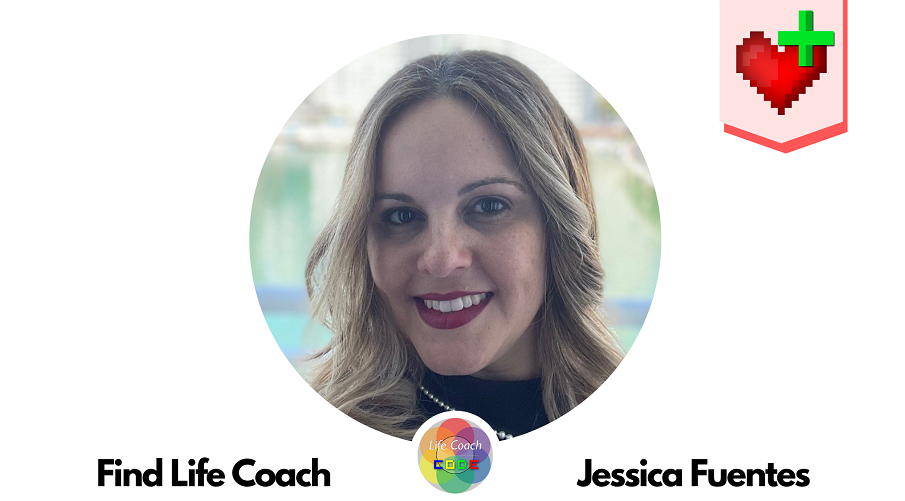
Jessica Fuentes is one of the coaches that we found this month and we did a little interview with her. She impressed us with her passion and dedication.
Her journey is a testament to resilience and transformation. As a single mother of two, she navigated the complexities of balancing her dreams and responsibilities with remarkable determination. Initially moving to Miami to pursue a career in the music industry, she faced numerous challenges, including starting her university education almost from scratch. However, she embraced these obstacles as opportunities, ultimately earning a degree in Management from Florida International University.
Her professional path spans over two decades as an Office and Administrative Manager, but it was a layoff in 2023 that catalyzed her shift towards a more fulfilling career. She started sharing her thoughts first on Facebook back during the pandemic. Then, she launched her personal blog where she can express her wisdom. Now she ventured into podcasting and earned a Professional Coaching Certification from iPEC, marking the beginning of her journey as a life coach.
She dedicates her expertise to helping clients overcome obstacles and find their purpose, focusing on self love, self empowerment, and personal growth. Her unique coaching approach emphasizes the intangible aspects of self awareness and self discovery, guiding clients to improve therelationship they have with themselves and unlock their true potential. Most importantly, she helps them turn self doubt into confidence so they can reach their goals. Here is what she said.
Meet Life Coach Jessica Fuentes:
Name: Jessica Fuentes, Certified Professional Coach
Pillar: The Heart
Who is this coach for: Anyone who wants improve the relationship they have with themselves and turn self doubt into confidence so they can reach their goals.
How they can help: By using various tools and techniques like active listening, asking empowering questions, visualization and laser coaching, just to name a few.
First of all, how are you and your family doing after these Pandemic times?
I am doing great!
Very happy and excited about our interview today.
My kids and family are doing well, thank you for asking!
I can say that after the Pandemic life changed in general.
Before the pandemic, we were accustomed to live life in autopilot: commuting to work, complying with our responsibilities, and getting back home to comply with the role there.
After the pandemic many people got accustomed to working from home and many others were looking forward to going back to their regular routine.
I honestly don’t think things went back to that norm.
I don’t think they’ll ever will!
We first had to adapt to the change of doing almost everything remotely and now we are still adapting to going back to the old ways.
But I always try to focus on the opportunities behind changes and challenges.
How did the coronavirus pandemic affect your clients? Did it affect you at all?
During the Pandemic I was still not a coach, I was going through my own process of self healing and self discovery.
It was a moment of growth for me.
I indulged myself with many books of self help, leadership, business development, and self improvement.
Some of the books I read that were transformational for me were:
What are the biggest lessons that you learned in this pandemic?
The biggest lesson was that being alone is not the same as feeling lonely.
Being alone is actually a blessing, because during that time I had so much alone time that I got to really know myself and I started to love the person I was transforming myself into.
I’m not going to lie, in the beginning I felt anxious and stressed out, but then I thought to myself “this is what I have at this moment, what good can I get out of this? What can I learn NOW that I NEVER had the chance to learn before?”
So, I decided to get to know myself!
Kind of like when you are dating…
So, I did that with myself.
And it was nice to get to know ME.
The Origin:
Tell us about you, your career, how you started with your coaching career?
I am from Puerto Rico but have been living in Miami, Florida for over 18 years.
I am 45 years old.A single mother of two.
I have a grown up daughter that is currently 23 years old and an almost teenaged son that is 12 years old.
The reason why I moved to Miami was because I was in pursuit of a career in the music industry.
I made a Demo and I even auditioned for American Idol, but I didn’t get that far and then I decided that since I didn’t make it passed the audition, I was going to complete my bachelor’s degree instead, so I went back to university.
Back when I was living in Puerto Rico, I had completed 3 years at the University of Puerto Rico, but when my daughter was born, I decided I needed to work, so I dropped out.
When I went back to university here in Florida, I only got 12 credits validated (out of the 85 credits I had completed), so I basically had to start University all over again.
This is actually one great example of a challenge that I encountered.
This was an opportunity for me to choose to be a victim rather than seeing the opportunity behind it all.
But I chose to see the opportunity.
It was my chance to re do things even better than before.
It was my chance to improve my English.
And I did!
I learned so much!
I graduated with a degree in Management in May, 2011 from Florida International University (FIU).
I’d like to mention that while I was working on completing my bachelor’s degree, I was a Full Time employee and a Full time Mom of a daughter with ADHD.
It was extremely hard, but I did it!
My only thought while going through the experience was “I don’t know HOW I am going to do it, but I AM going to do it!” and I did!
Professionally I have worked as an Office and Administrative Manager for over 23 years.
In June, 2023, I was Laid Off from a job of almost 18 years and it was another difficult experience.
As the sole provider, it really scared me!
Fortunately, my former boss recommended me for a role as a consultant and this opened the door of independence for me as a professional.
Instead of allowing myself to remain a victim, I decided to learn how to do a Podcast and started working and preparing it.
I also enrolled in the Professional Coaching Certification Program from iPEC and got Certified as a professional Coach.
Now I feel that life is aligning for me as it was meant to align.
My job as a professional has always been to facilitate the executives’ lives and ease their loads of responsibilities, but I always felt that what I was doing had no real meaning.
I wanted to help others in other ways, but I didn’t know how.
Getting Laid Off took me off my comfort zone and that experience taught me that I have no control over a job, but I do have control over my career.
I might not have control over other people’s behavior’s, but I get to choose my own response and my behavior towards them.
It took me years to realize that I am stronger than I thought I was.
Years struggling with my insecurities, but it was with these and many other challenges that I realized how much I’ve learned and how strong I actually am.
I don’t think of myself as being better than anyone. I just focused on becoming a better version of myself.
But I thought it would be selfish of me to keep the knowledge I’ve acquired to myself.
So, since I wanted to help others, in March of 2020, during the peak of the Pandemic, I decided to create the Facebook and Instagram pages of Empored.Selflove in which I started sharing my thoughts in Quotes.
But now it was time for me to speak up and launched my Podcast Empowered by Self Love the Podcast on June 1st, 2024.
I also completed my Certification as a Coach and Launched the Coaching business.
What was your biggest obstacle that you had to overcome in your life that made you who you are today?
I could say the lack of Self Love.
When I realized that the root cause of many of my problems, my failures, and my insecurities was that I never loved myself enough, therefore I always felt less than everyone!
And because I felt less than everyone, I never though I was deserving of many things!
Simple things such as love, respect, and success.
But when I accepted that I was not loving myself enough I entered a realization phase, in which I came to understand the reasons behind me accepting less than what I deserved.
But this process was hard, sometimes it is still difficult, because it is a false idea implanted in my brain since childhood, and now it requires the new conscious me to remind the little girl that, that idea is not the TRUTH.
And this is when the transformational phase began!
And now I feel the responsibility to let everyone know that the magic ingredient behind any level of success is the love we show to ourselves, because the way we love ourselves is reflected in the way we present ourselves out to the world.
The Coaching Style:
How do you innovate with coaching your clients?
I help my clients Overcome Obstacles and Find Purpose with tailored Coaching for Personal and Professional Success.
My goal is to help my clients reach a greater level of awareness and guide them in their discovery process so they can stop getting in their own way and discover the path to self love, self empowerment and self fulfilment.
In a nutshell, I help my clients turn self doubt into confidence so they can reach their goals.
What’s unique about your coaching approach?
I feel that most people focus on material outcomes and those are extremely important and necessary to have, but my coaching approach focuses more on the intangible.
It goes deep!
The purpose is for my clients to get to know themselves, understand themselves, and love themselves.
The intangible target for me is for my clients to fall in love with themselves.
Because once they reach that point, everything else in their lives will fall in place.
What benefits do your clients get after working with you?
I can say:
Self Confidence
Self Love
Self Empowerment
Do you use any specific tools to be efficient with your clients?
I love to first LISTEN to my clients and use my INTUITION to determine their ENERGY LEVEL and their BLOCKS.
Then I use EMPOWERING QUESTIONS to collect more information and to CHALLENGE my clients.
When it comes to measuring emotions, SCALING QUESTIONS are key to determining where the client is standing and that makes their feelings more measurable.
I also like to use VISUALIZATION, BREAKTHROUGH LASER COACHING, and AIM SMART tools.
It is important that the client feels in a secure environment since that allows them to open up.
The Impact:
If you had a super megaphone that, when you speak into, the whole world will hear your message, what would you say?
Wow! That would be amazing to have!
I would say:
Love yourself ABOVE anyone else!
Because the love you give to others will be a reflection of the way you love yourself.
You will have the capacity to accept what you know you deserve and reject what doesn’t serve you, and therefore, you will be able to give others the best version of yourself.
What is the greatest lesson you have learned in your life?
I have learned that every mistake teaches us a lesson and if we don’t apply the lessons learned they will continue to show up in front of us, until we learn them!
Your final thoughts?
The magic of coaching is that all answers and solutions are inside the client, which is something I love!
Because I am not there to tell my clients what to do, I serve as their guide.
But when the magic happens, when they realize their strength, their knowledge, their worthiness, and their capacity… Uuuufff!
That is priceless!
That is my goal with each and every one of my clients, for them to realize that even though they had been questioning their potential, the answers were always inside of them.
Where Can You Find Jessica Fuentes?
If you liked this interview and you would love to find out how to turn self doubt into confidence so you can reach your goals, go to https://www.empowered-selflove.com/ and see how coach Jessica can help you.
If you’d like stay in contact with her, follow her Facebook and Instagram accounts.
And if you’d like to connect with her more personally, you can do that through LinkedIn or by sending her a direct message on her Email [email protected]. It was an honor having this interview with you.
Life throws unexpected challenges our way, and sometimes it feels like we’re caught in the middle of a storm.
When Hurricane Beryl hit Houston, we experienced firsthand the power of resilience, family, creativity, gratitude, and mindset.
Here are five key takeaways from that experience that can empower you to weather any storm in your life.
5 Lessons from Hurricane Beryl:
1. Resilience is Your Insurance
Resilience is like an insurance policy for your emotional well being.
Life throws punches, but with resilience, you can get back up stronger.
Imagine the feeling after Beryl passed.
The city was battered, but the people?
We were cleaning up, helping each other, and rebuilding.
That’s resilience in action.
No matter how tough life gets, remember that you have the inner strength to bounce back and thrive.
2. Family is Your Anchor
During the storm, my kids could have crumbled, but they didn’t.
They held us together, reminding us of what truly mattered.
When life gets tough, remember your support system.
Lean on your family, your friends, and your community.
They can provide the emotional support and strength you need to navigate through difficult times.
Family and loved ones are your anchors in the stormy seas of life.
3. Think Outside the Box
Without electricity, even simple things became difficult.
I remember searching for a place to charge our phones.
It forced us to get creative.
We found a gas station with a generator, a small victory that kept us connected and hopeful.
When faced with challenges, think outside the box.
Look for creative solutions and be open to new possibilities.
Sometimes, the answer to a problem lies in an unexpected place.
4. Gratitude is a Gift
Beryl reminded us to cherish what we have.
We took running water and a cool breeze for granted before.
Now, every shower, every cool drink, feels like a blessing.
Practice gratitude daily, even for the small things.
Gratitude can shift your perspective and help you focus on the positive aspects of your life, making it easier to cope with adversity.
Training your gratitude is like a muscle.
The more you practice the more you program your mind to look for things to be grateful about.
Sooner or later this will become your default mindset.
What are you thankful for?
Think of 3 things every day.
You will see the difference.
5. Mindset Matters
The way you approach challenges can change everything.
We could have focused on the difficulties, but we chose hope.
We chose to believe that this would pass and that we would be stronger for it.
What you focus on matters!
Your focus shapes your mindset.
And your mindset shapes your reality.
It decides what you are able to perceive from the reality around you and what you remain blind to.
As you know, our minds are pretty limited.
We cannot perceive the full reality!
That’s why our minds have certain biases that help them filter out the unnecessary data from the world around us.
Your mindset determines what data has priorty: the negative information or the positive information?
You are always surrounded by both, but it’s your mindset that decides what you will see.
By maintaining a positive outlook and believing in your ability to overcome obstacles, you can navigate through life’s storms with greater ease and confidence.
Clarity is the Key
Imagine a life with clarity.
You know where you stand, you see your path forward, and uncertainty fades.
This starts with reflecting on your life, appreciating what you have, and building your resilience.
With clarity, you can make better decisions and stay focused on your goals, even when the storms of life try to knock you off course.
By taking charge of your personal life, you can navigate any storm.
So take action today!
Watch my full video on how to weather any storm on my YouTube channel and subscribe for more awesome videos weekly.
We start with the fundamental knowledge and understanding of a universal principle:
What we focus our attention on, we get more of…
Whether it’s good or bad, right or wrong, like it or not.
Right now, take a moment to observe where your attention is directed and who controls it. You’ll likely notice that your attention wanders aimlessly, with little to no direction.
As the Armenian philosopher Gurdjieff stated:
“The uncontrolled human mind is distracted from distractions by distractions.”
Notice that when your attention focuses on certain people, subjects, circumstances, or things, corresponding thoughts and emotions follow, creating momentum.
There’s nothing wrong with this; it’s just where we find ourselves.
The Focus Muscle
You have the ability to redirect and focus your attention where you choose. This is what we practice mastering through meditation.
Meditation strengthens and fortifies your ability to focus your attention, allowing you to choose where you direct it, instead of being dragged around aimlessly.
This gives you the power to intentionally create the things you desire, which is one of the most powerful abilities a human being can possess.
Meditation, though subtle, is the most impactful practice to develop your ability to focus and redirect your attention.
First-hand experience and awareness of your ability to shift your focus from thoughts or things that don’t feel good to those that do is, in my opinion, the greatest gift you can give yourself.
As you begin your meditation practice, you will see immediate results.
This new understanding and awareness that what you’ve been focusing on has created your reality, and that you can now redirect your attention, is profound.
For many, this is the biggest transition in life, the Source of Personal Power.
Meditation offers us the opportunity to be present in our lives.
It allows us to see our thoughts and emotions clearly.
This combination of thoughts and emotions is what has been creating our experiences all along.
As humans, we often get caught up in thinking about the past and the future, spending much of our time judging, evaluating, and criticizing our lives, ourselves, and others.
When you are in your thinking mind, you are always one step away from fully experiencing your life.
This is what Christ meant when he said:
“The key is to be in the world, not of it.”
Meditation helps us develop the skill of turning away from our thinking mind and moving towards a fuller experience of life. It helps us to be present, experiencing each moment—the only place life truly exists.
Meditation teaches us to release the mind’s clinging to thoughts.
Life is happening right now, and trying to make it different than what it is seems a bit insane.
At first, meditating might seem bumpy, but the positive effects and sense of relief will quickly present themselves.
You will feel a greater sense of ease, fewer knee jerk reactions, and an ability to allow people and things to be just as they are.
No thinking, just being and trusting the process.
As you continue your meditation practice, you will notice a return to your natural state of better health and well being.
Aches and pains in your body will begin to disappear as your mind calms and begins to focus.
You will soon see that experiencing life has nothing to do with thinking. It’s about simply experiencing the direct, non storied aspects of our life in each “now” moment.
Through meditation, you will learn to tell the difference between being stuck in your head and being present in the moment.
Let’s Get Started!
First, understand that there is no right way to meditate, but it’s important to grasp the concept.
You can sit on the floor or a chair, or even explore different Zazen (Zen Meditation) postures.
What’s important is finding a comfortable position that works for you.
Next, choose something to focus your attention on.
It can be a flame, the sound of a river, the ocean, a fan, etc.
Focus on this chosen point.
Select something mundane that your discriminating mind won’t judge. I use the sound of ocean waves so I get to go to the beach every day when I meditate.
Set a timer for 15 to 20 minutes and focus on the sound.
As thoughts arise, and they will, simply notice them and return your attention to the point of focus.
It’s that simple.
Meditate for 15 to 20 minutes a day, preferably first thing in the morning.
When you find yourself drifting off or focusing on body sensations, simply return your attention to the chosen focus. Don’t expect it to be a certain way or compare it to anyone else’s experience.
The Time and Space of Now
As I began my meditation practice, my mind played tricks on me.
I would hear, “This is too much. I can’t stop thinking. This can’t be helping.”
These were just more thoughts.
Another trap I fell into was wanting to tell everyone that I meditated as if I were part of an elite group.
So, as you begin, keep it light and be kind to yourself.
This will be the greatest gift you can give yourself.
For more information on harnessing the power of your mind, feel free to contact me anytime.
If you get stuck or would like some support getting your practice set up or moving forward, I’m always here to guide you along your path.
With passion and purpose, Allan “A. C.” Hendrickson Teacher/Author/Speaker Founder, The Center for Conscious Expansion
Susan Razavi, LCSWR, is a dedicated hypnotherapist and psychotherapist whose holistic approach to mental health is transforming lives.
With over a decade of experience, Susan seamlessly blends traditional therapeutic techniques with mindfulness, cognitive behavioral therapy (CBT), and body based practices.
Her unique TrancePlan Hypnotherapy, inspired by both Western and Eastern philosophies, provides clients with profound insights and lasting change.
Journey to Becoming a Hypnotherapist and Psychotherapist
From a young age, Susan had an innate drive to help others.
Her curiosity about human behavior was so intense that by age 10, she was already diving into the works of Freud and Jung.
However, life’s twists and turns led her down a different path.
She became a mother, and later a single mom, all while pursuing her education.
At 30, Susan made a bold move into the field of social work and began her journey as a therapist.
Despite the grueling graveyard shifts and the demands of raising two children, her commitment to providing therapeutic support never wavered.
Susan’s career started as a case manager for developmentally delayed adults and newborns in foster care.
She even learned Spanish to better serve her community.
Working as a bilingual therapist in community based agencies, she saw the impact of therapy firsthand but felt constrained by conventional methods.
This dissatisfaction led her to explore alternative approaches, including Eastern meditation and Ericksonian hypnotherapy.
Her dedication to learning paid off, by 2009, she was a certified professional clinical hypnotherapist, and by 2010, a yoga teacher.
Susan’s quest for knowledge took her to India multiple times, where she immersed herself in Hinduism and Eastern philosophies, enriching her practice and broadening her understanding.
The Power of Holistic Approaches
Integrating Eastern philosophies with Western therapeutic techniques has been a cornerstone of Susan’s therapeutic approach, allowing her to offer truly holistic care.
The profound effects of hypnotherapy on both her and her clients have fueled Susan’s passion for continuous learning and growth.
She engages with spiritual seekers online, finding inspiration in their journeys.
Susan’s mission is to reach as many people as possible, making a positive impact on their lives through the transformative power of hypnotherapy.
TrancePlan Hypnotherapy: A Unique Approach
Understanding TrancePlan Hypnotherapy
Hypnotherapy, particularly Susan’s TrancePlan Hypnotherapy, is a cornerstone of her practice.
Traditional hypnotherapy often uses scripts, but Susan’s method involves a more personalized approach.
She incorporates the client’s history, trauma, environmental stress, relationships, lifestyle, and goals into her sessions.
By understanding what the client wants from hypnotherapy based on their history, she helps them achieve their goals more effectively.
Susan’s approach includes inner child, adolescent, intergenerational, and identity work, creating significant physical and mental relief.
How TrancePlan Hypnotherapy Works
In TrancePlan Hypnotherapy, clients travel in their imagination to a future where they have created their ideal environment.
This visualization helps them trust their intuition, dreams, and gut instinct.
The gut instinct is part of the body based practice of working with the chakras and energy channel systems, which are widely used in acupuncture, Chinese and Ayurveda medicine, and yoga.
One of the benefits of TrancePlan is that clients don’t have to do anything, they just listen and become attuned to themselves, their inner experience, and more aligned with their goals.
9 Huge Benefits of TrancePlan Hypnotherapy:
1. Beyond Cognitive Processes
TrancePlan Hypnotherapy goes beyond cognitive processes, allowing individuals to tap into their physical, emotional, intuitive, and transformational experiences.
This approach enables individuals to trust their intuition, leading to a greater sense of self reliance and empowerment.
By releasing unnecessary feelings, thoughts, experiences, and energy forms without judgment, individuals can achieve balance, health, and transformation.
Clients often express feeling more comfortable expressing themselves, deepening their therapy process, and creating meaningful changes in their lives.
2. Enhanced Self Awareness and Intuition
One of the primary benefits of TrancePlan Hypnotherapy is the enhancement of self awareness and intuition.
Clients learn to trust their inner guidance and make decisions that align with their true selves.
This increased self awareness can lead to better decision making and a deeper understanding of one’s desires and goals.
3. Emotional and Physical Relief
TrancePlan Hypnotherapy provides significant emotional and physical relief.
By addressing inner child, adolescent, intergenerational, and identity issues, clients experience a release of long held tensions and traumas.
This process can result in improved mental clarity, reduced anxiety, and overall emotional well being.
4. Integration of Mind, Body, and Spirit Practices
The integration of Mind, Body, and Spirit practices in TrancePlan Hypnotherapy helps clients achieve a state of harmony and balance.
Techniques such as working with chakras and energy channels promote physical health and well being.
Clients often report feeling more grounded, centered, and connected to their bodies.
5. Visualization and Goal Achievement
Through guided visualization, clients create an ideal future environment where they can explore their potential and aspirations.
This practice enhances their ability to visualize goals and trust their intuition, leading to more effective goal setting and achievement.
Clients often find themselves more motivated and inspired to pursue their dreams.
6. Improved Relationships
TrancePlan Hypnotherapy also focuses on healing relationships, both with oneself and others.
By exploring and resolving past traumas and relational patterns, clients can build healthier, more fulfilling connections.
This healing process often leads to greater empathy, understanding, and communication skills.
7. Access to Bliss States
Clients can access deep states of relaxation and bliss through TrancePlan Hypnotherapy, akin to the Turiya state in Yoga Nidra.
These bliss states promote profound healing and relaxation, encouraging clients to continue creating positive patterns in their lives to repeat these experiences.
8. Self Healing and Empowerment
TrancePlan Hypnotherapy empowers clients to harness their innate healing abilities.
By tapping into their subconscious mind, clients can uncover and release limiting beliefs, fostering a sense of self empowerment and resilience.
This self healing process is transformative, allowing individuals to take charge of their mental and emotional well being.
9. Managing Conditions Differently
Hypnotherapy helps manage conditions like stress, anxiety, and depression differently compared to traditional psychotherapy.
It provides a direct experience rather than an abstract thinking process.
The connection with the self leads to being more available from the inner context, in a more conscious, liberated way.
This is a natural outcome in the process called TrancePlan Hypnotherapy.
Practical Tips for Maintaining Mental Well being:
For maintaining mental well being, Susan recommends daily mindfulness or relaxation techniques such as sound baths, Hz tones starting with 432hz, affirmations, breathing exercises, mantra, being in nature, eating organic food, and doing yoga or other exercises.
She often helps people improve their sleep, understanding the role of blue light from screens, and suggests taking a Dosha quiz to introduce the idea from Ayurveda of the three basic energies that all humans have, along with suggestions for seasonal lifestyle modifications, food, activities, and practices to maintain balance.
By integrating these holistic approaches into daily life, individuals can achieve a greater sense of balance and well being, paving the way for a more connected and fulfilling existence.
In an era dominated by social media, where curated images and edited personas often take center stage, authenticity stands out as a remarkable superpower.
Being genuine and true to oneself not only cultivates inner peace but also fosters deeper connections and resilience.
Here’s why embracing authenticity can transform your life…
5 Ways How Authenticity Improves Your Life:
1. Builds Trust and Deepens Relationships
Authenticity is the cornerstone of trust.
When you present your true self to the world, you attract the right people, the ones who appreciate you for who you are.
People are obsessed with likes and followers.
What they do not understand is that 1000 loyal followers who follow you because of who YOU really are is a much bigger accomplishment than 1000000 random followers who follow you because you act as someone else.
This genuine connection fosters deeper, more meaningful relationships.
According to research, leaders who are authentic are more effective and trusted by their teams.
2. Enhances Emotional Well Being
Living authentically means aligning your actions with your values and beliefs, reducing the inner conflict that arises from pretending to be someone you’re not.
This alignment leads to greater emotional well being and self acceptance.
A study found that authenticity is positively correlated with self esteem and overall life satisfaction.
3. Promotes Resilience
When you are authentic, you are more resilient.
Facing challenges as your true self means you are better equipped to handle setbacks because you are grounded in who you are, not in an image you’re trying to maintain.
Authenticity gives you the strength to navigate adversity with confidence and clarity.
Being authentic can inspire others to do the same.
When people see someone embracing their true self, it encourages them to drop their own masks and be more genuine.
This ripple effect can create a more open and honest community, both personally and professionally.
The previously mentioned study have also demonstrated that authenticity in leadership not only fosters trust but also encourages team members to be more authentic themselves.
For instance, in my own experience, when I began sharing my personal journey with authenticity in workshops, participants often expressed how it encouraged them to reflect on their own lives and embrace their true selves.
5. Fuels Personal Growth
Authenticity requires self awareness and a willingness to grow.
By understanding and embracing your strengths and weaknesses, you open the door to continuous self improvement.
This journey of self discovery enhances your personal and professional life, making you more adaptable and innovative.
The State of Authenticity is Your Highest Vibration
When you vibrate at the frequency of authenticity, you operate at your highest potential.
This state of being genuine and true to oneself aligns your energy with your true nature, creating a harmonious internal state.
According to psychology teachings and understanding of mental biases, living authentically reduces the cognitive dissonance associated with pretending to be someone you’re not, thereby conserving mental and emotional energy.
Dr. Brené Brown, a research professor at the University of Houston, has extensively studied the power of vulnerability and authenticity.
Her findings indicate that when individuals embrace their true selves, they experience less stress and greater overall well being.
This reduction in stress translates to more available energy for other tasks, enhancing overall efficiency and productivity.
Furthermore, another study found that authenticity is linked to higher levels of vitality and lower levels of fatigue.
When individuals stop wearing masks and pretending to be something they’re not, they save significant amounts of energy that would otherwise be spent on maintaining a false persona.
This energy can then be redirected towards personal growth, creativity, and other fulfilling activities.
My Personal Journey to Authenticity
I was not sure who I was when I was in the midst of depression, burnout, and an identity crisis.
I could tell you what I was doing: a high performing innovation consultant, but not who I was.
Creating clarity around visions, purpose, and values was my lifesaver.
Let’s save your life together: step into clarity with the Star in Me Mastermind. Click here: The Star in Me.
3 Ways How to Cultivate Authenticity:
1. Self Reflection:
Regularly take time to reflect on your values, passions, and goals.
Understanding what truly matters to you is the first step toward living authentically.
How to effectively self reflect?
Daily Journaling: Set aside time each day to journal about your thoughts, feelings, and experiences. This practice can help you identify patterns and uncover your true desires and motivations.
Meditation and Mindfulness: Engage in mindfulness practices to cultivate awareness of your inner self. Meditation can help you connect with your core values and gain clarity about what truly matters to you.
Seek Feedback: Ask trusted friends, family, or mentors for feedback on your actions and behaviors. Sometimes, others can provide valuable insights into aspects of yourself that you might overlook.
2. Embrace Vulnerability:
Don’t be afraid to show your true emotions and share your experiences, both good and bad.
Vulnerability is a powerful aspect of authenticity.
How to be vulnerable?
Share Your Story: Open up about your personal journey, including your struggles and triumphs. Sharing your story can help you connect with others on a deeper level and encourage them to be more open and honest.
Acknowledge Your Feelings: Allow yourself to feel and express your emotions, even the difficult ones. Suppressing emotions can lead to inner turmoil, while acknowledging them fosters emotional health and authenticity.
Take Risks: Step out of your comfort zone and take risks that align with your true self. Whether it’s pursuing a new career path or expressing your true opinions, embracing vulnerability can lead to significant personal growth.
3. Seek Authentic Connections:
Surround yourself with people who support and appreciate you for who you are.
Authentic relationships encourage you to remain true to yourself.
How to find authentic connections?
Identify Supportive Relationships: Evaluate your current relationships and identify those that are supportive and encouraging. Invest more time and energy into these connections.
Set Boundaries: Establish clear boundaries with people who do not support your authentic self. Protecting your emotional well being is crucial for maintaining authenticity.
Join Communities: Engage with communities or groups that share your values and interests. Being part of a like minded community can reinforce your commitment to living authentically and provide a support system.
Conclusion
In today’s world, where superficiality often prevails, authenticity is a superpower that can set you apart.
It builds trust, enhances well being, and fosters resilience.
By embracing your true self, you not only enrich your own life but also inspire those around you to do the same.
So, take off the mask, embrace your authenticity, and let your true self shine.
Want more authentic you in your life, empowered, successful, and fulfilled? Join the 30 Days Of Transformation here and step into a life you love: 30 Days of Transformation.
On 13th of July 2024 there has been an assassination attempt on Donald Trump.
He was shot on the upper corner of his ear but the bullet didn’t do any serious damage.
What was fascinating, at least for me, was how Trump reacted seconds after the event.
He got up, with a blood on his face, and put his fist in the air in an act of resistance.
This photo will definitely go in history as one of the most significant moments in USA (and the world’s) history.
But how can one develop such strong mindset that in midst of fear and chaos one stands and faces fear by looking at it in the eyes with a fist in the air?
No matter if you are a democrat or a republican, we can all learn from Trump’s recent behavior.
The world definitely needs more people with mental resilience.
How to Be Mentally Tough:
1. Have a Strong Belief In Your Purpose
Trump’s unwavering belief in his vision and purpose has been a driving force behind his actions.
To develop similar mental strength:
Clearly define your goals and the reasons behind them.
Regularly reinforce your commitment to your purpose.
Use your purpose as a compass for decision making.
2. Speak Out Your Truth
It’s all about authenticity.
Trump is known for his direct and often unfiltered communication style.
While tact is important, there’s strength in expressing your views openly.
There is power in authenticity.
Don’t shy away from expressing unpopular views if you believe in them.
When you do this, there will be people trying to test your arguments and that’s your arena where you build your mental resilience.
Staying true to your self despite social pressure is how you build mental strength.
3. Face The Bully
Throughout his career, Trump has shown a willingness to confront opponents head on.
Developing the courage to face adversity is crucial for mental strength.
Identify the “bullies” in your life, these could be people, situations, or personal fears.
Face them.
Develop strategies to address conflicts directly rather than avoiding them.
Stand your ground when you believe you’re right, even against powerful opposition.
View confrontations as opportunities for growth rather than threats.
4. Do Hard Things
Trump’s career has been marked by taking on ambitious projects and diving into unfamiliar territories.
Embracing difficulty is key to building mental toughness.
Regularly push yourself out of your comfort zone.
Break down daunting challenges into manageable steps.
Take on tasks that others might shy away from.
Exercise daily and push your limits.
When you put yourself in a situation that demands you to go over your mental limitations, you will be forced to tackle with your mind.
It will try to convince you to stop, to not face your fear, to stay in your comfort, to remain the same…
Learning how to conquer this voice is HOW you develop mental resilience and mental strength.
Consistently doing hard things builds confidence in your abilities and expands your capabilities.
As you work on these aspects, you’ll likely find yourself better equipped to handle life’s challenges and pursue your ambitions with unwavering determination.
Mental strength allows you to say “no” to things that are hard to say no to, it allows you to overcome harmful addictions, and point your fist in the air in act of resistance when chaos tries to take you down.
If you want to unleash the full potential of your Spirit, Mind, Body, Heart, and transform yourself into a Superhuman, join the Superhuman University today! Get access to 100s of courses that will teach you how to develop all your superpowers.
In our modern, fast paced world, many people experience constant stress and anxiety, often without understanding how to break free from this cycle.
While various techniques promise relief, one of the simplest and most effective tools is often overlooked: our breath.
By harnessing the power of breath, we can profoundly impact our nervous system, promoting calm and balance in both mind and body.
Understanding the Nervous System
The autonomic nervous system (ANS) controls involuntary bodily functions and is divided into two main branches: the sympathetic nervous system (SNS) and the parasympathetic nervous system (PNS).
The SNS is responsible for the “fight or flight” response, while the PNS governs the “rest and digest” state.
Chronic stress often keeps the SNS activated, leading to a range of health issues, from anxiety to hypertension.
Research from Harvard Business School underscores how chronic stress and an unbalanced nervous system are significant contributors to people’s survival mode, stress, and anxiety.
This persistent activation of the SNS can lead to numerous physical and mental health challenges.
Why an Unbalanced Nervous System is a Problem?
Most people live in a state of fight or flight, dominated by stress and anxiety, without knowing how to move out of it.
An unbalanced nervous system keeps the SNS overactive, which can trigger chronic stress responses and diminish overall well being.
This imbalance can lead to serious health issues, including chronic fatigue, depression, digestive problems, and weakened immune function.
Addressing this imbalance is crucial for maintaining a healthy, balanced life.
The Science Behind Breath and the Nervous System:
Breathing exercises can stimulate the PNS, helping to reduce stress and promote relaxation.
Studies have shown that deep, slow breathing can lower cortisol levels, the primary stress hormone, and reduce heart rate and blood pressure.
By practicing controlled breathing, we can bring the body back to a state of balance, mitigating the adverse effects of chronic stress.
Here are the benefits of controlled breathing:
1. Reduces Stress and Anxiety: By activating the PNS, controlled breathing helps decrease the production of stress hormones, bringing a sense of calm and relaxation.
2. Improves Focus and Concentration: Deep breathing increases oxygen supply to the brain, enhancing cognitive function and mental clarity.
3. Enhances Emotional Regulation: Regular practice of mindful breathing can help manage emotional responses, reducing impulsivity and promoting a more balanced mood.
4. Promotes Better Sleep: Engaging in breathing exercises before bedtime can prepare your body for sleep by calming the nervous system and easing the mind.
5. Boosts Immune Function: Regular deep breathing can enhance immune response by reducing stress and improving overall physiological function.
Practical Breathing Techniques:
Diaphragmatic Breathing
Also known as belly breathing, this technique involves breathing deeply into the diaphragm rather than shallowly into the chest.
Place one hand on your chest and the other on your belly.
Inhale deeply through your nose, ensuring your belly rises more than your chest, then exhale slowly through your mouth.
Box Breathing
Inhale for a count of four, hold the breath for four counts, exhale for four counts, and hold again for four counts.
This technique helps to regulate breathing and induce a state of calm.
4,7,8 Breathing
Inhale through your nose for four counts, hold the breath for seven counts, and exhale through your mouth for eight counts.
This method can help reduce anxiety and prepare the body for sleep.
Join the Journey to Transformation:
Your breath is a powerful tool, use it to unlock your potential and achieve a state of tranquility and well being.
Unlock the power of your breath and bring balance to your life. Join the 30 Days of Transformation to learn the most powerful techniques to transform yourself. Click here to get started.
Or, if you prefer personalized guidance, hack your nervous system with the help of an expert. Apply for VIP coaching with Hedi Schaefer by clicking here.