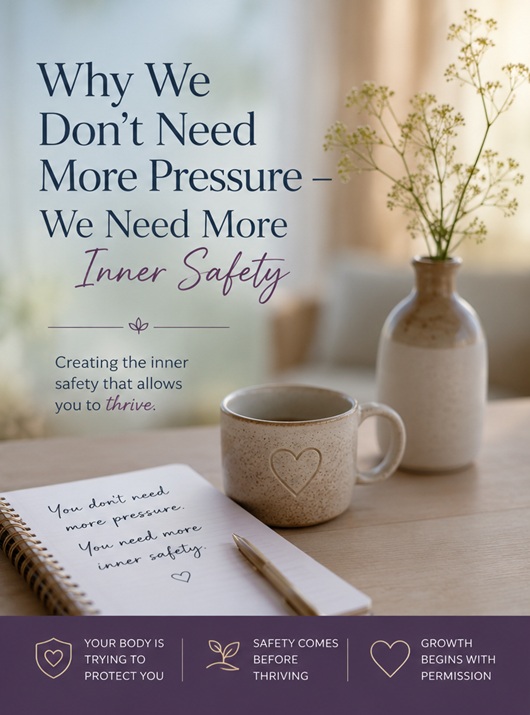
Identity Hangover: The Reason Why High-Achieving Women Feel Empty After Getting Everything They Wanted…

She has the title, the salary, the house everyone else scrolls past on Instagram wishing they had… And yet, at 11 p.m., sitting in the quiet after everyone else has gone to sleep, she feels completely hollow. This is what is known as Identity Hangover.

It’s not a personal failure nor ingratitude. It is not a sign that something is wrong with her.

Psychologists call it the Arrival Fallacy, a term coined by Tal Ben-Shahar, and it describes the mistaken belief that reaching a milestone will finally deliver lasting happiness, confidence, and peace.

But here is what the research doesn’t tell you, and what I see every single day in my work with high-achieving women:

The Arrival Fallacy isn’t just about happiness. It’s about identity.

And when your identity has been built on what you do rather than who you are, achievement doesn’t fill you. It exposes you.

Identity Hangover:

identity-hangover-high-achieving-women-empty-after-getting-everything

The Data Behind the Emptiness

In 2025, research published in Psychology Today confirmed what many women already feel but rarely say out loud: high-achieving women are at significantly greater risk of identity erosion and burnout, not despite their success, but because of it.

The numbers are stark:

  1. 59% of women report burnout in 2025 compared to 46% of men
  2. 1 in 3 high-achieving women has considered downshifting or leaving the workforce entirely, up significantly from the previous year.
  3. In early 2025 alone, over 212,000 U.S. women left the workforce, most citing inflexibility, but underneath that word is something deeper: misalignment with who they had become

And perhaps the most revealing data point of all:

Research from Self Determination Theory shows that when achievement becomes the primary source of identity, core psychological needs such as autonomy, meaning, and genuine connection remain unmet, even in the face of objective, measurable success.

She got everything she worked for.

And something still feels terribly wrong.

What Is Really Happening: The Identity Level

Most conversations about post-achievement emptiness stop at psychology.

They talk about hedonic adaptation, the brain’s tendency to return to a neutral baseline after any high, and they tell you to practice gratitude or set your next goal.

That advice misses the root.

In my work as an Identity Strategist and Transition Coach, using NLP and somatic techniques, I help women who have spent years, sometimes decades, constructing an identity around their role, their title, their output, and their usefulness to others.

The goal wasn’t just the goal.

The goal was who she was.

When she achieves it, or when life shifts around her through divorce, a career transition, an empty nest, or a midlife turning point, the identity she has built doesn’t just feel incomplete.

It collapses.

This is not a mindset problem. This is not something journaling alone will fix.

This is what NLP calls an identity-level shift, a disruption not at the level of behavior or belief, but at the level of who she understands herself to be.

And her body knows it before her mind does.

When Your Nervous System Signals the Truth

The Identity Hangover is not just emotional.

It is somatic. It lives in the body.

The flatness you feel getting out of bed. The inability to feel excited about anything. The chronic fatigue that sleep doesn’t fix. The sense of going through the motions in a life that looks perfectly fine from the outside.

These are not signs of laziness or ingratitude.

These are your nervous system’s ways of communicating misalignment.

Recent research confirms that women in high-performance environments experience measurable dysregulation of the parasympathetic nervous system, the system responsible for rest, recovery, safety, and a sense of self.

When achievement becomes the nervous system’s primary source of regulation, removing it, or reaching the end of the climb, leaves the system without an anchor.

This is why the Identity Hangover feels physical.

Because it is.

The 5 Signs You Are Living the Identity Hangover

You may be experiencing this right now if:

1. You Feel Ungrateful for Feeling Empty

You know you should be proud. Everyone tells you how far you’ve come.

But gratitude and hollowness coexist in a way you can’t explain, and that confusion becomes its own kind of pain.

2. You Are Chasing the Next Goal Before the Last One Lands

The promotion was approved, and within 48 hours, you were already scanning for the next target.

Not from ambition, but from anxiety.

Because stopping feels dangerous.

3. Your Identity Lives Entirely in Your Role or Title

When someone asks, “Who are you?” outside of what you do, you hesitate.

The answer feels thin.

Because for so long, the doing was the being.

4. Rest Feels Wrong

Downtime triggers restlessness, guilt, or a creeping sense of worthlessness.

Your nervous system has been conditioned to measure your value through output.

5. Something Has Shifted and No One Around You Sees It

A divorce. A career change. An empty nest. A milestone you reached.

Something changed, and you are standing on the other side of it wondering who you are now.

What The Identity Hangover Is Actually Telling You

Here is what I want you to hear clearly:

Emptiness is not the problem.

The emptiness is the message.

It is telling you that the identity you built, remarkable as it is, was built for a chapter that is now complete.

And there is a new one waiting.

In NLP, we understand that identity operates at the deepest level of human change.

You can shift your behavior. You can reframe your beliefs. But until you work at the identity level, until you answer Who am I beneath all of this?, the hangover doesn’t lift.

And somatically, once your nervous system learns to anchor safety and meaning in who you are rather than what you produce, the world stops feeling threatening during life transitions.

It starts feeling like possibility.

You Don’t Have to Figure This Out Alone

If you recognized yourself in any of this, know that what you are feeling is not a flaw.

It is an invitation.

The women I work with don’t need more information.

They need someone who can clearly see what they cannot yet see in themselves, and hold the vision of who they are becoming while they do the work of getting there.

If you are ready to stop waiting for clarity to arrive on its own, I invite you to book a free Clarity Strategy Call.

This is a private 30-minute conversation where we look at exactly where you are, what is keeping you stuck, and what your most powerful next step could be, with no pressure and no pitch.

One conversation can change the entire trajectory of your next chapter.

→ Book your free Clarity Strategy Call at thrivealter.com

Because the women who find their way through this transition don’t do it by pushing harder.

They do it by finally doing the work that matters most:

The work of coming home to themselves.

Real Leadership Begins Where Approval Ends!

A title can make someone a manager. It cannot make them a leader.

The title may give them the right to call the meeting, set the agenda, approve the budget, or make the final decision…

But it does not give them presence. It does not make people trust them, nor does it give them the courage to say what is true when the room goes quiet.

That kind of leadership comes from somewhere else

Where Does Real Leadership Begin?

real-leadership

Does leadership begin by knowing your purpose?

Does it begin by knowing your self?

No…

It truly begins when a person stops organizing their life around approval. 

This is not a call to become cold, careless, or indifferent. Quite the opposite.

The most developed leaders are often the ones who care the most, but they are not controlled by the need to be liked. They can remain connected to people without surrendering their judgment to the mood of the room. 

That distinction is not small. It is the difference between leadership and performance. 

A leader who needs approval too much will often avoid the very truth the situation requires. They may delay a hard conversation or soften the message until it loses its meaning.

They may over-explain, over-function, or try to keep everyone comfortable while the real problem grows quietly under the table. 

The organization may look polite. The team may look aligned. But everyone can feel what is not being said. 

And in leadership, what is not being said often leads the room. 

Gravitas Is Not a Technique

People often talk about executive presence as if it were a style problem. 

Stand taller. Speak slower. Use fewer filler words. Make better eye contact. Take up more space. 

There is usefulness in all of that, but it is not the essence of gravitas. 

Gravitas comes from being grounded enough in oneself to be seen and heard without begging for permission.

It is the inner expectation that one has a right to exist in the room, to think clearly, to speak honestly, and to take responsibility for one’s impact. 

That cannot be faked for long. 

Many leaders walk into rooms carrying old fears they have never fully examined. Fear of being dismissed, criticized, being exposed as inadequate.

Fear of being disliked, left out, wrong. 

Those fears do not always look like fear.

Sometimes they look like control. Sometimes they look like charm… silence, defensiveness, over-talking, avoidance, perfectionism, or the familiar corporate fog of “let’s circle back.” 

We call these things leadership styles. 

Often, they are not styles at all. They are unfinished development running the meeting. 

One leader avoids conflict because disagreement feels like danger. Another dominates because resistance feels intolerable. Another conforms because belonging matters more than truth. And another performs competence while quietly avoiding the decision that would reveal where they actually stand. 

In each case, the outer challenge is exposing the inner work. 

That is one of the gifts of leadership, though it rarely feels like a gift at the time.

Leadership gives constant feedback. The missed deadline, the difficult employee, the failed initiative, the tense meeting, the colleague checking out while we are speaking. Each moment shows us where we are steady and where we are still reactive. 

The question is whether we are willing to learn from it. 

The Room Knows When a Leader Is Performing 

There is a polished kind of leadership that can be mistaken for maturity. 

It uses the right language, sounds strategic, knows how to appear calm, thoughtful, and professional. It can speak fluently about values, culture, innovation, and accountability. 

But underneath, it may still be organized around fear. 

Fear of being wrong, of losing control. Fear of disappointing people, of being disliked, making the decision that cannot please everyone. 

People can sense the difference between a leader who is meeting reality and a leader who is managing an image.

They may not say it out loud, but they feel it. The room tightens. The conversation becomes less honest. People begin to protect themselves. 

Performance leadership may produce results for a while. It may even be rewarded. But it rarely creates deep trust, because trust requires contact with reality. 

Real leadership asks more of us.

It asks us to say what needs to be said without contempt. To challenge without humiliating. To disagree without disappearing. It asks us to care about people while still holding them to a higher standard. 

This is not easy, and it is not supposed to be. Leadership develops us precisely because it keeps placing us in situations where our old protections no longer work. 

The pleasing no longer works. 

Posturing no longer works. 

Hiding no longer works. 

The leader has to become more honest than the role alone requires. 

Can You Belong and Still Tell the Truth? 

One of the great leadership tests is whether we can stay connected to a group without surrendering our truth to it. 

Many people know how to belong by conforming. They read the room, adjust the message, protect the relationship, and avoid disturbing the group. 

Others know how to tell the truth in a way that separates them from everyone else. They pride themselves on being blunt, disruptive, or “the only one willing to say it,” but they are often speaking from isolation rather than service. 

Mature leadership asks for something harder. 

It asks us to belong and tell the truth. 

To stay in relationship while standing in reality. 

That means we stop using approval as our compass. Approval is too unstable. It changes with the room, the politics, the fear level, the incentives, and the personalities involved. 

A leader cannot be governed by that. 

A leader must be able to ask: 

  1. What is actually happening here?
  2. What am I afraid to name?
  3. Where am I protecting comfort at the expense of growth?
  4. Where am I calling something “strategy” when it is really avoidance?
  5. Where am I asking others to take risks I am not taking myself?

These are uncomfortable questions. Good. They should be.

Comfortable questions rarely create meaningful leadership. 

Leadership Is a Developmental Path 

Leadership is not separate from personal development. It is one of its most demanding arenas. 

Every meeting is practice. Every conflict, disappointment, every moment when we are tempted to collapse, conform, dominate, charm, perform, or retreat is practice… a chance to become more conscious.

The leader is always part of the system they are trying to change. 

If I want more honesty in the room, I have to become more honest

More courage from my team? I have to examine where I am still hiding

More people to take responsibility? I have to stop blaming the room for what I am unwilling to lead. 

This is where leadership becomes more than management. 

Management can organize work. Leadership develops people.

Management can track progress. Leadership can call forth capacity.

Management can maintain the system. Leadership can help transform it. 

But only if the leader is willing to be transformed as well. 

The world does not need more leaders who merely know what to say…

It needs leaders who are willing to become the kind of people who can hear what is difficult, say what is needed, and act in service of something larger than ego, comfort, or approval. 

The deeper question is not simply, “How do I lead them?” 

It is: 

Who must I become to lead this well?

That is where authority becomes presence. 

That is where influence becomes contribution. 

And that is where leadership begins.

Purpose Is Not Something You Find… It Is Something You BECOME!

Most conversations about purpose start in the wrong place. 

We are often asked, “What is your purpose?” as if purpose is a sentence we are supposed to discover, polish, and then put on a wall somewhere. 

I don’t believe purpose works that way. 

Purpose is not merely something outside of us that we go searching for. It is not hiding in the perfect career, the perfect relationship, the perfect title, or the perfect mission statement. Those may become expressions of purpose, but they are not the source of it. 

Purpose begins inside.

It begins with the person we are becoming. 

At LiveWright, we see purpose as deeply connected to our growth, our development, our relationships, and our willingness to become more fully ourselves.

The outer world is the playing field. It gives us feedback. It shows us where we are awake, where we are defended, where we are afraid, and where we are being invited to grow. 

Our work, families, friendships, businesses, and communities are not separate from our purpose. They are the places where our purpose gets practiced. 

Purpose Starts From the Inside Out

purpose-is-not-something-you-find

A person can build a company and still be avoiding themselves. 

They can serve others and still be driven by approval. 

They can even achieve impressive goals and still feel disconnected from the life they deeply want. 

This is why purpose cannot be reduced to achievement. Achievement can be meaningful, but it can also become a very sophisticated hiding place. 

Purpose asks more of us. 

It asks us to look honestly at where we are living from fear instead of truth.
Where we are conforming instead of choosing… pleasing instead of leading… reacting from old pain instead of responding from our deeper values. 

Most of us have unfinished developmental business. We all carry places inside us that still yearn to be seen, affirmed, respected, loved, and free to have impact. These places do not disappear simply because we become adults, professionals, parents, executives, or leaders. 

They show up when we are criticized and ignored…
They show up when someone does not respond the way we hoped…
When we are challenged, excluded, interrupted, dismissed, or asked to take a risk. 

And each of those moments can become either a repetition of an old pattern or an opportunity to grow. 

The World Keeps Inviting Us to Grow 

This is the heart of purposeful living. 

It is not about never feeling fear, hurt, anger, sadness, or longing. These experiences are part of being alive. The question is whether we learn from them or simply get run by them. 

  1. When we are hurt, we may withdraw
  2. When we are afraid, we may protect ourselves
  3. When we are angry, we may attack or shut down
  4. When we want to belong, we may conform and hide what is true

But if we are willing to become more conscious, these same moments can become doorways into development. 

We can begin to ask: 

  1. What is this moment showing me?
  2. What am I afraid to say?
  3. Where am I giving up my truth for approval? 
  4. Where am I trying to fix the outside world without looking at what is happening inside me? 

This is where real growth begins. 

Not in an abstract idea of purpose, but in the moment-to-moment practice of becoming more honest, more conscious, more courageous, and more fully ourselves. 

Becoming More Fully Yourself

I often say that you are your gift to the world

Not the polished version of you…
Not the performing version…
Nor the version trying to earn belonging by becoming acceptable. 

The real work is becoming the most developed, conscious, courageous version of yourself, and then bringing that self into your life, your work, your relationships, and your contribution. 

When we grow ourselves from the inside, our outer lives begin to change. 

We become more capable of leading with clarity… More honest in our relationships… More able to take risks.

We become less governed by approval and rejection. More available to our own desires, our own truth, and our own contribution. 

Purpose is not only found in grand gestures…
It is found in the moment you tell the truth when you would rather hide
It is found when you risk being seen
When you repair instead of retreat
When you choose growth over comfort

So the question is not simply, “What is my purpose?” 

A better question may be: 

Who am I becoming, and what becomes possible as I become more fully myself?

That is where purpose begins. 

From the inside out. 

What Did You Learn to BE that Keeps You Small?

You are not born as a people pleaser, you learn people pleasing.

You do not start playing small because something is wrong with you…

You start because, at some point, life felt unsafe, uncertain, or unpredictable.

So you adapted.

Not consciously, not strategically…

Automatically.

At some point, your brain learned a rule…

“I change myself to stay safe.”

And once the brain learns something protects you, it keeps using it.

Even long after the danger is gone.

The Adaptation Happens Quietly

What-Keeps-You-Small

That “unsafe” does not have to mean something dramatic or extreme.

Sometimes it is subtle… repeated, quiet enough that you do not even realise it is shaping you.

Not knowing what version of you was acceptable.

  1. Criticism.
  2. Rejection.
  3. Conflict.
  4. Instability.
  5. Being misunderstood.
  6. Conditional approval.
  7. The feeling that love, safety, or belonging depended on how well you adapted.

So your system responds automatically.

It builds behaviours designed to reduce risk…

  1. People pleasing.
  2. Playing small.
  3. Silence.
  4. Overthinking.
  5. Over preparing.
  6. Perfectionism.
  7. Avoiding conflict.
  8. Reading people constantly.
  9. Trying to control outcomes.
  10. Hyper independence.

Not because you are weak.

Because your brain is trying to protect you.

And when those behaviours work, even temporarily, the brain takes note.

“When I do this, I feel safer.”

So it repeats it.

Again.

And again.

And again.

When Survival Patterns Become “Strengths”

Over time, these patterns stop looking like protection.

They start looking like personality.

Over functioning becomes reliability.

Self silence becomes professionalism.

Emotional suppression becomes leadership.

People pleasing becomes capability.

Hyper vigilance becomes responsibility.

And because the world often rewards these behaviours, the cycle gets reinforced.

Approval.

Praise.

Acceptance.

Predictability.

The brain sees the reward and decides:

“Do more of this.”

Not because it is your identity.

Because it worked.

That is what makes these patterns so difficult to recognise.

The behaviours that keep you small are often the same behaviours people praise you for.

When Familiarity Starts Running Your Life

Then familiarity takes over.

And the brain will almost always choose what is familiar over what is free.

Even if the familiar thing is exhausting.

Even if it is limiting you.

Because known discomfort feels safer than unknown risk.

So you stay busy…

Productive…

Controlled…

Emotionally guarded…

You avoid the conversations, decisions, or visibility that might disrupt the identity you have built around safety.

And slowly, the behaviour becomes automatic.

Automatic starts feeling natural.

Natural starts feeling permanent.

Then eventually, it starts feeling like identity.

“I am just like this.”

“This is who I am.”

“I cannot change.”

But what is really happening is much simpler.

A playing small pattern becomes mistaken for personality.

The Loop That Keeps You Stuck

And the environment reinforces it.

Family rewards it.

Work rewards it.

Friendships adjust around it.

People become comfortable with the version of you that makes them comfortable.

So the loop locks in.

Then your mind protects the pattern.

“What if I lose everything?”

“What if I disappoint people?”

“What if I fail?”

“What if people see the real me and reject it?”

So staying the same starts feeling safer than changing.

Even when staying the same is costing you your energy, your voice, your confidence, your potential, and your peace.

Then the justification begins.

“This is just how I am.”

“This is how life works.”

“Everyone does this.”

Not because it is true.

Because the brain wants to reduce tension.

Because certainty feels safer than transformation.

So the loop continues.

Familiar discomfort wins over unfamiliar freedom.

The Real Question

The real question is not:

“Why am I like this?”

The real question is:

“What did I become that I now mistake for who I am?”

That question changes everything.

Because it separates you from the pattern.

It allows you to see that what feels automatic is not necessarily authentic.

And what feels familiar is not necessarily true.

Breaking the Pattern

If this feels familiar, do not judge it.

Notice it.

Observe it.

Because you do not break playing small patterns by forcing yourself to become someone else…

You break them by becoming aware while the pattern is running.

In the moment you over explain…

In the moment you shrink…

In the moment you silence yourself…

In the moment you choose safety over self expression…

That is where change begins.

Not by becoming someone new…

But by stopping the automatic version of you from running everything.

That is the work.

And when you are ready to identify where your pattern actually begins, you stop fighting symptoms and start changing the source.

Find Life Coach | Meet Daniela Veas González: How to Find Emotional Clarity and Personal Balance?

Daniela Veas González is one of the coaches that we found this month and we did a little interview with her. She impressed us with her kindness and positivity.

She believes that many of life’s greatest challenges are not punishments, but opportunities for growth, self awareness, and transformation. Through a blend of coaching, counselling, and holistic understanding, she helps clients reconnect with themselves and move forward with greater clarity and freedom.

She approaches every client with deep listening, neutrality, and respect for their personal truth, creating a safe space where people from all backgrounds can explore their emotions, relationships, and life direction without judgment.

She combines practical reflection with emotional and spiritual insight, helping clients better understand the patterns that shape their lives while guiding them toward a future aligned with their authentic selves. Here is what she said…

Meet Life Coach Daniela Veas González:

find-life-coach-daniela-veas-gonzalez

Name: Daniela Veas González

Pillar: The Spirit, The Mind, The Heart

Who is this coach for: Any individual (or groups) seeking emotional clarity, self understanding, relationship healing, and a balanced approach to personal growth through both psychological and spiritual perspectives.

How they can help: Through psychology based coaching, counselling, family constellation work, spiritual teachings, deep listening, sensory based techniques, and personalized written reflections that support emotional and personal transformation.

First of all, how are you and your family doing in these “crazy” times?

I like to know about what is happening, but I limit this information and try my best not to react to it emotionally, such as with anger or sadness.

Downsizing your bubble helps you better control your environment and avoid worrying about things that may or may not come true.

This will only feed your anxiety.

How did the coronavirus pandemic affect your clients? Did it affect you at all?

I was not coaching at the time, but I do remember having to work from home with a one year old child.

Multitasking was key here, but at the end of the day, I was very exhausted.

During this time, I learned how to better manage my productivity and my rest mode.

The Origin:

Tell us about you, your career, how you started with your coaching career?

I first studied Business Administration and later specialized in Human Resources Management, but I was always more interested in the human aspect.

In 2023, I embarked on a two year coaching and counselling program based on psychology, specializing in relationships, family constellations, and the individual.

During that time, I also learned different spiritual teachings.

What was your biggest obstacle that you had to overcome in your life that made you who you are today?

I guess my biggest obstacle in life has been having the financial means to do what I wanted to do.

Through many years of hard work and projects, I now have the means to do what I want to do.

I have noticed that all of us have different challenges that we can master, such as relationships, purpose, meaning, or even simply being.

For some people, certain things come easier, and for others they do not.

If something does not come easily to you, then perhaps rather than an obstacle, it is a challenge.

What can you learn from this challenge?

What are the biggest lessons that you learned overcoming your greatest obstacle?

You can do anything that you set your mind to.

It is important not to forget the people around you who help you in different ways.

Not all help is direct, and not all the help that you have given will come directly back to you.

The Coaching Style:

How do you innovate with coaching your clients?

As a coach, you are your own tool, and that means you are required to constantly read and learn about new techniques.

Of course, life happens, and this too is one important element to consider when understanding clients.

As a coach, you can also become an expert in the client’s same life experience, but it is important to stay in your own space and not project.

What’s unique about your coaching approach?

I always listen attentively.

I also maintain neutrality in many aspects, including different cultures, beliefs, and religions.

I work with the client’s truth, and ultimately that is what matters most to them.

That does not mean they will not be challenged, but at least they will come to know themselves better.

At the end of each session, I also provide an email with certain tools used or information that the client has mentioned.

This is useful because when the client is talking, it can be difficult to remember everything that has been said or felt.

Therefore, I give this information back to them in writing.

This way, they have something to look back on if needed.

What benefits do your clients get after working with you?

My clients appreciate the approach of seeing things in a practical way while considering the different facets that combine and intertwine with their mental, emotional, physical, and spiritual aspects.

Do you use any specific tools to be efficient with your clients?

Anything that is colorful, tangible, or connected to the five senses helps the client navigate from the mental and calculative side of the brain, the left side, to the creative and free side of the brain, the right side.

The Impact:

If you had a super megaphone that, when you speak into, the whole world will hear your message, what would you say?

Be yourself while allowing others to express themselves too.

Experience life the way you want to, while considering the free will of others.

What is the greatest lesson you have learned in your life?

I am still learning every day, but I guess the biggest lesson so far is understanding how people impact you.

Ultimately, you are the one who will either give attention to this and develop a grudge or move on and set yourself free.

Your final thoughts?

Some people might have the misconception that a coach is a consultant or even a mentor.

Although some responsibilities within these roles can overlap, the truth is that a true coach is not going to advise you to do anything.

A coach works from the perspective of the client’s story and life experience, and only with permission can they advise something.

Also, coaching is a method that moves the client from the present into the future through goals, dreams, and projects.

However, some people may still have pending or unfinished business from the past or something that does not allow them to move forward.

In these cases, it is first recommended to do counselling or therapy.

Of course, coaching and counselling can both be done within one session.

I am certified to do both.

Everyone has a story to tell, and this makes you a unique individual.

Harness your life story and see where it takes you.

Where Can You Find Daniela Veas González?

If you liked this interview and if you would love to see how Coach Daniela can help you, go to her website and find out more about all the ways she can help you.

If you’d like to peak a glimpse into her coaching, follow her Instagram account.

And if you’d like to connect with her more personally, you can do that through LinkedIn or by sending her a direct message on her Email [email protected]. It was an honor having this interview with her.

Assessment Tool: In Your Business Which Chakra Needs Your Attention Right Now?

Sometimes feeling stuck, emotionally drained, or out of sync is not about a lack of motivation.

Sometimes it is simply a sign that your energy needs support.

This gentle self assessment is designed to help you reconnect with your body, emotions, and inner patterns so you can identify which chakra may be calling for attention right now.

There are no right or wrong answers.

This is not about perfection.

It is about honest awareness.

How to Use This Assessment?

Read each statement slowly and notice what genuinely resonates with you in this moment.

Tick the statements that feel true for you right now.

Do not answer based on the past or how you feel on your best days.

Answer from your current reality.

The chakra with the highest number of ticks is likely the area asking for the most support at this time.

Which Chakra Needs Your Attention In Your Business?

Chakra Energy Assessment
☽ ✦ ☾

Which Chakra Is Calling
for Your Attention?

A gentle self-assessment to help you reconnect with your body, emotions, and inner patterns.

Read each statement and notice what genuinely resonates with you right now — not based on the past or your best days.

Tick everything that feels true, then press Continue to move to the next chakra.

Step 1 of 7 Root Chakra

Your Energy Reading

Here is where your energy is calling for support right now.

All Seven Chakras · Overview
Ready to Restore Balance?

The Chakra Clearing Program

Gently clear and rebalance all seven chakras — feel more grounded, confident, emotionally clear, and aligned without pressure or forcing.

✨ 70% Off — Use Code: LIFECOACHDD

Root Chakra

Safety, Stability and Grounding

You may need root chakra support if you often feel:

  1. Anxious about money or financial security.
  2. Constantly on edge or unable to fully relax.
  3. Like you must keep pushing forward in order to feel safe.
  4. Exhausted but afraid to slow down.
  5. Unsupported by life or current circumstances.

Main Theme

Safety, survival mode, grounding, and financial stability.

Read more:

Sacral Chakra

Creativity, Flow and Emotional Ease

You may need sacral chakra support if you notice:

  1. A lack of enthusiasm or creative energy.
  2. Emotional ups and downs affecting your motivation.
  3. Guilt around rest, pleasure, or enjoyment.
  4. Feeling disconnected from joy.
  5. Difficulty receiving support, abundance, or care from others.

Main Theme

Creativity, emotional balance, flow, pleasure, and enjoyment.

Read more:

Solar Plexus Chakra

Confidence, Self Trust and Boundaries

You may need solar plexus chakra support if you often experience:

  1. Self doubt or second guessing your decisions.
  2. People pleasing or taking too much responsibility for others.
  3. Difficulty saying no without guilt.
  4. Fear of criticism or judgment.
  5. Feeling like you constantly need to prove yourself.

Main Theme

Confidence, self worth, personal power, and inner authority.

Read more:

Heart Chakra

Balance, Compassion and Connection

You may need heart chakra support if you feel:

  1. Emotionally drained after supporting others.
  2. Uncomfortable receiving help, praise, or support.
  3. Guilty when prioritising your own needs.
  4. Deeply affected by other people’s emotions.
  5. Unappreciated despite giving so much.

Main Theme

Giving and receiving, emotional balance, compassion, and healthy boundaries.

Read more:

Throat Chakra

Expression, Truth and Visibility

You may need throat chakra support if you notice:

  1. Holding back what you truly want to say.
  2. Over explaining or constantly justifying yourself.
  3. Difficulty speaking up or setting clear boundaries.
  4. Feeling unseen, unheard, or misunderstood.
  5. Tension in the throat, neck, or shoulders.

Main Theme

Communication, truth, expression, and visibility.

Read more:

Brow Chakra

Intuition, Clarity and Insight

You may need brow chakra support if you experience:

  1. Overthinking or mental overwhelm.
  2. Difficulty trusting your intuition.
  3. Feeling unclear about your next steps.
  4. Constantly seeking answers outside yourself.
  5. Trouble visualising the future clearly.

Main Theme

Clarity, intuition, inner guidance, and insight.

Read more:

Crown Chakra

Purpose, Trust and Alignment

You may need crown chakra support if you feel:

  1. Disconnected from meaning or purpose.
  2. Spiritually unsupported or emotionally disconnected.
  3. Burned out despite your efforts.
  4. Doubt about your path, purpose, or timing.
  5. Like you are constantly pushing without inspiration.

Main Theme

Purpose, trust, spiritual connection, and higher alignment.

Read more:

What Your Results May Be Telling You

Most people resonate with more than one chakra.

That is completely normal.

Your energy system is deeply interconnected.

However, the chakra with the strongest emotional pull often represents the foundation that needs support first.

When that area begins to heal and rebalance, it can create a ripple effect throughout your entire system.

You may notice changes emotionally, physically, mentally, and energetically.

Small energetic shifts often create powerful changes in clarity, confidence, and wellbeing.

Ready to Restore Balance Across All Seven Chakras?

Business  Chakra Assessment Tool

If this assessment highlighted patterns you have been carrying for a long time, it may be a sign that your energy is asking for deeper support.

The Chakra Clearing Program is designed to gently clear and rebalance all seven chakras.

This process helps you feel more grounded, confident, emotionally clear, and aligned without pressure, forcing, or trying to fix yourself.

Currently Available with 70% Off here! Use code: LIFECOACHDD

When your energy is supported, clarity naturally returns.

Life begins moving with you instead of against you. 💜

Can Online Casino Setbacks Help You Build Emotional Resilience?

A seasoned poker player once described a loss as “information delivered with emotion attached.”

The hand ended, the balance shifted, and the mind raced to explain it away.

The useful part came later, after the first wave of frustration passed and the player reviewed decisions with a calmer head.

That same sequence shows up across online casino play for adults who participate legally, especially in fast sessions where outcomes arrive quickly and feelings arrive even faster.

Emotional resilience rarely comes from one big lesson.

It comes from repeated contact with small disappointments, followed by a deliberate return to composure.

In that sense, setbacks in gaming can function like a controlled environment for practicing recovery, as long as the approach stays mindful and the play stays within personal boundaries.

How Can Online Casino Setbacks Help You Build Emotional Resilience?

online-casino-setbacks-help-you-build-emotional-resilience

Start With Platforms That Reduce Unnecessary Stress

Resilience practice works best when the environment stays stable.

Poorly built apps create friction that has nothing to do with the game itself.

Lag, confusing terms, or inconsistent UI can trigger irritation that people later mislabel as “tilt.”

That muddies the learning signal because the emotional spike comes from the platform, rather than the outcome.

High quality apps and websites support a cleaner experience, which makes it easier to observe reactions and improve control.

For example, Jackpot City fits naturally into this discussion because it reflects what experienced players tend to value when they choose a platform for consistent play.

Clear navigation, predictable performance, and straightforward account flows help reduce avoidable stress.

That matters for resilience, because it keeps attention on decision making and emotional recovery, rather than on fighting the interface.

Understand What a Setback Triggers in the Brain

A setback usually lands as a threat signal, even when the stakes remain modest.

The brain treats uncertainty as a problem to solve right away.

That urgency can push people toward impulsive choices, such as speeding up session pace or switching games in search of a quick emotional reset.

The outcome becomes secondary, and the real driver becomes mood repair.

Two patterns show up often among experienced players.

One pattern is “story pressure,” the need to explain the loss instantly with a clean narrative.

The other is “control pressure,” the need to prove control through immediate action.

Both patterns feel productive in the moment.

Both patterns often reduce clarity.

A more useful lens treats the setback as a moment to practice response selection.

The skill is placed in the gap between result and reaction.

Athletes do this after a missed shot.

Traders do it after a bad fill.

Performers do it after an off night.

They acknowledge the hit, then return to process.

Build a Reset Routine That Trains Composure

Resilience becomes reliable when it turns into a routine that runs even on bad days.

The routine should feel practical, short, and repeatable.

It should also separate emotional regulation from gameplay decisions, since mixing the two tends to blur judgment.

A strong reset routine can include:

  1. Name the emotion in plain language, like “irritated” or “disappointed,” then pause for a short count before clicking anything.
  2. Switch from outcome thinking to process thinking, by focusing on the decision made rather than the result delivered.
  3. Use a brief physical reset, such as changing posture or loosening the jaw, to interrupt the stress loop.
  4. Set a pre decided checkpoint, then evaluate whether focus remains steady or whether the session needs to end.

This routine works because it gives the mind a job other than chasing relief.

Over time, that repetition builds a familiar pathway back to calm.

The goal stays simple.

Return to a steady state faster, with less drama.

Where the Global iGaming Market Stands

The global iGaming market (that is expected to grow from $110.8 billion in 2025 to $130.52 billion in 2026) continues to mature in ways that benefit serious users who care about structure and reliability.

Many operators have invested in better mobile performance, clearer UX, and stronger payments infrastructure, which supports smoother sessions and fewer preventable frustrations.

That improvement matters for emotional control, because stability reduces the background noise that can amplify disappointment.

The market has also pushed toward more transparent product standards in many regions, driven by competition and by consumer expectations.

Experienced users now expect clear terms, responsive support, and tools that help manage play boundaries.

When platforms compete on trust and experience, the overall ecosystem becomes easier to navigate with intention, which fits the resilience angle.

A stable market environment supports stable personal habits.

Translate the Skill Into Real Life Pressure

The most valuable transfer happens when the same reset routine shows up outside gaming.

A tense work message, a late delivery, or a disagreement at home can trigger the same “story pressure” and “control pressure.”

The difference lies in the consequences.

Real life often carries social and professional stakes, and the emotional residue can last longer.

The bridge is practice.

A person who learns to pause after a setback, label the reaction, and choose the next step with care builds a general skill that applies broadly.

Over time, that skill shows up as calmer communication and clearer decisions under stress.

The setback stays a setback, yet the response becomes stronger.

That is what resilience looks like in action.

4 Signs Your Business is NOT Aligned With Your Higher Purpose? This is How The Crown Chakra Holds The Key to Success…

In the fast paced world of entrepreneurship, it is easy to get caught up in strategy, visibility, and client attraction.

Many entrepreneurs focus on doing more, learning more, and pushing harder.

But what if the real missing piece is not another tactic…

What if it is energetic alignment?

The Crown Chakra Holds The Key to Success

the-crown-chakra-key-to-success

Your crown chakra plays a powerful role in how you think, decide, and lead your business.

The crown chakra is located at the top of your head.

It is your gateway to higher consciousness, clarity, and spiritual connection.

When this energy centre is balanced, inspiration flows naturally.

Clarity becomes effortless.

Your purpose begins to guide every decision you make.

When it is blocked or out of balance, things feel very different.

You may feel disconnected from your vision.

You may experience mental fog or constant doubt.

You may feel like you are doing everything right, yet nothing truly clicks.

4 Signs Your Crown Chakra May Be Misaligned:

Crown chakra imbalance often shows up in subtle but powerful ways.

These are the signals that tell you your connection to higher guidance needs attention…

  1. Feeling spiritually disconnected or unclear about your purpose.
  2. Overthinking, burnout, or feeling unsupported BY life.
  3. Doubting your gifts or struggling to trust your intuition.
  4. Chasing results instead of being guided by inspiration.

In business, this can create frustrating patterns.

You may launch offers that do not feel aligned.

You may attract clients who are not the right fit.

You may constantly second guess your decisions.

This is why energetic alignment is not optional.

It is foundational for building a business that feels aligned, purposeful, and sustainable.

Three Self Help Tools to Realign Your Crown Chakra and Reconnect to Purpose:

Simple daily practices can help you restore clarity and reconnect with your inner guidance.

These tools are designed to bring you back into alignment with your vision and purpose.

1. Daily Crown Chakra Check In

Start your day with intention.

Place your hands gently on the top of your head.

Ask yourself a simple but powerful question.

What would it look like to run my business today with guidance and clarity?

Sit quietly and allow the answer to arise.

Even a few moments of stillness can bring powerful insight.

2. Violet Light Visualisation

Close your eyes and imagine a soft violet light at the top of your head.

See this light expanding upward and outward.

Allow it to dissolve confusion, tension, and mental heaviness.

As the light grows stronger, feel yourself reconnecting to clarity and higher wisdom.

Let this feeling guide your next steps.

3. Sacred Walks or Nature Grounding

Sometimes clarity comes when you stop trying to force it.

Take a slow walk in nature without distractions.

Allow your mind to settle.

Let your body relax into the present moment.

Ask for clarity and then listen.

When your system is calm, your inner voice becomes easier to hear.

When You Realign Your Energy, Everything Changes

When your crown chakra is balanced, your business begins to feel different.

Decisions become clearer.

Ideas feel inspired instead of forced.

You stop chasing and start allowing.

Your work becomes an expression of purpose rather than pressure.

If you have been feeling stuck, disconnected, or uncertain, this is a sign to realign your energy.

Restore Your Clarity with the Chakra Clearing Program

You have the opportunity to reset your energy and reconnect with your purpose.

For a limited time, you can access the full Chakra Clearing Program.

This program offers a powerful energetic reset for your body, mind, and spirit.

You can receive seventy percent off by using the code LIFECOACHDD.

Visit the program here.

This program works across all seven energy centres.

It helps you release energetic blocks and restore natural alignment.

You begin to feel more peaceful, focused, and guided in your daily life.

When your energy is clear, your vision becomes strong.

When your vision is strong, your business becomes unstoppable.