Something Is Heating Up Inside Egypt’s Ancient Pyramids And Scientists Can’t Explain It!

Two weeks of new thermal scanning in Egypt’s Giza pyramids have identified anomalies in the 4,500-year-old burial structures, including a major one in the largest pyramid, the Antiquities Ministry announced recently.

Officials speak in front of the great pyramid of Khufu in Giza.

The scanning showed “a particularly impressive one (anomaly) located on the Eastern side of the Khufu pyramid at ground level,” the ministry said in a statement.

The largest of the three Giza pyramids is known locally as Khufu and internationally as Cheops. Antiquities Minister Mamdouh el-Damaty and technical experts working on the project showed the higher temperature being detected in three specific adjacent stones at the bottom of the pyramid in a live thermal camera presentation to journalists.

The thermal scanning was carried out at all times of the day, including during sunrise, as the sun heats the structures from the outside, and then during sunset as the pyramids are cooling down. The speed of the heating and cooling phases is being used to uncover “hypotheses” such as empty areas in the pyramids, internal air currents, or different building materials used.

“The first row of the pyramid’s stones are all uniform, then we come here and find that there’s a difference in the formation,” said el-Damaty, pointing at the three stones showing higher temperatures.

While inspecting the area, el-Damaty said they found “that there is something like a small passage in the ground that you can see, leading up to the pyramids ground, reaching an area with a different temperature. What will be behind it?”

Other heat anomalies were detected in the upper half of the pyramid that the experts said need to be investigated further.

El-Damaty invited all Egyptologists, especially those interested in ancient Egyptian architecture, to join in the research and help come up with ideas on what could be behind the anomalies.

The pyramids, located on the outskirts of Cairo, are one of the major tourist attractions in the country. The pyramids, which were used as sacred burial structures, were built in the fourth Pharaonic dynasty. The great pyramid is the oldest and only surviving monument of the Seven Wonders of the Ancient.


Sources: Educate Inspire Change;

THIS Is The One Single Word That Can End Your Relationship…

0

Words can literally create, or destroy, depending on how you use them. If you think thoughts are powerful, they are nothing compared to the impact words have!

When words are properly used together, you can cast beautiful things and emotions into being.

Think about it: with only one sentence you can make someone smile and have a better day; but with only one sentence you can ruin someone’s day too.

Each word has a power on its own depending on the context and meaning behind it. And one simple word can make IMMENSE difference.

There is one word that is responsible for the end of most relationships between people.

Sometimes, we don’t intend to hurt someone else by our words; this is where it gets a bit tricky.

Read these statements and decide if they are damaging or not:

‘Sorry I didn’t reply to your calls or text messages. I’ve just been really busy.’

‘That sounds like so much fun! Unfortunately, I’m busy with work.’

‘I’d love to try that new place with you guys, but I’m busy with the kids.’

What do you think? On the surface, there is certainly nothing wrong. After all, we all have responsibilities, so it’s safe to assume that they really are busy, right?

But exactly this word “BUSY” is the cause why most relationships between individuals end!

Let me explain why and how:

The subconscious mind is a really powerful thing. If the conscious mind perceives details like words, the subconscious mind perceives the depth, the meaning, the context, the reasons and patterns leading to it, the possible outcomes…

When we say ‘I’m busy’ to our partners in the context of spending time with them, it sends a powerful psychological bomb in the structure of your relationship.

It says A LOT more than the fact that we are actually really busy.

It reveals the focus of your energy, the will to be with them, the structure of your priorities, the importance they have for you.

It destabilizes the trust and creates space for doubt, no matter how much you trust each other.

It sounds cold and disconnected.

And when we get real, it’s really an excuse, it’s not something you say to people who matter to you!

No matter how busy you are, there are 3 facts pointing that your statement is simply an excuse for not seeing them:One Word Ends Up Most Relationships

1. EVERYBODY IS BUSY

Here’s a newsflash: nearly every single person walking the earth is “busy”. If they’re not “busy”, they probably feel “busy”.

To tell someone ‘I’m busy’ is too quickly avoid facing them.

After all, what is “busy”? You could be rushing around the office, grabbing at paperwork and spilling your coffee, or rushing inside to the hotel where you’re staying on vacation to order food.

2. NOBODY IS WITHOUT A FREE TIME

No matter how busy and preoccupied you are with whatever you spend your time at, there is at least 1 hour free in your day.

Not choosing to use a part of this free time to meet with your partner shows that you simply don’t care enough.

You might do, you might really care, but what you show is very different.

3. ANYONE CAN MAKE A ROOM

Your busy schedule is not an excuse because not everything on it is extremely important.

There are things with higher priority than others, things you cannot reschedule, but there are A LOT of things you can move, cancel, or postpone.

If you give just a tiny little bit of effort you can make a room to see your partner instead of avoiding them with ‘I’m busy!’

What to say instead:

“Busy” is just a mental boundary to keep you away from what’s not important.

And when it comes to your partner, there is certainly a better choice of words than simply saying ‘I’m busy!’

We don’t say that you should leave everything and meet with them. But that you don’t put what’s important at the moment above them.

Of course, there are rare times where you simply must get off of the phone ASAP (emergencies, an urgent meeting, etc.)

But even in those situations the important people in your life deserve to know the reason of why you are busy.

And if the situation is really urgent, and if they are at least a little sane, they’ll understand.

There are 3 things you need to do if you are busy to avoid damaging your relationship: apologize about being busy, elaborate the situation explaining the reason, and speak about when you’ll be able to make time to meet.

What’s important at the moment is a tiny dot. Your partner is the big picture.

At least that’s how your priorities should be sorted if you truly care about them.

The 10 Commandments For Happiness

0

Happiness is probably the most addicting emotional state, right next to love. The whole world is addicted to it.

There are countless products, programs, courses, books, drugs, services, entertainment… all existing because we WANT to be happy!

But what if I tell you that there are 10 simple commandments that, if you follow, you will be happier than trying 90% of all the products created to make you happy.

These are The 10 Commandments Of Happiness:10 Commandments Of Happiness

1 – Thou shalt eat food that will nourish your body, rather than food that will harm it.

2 – Thou shalt get enough sleep.

3 – Thou shalt take time out. From work, your chores, for yourself. Little and often. We all need to recharge.

4 – Thou shalt exercise to gain strength, flexibility and to keep your heart healthy. Don’t overdo it and don’t make excuses not to do it. Make sure you do exercise that’s fun.

5 – Thou shalt do at least one thing a day that makes you smile – from a nice bubble bath, reading a chapter of a good book, to having a night out.

6 – Thou shalt listen, listen, listen. Listening is the key to good communication. Listen to your kids, your partner, your family, your friends, your body and your heart.

7 – Thou shalt meditate.

8 – Thou shalt treat everyone with kindness, including yourself.

9 – Thou shalt believe in yourself and in others. Start telling yourself that you can do the things you want to.

10 – Thou shalt give thanks and be grateful. Always say ‘thank you’ and think of at least three things you’re grateful for at the end of the day, no matter how bad it’s been. This simple act keeps you grounded and happy.


The original list consists of 11 commandments that appear in ‘The Happy Woman: What You Can Learn from Kids, Dogs and Men.’

These Black and White Drawings Perfectly Describe The Overlooked Beauty Of Single Life…

0

There is a certain beauty in living alone that most people overlook.

Being alone often has a sad stigma attached to it, and people tend to miss on the real beauty that single life offers.

Having a space all for yourself; waking up and being free to roam around in your underwear; to turn on your favorite embarrassing playlist and dance like you really feel because nobody is watching; to stretch out on every available surface; to read, nap, eat, nap, repeat, without anyone judging you;

There is a SIGNIFICANT difference between being alone and being lonely, and more than 50% of the world population confuses these terms.

This is what makes most people underestimate the beauty of being alone.

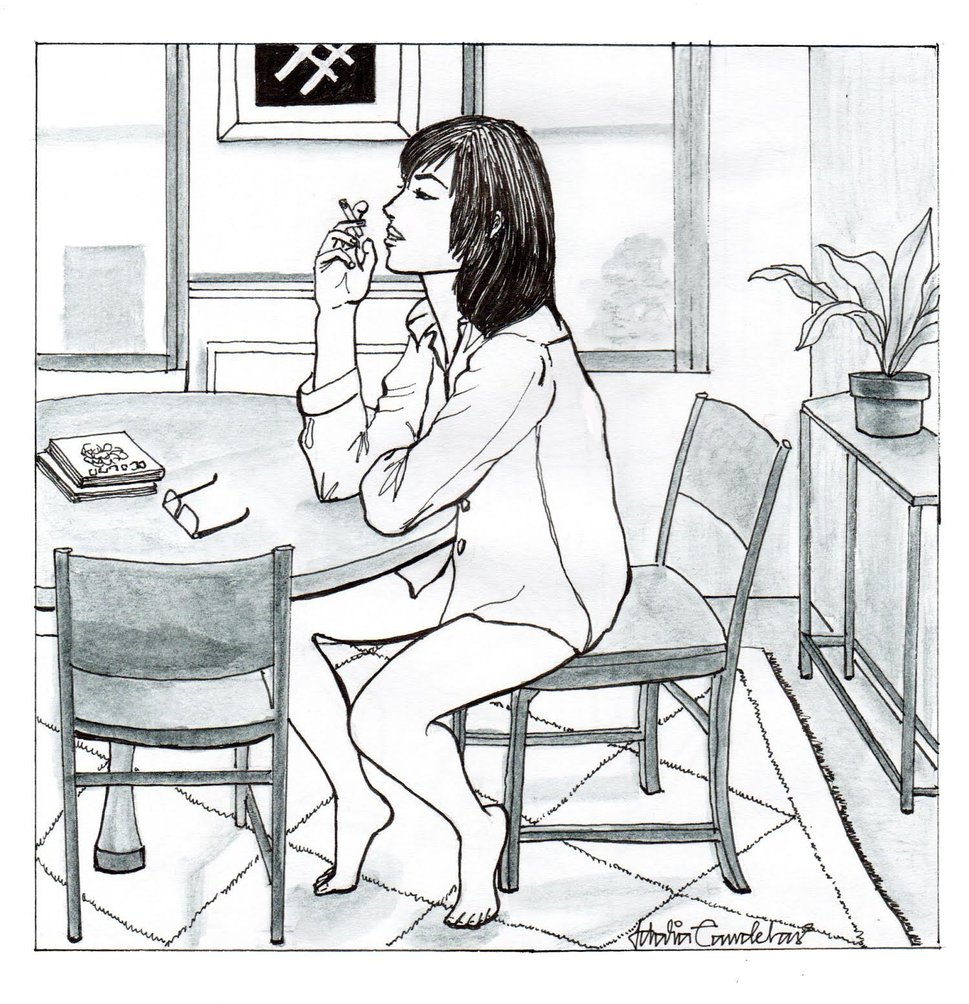
Thankfully, there’s Mexico-based illustrator Idalia Candelas. She captures the subtle space between lonely and alone in her series “Postmodern Loneliness.”

These are some of her drawings that perfectly describe the overlooked beauty of single life:

Drawings Perfectly Describe The Overlooked Beauty Of Single Life 1 Drawings Perfectly Describe The Overlooked Beauty Of Single Life 6 Drawings Perfectly Describe The Overlooked Beauty Of Single Life 5 Drawings Perfectly Describe The Overlooked Beauty Of Single Life 4 Drawings Perfectly Describe The Overlooked Beauty Of Single Life 3 Drawings Perfectly Describe The Overlooked Beauty Of Single Life 2


Source: Huffington Post;

THIS Is How To Boost Your Immune System In Only 15 Seconds…

0

Cold water and cold shower have a long tradition in many cultures, and for good reason. While showering and bathing in hot water is very smooth, cold water provides us numerous health benefits.

A study, conducted by German scientists, has come up at the conclusion that people who use cold showers for at least two minutes, rarely suffer from colds.

Another study, conducted in Prague, concluded that two types of white blood cells, monocytes and lymphocytes, which are responsible for the destruction of pathogens, increased after athletes took a bath in cold water.

Many researchers claim that cold shower relieves stress and improves mood.

A survey conducted at Virginia Commonwealth University in Richmond US found that cold water stimulates the production of norepinephrine, a hormone that is similar to adrenaline and have the same function.

There is a simple method using cold water that will boost your immunity.

This is the method:

This Is How To Boost Your Immune System

Every night before bedtime, fill the bathtub with cold water. Then enter barefoot in the tub and tap with your feet in the cold water but only for 15 seconds. Put on cotton socks afterwards. Practice this method every night and you will significantly strengthen the immune system.

In case you have a cold, it is another reason to urgently strengthen your immunity. In such case this method should be applied every 4 hours.

Do not be afraid that this will worsen your health condition because this method will do nothing but help you strengthen the immune system.


Source: India Times;

New Research Concludes That Some Neandratals Were Vegetarian And More Culturally Advanced Than We Thought!

Examining the contents of the calcified plaque of five Neanderthal specimens that range from 42,000 to 50,000 years old, researchers were able to determine their diet. It turns out that not all Neanderthals ate meat. Some of them were vegetarian!

Some of them dined on a lot of meat, eating the flesh of animals like woolly rhinoceros and wild sheep.

But others may have been complete vegetarians, according to a paper published Wednesday in the journal Nature.

In the plaque of these Neanderthal vegetarians, researchers found no evidence of any meat. Instead, they say these individuals dined on mushrooms, pine nuts, and moss.

To be real here, it’s really unlikely that the choice of these diets was based on some moral or ethical foundation.

“We really think that these are just reflective of the particular environments that the Neanderthals were in at the time,” study lead author Laura Weyrich, tells The Christian Science Monitor.

The meat-munching Neanderthal teeth were unearthed at Spy Cave in Belgium, a region that researchers think was more of a steppe environment, with big, rolling, grassy hills or small mountains, when Neanderthals lived there.

The moss-munching Neanderthal specimens are from El Sidrón Cave in Spain, which was probably densely forested at the time.

New Research Concludes That Some Neandratals Were Vegetarian!

“It’s easy to understand how a big woolly rhino could have been wandering through a grassy field,” Dr. Weyrich says.

But “it’s very difficult to picture that big beastly animal trying to squeeze its way through a densely forested area. It’s much easier to eat pine nuts that are all over the ground.”

“They did what any human would do. They ate what was available to them.”

Even though there were certainly some animals there they could have eaten, the Neanderthals who were found in Spain chose to avoid meat, for some reason.

We don’t want to say that these Neanderthals cared too much about the animals, but maybe they found another, better option, and they didn’t want to change.

This could suggest that, if humans have 2 choices where 1 is eating animals, and the other is not, naturally we would choose the friendlier way.

This says a lot about who we are, and how we developed depending on the environment we were born and raised in.

Another thing that scientists discovered was a microbe suggesting a possible “kissing” connection between Neanderthals and modern humans.

New Research Concludes That Some Neandratals Were Possibly Kissing Modern Humans

They extracted a complete genome of a microbe, “Methanobrevibacter oralis”, a strain of which is found today in Homo sapiens’ microbiome.

This, Weyrich and her colleagues say, suggests that the mouth-inhabiting microbe was being passed between the two species.

The two human species are known to have interbred, but “those interactions of interbreeding were always described as something that was very brash and brutal,” Weyrich says.

“But if they’re swapping spit and they’re sharing oral microorganisms, that means that there’s something much more friendly, or certainly something much more intimate going on with those interactions.”

They might have even felt love towards one another, instead of the animalistic light we describe them with, being led solely by their instincts.

The whole research suggests that there is a lot we considered wrong about  Neanderthals.

“It’s not these individuals that were toting clubs and grunting and running around in caves,” Weyrich says. Instead, she says, they led “a very nuanced lifestyle.”

There are a lot more clues like cave art, tombs, and complex constructed structures all point to the extinct human species being more culturally advanced than classically thought.

Neanderthals, according to Dr. Weyrich, “were very capable, very intelligent, probably very friendly beings,”

“We really need to rewrite the history books as far as how we see them and how we view their lifestyle.”


Source: CSMonitor;

12 Life Lessons From A Man Who’s Seen 12,000 Deaths!

0

Rooted in the hearts of many Hindus is the belief that if you breathe your last breath in Kashi (Varanasi) you attain ‘the fruit of Kashi’— “release from the cycle of rebirth impelled by the law of karma”.

Kashi Labh Mukti Bhawan in Varanasi is one of the three guesthouses in the city where people check in to die.
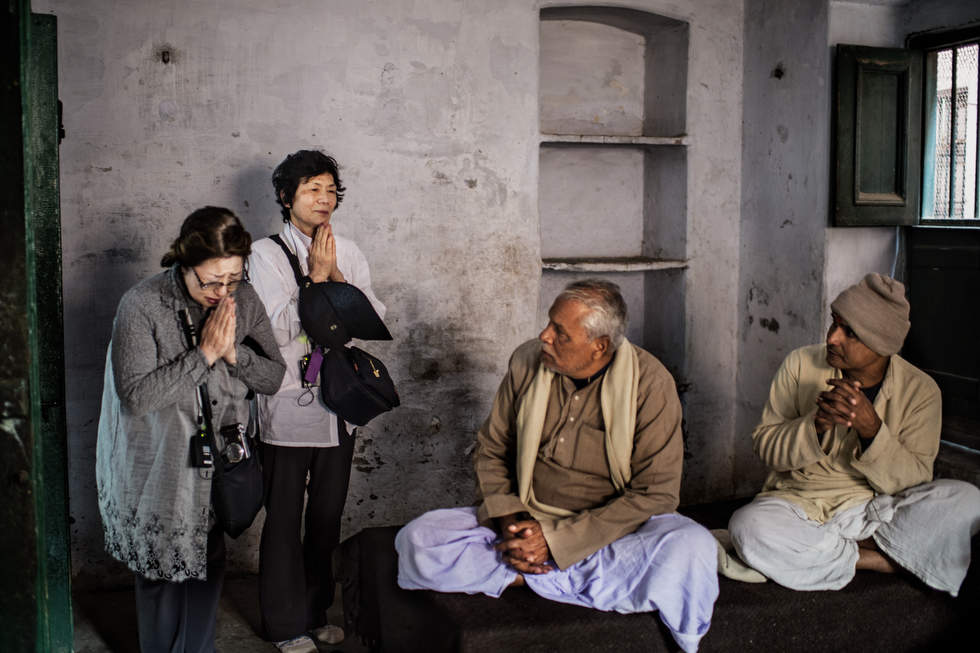
Bhairav Nath Shukla

Bhairav Nath Shukla has been the Manager of Mukti Bhawan for 44 years.

He has seen the rich and the poor take refuge in the guesthouse in their final days as they await death and hope to find peace.
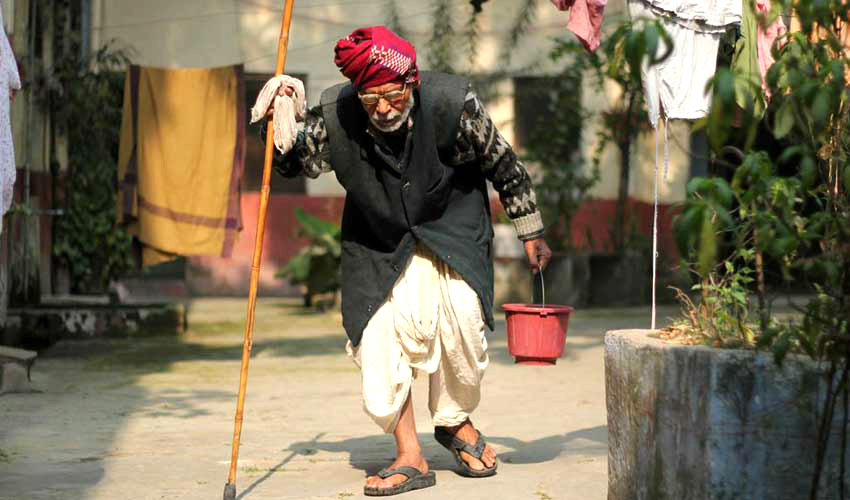
Manager of Mukti Bhawan

Bhairav hopes with and for them. He sits on the wooden bench in the courtyard, against the red brick wall and hears the lessons and regrets of these people.
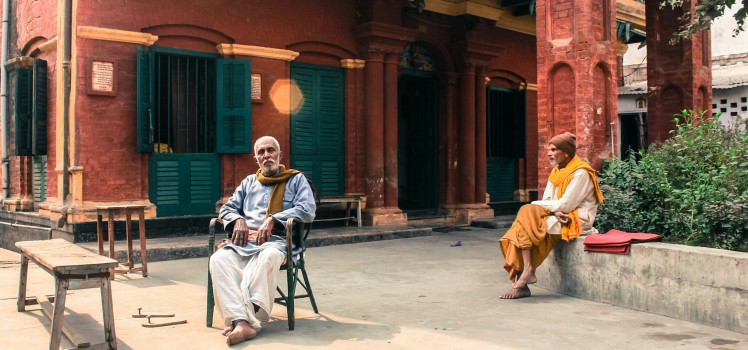
Kashi Labh Mukti Bhawan

Bhairav shared 12 recurring life lessons from the 12000 deaths he has witnessed in his experience as the manager of Mukti Bhawan:

1. Resolve all conflicts before you go

Bhairav recounts the story of Shri Ram Sagar Mishr, a Sanskrit scholar of his times.

Mishr was the eldest of six brothers and was closest to the youngest one. Years ago an ugly argument between the two brothers led to a wall to partition the house.

In his final days, Mishr walked to the guesthouse. He was sure he will pass away on the 16th day from his arrival.

On the 14th day he said, “Ask my estranged brother of 40 years to come see me. This bitterness makes my heart heavy. I am anxious to resolve every conflict.”

A letter was sent out. On the 16th day when the youngest brother arrived, Mishr held his hand and asked to bring down the wall dividing the house. He asked his brother for forgiveness. Both brothers wept and mid sentence, Mishr stopped speaking. His face became calm. He was gone in a moment.

Bhairav has seen this story replay in many forms over the years. “People carry so much baggage, unnecessarily, all through their life only wanting to drop it at the very end of their journey. The trick lies not in not having conflicts but in resolving them as soon as one can,” says Bhairav.

2. Simplicity is the truth of life

“People stop eating indulgent food when they know they are going to go. The understanding that dawns on many people in their final days is that they should’ve lived a simple life. They regret that the most,” says Bhairav.

A simple life, as he explains, can be attained by spending less. We spend more to accumulate more and thus create more need.

To find contentment in less is the secret to having more.

3. Filter out people’s bad traits

Bhairav has seen that every person has shades of good and bad.

Instead of dismissing “bad” people outrightly, we must seek out their good qualities. That’s how you’ll help them realize their good side.

Harboring bitterness for certain people comes from concentrating on their negatives.

If you focus on the good qualities though, you spend that time getting to know them better or, maybe even, loving them.

4. Be willing to seek help from others

To know and do everything by yourself might feel empowering but it limits one from using what others have learnt.

Bhairav believes we must help others, but more importantly, have the courage to seek help when we’re in need.

Every person in the world knows something more than us in some respect. And their knowledge can help us, but only if we’re open to it.

5. Find beauty in simple things

Mukti Bhavan plays soulful bhajans and devotional songs three times a day. “Some people”, Bhairav says, “stop and admire a note or the sound of the instruments as if they have never heard it before, even if they have. They pause to appreciate it and find beauty in it.”

But that’s not true of everyone, he adds. People who are too critical or too proud, are the ones who find it hard to find joy in small things because their minds are preoccupied with “seemingly” more important things.

And when they get old, they realize that those “small” things are the real gifts of life, and they regret missing on so much of them.

6. Acceptance is liberation

Most people shirk away from accepting what they are going through. This constant denial breeds in them emotions that are highly dangerous.

Only when you accept your situation you become free to decide what to do about it.

When you are not in denial of a problem you have the strength to find a solution.

Indifference, avoidance, and denial of a certain truth, Bhairav believes, cause anxiety; people develop a fear of that thing.

Instead, accept the situation so you are free to think what you want to do about it and how. Acceptance will liberate you and empower you.

7. Accept everyone as the same

The secret to Bhairav’s unfazed dedication towards his demanding job can be understood via this life lesson.

He admits that life would’ve been difficult if he treated people who admit themselves differently, based on their caste, creed, color, and social or economic status.

Categorization leads to complication and one ends up serving no one well.

“The day you treat everyone the same is the day you breathe light and worry less about who might feel offended or not. Make your job easier,” he says.

8. When you find your purpose, do something about it

To have awareness about one’s calling is great, but only if you do something about it.

A lot of people, Bhairav says, know their purpose but don’t do anything about it.

Simply sitting on it is worse than not having a calling in the first place.

Having a perspective towards your purpose will help you measure the time and effort you need to dedicate to it, while you’re caught up in what you think you can’t let go or escape.

Take action on what truly matters. That’s what keeps the fire burning deep inside you!

9. Habits become values

Building good habits happens over time, with practice. And those habits, over time, become values.

Bhairav recommends cultivating good habits to be able to house good values.

“It’s like building a muscle; you have to keep at it everyday.”

Till one doesn’t consistently work towards being just, or kind, or truthful, or honest, or compassionate, every single time he is challenged, one cannot expect to have attained that quality.

10. Choose what you want to learn

In the vastness of the infinite amount of knowledge available to us it is easy to get lost and confused.

“The key lesson here is to be mindful of choosing what you deeply feel will be of value to you,” he says.

People might impose subjects and philosophies on you because it interests them, and while you must acknowledge their suggestions, the wise thing to do is delve deeper into what rejoices your own heart and mind.

With a smile on his face he says, “In the last days of their life a lot of people can’t speak, walk or communicate with others with as much ease as they could, earlier. So, they turn inwards. And start to remember the things that made their heart sing once, things that they cared to learn more about over the course of their life, which enriches their days now.”

11. You don’t break ties with people; you break ties with the thought they produce

You can seldom distance yourself from people you have truly loved or connected with in some way.

However, in any relationship, there is a certain mismatch of ideologies that might cause people to stop communicating.

This never means you are no longer associated with that person. It simply means that you don’t associate with a dominant thought that person brings with him/her, and to avoid more conflict you move away.

This is why we still love some people who we broke up with so long ago, even though we cannot understand why.

The divorce, Bhairav affirms, is with the thought and never with the person. To understand that is to unburden yourself from being bitter and revengeful.

12. 10 percent of what you earn should be kept aside for dharma

Bhairav doesn’t define Dharma as something religious or spiritual. Instead, he says it is associated with doing good for others and feeling responsible about that.

A simple calculation according to him is to keep 10 percent of your income for goodwill.

Many people donate or do charitable acts towards the end of their life because death is hard on them.

In their suffering, they begin to empathize with others’ suffering.

He says those who have the companionship of loved ones, the blessings of unknown strangers, and an all-encompassing goodwill of people, exit peacefully and gracefully.

That is possible when you don’t cling on to everything you have, and leave some part of it for others.


Source: In5d;

Everyone Has This Plant But NOBODY Knows That It Makes Cancer Cells Disintegrate Within 48 Hours!

0

Back in 2009, a group of Canadian researchers from the University of Windsor in Ontario started looking at an abundant weed as a cure for cancer.

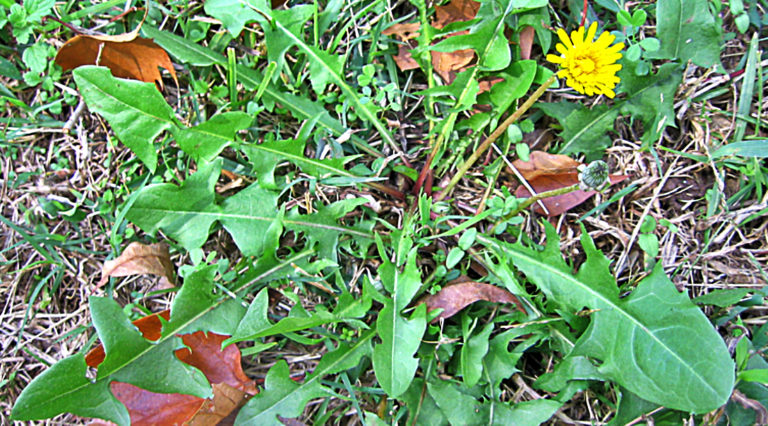
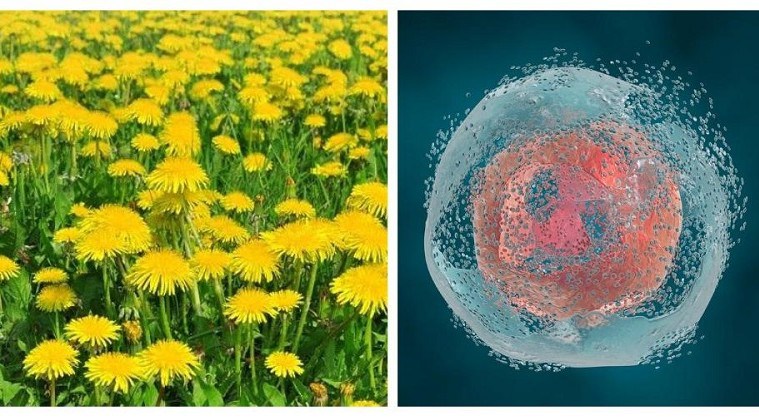
It all started when an oncologist came across something quite interesting with some cancer patients.  Believe it or not, the plant we are talking about is the common dandelion!

A post-doctoral fellow at the University of Windsor named Pamela Ovadje has done an extensive work on the topic. She dealt with the anti-cancer properties of dandelion and similar extracts.

Everyone has this plant but NOBODY knows that it makes cancer cells disintegrate within 48 hours

According to Ovadje,

“We had information from an oncologist, a collaborator here in Windsor, who had patients that showed improvement after taking dandelion root tea. And so, with a phone call, we decided to start studying what was in this tea that made patients respond to it, so we started digging up dandelions.”

She was quite suspicious in the beginning, but not because it was an all-natural source. “I figured dandelions are everywhere, and if there was something to it, people would have found this out already,“ – she explained.

We should be glad to hear that the researchers have started conducting studies on dandelion root extract and its effects on cancer, as the results are more than amazing!

“Since the commencement of this project, we have been able to successfully assess the effect of a simple water extract of dandelion root in various human cancer cell types in the lab and we have observed its effectiveness against human T-cell leukemia, chronic myelomonocytic leukemia, and pancreatic and colon cancers, with no toxicity to non-cancer cells. Furthermore, these efficacy studies have been confirmed in animal models (mice) that have been transplanted with human colon cancer cells.” (Source)

Dandelion root extract was approved for human trials in February 2015. Now, it is in Phase 1 trials for end-stage blood-related cancers, such as leukemia and lymphoma.

According to Dr. Siyaram Pandey, professor of chemistry and biochemistry at the University of Windsor and principal research investigator for the project, dandelion root extract has quite a “good potential” to cause a death of cancer cells.

How Does it Work?

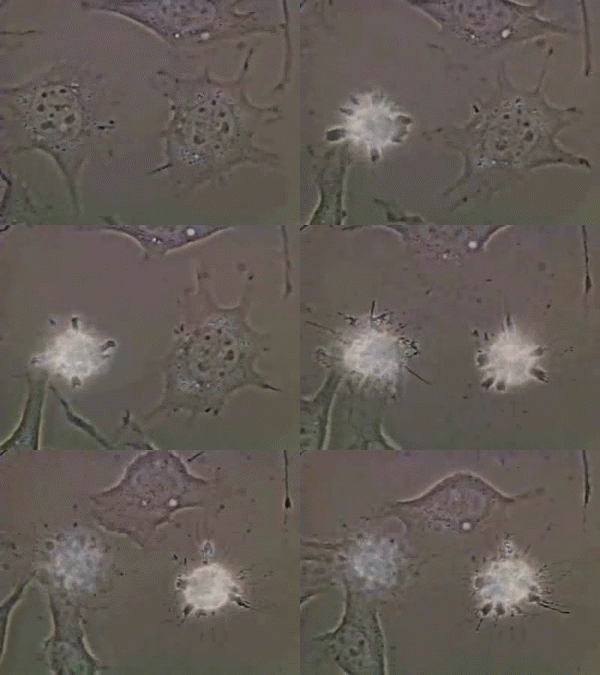
This extract causes cancer cells to go through apoptosis, a natural cell process where a cell activates an intracellular death program because it isn`t needed anymore. In brief, dandelion root extract causes the cancer cell to “commit suicide” without affecting the healthy ones.

Two cells perform apoptosis which is far better than chemotherapy drugs which kill one healthy cell for every 5 to 10 cancer cell, the dandelion extract.

plant makes cancer cells disintegrate within 48 hours

It is important to mention that the concentration of this extract is much higher than the one which is currently available. Even though trials are still underway, this extract may be the future of cancer treatment!

If you would like to learn more about this, check out the following video.  Dr. Siyaram Pandey’s explains how dandelion root causes the death of cancer cells within 24 hours.


Sources:
Best Healthy Guide;
CBC;
Living Traditionally;
David Wolfe;
Underground Health Reporter;
IBTimes;
http://www.uwindsor.ca/dandelionrootproject/;