They don’t just solve problems, they innovate solutions.
They don’t wait for a perfect, packaged answer to drop into their laps.
They go out, explore, dig deeper, ask questions, and find a way.
An exceptional leader isn’t just a reactive problem solver, they are a proactive innovator.
They understand that every obstacle holds a lesson, and every challenge is an opportunity to learn and grow.
They make it their mission to not only address problems but to reframe them in a way that opens up new avenues for success.
The Car Key Debacle: A Crash Course in Boxless Thinking
Let me tell you a story that illustrates what it means to be an exceptional leader.
This past weekend, I was at a CEO and Leadership convention, surrounded by some of the brightest minds in business, talking about innovation, leadership, and the future.
We were brainstorming, strategizing, and exchanging ideas about how to create sustainable growth, build thriving teams, and drive innovation in a rapidly changing world.
In the middle of all this high level thinking… I lost my car keys.
Annoying? Yes.
Fixable? Absolutely.
Except it was Sunday.
And Ford? Closed.
The first locksmith I called had the standard response: “We’ll have to get your key code on Monday.”
There I was, four hours away from home, facing The Boxed Solution: wait, accept the problem, and deal with it.
The options?
A) Sleep in my car
B) Get a hotel
C) Spend more money, deal with Ubers, lose a whole day, and simply accept the inconvenience.
At that moment, I had to make a decision.
Do I succumb to the limitations of conventional thinking? Or do I think outside the box, or better yet, boxless?
But that’s not how exceptional leaders operate.
(And Ford, if you need a one on one problem solving session to make your customer service more sustainable, feel free to book a call with me.)
The Power of Unconventional Problem Solving
I had two choices:
Accept the situation and sleep in my car.
Problem solve.
When we face problems, we often feel stuck.
The “boxed” solution presents itself as the only way out.
It’s easy to accept what’s being handed to us because it feels like the path of least resistance.
But as leaders, it’s our job to reject the standard response and challenge ourselves to find innovative solutions.
So, I did what any Boxless Leader would do.
I started researching.
Where else could I find the key code?
Was there a workaround?
Could someone else solve this problem for me?
I kept digging.
And then… Bingo!
I found a solution.
Not just any locksmith, but one who could create a new key without needing Ford’s “Monday business hours.”
A few hours later?
Problem solved.
I was driving home.
The power of unconventional thinking lies in questioning what we’re told and finding alternative solutions that others may overlook.
In this case, my curiosity and persistence led me to a solution that saved me time and money.
This is the essence of boxless thinking, refusing to be constrained by traditional approaches and finding a way to innovate and adapt in the face of challenges.
That’s the point: Never let a “boxed” solution be your only option.
The Abundance Banking Asset of Curiosity
Here’s the secret to being a truly innovative leader: Questions are breadcrumbs.
They lead you from problem to solution, if you keep following them.
The key to being an exceptional problem solver is maintaining a mindset of curiosity.
When faced with a challenge, the first step is to ask yourself,
“What if there’s another way?”
This simple question opens the door to infinite possibilities.
The answers you seek may not always be obvious, but by following the trail of your questions, you will uncover creative solutions that others might miss.
If someone tells you, “There’s no way,” ask: “What if there was?”
If you don’t understand the answer, ask: “What does that really mean?”
If a door is locked, ask: “Where’s another entrance?”
The moment you stop questioning, you stop leading.
When you stop asking questions, you cease to be a true leader.
It’s the leaders who never stop asking questions, even when the answers aren’t clear, that create environments where growth, innovation, and transformation happen.
As a leader, it’s your job to ask questions that challenge the status quo, even if it means going against conventional wisdom.
Questions force us to think critically and creatively.
They push us to see problems from different angles and, in doing so, help us uncover new solutions.
The more questions you ask, the more solutions you will uncover.
And the more solutions you uncover, the more problems you’ll be able to solve.
Be the Boxless Leader Your Team Needs
The best leaders, the ones who drive innovation, create cultural transformation, and build sustainable success… are the ones who refuse to settle for the obvious answer.
They push, they dig, they challenge the status quo.
In doing so, they find solutions others might miss.
Exceptional leaders are more than just problem solvers, they are solution innovators.
They look beyond the immediate problem and search for ways to turn obstacles into stepping stones for greater success.
They refuse to accept “good enough” and always strive for excellence.
And in doing so, they create environments where their teams feel empowered to think creatively, challenge assumptions, and push boundaries.
As a Boxless Leader, you must embrace the idea that your role isn’t just to direct, it’s to guide your team through uncharted territory.
This requires constant questioning, a relentless pursuit of better ways, and the courage to step outside your comfort zone.
Your Challenge Today: Embrace Curiosity and Innovate
Your challenge today: Next time you hit a wall, don’t stop at the first “No.”
Follow the breadcrumbs.
Stay curious.
Innovate.
The world of business is filled with problems, some big, some small.
But the leaders who succeed are the ones who don’t stop when they hit an obstacle.
They keep digging, they keep asking questions, and they keep finding solutions.
By doing this, they not only solve problems, they create new opportunities and drive change in ways others can’t even imagine.
So, next time you’re faced with a challenge, remember: The answer isn’t always the obvious one.
Ask the hard questions.
Push beyond the “boxed” solutions.
Be the leader who doesn’t just solve problems, be the leader who innovates solutions.
Take Your Leadership to The Next Level!
Want more strategies on how to be an exceptional Boxless Leader?
What if the pain you’re carrying isn’t fully yours, but the weight of generations of unhealed wounds passed down through your bloodline?
As mothers, we unknowingly inherit patterns of emotional neglect, criticism, and disconnection from the generations before us…
And without awareness, those same patterns continue through our own children.
Modern psychology and ancestral healing wisdom both confirm: generational trauma is real, and it silently shapes the way we parent, love, and live.
Many of us were raised in households where emotional needs went unmet, where patterns of neglect, criticism, or emotional disconnection were passed down like family heirlooms.
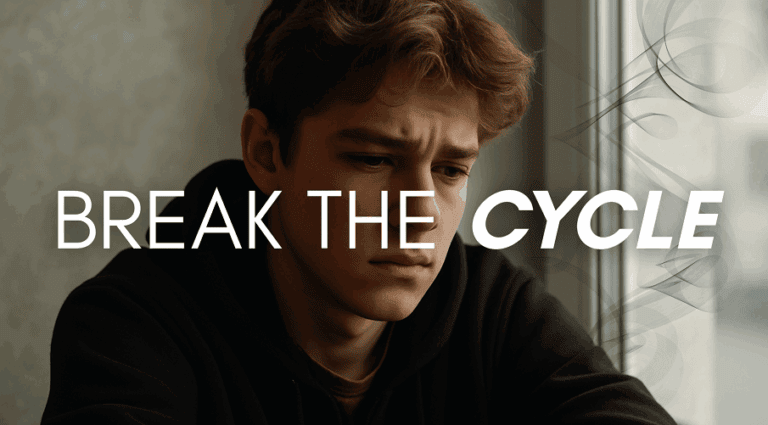
And now, as we hold our own children, we feel the pressure to do better, to break the cycle.
But how do we heal wounds we didn’t cause yet still carry?
How do we stop generational trauma from shaping our motherhood journey?
The truth is: it starts with awareness and intention.
You have the ability to break the cycle, heal your lineage, and raise your children in the light of conscious, empowered motherhood.
You have the power to rewrite the story for yourself and your children.
In this article, we’ll explore what generational trauma is, how it affects motherhood, and the 7 transformative steps you can take to break the cycle and step into your role as a healed, empowered, sovereign Mama Goddess.
What is Generational Trauma?
Generational trauma, or intergenerational trauma, refers to emotional, psychological, and behavioral patterns passed down through families.
It may show up as:
Persistent feelings of unworthiness or shame.
Fear of failure or rejection.
Difficulty expressing emotions.
Struggles with boundaries and self worth.
Anxiety, depression, or emotional numbness.
These patterns often originate from traumatic experiences in past generations (abuse, neglect, loss, cultural oppression, war, or addiction) that were never processed or healed.
As children, we subconsciously absorb these unspoken wounds, and without awareness, we risk passing them on to our own children.
How Generational Trauma Affects Motherhood:
When we enter motherhood, unresolved generational trauma can unconsciously shape how we parent.
It might look like:
Overreacting to minor challenges because of deep rooted fears.
Struggling to bond emotionally with your child.
Projecting your own insecurities onto your children.
Repeating harsh discipline or critical patterns you experienced.
Feeling emotionally overwhelmed or disconnected.
Without intentional healing, we risk recreating the emotional climate we once longed to escape.
But it doesn’t have to be this way.
You can break the cycle.
7 Ways How to Stop Generational Trauma from Affecting Your Motherhood:
Breaking the cycle doesn’t mean you need to have everything perfectly figured out.
It means choosing to become aware, to heal, and to parent with intention.
Here’s how you can start:
1. Acknowledge the Patterns
The first step is to gently explore your family history and personal experiences.
Ask yourself:
What messages about love, worth, and emotions did I receive growing up?
Are there emotional patterns I notice repeating in my life?
How do these patterns show up in my parenting?
This awareness allows you to respond, not react, and begin making conscious changes.
2. Prioritize Your Healing
Healing yourself is one of the greatest gifts you can give your children.
It models resilience, emotional intelligence, and self-love.
Salma Malik is one of the coaches that we found this month and we did a little interview with her. She impressed us with her passion and resilience.
She is one of those rare healers whose greatest strength was forged in the fires of her own struggles. Battling chronic skin conditions, suppressed emotions, and the heavy weight of cultural expectations, she turned to inner work when conventional solutions failed. What began as a personal healing journey soon became a calling to help others break free from the hidden roots of their suffering.
She now blends science, spirituality, and emotional therapy into a powerful, integrative approach to wellness. By fusing neuroscience, somatic awareness, and Quranic psychology, she guides clients to become investigators of their own symptoms, decoding the emotional conflicts and patterns that keep them stuck, and unlocking deep healing from within.
She shares in this interview how her pain became her greatest teacher, the principles behind her signature 10 step root cause analysis, and the unique fusion of emotional release tools and faith based wisdom that sets her coaching apart. Here is what she said…
Meet Life Coach Salma Malik:
Name: Salma Malik
Pillar: The Spirit, The Mind, The Body, The Heart
Who is this coach for: Anyone who wants to find the root cause of their pain and reverse their chronic symptoms.
How they can help: By using her signature 10 step root cause analysis, as well as various tools and techniques like EFT tapping, Lifestyle Prescription Mapping, emotional decoding, and Quran based mindset tools, just to name a few.
First of all, how are you and your family doing after these Pandemic times?
Thank you for asking.
We are doing well and stronger than before.
The pandemic brought us closer as a family, deepened our faith, and taught us to appreciate the present moment like never before.
How did the coronavirus pandemic affect your clients? Did it affect you at all?
It impacted everyone, emotionally, mentally, and spiritually.
Many clients came to me with anxiety, skin issues, relationship breakdowns, and chronic fatigue.
Personally, the pandemic was a reminder that my work is needed more than ever.
It was also the time I expanded my digital presence and held my most powerful healing group programs yet.
What are the biggest lessons that you learned in this pandemic?
That resilience isn’t just a buzzword, it’s a lifestyle.
And that true healing happens when we face our inner world with honesty and compassion.
The Origin:
Tell us about you, your career, how you started with your coaching career?
I’m a Root Cause Health Coach, Certified EFT Practitioner, and Lifestyle Medicine Specialist.
My coaching journey started from my own healing experience.
Struggling with chronic skin conditions, emotional suppression, and cultural pressures, I eventually discovered the power of inner work.
My transformation led me to study the Organ, Mind, Brain Connection.
I now empower others to decode their symptoms and find peace through an integrative approach that blends science, spirituality, and lived experience.
What was your biggest obstacle that you had to overcome in your life that made you who you are today?
Being separated from my family at a young age, dealing with chronic eczema, and growing up with suppressed emotions shaped me deeply.
But it was this pain that became my purpose.
Healing myself gave me the roadmap to guide others through theirs.
The Coaching Style:
How do you innovate with coaching your clients?
My unique innovation is combining root cause analysis with lifestyle prescriptions.
I integrate emotional release tools like EFT with neuroscience, Quranic psychology, and somatic awareness.
I don’t treat symptoms, I decode them.
Every session is tailored with a 10 step investigation of organ, brain, emotion, social links to unlock deep healing.
What’s unique about your coaching approach?
I blend Islamic wisdom with neuroscience and emotional therapy.
This fusion of faith and science is my signature.
I also empower clients to become investigators of their own symptoms, unlocking healing from the inside out.
What benefits do your clients get after working with you?
They gain clarity on their root emotional conflicts.
They learn how to self regulate.
They experience physical relief from chronic symptoms.
Do you use any specific tools to be efficient with your clients?
Yes.
My signature 10 step root cause analysis, EFT tapping, Lifestyle Prescription Mapping, emotional decoding, and Quran based mindset tools.
The Impact:
If you had a super megaphone that, when you speak into, the whole world will hear your message, what would you say?
Your pain is not random.
It’s a message.
When you listen with love, you heal with purpose.
What is the greatest lesson you have learned in your life?
That the body never lies.
Suppressed emotions, unresolved trauma, and limiting beliefs always find a way to express themselves, usually through physical symptoms.
Listen to your body, and you’ll find your truth.
Your final thoughts?
Healing is possible.
No matter how long you’ve suffered, there’s always a root.
Where there’s a root, there’s a way.
We just need the courage to look inward, and the right guide to hold the torch.
Feel free to check her website and explore all the ways she can help.
If you want to peak a glimpse into her coaching, you can follow her Facebook profile and Instagram account.
And if you’d like to connect with her more personally, you can do that through LinkedIn or by sending her a direct message on her Email [email protected]. It was an honor having this interview with her.

We often find ourselves caught in unspoken battles for validation, power, and recognition…
Unaware of the deeper dynamics at play.
Beneath these surface level exchanges lies a timeless choice: to walk the path of love and unity, or to get trapped in cycles of selfishness and separation.
The following poem offers a reflective journey through these hidden games we play with one another.
Let this poem invite you to pause, reflect, and reconsider the roles you play… and perhaps, inspire you to leave loving footsteps in the sand.
Love and Evil Game
When interacting with others, you always play some kind of unique game, we activate our race program and want to earn the fame.
We think we know the rules of the game, but this is often wrong, with the truth being in the heart all along.
A dynamic develops by itself along the way, there is not even a need for anything to say.
Determined by energetic nature and condition of the ones involved, and sometimes karmic issues to be resolved.
How can I drain and fool the other person as much as I can, and hide the scam.
I need to win at all costs not caring for the others, I don’t care if they are my lovine sisters and brothers.
Often the game of “me, myself and I”, the values/the game of the all-seeing eye.
The dark giving you the offer to play its game, and promising you a personalized fame.
To play on its side of the fence, and to weaken the omnipotence of love`s defence.
Believing you are playing the game of the perfect look, money and fame, the beggars on the street are useless eaters, a true shame.
The rat race in motion, selfishness in true devotion.
I don’t give but only take, to invest in emotions that are fake.
When realizing the other one is shy, empathetic and full of love, not caring about the meaning of a white dove.
Often we see the empath together with a narcissist beast, emotions creased.
If not setting the boundaries tight, we might get rolled over and end in a dramatic fight.
Sometimes we are forced to play a game we don’t want to be in, knowing deep within there will be no win.
Not knowing how to get out, anybody please helping me to stop “shouting out loud!”
Don`t you know that in the end the winner stands alone, in the hand a dark crown,
the heart empty and alone, underneath the glass dome.
We might learn the rules of the game when it is nearly over, suddenly it is game over.
In the end you played white and black chess to decide the side of the fence, does it slowly start to make sense?
You determined your own future rue, black or white shoe.
In the future the evil will play with the evil in one game, while the good hearted will play another game and enlighten the love flame.
3-d versus 5-d, a high frequency is the key.
While many will return home, out of this dark zone.
For the ones that have to continue to play, there will be planet A and planet B, the lovine`s mercy has its limits, you will see.
Is it not much better to walk through the goal line hand in hand, and leaving loving footsteps in the sand?
Mayumi Ogata is one of the coaches that we found this month and we did a little interview with her. She impressed us with her passion and wisdom.
Her approach to public speaking is one I am sure you haven’t heard before. What if every conversation you had, every moment you spoke, whether with your family, your team, or a room full of strangers, was a performance capable of shaping your life? For coach Mayumi this idea isn’t theory, it’s a lived truth.
Her story is one of resilience, reinvention, and the power of authentic expression. From her beginnings as an actress to transforming a struggling restaurant into a nationwide sensation, and now to coaching leaders and entrepreneurs to embody their brilliance on stage and off, she has proven that our life is a series of speeches that, if done effectively and authentically, can transform the world.
Her journey wasn’t without hardship. Childhood trauma left her with a deep fear of speaking, stunting her ability to express herself. However, through the guidance of a mentor and the wisdom of Eastern philosophy, she learned to reframe her experiences. Embracing the Yin and Yang concept, Mayumi realized that even the darkest moments held the potential for growth and light. This shift in perspective allowed her to transform her fears into strength, and it became the foundation of her coaching, where she helps others turn their struggles into powerful sources of self expression and personal transformation. Here is what she said…
Meet Life Coach Mayumi Ogata:
Name: Mayumi Ogata
Pillar: The Mind, The Heart
Who is this coach for: Anyone who wants to learn how to powerfully express their true self so they can bring more of their soul into this world and create a positive change.
How they can help: By using her vast knowledge on the subject, coaching, and using various tools and techniques for deepening client introspection and organizing thoughts, such as specific ‘output’ exercises and the Dialogue Journal, question sheets to reframe perspectives, and mind and body connection exercises like walking meditation and mindfulness practices that focus on physical sensations.
First of all, how are you and your family doing after these Pandemic times?
Thank you for asking.
My family and I are all doing well.
The pandemic was certainly a challenging time, but it also gave us an opportunity to deepen our family bonds and appreciate the small joys of everyday life.
I still vividly remember being moved by the sight of flowers blooming on the roadside during walks with my husband.
Thanks to that period, I’ve stopped being glued to my phone while walking and have become more deeply aware of the beauty of nature right at my feet.
Realizing what I had taken for granted helped me appreciate that everything is a series of miracles.
Also, facing the same difficulties as people worldwide, I strongly felt the importance of connection and mutual support.
I became more conscious of choosing warm words and recognized anew the significance of conveying and expressing feelings.
We’re not guaranteed tomorrow, so I’ve started to truly practice the idea of Ichinichi Issho (a Japanese saying meaning “one day, one lifetime”) encouraging us to live each day fully as if it were our last.
How did the coronavirus pandemic affect your clients? Did it affect you at all?
Many of my clients struggled with the shift to online communication.
They faced challenges with conveying nuances and feeling a non verbal connection through the screen.
On the other hand, the increase in remote work gave many people more time for self reflection, prompting them to think deeply about their careers and lives.
Personally, I spent several years fully transitioning my sessions from in person to online.
It was a process of trial and error at first, but I became confident that I could build deep connections and support client transformation even online.
In a recent session, witnessing a client have a profound realization and shed tears through the screen, I saw the infinite possibilities of remote connection.
Also, during my keynote in France last month, I spoke about the importance of resilience and living in the present.
It struck me that Japan has companies that have lasted 100 or 200 years.
Sharing this ancient Japanese wisdom for building a sustainable, post pandemic society could lead to true globalization, a ray of hope I discovered.
What are the biggest lessons that you learned in this pandemic?
The biggest lessons were about True Self Reliance and Flexibility.
It’s the importance of nurturing your inner core (your Sacred Tree), listening to your own voice, making decisions based on self awareness (which is true self reliance), and cultivating the ability to adapt flexibly to uncertain changes by accumulating small, intentional decisions and choices.
In an age of information overload, I learned that discerning the essence and continually asking “Why?” is the key to forging your own path.
The Origin:
Tell us about you, your career, how you started with your coaching career?
I work as a Public Speaking Performance Coach.
I originally started as an actress, and after getting married, I was entrusted with managing one of my husband’s restaurants.
With no prior experience in the food industry or management, I started from absolute scratch when the restaurant was completely empty.
However, it eventually became a popular spot visited by customers from all over Japan and was even featured on TV and in magazines.
Just as I started giving talks to invigorate the restaurant industry, sharing insights from our success, the pandemic forced us to close down.
Wondering what to do next, a friend who was preparing for a major speech asked me, “You have so much stage experience, can you teach me about expression?”
After about an hour of coaching, she was thrilled, and her speech became incredibly persuasive.
It resonated with the struggles I saw restaurant owners face.
So many people have wonderful ideas and passion but miss opportunities because they can’t communicate them effectively.
Through my experiences, I became convinced that our lives are a continuous series of speeches.
No matter how delicious the food, if you can’t convey its value, customers won’t come.
The reason my restaurant became so popular was actually because I went around to each table and shared the story behind the deliciousness of the beer we served.
Customers experienced firsthand how much better the beer tasted when they knew its secret, compared to just drinking it unknowingly.
That’s what sparked the word of mouth buzz.
I realized that speaking isn’t just a skill, it’s a way to express one’s way of being and has the power to shape one’s life.
That led me to start my current coaching career, focusing not just on speaking techniques, but on deeply exploring one’s inner self and helping people embody their innate brilliance through their performance.
In recent years, I’ve had increasing opportunities to speak at high schools, universities, and events for executives and entrepreneurs.
This year, I was honored to give a keynote speech in Paris, France, for International Women’s Day, sharing the potential of expression both domestically and internationally.
What was your biggest obstacle that you had to overcome in your life that made you who you are today?
My biggest obstacle was the deep trauma I experienced in childhood.
For many years, that experience robbed me of my self worth and created a significant fear of expressing myself in front of others, whether one on one or in a group.
However, upon meeting my mentor, I received the words, “Everything happens for a reason.”
At the time, I couldn’t grasp what it meant, but I started to wonder, “What if those words were true?”
As I pondered this, a theater director gave me advice that struck me:
“Go experience more heartbreak. Otherwise, you won’t understand the feelings of someone heartbroken. Right now, you’re just acting, Mayumi, so your performance feels false. Actors don’t just act, they live fully within that world.”
I realized then that all experiences enrich our lives…
Using the Eastern philosophy of Yin and Yang, let me explain…
We tend to react with negative feelings when something Yin (negative) happens to us.
But Yin and Yang are interconnected and transform into each other, like how light shines brightest in the darkness, they coexist.
This means we can choose how we interpret events, whether as good or bad.
My old catchphrase used to be, “Why does this always happen to me?”
But after grappling with my mentor’s and the director’s words, a new perspective emerged: no experience is wasted.
Furthermore, in “Yin Yang” theory, things often start from Yin.
If you knew that Yang (positivity, light) would follow, wouldn’t you want to make the most of the Yin experience?
Thanks to this new viewpoint, my perception changed.
I began to see Yin not as bad, but as a valuable experience that expands one’s inner capacity.
It’s precisely because our capacity expands first that we can receive the Yang, tangible results and success.
If our capacity is small, Yang opportunities and experiences can feel overwhelming or crush us.
Through this realization process, I developed the “Sacred Tree Theory”.
Like a great tree withstanding any storm, we grow a trunk of our own axis and let branches and leaves of experience flourish.
It’s called a sacred tree because if you can believe there’s a sacred presence dwelling within you, you can treat yourself with care.
This is a crucial point: treating yourself as a sacred tree is a form of self coaching.
As concrete steps to nurture resilience, I practiced:
Journaling for deep self dialogue,
Walking to connect mind and body, and
Cultivating multiple perspectives (Fukugan Shikou) to change how I viewed things.
Throughout this process, my emotions went up and down, but each time, I recalled the Yin and Yang principle, continuing to believe that after every deep Yin (difficulty), Yang (light) would surely follow.
This very experience is the unwavering foundation upon which I now coach, empathizing with people’s pain and helping them bring out their inner radiance.
I now share this experience through my speaking engagements both in Japan and internationally.
The Coaching Style:
How do you innovate with coaching your clients?
My innovation lies in viewing speaking not as a surface level technique but as a reflection of one’s inner state.
According to what’s commonly known as Mehrabian’s Law, it is believed that 93% of the information we receive is non verbal.
I believe this non verbal communication (eye contact, facial expressions, posture, tone of voice, etc.) isn’t something to be manipulated with techniques but rather a natural manifestation of a person’s thoughts and emotions, their way of being.
Leveraging my acting background, I incorporate character development methods, creating a unique approach that builds presence and influence by aligning and integrating one’s attitude, thoughts, emotions, and body.
While acting focused on one to many communication, my restaurant experience, talking intimately with customers at each table, taught me that the essence is the same whether it’s one on one or one to many.
My coaching emphasizes not just how to speak, but delves deeper into why you feel and what you truly want to convey.
When clients connect with their inner selves, like tuning an instrument, aligning their words, emotions, and body movements, confidence and conviction arise.
In that moment, they deliver authentic, resonant performances that transcend technique.
This is what I call Performance Coaching that Embodies Your True Self.
What’s unique about your coaching approach?
The uniqueness of my coaching approach is rooted in the philosophy that “Life is a continuous series of speeches.”
While presentations might involve slides, in every aspect of our daily lives, in relationships with partners, children, or colleagues… we express ourselves through words and demeanor.
Enhancing the quality of this “expression (performance)” directly enhances the quality of life itself.
Specifically, I go beyond mere speaking techniques to focus deeply on the client’s “way of being (Being).”
Based on the idea that non verbal expression is a mirror of the soul, I help clients integrate their thoughts, emotions, physical sensations, and words, allowing their natural charisma and leadership to emerge effortlessly.
It is truly performance coaching designed to unleash inner brilliance.
What benefits do your clients get after working with you?
Clients gain a wide range of benefits…
They learn to speak confidently and effectively.
Beyond that, their self esteem increases, and they learn to trust themselves deeply.
They are freed from excessive nervousness and anxiety in front of others.
Their leadership and presence improve.
They clarify and learn to communicate their true thoughts and feelings.
They release limitations and become empowered to pursue what they want.
Their relationships become smoother.
Ultimately, this leads to career advancement, business success, and overall life satisfaction.
For example, client results include:
1. A female entrepreneur, once afraid of public speaking, captivated the audience with her poised speech and presence, winning the Grand Prix in a speech contest.
2. A bodybuilder lacking confidence placed in a competition after just one session, regaining his self assurance.
3. Others have tripled their sales by transforming their presence.
These are just a few examples of the concrete results my clients achieve.
Do you use any specific tools to be efficient with your clients?
Yes, I utilize several tools.
For online sessions, I use platforms like Zoom, along with video content designed to help master public speaking and charismatic presence.
Beyond that, I incorporate tools for deepening client introspection and organizing thoughts, such as specific ‘output’ exercises and the Dialogue Journal, question sheets to reframe perspectives, and mind and body connection exercises like walking meditation and mindfulness practices that focus on physical sensations.
These tools enhance the effectiveness of the sessions and support clients in deeply engaging with their own “way of being.”
The Impact:
If you had a super megaphone that, when you speak into, the whole world will hear your message, what would you say?
Life is a stage, and you are the star.
To live your true self fully, without regrets, never be afraid to express yourself!
Your voice, your experience, your very existence hold unique value.
There are things only you can do, things you can achieve precisely because you are you.
Unleash your inner radiance and share it confidently with the world.
Your expression can become someone’s hope, someone’s courage, and holds the power to make the world a better place.
What is the greatest lesson you have learned in your life?
The greatest lesson I’ve learned in life (as I touched upon in the previous question) is that “every experience has meaning and can be transformed into strength.”
Even past trauma and difficult experiences can become wisdom and strength that illuminate the future if you choose to change your perspective and learn from them.
Just as shadows make the light brighter, setbacks cultivate kindness and inner strength.
Through my own journey, I learned that it’s possible to rise from any situation and shine authentically.
That potential lies dormant within everyone.
As I told a client just yesterday, who agreed, “The most painful experiences in life can become your greatest weapons.”
It was because of my childhood trauma that I constantly sought ways to overcome it.
As a result, thanks to that traumatic experience, I can now empathize with and support my clients.
I feel truly happy to be in this work where I witness clients release their inner limitations and fears, opening the door to their potential by their own will.
It’s like flipping a coin, or how all the black pieces in Othello can turn white in an instant.
Depending on you, any event can be turned into power.
Your final thoughts?
We are all storytellers, each carrying a unique narrative called “self”.
And how we tell that story dramatically changes our lives.
My passion lies in helping each person listen to their inner voice and confidently share their story with the world through their expression.
Until now, I have dedicated myself to helping leaders and female entrepreneurs in Japan, who possess wonderful potential but hesitate to express themselves, shine further both domestically and internationally.
However, through this opportunity with this publication, my hope extends beyond Japan.
If reading this article inspires you, wherever you are, to embark on your best life through your own authentic expression, nothing would make me happier.
Where Can you Find Mayumi Ogata?
If you liked this interview and if you would love to learn how Coach Mayumi can help you to express your true self in such a powerful way so that you can change the world, get her online course here.
Feel free to explore her website and learn more about her and her services.
If you’d like to peak a glimpse into her coaching, subscribe to her YouTube channel.
And if you’d like to connect more personally with her, you can do that through LinkedIn or by sending her a direct message on her Email [email protected]. It was an honor having this interview with her.

Claire stood at the edge of the crowded cafeteria, her tray balanced precariously in her trembling hands.
The noise (laughing, shouting, the scrape of plastic chairs on tile) pressed in around her.
She scanned the room, searching for Lily.
Her heart pounded as the wave of sound threatened to swallow her whole.
Then she saw her…
Lily waved from the corner table, the seat next to her empty and waiting.
Claire exhaled, the tension in her chest loosening slightly.
As she slid into the chair, Lily smiled.
“Rough day?”
Claire nodded, tears threatening to spill over.
She didn’t trust herself to speak.
Lily’s smile softened.
She reached over and squeezed Claire’s hand.
“You don’t have to say anything. I’m here.”
It wasn’t a grand gesture.
It wasn’t a solution.
But in that moment, Claire felt seen, heard, understood.
That night, as Claire lay awake in bed, she thought about Lily’s hand on hers.
The way her heart slowed down…
The way the noise of the cafeteria had faded when Lily smiled at her…
And she wondered…
How does Lily always know what to say?
How does she always make things feel better?
The Power of Peer Support
Adolescents spend more time with their peers than with family members, making peer relationships one of the most influential factors in emotional and psychological development (Brown & Larson, 2009).
Research shows that teens who feel supported by their peers experience:
Lower rates of anxiety and depression
Better emotional resilience
Improved social skills
In Claire’s case, Lily’s presence acted as a form of emotional regulation.
The simple act of sitting with a trusted friend in a stressful environment calmed Claire’s nervous system.
Studies show that social support reduces activity in the amygdala, the part of the brain responsible for processing fear and threat…
While increasing activity in the prefrontal cortex, which governs rational thinking and emotional control.
Peer support creates a sense of belonging and psychological safety.
When teens feel seen and accepted by their peers, their brains produce oxytocin, a bonding hormone that reduces stress and increases emotional stability (Inagaki & Eisenberger, 2012).
This sense of safety allows teens to open up emotionally, process difficult experiences, and build healthier coping mechanisms.
Lily’s ability to sit with Claire and simply be present without trying to fix anything reflects a key principle of effective peer support: emotional presence.
Research shows that “being with” someone in emotional pain (rather than trying to solve their problem) strengthens emotional bonds and increases emotional resilience (Coan et al., 2006).
Emotional Regulation and Shared Coping
One of the most significant ways teens can support each other’s mental health is by helping with emotional regulation.
Adolescents are still developing their prefrontal cortex (the part of the brain responsible for impulse control and emotional regulation) making it harder for them to process strong emotions independently (Casey et al., 2019).
Lily helped Claire regulate her emotions by offering (Co)regulation.
By maintaining a calm and supportive presence, Lily’s emotional state influenced Claire’s.
This aligns with research showing that emotional states are contagious, when one person remains calm, it helps regulate the nervous system of the other (Butler et al., 2003).
Peer relationships also create opportunities for shared coping strategies.
Teens who feel supported by their peers are more likely to engage in adaptive coping strategies, such as problem solving and seeking emotional support, rather than maladaptive ones like avoidance or substance use (Compas et al., 2001).
After lunch, Claire found herself replaying Lily’s words.
The next time her anxiety started to rise, she took a breath and imagined Lily’s hand on hers:
“You don’t have to say anything. I’m here.”
The memory alone was enough to steady her breathing.
Reducing Social Isolation and Stigma
Social isolation is one of the most significant risk factors for adolescent mental health problems.
Teens who feel disconnected from their peers are more likely to experience depression, anxiety, and suicidal ideation (Allen et al., 2014).
Peer support acts as a buffer against these outcomes by increasing social connectedness and reducing feelings of loneliness.
Lily’s consistent presence in Claire’s life reduced Claire’s sense of isolation.
When Claire struggled with anxiety, she didn’t withdraw entirely because she knew Lily would notice and reach out.
Peer influence also plays a powerful role in reducing the stigma surrounding mental health.
Research shows that teens are more likely to seek help for mental health issues when they perceive that their peers view therapy and emotional support positively (Gulliver et al., 2010).
Lily’s non judgmental attitude toward Claire’s anxiety reinforced the message that mental health struggles are normal, and asking for help is not a sign of weakness.
Encouraging Help Seeking Behavior
Peers can act as critical bridges to professional support.
Teens are more likely to seek help from a counselor or therapist if encouraged by a peer than by an adult (Rickwood et al., 2005).
Positive peer norms around mental health increase the likelihood that teens will engage with therapy and other mental health services.
After several conversations with Lily, Claire agreed to see the school counselor.
“It’s not weak to ask for help,” Lily had said.
“You don’t have to do this alone.”
Research shows that teens who engage in mental health services early have better long term outcomes, including:
Improved emotional regulation
Academic success
Relationship stability
Peer encouragement plays a crucial role in removing the barriers of shame and fear that often prevent teens from seeking help.
Empowering Teens to Help Each Other
Teaching teens how to support each other’s mental health is a powerful intervention strategy.
Peer support programs, peer listening groups, and mental health awareness campaigns increase emotional resilience and reduce mental health stigma in schools (Shochet et al., 2001).
Studies show that schools that implement peer support programs report:
Increased student engagement
Improved emotional well being
Lower rates of disciplinary action
Encouraging teens to participate in peer mentoring and emotional wellness initiatives empowers them to become part of the solution.
Lily eventually became a peer mentor through her school’s mental health club.
“Sometimes you don’t have to have the right words,” she told the younger students.
“You just have to show up.”
Conclusion: The Transformative Power of Peer Support
Claire’s story illustrates the profound impact that peer support can have on teen mental health.
Emotional presence, shared coping, and social connection create a foundation of psychological safety that allows teens to navigate emotional challenges more effectively.
Teens are not powerless in the face of mental health struggles.
By listening, showing up, and encouraging help seeking behavior, teens can play a transformative role in each other’s emotional well being.
Mental health support doesn’t always require complex solutions, sometimes it’s as simple as holding a friend’s hand and saying, “I’m here.”
References:
Allen, J. P., et al. (2014). Peer influences on adolescent emotional development. Developmental Psychology, 50(1), 1-12.
Brown, B. B., & Larson, R. W. (2009). Peer relationships in adolescence. In R. M. Lerner & L. Steinberg (Eds.), Handbook of adolescent psychology (3rd ed., Vol. 2, pp. 74-103).
Wiley. Casey, B. J., et al. (2019). The adolescent brain and emotional regulation. Developmental Review, 28(1), 62-77.
Eisenberger, N. I., et al. (2011). Social support and stress reduction. Biological Psychiatry, 68(5), 367-373.
Gulliver, A., et al. (2010). Perceived barriers and facilitators to mental health help-seeking. Psychological Medicine, 41(5), 1-12.
Dr. Marci Catallo-Madruga is one of the coaches that we found this month and we did a little interview with her. She impressed us with her professionalism and expertise.
She began her career in physical therapy, working with people navigating the fears and frustrations that come with injury and chronic pain. But over time, she grew disillusioned with a system that managed symptoms while ignoring the deeper causes. Driven by a desire to offer something more meaningful, she pursued health coaching, NeuroLinguistic Programming (NLP), and hypnosis, building a holistic approach that treats the person, not just the problem.
She knows what it means to struggle. Growing up on welfare, watching her parents file for bankruptcy twice, and battling back pain from the age of three, she made a promise to herself: to create a life different from the one she came from and to show others they could too. That personal experience became the foundation of her work, allowing her to connect deeply with clients who feel overlooked, exhausted, and ready for change.
She now empowers clients to take back control of their health by teaching them to listen to their own intuition and create customized wellness plans. Her coaching is customized to each individual’s needs and uniqueness. Her clients don’t just follow instructions, they come off medications, rediscover energy, and build lives they actually want to live. Here is what she said…
Meet Life Coach Dr. Marci Catallo-Madruga:
Name: Marci Catallo-Madruga, Dr., PT, DPT, CFMP, CAdvHypnosis NLP
Pillar: The Mind, The Body
Who is this coach for: Anyone who wants to gain clarity and optimize their health so they can be vital and strong even when they are 80 years old.
How they can help: By using various tools and techniques like assessments, DNA epigenetic testing, NLP and Hypnosis, just to name a few.
First of all, how are you and your family doing after these Pandemic times?
We are doing mostly well.
The kids (twin boys) are still making some adjustments and are not as outgoing as they were before.
My husband is still working from home most of the time.
And my business could still be better.
How did the coronavirus pandemic affect your clients? Did it affect you at all?
The pandemic created a lot of anxiety and uncertainty in people.
It’s not unlike the current political climate.
There was a sense of dread and fear.
They wanted some security and some sense of connectedness.
For me, it devastated my business.
It was certainly scary, but it also allowed me to focus on how to best support my family, to better budget, meal prep, and plan so that we could make it through with ease.
What are the biggest lessons that you learned in this pandemic?
When the world crashes, you might too.
And that’s okay.
But always think critically.
Always look deeper.
Sheep are always going to be taken advantage of, and they will always be victims.
Those who choose to question, to be bold, they may face ridicule in the beginning, but they will have the value of peace of mind in the end.
The Origin:
Tell us about you, your career, how you started with your coaching career?
I actually started my coaching career with my physical therapy practice.
I was helping people navigate the trials and fears post injury, and also chronic pain.
I decided to start digging deeper into the causes and found that, most often, people were symptom managed instead of cause managed.
It was frustrating, and I knew it needed to be different.
I started with a simple health coaching certification and moved from there into Neurolinguistic Programming (NLP), Hypnosis, and so on.
What was your biggest obstacle that you had to overcome in your life that made you who you are today?
I feel like I have been put where I was and where I am because it allows me to better understand and feel.
We grew up on welfare and food stamps.
We didn’t have enough to go around.
My parents filed for bankruptcy two times before I was 18.
It was a struggle.
And on top of that, I had back pain from age 3.
It seemed like there was just always a struggle.
And I made decisions based on experience to try and never be where I was growing up.
To show others that there was a way out.
That if they believed they could, it would happen.
The Coaching Style:
How do you innovate with coaching your clients?
I think that the biggest thing I do is try to get the client to come to their own solutions.
They know, intuitively, what they need.
They are just afraid to say it.
In part, because they have been told that it’s not real or that it’s all in their heads.
In part, because they are tired and frustrated and just want someone to see them.
What’s unique about your coaching approach?
I take clients with health challenges and teach them how to bring health first thinking forward.
I don’t use the traditional models, but I focus more on education and guidance on what the basics should look like, and then how to customize that.
And then, I ask them:
“How will this fit into your life?”
“How do you want your life to look?”
“How do you want your life to look in 20 years or 50 years?”
“What are you willing to do now so that you are able to do what you want at age 80?”
And I let them come to the plan.
What benefits do your clients get after working with you?
Most of my clients end up (DE)medicating.
They come off of things like cholesterol meds, blood pressure meds, Metformin, and some even their insulin.
I have had many come off thyroid meds, and meds for anxiety and depression.
They come away from my coaching with a better understanding of their specific biophysiological processes and what they need to do to be as healthy and vital as they can.
And then, they make choices they want to make to obtain that.
Do you use any specific tools to be efficient with your clients?
I use a platform called Practice Better to deliver video content and email content.
I also use group coaching twice per month and surveys to see where they are.
All of my annual membership clients also have DNA epigenetic testing done to find their blueprint.
The Impact:
If you had a super megaphone that, when you speak into, the whole world will hear your message, what would you say?
You are different from everyone around you.
Stop making your health so hard.
Find your blueprint and follow it.
But if you don’t want to do that, remember the basics:
Protein, 90 grams minimum, but most females need 120, and men 150.
Real food that you make or cook, not from a package with ingredients you can’t pronounce.
More water than anything else you drink.
Move every day, even if it’s just getting your 30 minute brisk walk in.
What is the greatest lesson you have learned in your life?
It’s important to not get too big for your britches.
I see so many that have found their “spiritual awakening” or “enlightenment” or overcome a big health challenge and now think that their way is best.
But the truth is, we are all still individuals.
And what worked for you may not work for me.
It still has to be customized to the person making the decisions and then the sacrifices.
Your final thoughts?
Life was meant to be enjoyed, not endured.
If you aren’t finding joy in what you do, maybe look at where you want to be and who you have around you.
You can also follow her Instagram account and X where she shares golden nuggest of value.
And if you’d like to connect with her more personally, you can do that through LinkedIn or by sending her a direct message on her Email [email protected]. It was an honor having this interview with her.
Debi Lynn is one of the coaches that we found this month and we did a little interview with her. She impressed us with her professionalism and strength of character.
She is a Certified Grief Educator, speaker, and emotional wellness strategist who turned personal tragedy into powerful purpose. After the heartbreaking loss of her child, she made a life altering choice: to transform her pain into a mission of helping others navigate theirs. What began as grief support soon evolved into a dynamic business, guiding individuals and organizations toward emotional wellness and resilience.
She has a unique approach, by blending emotional healing with leadership strategy, she equips her clients with tools that don’t just inspire, they deliver measurable results in productivity, profit, and peace of mind.
She carries a message the world needs to hear: you don’t have to hide your pain to be successful. Grief isn’t something we merely survive, it’s something we can transform into strength. And through her work, she’s proving that wellness isn’t a luxury or an afterthought, it’s the very foundation of lasting, meaningful success. Here is what she said…
Meet Life Coach Debi Lynn:
Name: Debi Lynn
Pillar: The Spirit, The Mind, The Heart
Who is this coach for: Anyone (especially entrepreneurs and small business owners) who want to transform their pain and grief into strength and become the leader they were born to be.
How they can help: By using her own experience with grief as well as various tools and techniques like custom grief mapping tools, wellness audits, leadership resilience assessments, and team recalibration frameworks, just to name a few.
First of all, how are you and your family doing after these Pandemic times?
We’re doing well now, thank you.
Like many families, we went through a period of intense reflection, loss, and recalibration.
The pandemic challenged our resilience, but it also deepened our appreciation for connection, purpose, and emotional well being.
How did the coronavirus pandemic affect your clients? Did it affect you at all?
Absolutely.
My clients (mostly entrepreneurs and small business owners) were overwhelmed.
The emotional toll of burnout, uncertainty, and loss was staggering.
I had to evolve quickly, creating new virtual programs and resources that met them in their chaos and guided them toward clarity, confidence, and profit recovery.
What are the biggest lessons that you learned in this pandemic?
That emotional wellness is not a luxury, it’s a necessity.
And leadership begins with empathy.
When we invest in people’s emotional resilience, everything else improves: productivity, profits, loyalty, and even innovation.
The Origin:
Tell us about you, your career, how you started with your coaching career?
I’m a Certified Grief Educator, speaker, and emotional wellness strategist.
My journey began with personal loss, the kind that stops you in your tracks.
After losing my child, I knew I could either be consumed by the pain or channel it into purpose.
I chose purpose.
I began helping others navigate their own pain through grief support, and that eventually evolved into a grief wellness business that supports individuals and companies alike.
What was your biggest obstacle that you had to overcome in your life that made you who you are today?
The death of my child.
That loss shattered me and rebuilt me all at once.
It’s the reason I understand grief on a cellular level, and why I’m so passionate about transforming pain into power for others.
The Coaching Style:
How do you innovate with coaching your clients?
I bridge emotional healing with leadership training and profitability.
I’ve developed a unique framework that combines personal development with organizational strategies to boost retention, reduce burnout, and elevate workplace resilience.
It’s not just about healing, it’s about transformation that impacts lives and bottom lines.
What’s unique about your coaching approach?
I don’t just focus on mindset, I focus on grief informed leadership and practical tools that create measurable impact.
My clients leave with not just clarity and confidence, but with strategic action plans that drive profit, retention, and emotional health.
What benefits do your clients get after working with you?
They report a 20 to 25% increase in productivity and profits within a year.
More importantly, they feel reconnected to their purpose, their team, and their peace of mind.
I help them reduce absenteeism, build resilient leadership, and turn life’s biggest disruptions into their greatest breakthroughs.
Do you use any specific tools to be efficient with your clients?
Yes.
I use custom grief mapping tools, wellness audits, leadership resilience assessments, and team recalibration frameworks to measure both emotional wellness and profitability outcomes.
Everything is rooted in clarity and action.
The Impact:
If you had a super megaphone that, when you speak into, the whole world will hear your message, what would you say?
You don’t have to hide your pain to be successful.
The world needs leaders who are brave enough to be human.
What is the greatest lesson you have learned in your life?
Pain is a teacher.
If we listen to it, rather than run from it, it will guide us toward our deepest growth and greatest calling.
Your final thoughts?
Grief isn’t just something we survive, it’s something we can transform into strength.
My mission is to help people (and companies) recognize that wellness is not separate from success.
It’s the foundation of it.
Where Can You Find Debi Lynn?
If you liked this interview and if you would love to use your grief and pain as catalysts to transform into the best version of yourself, schedule a FREE discovery call here and see how Coach Debi can help you do that.
Feel free to check her website and learn more about her services.
If you want to peak a glimpse into her coaching, follow her Facebook profile.
And if you’d like connect with her more personally, you can do that through LinkedIn or by sending her a message on WhatsApp or her Email [email protected]. It was an honor having this interview with her.