Vana McCreary is one of the coaches that we found this month and we did a little interview with her. She impressed us with her strength of character and courage to stay true to herself.
She knows firsthand what it means for life to come to a crashing halt, literally. A single accident shattered her plans for a career in media and entertainment, thrusting her into the isolating chaos of misdiagnoses, physical trauma, and emotional overwhelm. But rather than stay trapped in survival mode, she chose a different path: one of deep healing, self discovery, and ultimately, transformation. Today, that journey fuels her mission to guide others through their own turning points.
She brings more than just credentials to her coaching, she brings lived wisdom. With training in systemic therapy and a trauma informed lens, she walks beside her clients through the complexities of their inner worlds. Her style is anything but conventional… it’s warm, intuitive, and often disarmingly humorous. Influenced by the philosophies of Carl Jung, Virginia Satir, and Gabor Maté, she helps people reframe pain as a portal, not a life sentence.
She believes healing is not about fixing what’s broken, but reclaiming what’s been buried. Her work invites clients to move beyond avoidance and into a space of integration, where truth, emotion, and body wisdom come together. In her hands, coaching becomes more than a service, it becomes a sacred space where individuals remember who they really are. Here is what she said…
Meet Life Coach Vana McCreary:
Name: Vana McCreary
Pillar: The Spirit, The Mind, The Heart
Who is this coach for: Anyone who wants to overcome trauma and transform, regulate stress responses, understand their coping strategies, and rewire patterns that no longer serve them.
How they can help: By using various trauma informed practices, tools, techniques, and models like the Satir Growth Model, family of origin exploration, active listening and guidance, just to name a few.
First of all, how are you and your family doing after these Pandemic times?
Like many others, my family is still adjusting to the new normal.
We lost our patriarch to cancer during the pandemic, a time that magnified fears, isolation, and fractured connections.
It was a tumultuous period for us, but it also brought unexpected blessings and growth, many of which continue to unfold.
How did the coronavirus pandemic affect your clients? Did it affect you at all?
The pandemic was a global trauma.
For many, isolation deepened existing struggles.
It forced individuals, couples, and families to confront issues they had avoided, often under intense emotional pressure.
Personally, while I experienced loss, the pandemic also offered me space to focus on my family and healing.
I am grateful that I was pursuing my master’s degree during that time.
The timing allowed me to acquire and apply therapeutic tools in real time, which was both a challenge and a gift.
What are the biggest lessons that you learned in this pandemic?
The pandemic taught me about resilience under existential pressure.
I saw how extreme stress affects behavior, cognition, and connection.
I was humbled by both my limitations and my capacity for growth.
Being in graduate school during that time helped me meet the moment with emerging skills that supported both my personal and professional development.
The Origin:
Tell us about you, your career, how you started with your coaching career?
Professionally, I’ve followed an unconventional path.
After earning my B.S. in Mass Communications with a focus on Journalism and Broadcasting, I was invited by actress Dawn Wells to assist with a film festival.
That opportunity led me to Los Angeles, but shortly afterward, I was struck by a vehicle while running an errand for another film festival.
That accident abruptly ended the career I had envisioned.
From 2005 to 2009, I navigated the aftermath… medical visits, misdiagnoses, and psychological evaluations while unknowingly living with complex trauma.
Rather than focus on healing, as I was cognitively disorganized and without direction, I poured myself into helping others, unaware I was operating from a place of unresolved pain.
I entered a relationship that became increasingly unhealthy, and after the birth of my son and a difficult NICU experience, I realized I had to change.
In the later stages of the Me Too Movement and a year before the pandemic, I finalized my divorce and began studying Trauma Informed Systemic Marriage and Family Therapy.
It was during this time that pieces began to fall into place.
I was healing and learning simultaneously.
That dual journey of recovery and education inspired me to share my insights through writing, and eventually to begin coaching from a trauma informed lens.
What was your biggest obstacle that you had to overcome in your life that made you who you are today?
The greatest obstacle I’ve overcome was myself.
Learning to work with, rather than against, myself was transformative.
While I still face challenges, I now rely on the skills I’ve developed to navigate them.
Living with complex trauma means that healing is not about “overcoming” in a traditional sense, it’s about integration.
Trauma leaves imprints that affect cognition, memory, and emotional regulation.
The work lies in moving from a state of disorganization or incongruence to congruence, in reconnecting with the authentic self, and in choosing to heal over and over again.
The Coaching Style:
How do you innovate with coaching your clients?
I have a unique relationship with trauma, both through lived experience and academic study.
Trauma fascinates me and fuels my curiosity and passion for transformation.
I understand how trauma imprints on the nervous system, and I help clients navigate its effects with compassion.
I blend my training in trauma informed systemic therapy with my personal journey, meeting clients where they are emotionally and psychologically.
While I can work in traditional time blocks, I prefer to create flexible, responsive spaces for healing.
My emphasis is on empathy, safety, and mutual connection.
What’s unique about your coaching approach?
My coaching is shaped by both philosophical insight and clinical training.
Influenced by thinkers like Dante Alighieri, Joseph Campbell, and Rod Serling, I view personal transformation as a heroic journey.
Therapeutically, I draw from the work of Carl Jung, Virginia Satir, Bessel van der Kolk, and Gabor Maté.
Humor and play are essential to healing.
I integrate the Satir Growth Model, which emphasizes congruence, self esteem, and adaptability through change.
What benefits do your clients get after working with you?
Clients often say the process feels surprisingly natural and easeful.
They report that I bring insight into their symptoms and help them see patterns they hadn’t noticed before.
I help them regulate stress responses, understand their coping strategies, and rewire patterns that no longer serve them.
I accompany clients through the work as a witness, participant, and guide… someone who has walked the path herself.
My coaching is personal, systemic, and grounded in real experience.
I don’t just “talk the talk.”
I live the work.
Do you use any specific tools to be efficient with your clients?
I use trauma informed practices guided by Substance Abuse and Mental Health Services Administration’s (2014, 2024) Three R’s: Realize the prevalence of trauma, Recognize its impact, and Respond with trauma informed care.
These principles are expanded into six key elements: safety, trust, peer support, collaboration, cultural sensitivity, and empowerment.
The Satir Growth Model complements this approach.
It works with survival stances, stress responses, and teaches clients how to navigate change through five stages: Late Status Quo, Resistance, Chaos, Integration, and New Status Quo.
Tools like experiential techniques, family of origin exploration, and communication work are key.
The Impact:
If you had a super megaphone that, when you speak into, the whole world will hear your message, what would you say?
You are not broken, you are adapting.
Healing is not about fixing yourself.
It’s about reclaiming your wholeness.
Give yourself permission to grow, feel, and become.
What is the greatest lesson you have learned in your life?
Even in our darkest moments, there is light.
Our most painful experiences often reveal our deepest strengths.
When my father disclosed his terminal illness, I promised to be there for him.
Being with him in hospice was one of the most difficult yet profound experiences of my life.
It taught me about love, loss, and the sacredness of presence.
Your final thoughts?
Trauma creates disruption, but it also opens the door to profound healing.
The pandemic reminded us of our humanity, of our vulnerability, and our capacity for grace.
I help clients remember that they’re not defective, they’re human.
We all stumble, forget, and fall short.
But we are also capable of incredible transformation.
My work is to guide others through that journey.
I help others to slow down, reconnect, and rediscover who they are beneath the pain.
Where Can You Find Vana McCreary?
If you liked this interview and if you would love to overcome trauma, regulate stress responses, understand your coping strategies, and rewire patterns that no longer serve you… contact Coach Vana and see how she can help you do that.
You can connect with her through LinkedIn or, if you want to get in touch with her more personally, you can do that by sending her a direct message on her Email [email protected]. It was an honor having this interview with her.
Joanna Skorupa is one of the coaches that we found this month and we did a little interview with her. She impressed us with her no BS mindset and deep passion for coaching.
She made us all wonder… What happens when a world ranked ballroom dancer, a scientist, and a spiritual seeker all exist in the same person? The answer is clear: You get a coach who doesn’t just guide transformation… she’s lived it, again and again. From growing up in communist Poland to ranking #4 in the world as a Latin ballroom dancer, and then pivoting her entire life’s work during the global pandemic, her journey is anything but ordinary.
She was driven by the emotional upheaval she witnessed during the pandemic and chose to leave behind the spotlight to step into a deeper calling: supporting others through trauma, growth, and awakening. With a powerful blend of science, somatics, psychology, and spiritual wisdom, she now helps her clients reclaim their wholeness and create “heaven on earth” through grounded, integrative coaching.
She shares in this interview the pivotal moments that shaped her mission, the innovative tools she uses, and how her path from performance to purpose is empowering others to live life fully awake… mind, body, and soul. Here is what she said…
Meet Life Coach Joanna Skorupa:
Name: Joanna Skorupa, MA
Pillar: The Spirit, The Mind, The Body, The Heart
Who is this coach for: Anyone who want to embody their truth, heal from past trauma, and create their most beautiful life.
How they can help: By using various tools and techniques like NLP, Mental and Emotional Release® Therapy (Mental and Emotional Release® is a trademark of Matt James, MA, PhD, licensed exclusively to Empowerment, Inc.), Hypnosis, sound healing, breathwork, Reiki, and dancing, just no name a few.
First of all, how are you and your family doing after these Pandemic times?
Right now, we’re doing well, thank you for asking.
I think it’s important to share that I’m a mother of two boys, Alex and Max, who are now 10 and 13.
My husband and I live in the greater Houston area in Texas, and we’ve built our life here since immigrating to the United States.
Our extended family still lives in Poland, which meant that during the pandemic, we couldn’t visit them for quite a long time.
That distance, along with the uncertainty of the quarantine, brought a lot of stress and anxiety, especially for the kids.
It was hard for them not to be able to see or play with their friends.
Reconnecting with their social world was a big part of their healing.
For my husband, one of the biggest challenges was continuing to support his employees and keep his business running.
Thankfully, because he was working in cooperation with Johnson & Johnson on medical equipment, his company was classified as essential, so we were fortunate not to be impacted financially the way many other families were.
How did the coronavirus pandemic affect your clients? Did it affect you at all?
When the pandemic hit in 2020, I was working as a dance coach.
Unfortunately, like many others in the performing arts and wellness industries, I experienced a sudden and significant shift.
Most of my clients understandably paused their lessons, understandably so, as everyone was focused on their health and safety.
Human connection became limited, and even though I tried to stay in touch, many people naturally stepped away from activities that weren’t considered essential at the time.
Dance and entertainment took a back seat, and for nearly two years, many of my clients withdrew from lessons entirely.
What are the biggest lessons that you learned in this pandemic?
During the pandemic, I came to a powerful realization… how essential it is for all of us, myself included, to understand the basics of self regulation and the core principles of psychology.
I witnessed how deeply our ability to manage our emotions, relate to ourselves, and connect with others influences our well being, especially during times of crisis.
This experience awakened a deep calling in me to study psychology and become formally educated in this field, so I can better support others in navigating their inner world and relationships with more awareness and resilience.
The Origin:
Tell us about you, your career, how you started with your coaching career?
Interestingly, it was the experience of living through the pandemic that led me to shift my career toward coaching and mental health.
During the pandemic, I began pursuing additional certifications in coaching, and eventually made the decision to go back to school.
I’m now earning my master’s degree in Clinical Mental Health Counseling.
This path feels like a natural evolution for me.
Before the pandemic (and the reason I originally moved to the United States) I was a professional Latin ballroom dancer.
I competed internationally and was proud to represent the U.S., achieving a world #4 ranking in 2008.
For many years, I worked as a dance teacher.
But when the pandemic hit and we were living in California, dance studios shut down for over a year.
Like many of my colleagues, I lost my source of income and had to reevaluate my direction.
That time showed me how deeply people were struggling, not just financially, but emotionally.
The amount of stress, fear, and conflict I witnessed made it clear how essential mental health support is.
I saw how closely teaching and coaching are connected, and I felt called to grow beyond movement and into deeper emotional support.
That’s what inspired me to pursue psychology and counseling, to help people heal and thrive on every level.
What was your biggest obstacle that you had to overcome in your life that made you who you are today?
Throughout my life, I’ve had many powerful experiences that have shaped my growth and deepened my understanding of the world, human nature, and the nature of reality.
I was born in Poland during a time when it was still under the influence of the Soviet Union.
Growing up, I witnessed firsthand what it meant to live without freedom… freedom of speech, access to resources, or opportunities for growth.
The scarcity and limitations of that time left a lasting impression on me.
Later, I lived through Poland’s transformation from a communist state to a member of the European Union.
That transition opened my eyes to what was possible and sparked my desire for personal growth, travel, and learning from Western cultures, especially when it came to cultivating well being.
Another pivotal chapter of my life was my career in ballroom dance.
It wasn’t just a passion, it became a path of resilience.
I had to find ways to support myself financially to afford lessons with top European coaches.
I also had to work through deep fears around performance, self worth, and competition.
But with relentless dedication, I rose to become the third ranked dancer in my country by 2000.
That achievement became a passport to new opportunities, including a working visa in the United States, where I began teaching dance in a prestigious studio in Los Angeles.
The third major turning point in my journey came with the pandemic.
It was during this time that I truly realized how essential mental health is.
The disruption forced me to reevaluate my path and awakened a calling to deepen my understanding of psychology and healing.
That’s what ultimately led me to pursue professional training in counseling, so I can support others in navigating their own challenges and transformations.
Another pivotal moment in my career is stepping into the world of public speaking.
I’m honored to have been invited as a speaker at the 4th Global Women Power Summit on Leadership 2025, taking place on October 9th and 10th, 2025, in Toronto, Canada.
This opportunity marks an exciting new chapter in sharing my voice, insights, and passion for empowering others on a global stage.
The Coaching Style:
How do you innovate with coaching your clients?
What sets my work apart is the diverse range of methods I bring to my coaching.
With over 20 years of experience in teaching and a strong foundation in mind body techniques, I integrate various tools to support my clients in a holistic way.
I hold coaching and mind body medicine certifications from Saybrook University, as well as in NLP, Mental and Emotional Release® Therapy (Mental and Emotional Release® is a trademark of Matt James, MA, PhD, licensed exclusively to Empowerment, Inc.), Hypnosis, sound healing, Reiki, and dancing.
I also hold a master’s degree in cellular biology, which enables me to gain a deeper understanding of the internal processes that the human body undergoes on a biophysical level under pressure, stress, or other external stimuli.
My approach weaves together these evidence based methods with a deep spiritual practice I’ve cultivated for over a decade, including meditation and breathwork.
I guide my clients from a place that honors the connection between mind, body, and spirit.
I’m also deeply engaged in ongoing education to stay aligned with the emerging future of healing, including the therapeutic use of psychedelics.
This journey is what led me to pursue my licensure as a professional counselor, so I can ethically and skillfully support others when these powerful medicines become legally available for therapeutic use in the U.S.
What’s unique about your coaching approach?
What makes my coaching practice truly unique is its versatility and depth.
I’m educated in a wide range of modalities… from movement and breathwork to emotional release techniques, NLP, and psychological principles.
I’m currently pursuing my master’s in clinical counseling, which continues to deepen my understanding of the human experience.
At the core of my work is a strong spiritual foundation.
I guide my clients through their spiritual growth while helping them stay grounded and emotionally integrated.
One of the most important aspects of my approach is addressing and preventing spiritual bypass, a common issue in today’s spiritual communities where deep emotional wounds are avoided by masking them with “positive thinking” or spiritual concepts.
True healing requires us to acknowledge and process what lies beneath, not just rise above it.
My work brings together mind, body, and spirit in a way that supports fundamental transformation, not avoidance.
What benefits do your clients get after working with you?
What I believe my clients gain most from working with me is a deep sense of wholeness, a fuller understanding of who they truly are on a spiritual, mental, and psychological level.
My coaching is about helping people reconnect with their authentic selves while staying grounded and practical in their daily lives.
I honor and support my clients’ spiritual experiences, but I also guide them in anchoring those insights into real, tangible action.
My goal is to help them not just dream, but create their dream life, what I like to call “heaven on earth.”
A big part of this journey is encouraging my clients to step out of the victim mindset and take full responsibility for their lives.
Empowerment begins when we stop waiting to be saved and start choosing to transform.
I’m here to support that transformation every step of the way.
Do you use any specific tools to be efficient with your clients?
Yes.
Above all, I bring cultural humility and deep respect for the individuality of each client.
I tailor my approach to honor their unique background, values, and experiences, creating a safe and empowering space for transformation.
I often incorporate guided imagery in my coaching sessions as a powerful tool to support clarity, focus, and inner connection.
I also encourage my clients to take ownership of their journey by completing homework assignments, including establishing action steps they want to take before our next session.
Before we begin working together, I ask each client to complete a discovery form, which helps us explore their current life situation and create meaningful, SMART goals to guide our work.
One of the core methods I use is Mental and Emotional Release® Therapy, a highly effective technique I’m certified in that helps clients release stored negative emotions and limiting beliefs.
This process allows them to open their minds, shift their perspective, and move forward with greater freedom and purpose.
The Impact:
If you had a super megaphone that, when you speak into, the whole world will hear your message, what would you say?
I always encourage my clients to step out of the victim mindset and take full responsibility for their lives.
True transformation begins when we take action, believe in ourselves, and stop waiting for someone else to change things for us.
I deeply believe that anything we desire is within reach, if we’re willing to do the inner work and take inspired steps forward.
With commitment and self belief, we truly can create the life we dream of.
What is the greatest lesson you have learned in your life?
One of the greatest lessons I’ve learned is that anyone can achieve their dreams, if they truly believe in themselves.
I’ve come to understand that we are the creators of our own reality, and our mindset plays a powerful role in shaping our experiences.
Reprogramming limiting beliefs and cultivating a positive, empowered mindset is essential for reaching our goals and living a fulfilled life.
At the heart of it all, I truly believe that anything is possible… if you believe it is.
Your final thoughts?
My final thought is this: bringing awareness to alternative approaches in psychology can open doors to profound transformation.
One of the most empowering truths we can embrace is that we have far more influence over our mindset (and our lives) than we often realize.
Our perception is not the full reality, it’s just a fraction of it.
When we begin to shift our perspective, heal from within, and expand our awareness, our entire experience of life can change.
Growth is not a destination, it’s an ongoing evolution.
And I believe that through this inner work, we can all create a more aligned, empowered, and fulfilling life.
Where Can You Find Joanna Skorupa?
If you liked this interview and if you would love to experience deep healing and embodied awakening so you can create “heaven on earth”, then contact Coach Joanna and see how she can help you achieve that.
And if you’d like to connect with her more personally, you can do that through LinkedIn or by sending her a direct message on her Email [email protected]. It was an honor having this interview with her.
Kelly Boyer is one of the coaches that we found this month and we did a little interview with her. She impressed us with her wisdom and innovativeness.
She took a completely different path in a world saturated with cookie cutter coaching programs… a path carved not from textbooks, but from intuition, lived experience, and a deep reverence for the soul. Grounded in trauma informed psychology and energy work, she didn’t just study transformation, she embodied it. Her coaching journey was born during the stillness of the pandemic, when a friend recognized her rare gift for seeing beyond words into the truth of people’s souls. What began as intuitive soul readings soon unfolded into a revolutionary approach to healing and purpose led business.
She now guides her clients through the CLEARITY Method™, her signature framework that weaves together psychology, quantum strategy, and soul work. This isn’t about fixing broken people… it’s about helping them remember who they truly are beneath all the layers of programming, fear, and expectation. Her process is a journey of deconditioning and rediscovery, empowering clients to reconnect with their essence and unlock the wisdom they already carry within.
She believes that real transformation begins from within. At the core of her work lies a radical yet simple truth: you don’t have to chase a life that feels right, you can create it. Whether she is helping someone dissolve subconscious blocks or build a business aligned with their Human Design, her approach empowers clients to lead from the inside out, reclaiming their power, purpose, and peace. Here is what she said…
Meet Life Coach Kelly Boyer:
Name: Kelly Boyer
Pillar: The Spirit, The Mind, The Heart
Who is this coach for: Women who want to go from chaos to clarity, heal, and create a life that their soul came here to lead.
How they can help: By using her own CLEARITY Method™, Quantum Human Design, as well as ohter various tools and techniques like conversational hypnosis, NLP, CBT, intuitive energy work, and somatic parts therapy, just to name a few.
First of all, how are you and your family doing after these Pandemic times?
We’re doing great and truly thriving.
The pandemic, while it brought its own set of inconveniences, didn’t impact us in the same way it did for many others.
As a family, we were already pretty home-oriented even before everything changed.
In a lot of ways, we were ahead of the curve with how we lived day to day.
We were already having groceries delivered, working remotely, and using services like Uber Eats, DoorDash, and Amazon.
So, when the world had to shift, our lifestyle was already aligned in a way that made the transition feel smoother.
How did the coronavirus pandemic affect your clients? Did it affect you at all?
The pandemic was a deeply challenging time for so many, and it called for an immense amount of compassion, flexibility, and presence from not only individuals but also anyone in a position of support, like coaches, healers, and therapists.
During those two years, I quickly realized that my coaching had to evolve to meet people where they were.
For many of my clients, they were navigating uncertainty, fear, grief, and deep emotional turbulence.
So, my work naturally shifted to focus more on energetic healing and intuitive guidance.
Many clients were struggling with an overwhelming sense of unease, uncertainty about their futures, their families, their jobs, and the world at large.
Others experienced heartbreaking losses during that time.
A number of clients lost loved ones and couldn’t say goodbye or be present in the hospital due to restrictions, which created immense grief layered with guilt and shame.
In response, I leaned into my background in trauma based psychology and energy work, offering grief healing sessions and emotional support that allowed them to process those heavy emotions with greater understanding, compassion, and care.
One thing I often share is that trauma doesn’t just affect us mentally; it becomes embedded in the body’s memory and energy field.
Every trauma, whether big or small, leaves behind an energetic imprint.
When a new trauma occurs, it can trigger a web of stored emotional memories, reactivating old wounds and intensifying the present pain.
So, when someone was grieving a recent loss, they were often also feeling the weight of unresolved traumas from their entire life.
This is why the pandemic triggered such a mental health crisis.
It wasn’t just about the moment; it was about everything the moment was connected to.
To support my clients through this, I used a combination of grief and trauma-informed healing techniques, along with energy based approaches that helped them move through those experiences with more gentleness and clarity.
At the same time, many people were grappling with the fear of the unknown, including fear of illness, financial uncertainty, or what the world would look like moving forward.
My intuitive work became especially important during this time.
I was able to tap into their unique energetic timelines and provide personalized insight on what was ahead, as well as how to overcome energetic blocks or limiting beliefs standing in their way.
Rather than just trying to soothe the fear, I focused on helping clients transform fear into empowerment.
We shifted the energy from contraction to expansion, moving from survival mode into intentional living, and anchored into what could still be created, even in the midst of chaos.
Interestingly, while the pandemic was disruptive for many, it gave me the space to step further into my calling.
I was working an intense full time job before the pandemic, and the forced global pause created room for me to slow down, listen deeply to my soul, and fully commit to the work I knew I was here to do.
It was during that time that I stepped more fully into my role as a healer, a coach, and a guide, serving in ways that felt more meaningful and aligned than ever before.
What are the biggest lessons that you learned in this pandemic?
One of the biggest lessons I learned during the pandemic was this: life was never meant to be lived in overdrive.
We weren’t designed to constantly hustle, burn out, or push ourselves to the edge in the name of success.
The pandemic, in all its intensity, revealed something sacred… that life is meant to be felt, not just managed.
It’s meant to be lived with presence, connection, and intention.
When everything slowed down, I began to realize just how fast I’d been going for so many years.
I had been stuck in survival mode, caught up in the grind of ‘doing’ instead of truly being.
And while I did use that time to slow down and reflect, in hindsight, I can see that I still wasn’t slowing down enough to really hear what my soul was trying to tell me.
The truth is, I spent years chasing success, thinking that if I just pushed a little harder, worked a little more, achieved one more goal, then I’d feel like I had arrived.
But what I didn’t realize at the time was that in that pursuit, I was missing the very life I was trying so hard to build.
One of my deepest regrets is feeling like I missed parts of my son’s childhood.
I was the mom who was present physically, but emotionally and energetically, I was just trying to survive, focused on striving instead of simply enjoying him.
I was chasing a version of success that had been fed to me by the outside world, not the one my soul truly longed for.
It wasn’t until much later (December 2023, to be exact) when the message finally hit me with full force.
Practically overnight, I lost 95% of my client base.
It was like the universe pulled the rug out from under me.
And while that moment felt jarring, I now see it as a divine intervention.
The lesson I thought I had learned during the pandemic?
I hadn’t fully embodied it.
That moment forced me to stop, to be fully present, and to finally just BE.
But here’s the beautiful part: in the stillness, not in the hustle, my business began to build again.
This time, however, it was rooted in a completely different energy.
It was no longer about chasing success or proving my worth.
It became about alignment, service, and sustainability.
My focus shifted to cultivating deeper connections, creating spaciousness, and allowing the work to flow from a place of integrity, intuition, and genuine impact.
The business that emerged was built not from pressure, but from presence.
And it’s been more fulfilling than anything I could have created from burnout.
I now understand that every experience (joyful or painful) is neutral until we assign meaning to it.
And even the difficult seasons carry sacred wisdom if we’re willing to listen.
The pandemic taught me to stop measuring life by how much I do and instead start living by how deeply I can be.
The Origin:
Tell us about you, your career, how you started with your coaching career?
My background is deeply rooted in psychology (CBT, ERBT, Hypnosis, NLP, and Trauma Informed Care), with much of my professional experience centered around trauma informed mental health, public safety, and crisis intervention.
Over the years, I’ve developed a strong understanding of human behavior, especially how the subconscious mind shapes the narratives we live by and how trauma impacts memory and body consciousness.
I’ve always been fascinated by the mind body connection and the energetic shifts required to create real, lasting change.
Working in the mental health field gave me insight into how often traditional approaches serve more as a temporary band aid rather than a path to true healing.
I found myself asking deeper questions about why we behave the way we do and how we can actually shift our patterns at the root level.
At the same time, I developed a passion for quantum physics and energy work.
I became increasingly drawn to the idea that transformation doesn’t come from fixing ourselves… rather, it comes from alchemizing our energy, shifting our inner state, and remembering who we truly are beneath all the conditioning.
My coaching journey began somewhat unexpectedly during the pandemic.
Unlike many coaches who pursue certifications as their entry point, my start was much more intuitive and based on lived experience.
A close friend encouraged me to start offering guidance sessions after noticing that my “advice” often came from a place of deep knowing.
What she saw and what I began to realize was that I was intuitively reading people on a soul level, seeing beyond what was said and uncovering truths that others couldn’t.
At first, I offered intuitive sessions, but they quickly evolved.
I started seeing not just people’s current challenges but also their quantum possibilities, the future potential waiting to be unlocked.
I also began noticing the subconscious blocks standing in the way of that potential.
So, I started integrating my background in psychology with intuitive and energetic healing practices to help clients move through their own transformation.
Over time, it became clear that this work is not about fixing people.
Instead, it’s about deconditioning.
It’s about helping people unlearn the false stories they’ve been told or internalized and guiding them back to their authentic selves, the truth of who they’ve always been.
Eventually, clients who had gone through this inner healing began asking for help in building businesses aligned with their unique gifts.
That’s when my work expanded into business coaching, but in a way that was far from traditional.
I wasn’t interested in helping them build copy and paste businesses.
Instead, I helped them design businesses aligned with their human design, energy blueprint, and soul led mission.
I used quantum strategy to help dissolve limiting beliefs and then helped build backend systems to support and sustain their passion.
This entire journey led to the creation of the CLEARITY Method™, which I now use in both personal development and business coaching.
It’s a unique framework I developed to walk women through the process of coming back home to their truest, most authentic selves.
It’s a blend of trauma informed healing, energetic alignment, intuitive insight, and soulful strategy.
This all began when the world finally slowed down during the pandemic and gave me the stillness and space to hear what my soul had been trying to say all along.
What was your biggest obstacle that you had to overcome in your life that made you who you are today?
Without a doubt, the biggest obstacle I’ve had to overcome was myself, and more specifically, the version of myself I had unconsciously constructed from years of conditioning, trauma, and external expectations.
For so long, I was living out the projections of others and the programming of a world that tells us who we should be, how we should act, and what success is supposed to look like.
It wasn’t until I was forced to slow down and really look inward that I realized the person I had become wasn’t the full truth of who I really was.
This journey required a raw honesty and a willingness to face my own shadows, not just the pain and trauma I had experienced, but also the parts of myself I had rejected or hidden away.
These were aspects of me shaped by survival, by adaptation, by believing I needed to be someone else in order to be safe, accepted, loved, or successful.
It was deeply uncomfortable.
Our ego naturally wants to point outward, to assign blame to people or circumstances, because it’s easier than owning the responsibility of looking within.
But real transformation demands that kind of inner reckoning.
I came to realize that no one was to blame, not even myself.
We’re all creating and living in a reality shaped by the beliefs we’ve accepted as truth.
The moment I took ownership of that, everything shifted.
I stopped looking for answers outside of myself.
For years, I was chasing solutions, validation, and direction, always looking outward to feel whole.
But nothing ever truly clicked because the solution was never out there.
It was in me.
Committing to my own healing was the hardest, yet most liberating thing I’ve ever done.
I had to return to myself, to my soul, and rebuild from that place.
In doing that deep inner work, I didn’t just reclaim my identity, I found my power.
And in that process, I also discovered the gift of guiding others through the same journey.
That’s why, whether I’m supporting someone through personal transformation using the CLEARITY Method™, or helping them build a purpose driven business, my approach always begins the same way: by going inward.
True growth and success, personally or professionally, has to be built from the inside out.
That inner reconnection, what I call coming home, is where everything begins.
Once we return to that place, we stop chasing the life we think we’re supposed to have and begin creating the life we were always meant for.
The Coaching Style:
How do you innovate with coaching your clients?
One of the most important things I’ve learned through both my own personal growth and professional experience is that coaching should never be a one size fits all approach.
Like many others, I’ve worked with incredible coaches and mentors throughout my journey, each of them bringing valuable tools to the table.
While I appreciated their support, something never quite clicked.
I constantly felt a subtle but undeniable resistance in my body, a knowing that I was trying to mold myself to fit into someone else’s blueprint rather than living in alignment with my own.
It finally became clear that the discomfort wasn’t about the coaches themselves, but about the system.
I was trying to force myself into their framework, their methods, and their way of doing things.
The truth is none of us are meant to walk identical paths.
Each person has a completely unique energetic signature, a way of expressing, creating, and existing in the world that is only theirs.
That realization pushed me to innovate the way I approach coaching.
I became deeply curious about how we could guide people, whether for personal development or business growth, back to themselves.
That’s when I discovered Quantum Human Design, and everything changed.
Quantum Human Design offers a precise and powerful energetic blueprint of who we are at our core.
It maps out how we’re wired to make decisions, build relationships, create, rest, and show up in the world.
I dove into it, studying it deeply, and quickly saw how transformative it could be when integrated into coaching.
At the same time, I developed my own signature framework, CLEARITY Method™, which was born out of my years of professional expertise, lived experience, and a deep intuitive connection with the Divine.
The CLEARITY Method™ is a soul centered framework that empowers women to release trauma, rediscover who they truly are, and remember the truth of their own essence.
It walks clients through a healing journey where they learn to align their energy, values, and actions with their authentic self, not the conditioned version of who they’ve been told to be.
The combination of Quantum Human Design and CLEARITY Method™ allows me to design coaching programs that are entirely unique to each client.
There’s no trying to fit them into a box that doesn’t belong to them.
Instead, I guide them in reclaiming their truth and stepping into the life and business they were always meant to create.
That’s real innovation, coaching people not into my model but into their own.
What benefits do your clients get after working with you?
The benefits my clients experience go far beyond just business success or personal growth.
The first and most profound benefit is that they begin to remember who they have always been, their authentic, soul driven selves beneath all the conditioning, trauma, and external expectations.
This reconnection serves as the foundation for everything else.
From there, they’re able to create something truly meaningful and fun (usually a business or career path) that flows naturally from that authentic place.
It’s no longer about chasing someone else’s version of success but about crafting a life and work that brings them joy, purpose, and fulfillment.
One of the things clients tell me most is how comforting it is to have someone truly in their corner, someone who sees them deeply and supports them unconditionally.
Throughout the process, they never feel broken or pressured to ‘fix’ themselves.
Instead, they feel hopeful and empowered, knowing that what they desire in life is not only possible but within reach.
I strive to create a space of genuine conversation where it never feels like a rigid coaching program or a checklist of steps, but rather an open, compassionate dialogue that honors where they are while gently guiding them toward who they want to become.
This human centered approach makes the journey feel supportive, inspiring, and deeply transformational.
Do you use any specific tools to be efficient with your clients?
Yes, I use a combination of powerful tools, both intuitive and practical, that help me support my clients in a way that’s both efficient and deeply transformational.
Depending on the type of support they need, whether it’s mindset and emotional healing or business strategy and backend structure, I tailor my approach to meet them exactly where they are.
On the personal development and mindset side, I use tools like conversational hypnosis (which is one of my favorite and most effective methods) NLP, Quantum Human Design, intuitive energy work, and somatic parts therapy.
These modalities help uncover and rewire subconscious beliefs, release stored trauma, and shift internal narratives that may be holding them back.
One of my gifts is being able to take what feels like chaos inside someone’s head and help them make sense of it… I bring neutrality and clarity so they can move forward with confidence.
That’s a big part of what my CLEARITY Method™ is all about: making the intangible tangible and guiding people back to the truth of who they really are.
On the business side, I use Quantum Human Design to align my clients’ businesses with their natural energetic strengths.
From there, we integrate practical systems to help their vision come to life, whether that’s building websites, setting up booking platforms, creating funnels, or designing automated workflows.
I love helping clients take their passion and purpose and turn it into something sustainable and structurally sound so they can stay focused on doing what they love without the burnout.
Everything I use is chosen with intention because my goal is always to create a coaching experience that feels grounded, soul led, and uniquely aligned to each client’s journey.
The Impact:
If you had a super megaphone that, when you speak into, the whole world will hear your message, what would you say?
You are not broken.
You were never broken.
Everything you need to create the life you truly desire is already within you, waiting to be remembered, not fixed.
We’ve spent so much of our lives trying to earn our worth, chasing someone else’s definition of success, trying to fit into boxes we were never meant to fit into.
But what if the truth is that your power has always been in who you already are?
My message to the world is this: it’s time to come home to yourself.
To slow down.
To breathe.
To stop performing and start being.
You don’t have to hustle your way into value or prove your right to take up space.
When you live in alignment with your own energetic design, when you honor your truth instead of contorting to meet the world’s expectations, you begin to experience a freedom that’s not just felt, it’s lived.
You deserve a life that feels like you, a business that reflects your heart, and relationships that meet you where you are.
And you don’t have to walk that path alone.
You get to be seen, supported, and held.
That’s the kind of world I want to help create, where people don’t just survive…
They come alive.
What is the greatest lesson you have learned in your life?
The greatest lesson I’ve learned in my life is this: I am good enough just as I am.
And while that may sound simple, or even cliché, it’s actually one of the most profound truths we can embody.
For much of my life, I felt like I had to prove something.
To be more, do more, and achieve more in order to be seen as worthy or successful.
I thought if I just hit the next milestone or lived up to others’ expectations, then I would finally feel like I was “enough.”
But all of that striving only distanced me from my truth.
It wasn’t until I began to unlearn the conditioning and reconnect with my authentic self that I discovered what I had been missing.
Life isn’t meant to be a performance, it’s meant to be an expression.
When we align with who we truly are, without trying to fit into anyone else’s mold, life becomes lighter, more joyful, and more creative.
That’s not to say it becomes perfect, but it becomes aligned.
And from that place, everything flows differently.
That alignment truly began to click into place when I discovered Quantum Human Design.
I had heard of it before, but it didn’t resonate with me at first.
That changed when I experienced a major ego check in December 2023, as my business seemingly unraveled overnight.
It was in that moment of stillness and self reflection that I began to explore Human Design with fresh eyes.
What I discovered was nothing short of life changing.
Everything I had been doing… how I worked, how I made decisions, and how I pursued success… was in direct opposition to my own energetic blueprint.
That realization was a massive aha moment.
I finally understood why things had always felt hard or chaotic.
I wasn’t living in alignment with how I was designed to operate in this world.
So, I made the decision to begin living according to my soul’s design.
Once I did, my life transformed dramatically.
The chaos stopped.
The survival mode lifted.
I began to heal traumas that had once felt impossible to reach.
Perhaps most powerfully, my futurist gift (the ability to intuitively see potential timelines and possibilities) returned in full clarity after being blurred by trauma I had experienced during my early teens.
Through that deep alignment, the foundation for my CLEARITY Method™ naturally emerged, long before it even had a name.
I came to see that everything we’re trying to build in this life… whether it’s the right career, the right relationship, or the right business… must come from within.
More specifically, it must come from our unique soul signature.
That’s where true clarity, freedom, and fulfillment are born.
Today, I no longer make decisions based on what the world expects or what others say I should do.
I trust my inner compass… I follow my heart.
That is where the truth lives… not outside of us, but within.
And that’s what I want for others.
I want people to know that they are already enough, exactly as they are.
We are not here to fit into someone else’s version of success.
We are here to remember who we are and live from that truth.
That’s real power.
That’s real freedom.
That’s coming home.
Your final thoughts?
As I reflect on everything we’ve talked about, what keeps coming up is just how important it is to come home to ourselves.
This journey, both my own and the one I guide others through, has never been about fixing or becoming someone else.
It’s about remembering.
Remembering that we are already enough, already worthy, and already equipped with everything we need to create a life that feels like us.
I want people to know that healing doesn’t have to be heavy.
That building a business doesn’t have to mean burning out.
That success can feel like freedom, joy, and alignment rather than pressure and performance.
Whether someone is seeking personal clarity or building something bigger than themselves, I want them to feel truly seen, supported, and empowered every step of the way.
If you take away anything from this, let it be this: your path is valid.
Your timeline is divine.
And your soul already knows the way.
I’m just here to help you remember how to listen.
Where Can You Find Kelly Boyer?
If you liked this interview and if you’d love to go from chaos to clarity and create a life that your soul came here to lead, go here and schedule a FREE 15 minute discovery call with Coach Kelly. See if you are a good fit to work together.
You can check her website here and see all the ways she can help you. And if you want to join a community of like minded individuals, renowned spiritual leaders, healers, and change makers, Join Here!
You can always follow her Instagram and Facebook accounts to get nuggets of value.
And if you’d like to connect with her more personally, you can do that through LinkedIn or by sending her a direct message on her Email [email protected]. It was an honor having this interview with her.
Dr. Dolores Fazzino, Nurse Practitioner, Medical Intuitive, Energy Whisperer
What happens when our nervous system gets stuck in survival mode?
Join Dr. Dolores Fazzino in this episode of The Dr. Dolores Show, as she welcomes award winning Mind Body CoachPetra Brunnbauer to explore the impact of the freeze response on our mental, emotional, and physical health.
Drawing on her groundbreaking work, The Functional Freeze Formula™, Petra shares how unresolved trauma can lock the body into patterns of disconnection, fatigue, and overwhelm.
With deep insight and compassion, Petra reveals how holistic, mind-body approaches can gently guide us out of the freeze state and back into regulation, vitality, and wholeness.
As founder of The Jōrni® wellbeing platform and host of the globally ranked Jōrni Podcast, Petra brings powerful tools and personal wisdom to help listeners understand their healing journey on a whole new level.
With a Master’s in Psychology and as a doctoral student in Mind Body Medicine, Petra is committed to advancing holistic approaches to health and healing.
The Jōrni offers holistic healing programs that support individuals in reclaiming their mental, emotional, and physical wellbeing.
Inspired by her personal journey through chronic stress and burnout, Petra created The Functional Freeze Formula, a groundbreaking book and methodology that provides an innovative approach to managing Functional Freeze and chronic stress.
It is Petra’s mission to make holistic healing accessible and transformative, empowering individuals worldwide to take charge of their wellbeing and thrive.
When we’re awake (not just physically, but consciously) we begin to witness what is going on around and within us with clarity and presence.
This act of witnessing is not passive, it’s a powerful form of awareness that brings us back to our inner authority.
Stop Giving Your Power Away
One of the greatest lessons of this time is to stop handing over your power to distractions.
Whether it’s media, social feeds, or emotional chaos, these are designed to pull us out of presence and disconnect us from our purpose.
A Time of Energetic Upgrades and Realignment
We are in a time of deep energetic transformation.
Anything that no longer resonates with your true self or higher path is naturally falling away.
While this process may feel destabilizing, it’s actually creating space for deeper alignment.
You Are Being Upgraded
Even if you can’t see all the changes yet, know this: you are being energetically upgraded.
These shifts are guiding you back into alignment with your purpose and authenticity.
Energetic Alignment Creates a New World
This isn’t just about individual peace, your alignment contributes to a global shift.
When more of us live in coherence with our truth, we begin to co create a new world.
Choosing the Present Moment Consciously
Make a conscious choice to stay present.
Allow yourself to be in the moment and witness what is unfolding.
This kind of presence creates a doorway to clarity, healing, and transformation.
What’s Real, What’s Not
Now is the time to check in with yourself…
What feels real to me?
What am I holding onto that no longer resonates?
The Wake Up Call of Our Times
“What is going on in the world is triggering us to wake up,” says Dr. Dolores Fazzino with her guest Petra.
The global chaos is a mirror reflecting what still needs healing and awakening within us.
When in Doubt, Just Breathe
If things feel overwhelming, come back to your breath.
One conscious breath can reset your nervous system and reconnect you to the now.
Understanding the Nervous System: Beyond Fight or Flight
The Hidden Cost of Wearing Too Many Hats
Many people under stress are constantly switching roles (parent, partner, provider, leader).
This multitasking drains your energy and taxes your nervous system in ways that are not always obvious.
Are You Living With a Deregulated Nervous System?
If you constantly feel tired, anxious, or emotionally numb, you may be dealing with nervous system dysregulation.
And you’re not alone.
The Truth About Functional Freeze:
It Can Look Like You’re Still Functioning
Many people are living in what experts call a “functional freeze.”
On the surface, they’re doing everything right (working, socializing, managing tasks) but underneath, they’re shut down emotionally or energetically.
Exhaustion Is Often the First Sign
Exhaustion is one of the first indicators that your nervous system is stuck in this freeze state.
This isn’t laziness or lack of motivation, it’s your body trying to survive.
The Gut Brain Connection: Your Inner Guidance System
Did you know your gut has its own “brain”?
This powerful second brain is in constant communication with your mind and plays a key role in how you feel, think, and respond.
Healing Through Presence and Nervous System Awareness
The path forward is simple, but not always easy: bring your nervous system back to the present moment.
This is where healing begins.
When you regulate your inner state, you gain the capacity to respond to life with clarity and intention, not just react out of survival.
Whether you’re feeling stuck, burnt out, or just ready to reconnect with your inner strength, this episode offers hope, science, and soul centered strategies to support your path forward.
Lean back and enjoy it…
CLICK BELOW TO LISTEN TO “THE DR. DOLORES SHOW” PODCAST:
To donate to our podcast “The Dr. Dolores Show” please snap the QR code. Your donations will ensure our work continues to be produced and hosted globally.
What to Look for In This Episode of The Dr. Dolores Show:
Best way to observe is to be awake. Witness what is going on. (3:39)
Do not give your power away to the distractions. (5:28)
This is a time when anything that is not energetically aligned with you and your purpose will fall away. (7:35)
You are being upgraded right now! (8:49)
Being energetically aligned is how we create a new world. (9:36)
Make a conscious choice about being in the present moment and allowing yourself to witness what is going on. (11:06)
This is the time to check in with yourself and see what is real and what is not. (11:45)
“What is going on in the world is triggering us to wake up.” Dr Dolores Fazzino with guest Petra (14:14)
If all things fail, just take a deep breath. (20:02)
People with stress are often wearing multiple hats. P (27:01)
Are you the product of a deregulated nervous system? PB (27:52)
There is more to the nervous system than fight, flight or freeze. PB (34:01)
Multiple nervous system responses can happen at the same time. PB (25:25)
Many people don’t know they are in a functional freeze. PB (36:45)
Functional freeze can first show as exhaustion. PB (38:19)
Our gut has our own “brain” that communicates with our actual brain. PB (41:30)
We want to bring our nervous system back to being present. PB (48:59)
FIND THE DR. DOLORES SHOW WITH DR. DOLORES FAZZINOHERE
Dr. Dolores Fazzino, Nurse Practitioner, Medical Intuitive, Energy Whisperer
In a world spinning with uncertainty, rapid change, and emotional overwhelm, how do we stay grounded in peace and presence?
In this episode of The Dr. Dolores Show, we explore the transformative power of Channeling Grace… the art of tapping into higher wisdom, inner calm, and divine flow even in the most turbulent times.
The Dr. Dolores Show: 7 Steps How to Channel Grace
1. Triggers Distract You From Your Power.
When we get triggered, we often become so consumed by our emotional reactions that we lose sight of the bigger picture.
We stop noticing other people’s motives, energies, and hidden agendas.
In those moments, we’re not responding, we’re reacting.
And reaction pulls us out of presence and into old programming.
Mindfulness tip: Before reacting, ask yourself: “Is this mine, or am I absorbing someone else’s energy?”
2. Guard Your Vibration Like It’s Sacred.
Every time you match someone else’s lower frequency (anger, fear, blame) you lower your own vibration.
Energetically, you’re choosing to “fit in” instead of stand in your truth.
That choice comes at the cost of peace.
The key is to anchor into your higher frequency, even when everything around you feels low.
Remember: you’re not here to dim your light, you’re here to hold it steady.
3. The Outer World Will Always Shift. You Don’t Have To.
As Dr. Fazzino puts it, “The only thing you can control is you.”
When the world becomes chaotic (news, emotions, opinions) your nervous system can get hijacked.
That’s when it becomes critical to return inward.
Be the eye in the storm.
You don’t need to control the storm.
You just need to remain centered while it passes.
4. You’re Always Contributing Energy.
Whether consciously or not, we are all contributing energy to what we experience.
This means your inner state directly impacts the collective field.
The more you hold peace, grace, and presence, the more you influence the space around you.
That’s why your energy hygiene matters, because when you hold the frequency of grace, you invite others to rise with you.
5. It’s About Allowing.
Grace isn’t just a soft word we use in spiritual conversations.
It’s a living energy, a divine intelligence that flows through us when we’re open, present, and connected.
“Grace is not a temporary refuge, it’s a way of living.” – Dr. Dolores Fazzino
Channeling grace means opening your heart, mind, and body to receive support beyond the logical mind.
It’s about allowing, not forcing… And it’s always available, if you invite it in.
6. Presence Is the Portal.
You can’t channel grace if you’re not in your body.
According to Dr. Fazzino, mindfulness is the gateway to presence.
The more you’re in your body, the more you become receptive to intuition, alignment, and grace.
So the question becomes:
What is your mindful activity that gets you into your body and deeper into yourself?
For some, it’s breathwork.
For others, it’s walking, dancing, painting, or meditating.
What’s yours?
7. Fear Pushes You Into Ego. Grace Pulls You Into Soul.
When fear arises, the ego often takes the wheel.
This leads to defensive behavior, control patterns, and emotional shutdown.
But grace asks a different question:
“What does my soul want me to see here and what would grace want me to choose?”
Grace reminds you there’s always a higher response available.
You just have to pause long enough to access it.
You Are a Lighthouse
At the end of the day, the more you live in grace, the more others feel safe to do the same.
You become a steady light in their storm.
You don’t have to fix others, you simply have to embody your truth.
As Dr. Fazzino beautifully states, “You are lighthouses for other people.”
Discover how Channeling Grace can become a way of life, not just a moment of peace.
Tune in for a powerful conversation that brings light to darkness, calm to storms, and hope to the heart…
CLICK BELOW TO LISTEN TO “THE DR. DOLORES SHOW” PODCAST:
To donate to our podcast “The Dr. Dolores Show” please snap the QR code. Your donations will ensure our work continues to be produced and hosted globally.
What to Look for In This Episode of The Dr. Dolores Show:
When we get triggered, we get so wrapped up in the reaction we get distracted from other’s agendas and what they want to do. (2:50)
When we get sucked into the lower vibration frequencies, we are lowering our vibrations to fit into that. (5:05)
This is all about you keeping your peace of you within, no matter what goes on in the outer world. (5:48)
The only thing you can control is you. (8:46)
When we are in constant bombardment of information and emotions, energies shift and can pull us out of alignment. (10:44)
We are all contributing energy to what we are witnessing. (12:24)
When you are able to anchor within, you remain in your grace. (13:23)
Channelling grace is opening our energy field—our hearts, minds, and bodies—to become vessels for this divine flow. (14:13)
Grace is always there for us, it’s just about us allowing it to be there for us. (18:14)
Grace can be cultivated and invited, not forced. (19:25)
You have to be fully present in your body to channel grace. (19:56)
“Mindfulness is the gateway to getting you into your physical body to get you to be here right now in the present moment.” Dr Dolores Fazzino (22:42)
What is your mindful activity that will be the doorway to go deeper into yourself? (23:38)
When you are in fear, you often go into ego based reactions. (28:42)
What does my soul want me to see here and what would grace want me to choose? (28:43)
“Grace is not a temporary refuge, it’s a way of living.” Dr Dolores Fazzino (29:50)
You are lighthouses for other people. (34:26)
FIND THE DR. DOLORES SHOW WITH DR. DOLORES FAZZINOHERE
Dr. Dolores Fazzino, Nurse Practitioner, Medical Intuitive, Energy Whisperer
Dr. Dolores Fazzino dives deep into the powerful, unexpected moments when Spirit delivers clear and undeniable guidance.
These are the moments that stop you in your tracks, shift your perspective, and remind you that the Universe is always speaking, but are you truly listening?
Whether it’s through synchronicities, intuitive nudges, or life altering revelations, Spirit always tries to drop wisdom into your life.
The Dr. Dolores Show: The Divine Mic Drop
I remember a time when I was spiraling in indecision.
Everything felt foggy. And then, one small moment of clarity hit me like lightning.
I heard the same phrase three times in one day, saw a sign that echoed it on a billboard, and felt it deep in my chest.
It was a Divine Mic Drop.
What Is a Divine Mic Drop?
A Divine Mic Drop is a spiritual moment so precise and impactful that it demands your attention.
It feels like something greater than yourself has spoken directly into your life.
It’s clarity. It’s alignment. It’s truth dropping into your awareness like a perfectly timed note in a symphony.
When these moments happen, everything shifts.
Spirit Speaks Many Languages
Spirit doesn’t speak with just words… It speaks in symbols, synchronicities, repeating patterns, and intuitive nudges.
It might whisper through dreams, a line in a song, or a sudden feeling that pulls you in a new direction.
It may even use the natural world (a feather, an animal crossing your path, or the wind at just the right moment) to communicate its message.
The key is: are you tuned in?
Listening Is Not the Same as Trusting
We often hear the message long before we act on it.
We might sense the nudge, feel the pull, or see the sign… but we hesitate. Why?
Because trust requires surrender.
It asks us to follow our inner guidance without needing all the answers upfront.
Many people listen to spirit, but few truly trust it.
And trust is where transformation happens.
Strengthening Your Connection with Spirit
If you’re ready to deepen your relationship with Spirit and recognize divine mic drop moments more clearly, here are some tools to help you strengthen your trust:
Stillness: Silence is sacred. In moments of quiet, the voice of spirit becomes louder.
Mindful activities: Walking in nature, journaling, or simply observing your breath can open the channel.
Self inquiry: If you’re resisting a message, ask yourself why. Resistance often masks truth.
These practices ground you, clear the noise, and make space for guidance to enter.
Your Truth Is Sovereign
To speak your truth and be your truth is not a privilege, it’s your birthright.
When you live in alignment with your soul, you don’t just respond to divine messages… you embody them.
You stop chasing signs and start becoming the container they’re meant to land in.
You become the space where clarity arrives.
Make Life a Conversation with Spirit
Living spiritually doesn’t mean waiting for rare moments of insight.
It means making your life a conversation with Spirit… a constant dialogue of listening, feeling, trusting, and moving.
Spirit doesn’t speak just to inform, it speaks to activate.
Every message is an invitation to grow, shift, and step into greater alignment.
The Divine Mic Drop is not just a message… It’s a call to move. And when you trust the nudge, your path transforms.
In this episode of The Dr. Dolores Show, you’ll learn how to tune in, trust, and take aligned action when higher guidance shows up.
Join us as we explore the sacred art of receiving messages from the unseen and surrendering to the flow of divine wisdom.
This Divine Mic Drop might just be the message you’ve been waiting for…
CLICK BELOW TO LISTEN TO “THE DR. DOLORES SHOW” PODCAST:
To donate to our podcast “The Dr. Dolores Show” please snap the QR code. Your donations will ensure our work continues to be produced and hosted globally.
What to Look for In This Episode of The Dr. Dolores Show:
Divine mic drop moments are when everything comes together and things become clear. (2:23)
A divine mic drop moment is a spiritual moment from source that is so precise that it demands attention. (4:08)
The spirit has many languages. Are you tuned in? (4:51)
Spirit can speak in repeating patterns or intuitive nudges. (7:25)
Spirit can speak through the natural world. Pay attention. (10:52)
With messages, listening is one thing but trusting is another. (18:56)
To speak your truth and be your truth is a sovereign right. (20:50)
Tools to strengthen your trust can be stillness or mindful activities. (23:15)
If you are resisting the message, check in with yourself and ask follow up questions. (25:55)
Spirit doesn’t just drop information, it’s a call to move. (26:55)
“Make your life a conversation with spirit.” Dr Dolores Fazzino (34:29)
The spirit is always speaking, are you listening with your whole self? (37:05)
Divine mic drops shift everything. (49:34)
Trusting the nudge is what transforms your path. (50:39)
When you tune into your soul, you no longer chase after the signs. You become the space they sink into. (52:23)
FIND THE DR. DOLORES SHOW WITH DR. DOLORES FAZZINOHERE
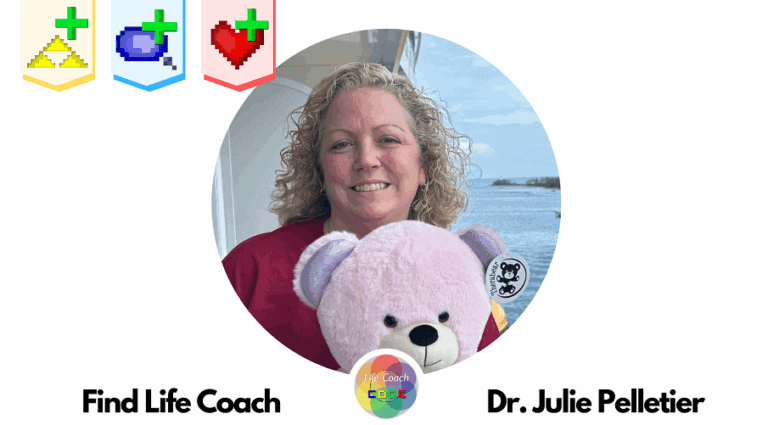
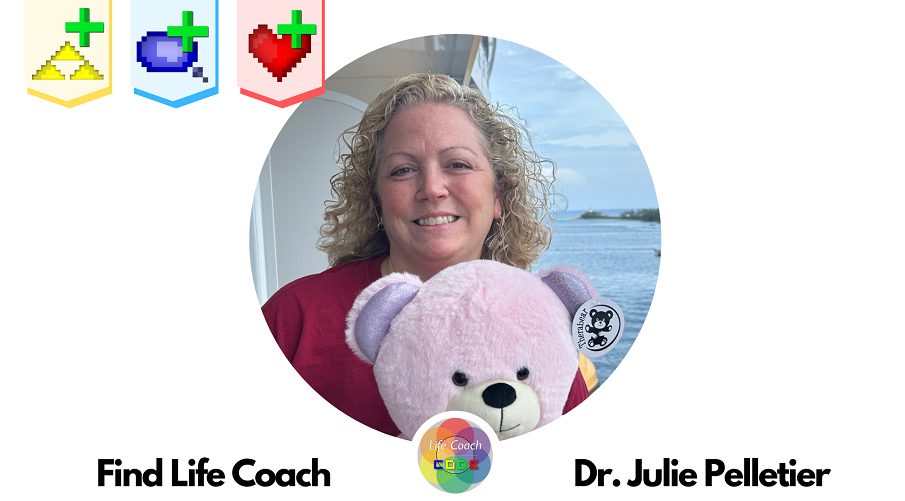
Dr. Julie Pelletier is one of the coaches that we found this month and we did a little interview with her. She impressed us with her innovativeness and passion.
She has devoted her life to making emotional healing approachable, comforting, and even cuddly, in a world where childhood mental health challenges are on the rise. With over two decades of experience as a Clinical Pediatric Psychologist and a mother of four, she blends clinical expertise with deep personal insight to meet children exactly where they are. But her work goes far beyond talk therapy, she’s innovating the field with a groundbreaking tool: Therabear, a weighted, multisensory, talking teddy bear that teaches kids coping skills through comforting routines and positive reinforcement.
She brings a rare combination of science, faith, and heart to every child and family she works with. Her coaching style is rooted in compassion and powered by proven strategies (from growth mindset training to emotion regulation techniques) all personalized to the unique needs of each child. Whether it’s through visualization exercises, gratitude journaling, or the gentle voice of Therabear, her mission is clear: to equip children with the tools they need to build resilience, self confidence, and emotional strength that lasts a lifetime.
She is not just changing how we support children, she’s reimagining what healing can feel like: safe, soothing, and empowering. Through her innovative work, she is planting seeds of emotional intelligence and inner peace in the next generation, one child and one cuddly bear at a time. Here is what she said…
Meet Life Coach Julie Pelletier:
Name: Julie Pelletier, Dr.
Pillar: The Spirit, The Mind, The Heart
Who is this coach for: Kids and parents who want to set their children for success, emotionally, mentally, and socially.
How they can help: By using her revolutionary talking and teaching, lightly weighted, multi sensory therapeutic bear (Therabear), and various other coaching tools and techniques.
First of all, how are you and your family doing after these Pandemic times?
My family and I are doing well following the pandemic.
How did the coronavirus pandemic affect your clients? Did it affect you at all?
I think something that really impacted children during the pandemic is not being in a structured school environment for such a long period of time.
Children NEED structure and benefit so much from routine and expectations that come with the school setting.
The young children who missed the opportunity to learn skills that are taught during preschool and elementary school years during the pandemic may struggle more now because these foundational skills were missed.
What are the biggest lessons that you learned in this pandemic?
One of the biggest lessons that I learned during the pandemic is patience.
This has helped me in my business and in my personal life in so many ways.
Attempting to understand patience from a faith based perspective has really been helpful for me as I have reflected on this.
Truly trusting the process and believing that there is a greater plan and a timeline that is not mine is something that I continue to learn as each day passes.
The Origin:
Tell us about you, your career, how you started with your coaching career?
I am a Clinical Pediatric Psychologist.
I received Bachelor’s, Master’s, and Doctoral degrees in clinical psychology, with highest honors.
I have worked with children and families in multiple settings in the nearly twenty five years that I have been practicing.
Some of these settings include residential treatment, locked secure units, inpatient acute units, outpatient community mental health clinics, shelter care, intensive outpatient programs, hospital based behavioral health programs, and most of my time has been working in private practice.
I am also a Positive Mindset Coach for Children and the creator of Therabear.
I am passionate about working with children to improve the ways they think about themselves and the world around them.
Teaching coping and self soothing skills with a growth mindset is what I love to do.
I am a mother of four amazing kids myself, and I have learned a lot about parenting that is not necessarily taught in books.
This has helped me to better and more thoroughly understand difficulties and needs in the families that I work with.
I practice from a faith based perspective and believe that my Christian background has helped me to be not only a better person but also a better clinician.
I believe that there are children everywhere who can benefit from learning skills that will help them manage emotions and behaviors throughout life.
This is what has led to my starting to work in the coaching space and also led to my creation, Therabear.
Therabear is a lightly weighted, multi sensory, soft and cuddly teddy bear that talks to teach coping skills in a calm, routine manner when it is hugged.
There is a hidden zipper under the bear’s arm that holds a therapy heart.
When this heart is squeezed, the therapy steps begin.
Much research and thoughtful planning went into the weight, size, colors, textures, and length of time that Therabear “talks” the child through the therapy steps that are provided.
What makes Therabear even better is that positive reinforcement is provided as the child practices the therapeutic skills along with Therabear.
Children, preschool age up to adulthood, are benefiting from all that Therabear has to offer.
What was your biggest obstacle that you had to overcome in your life that made you who you are today?
I don’t know if I have one biggest obstacle.
There have been several challenges, setbacks, and traumas that have given me opportunities to learn about myself, who I am, and who I want to be.
There have definitely been some very challenging times and experiences that I have had.
I am so blessed and thankful that I have my faith to help me through those times.
I have learned to practice gratitude each morning and continue to pray throughout each of my days.
I truly believe that the difficulties I experience and the people who share my path are there for a purpose.
And I am SO thankful for my family!
I have the best!
The Coaching Style:
How do you innovate with coaching your clients?
When I work with a coaching client, I innovate by meeting my clients just where they are at that time.
Then, I use a blend of science backed strategies and creative tools tailored to their own needs.
I bring in mindset psychology, positive reinforcement, emotion regulation techniques, and therapeutic tools, like Therabear, to help build trust and engagement.
I have found that following a series of steps, while at the same time modifying these steps for each child that I work with, is what tends to work best.
I also like to use visualization and breathing practices, whatever resonates the most with each individual.
I also know that I am constantly learning about each client and about which intervention strategies work best for each client, and I use what I learn to modify meetings as we go.
Innovation to me is about personalizing the process and helping the child or family feel as comfortable as possible.
What’s unique about your coaching approach?
What is unique about my approach to coaching is the background and experience that I have had.
As a mom, a clinical child psychologist, and a mindset coach, I bring deep knowledge of emotional development paired with genuine compassion and strong listening skills, all from a faith based point of view.
My focus is on teaching emotion regulation, resilience, positive self talk, and growth mindset in a way that is practical, empowering, and rooted in prevention.
I don’t just coach, I equip children and families with life changing emotional skills that are grounded in science and guided by love.
The experiences I have had in my professional work as well as within my own family have helped me to better understand that there is no such thing as one size fits all when it comes to working with a child.
I am blessed to have had the many experiences and challenges in many settings so that I can better understand where my clients may be coming from to assist in developing the best plan that I can for each individual and family.
What benefits do your clients get after working with you?
Families walk away with more than just insight after working with me.
They gain practical, lasting tools for emotional strength and mindset growth.
Children learn how to understand and manage feelings, build confidence, and believe in themselves, skills that impact their performance, relationships, and mental well being for the rest of their lives.
Parents feel more equipped and connected, with a clearer understanding of how to support their child’s emotional needs.
Kids learn to regulate emotions, bounce back from setbacks, and view challenges as opportunities.
Overall, staying focused on the positive and having gratitude each day are important things that clients are able to take away from our work together.
Do you use any specific tools to be efficient with your clients?
I use a few specific tools with the clients I work with.
First, I use Therabear, the multi sensory, lightly weighted, talking and teaching, comforting therapeutic plush that I created over many years.
Children get to choose which Therabear would be best for their needs.
I also use a gratitude journal, and I send a few other surprises along for children as well.
The Impact:
If you had a super megaphone that, when you speak into, the whole world will hear your message, what would you say?
We need to start giving kids tools to cope with emotions, frustrations, and anxiety now.
We need to think prevention.
We need to focus on giving kids skills to self calm, manage their emotions, and teach them to understand how their behaviors impact not just them but those around them.
Kindness and gratitude should be incorporated into daily routines along with these coping skills to help promote empathy and frustration tolerance.
We all need these skills in order to live well.
What is the greatest lesson you have learned in your life?
Among the greatest lessons I have learned in my life is that trust and true connection are the foundation for both healing and growth.
Whether I am working with a client, raising my own children, or supporting others I am close to, I have seen repeatedly that people thrive when they feel safe, seen, heard, and supported.
This has taught me to slow down, listen deeply, and lead with faith and compassion, because that is where the real goodness and transformation begins.
Your final thoughts?
My passion is working with children to help them learn skills that will allow them to be the best versions of themselves and have the greatest opportunities for success emotionally, academically, athletically, and socially throughout their lives.
If we start teaching children about emotional well being and regulation skills when they are young, they will be better equipped to manage challenges and daily life as they grow through life.
It’s a WIN for everyone involved!
Where Can You Find Dr. Julie Pelletier?
If you liked this interview and if you would love to set your kid for success, emotionally, mentally, and spiritually… go to drjulietherabear.net and see how Coach Julie can help you and your kid achieve that.
If you’d like to peak a glimpse of her coaching, follow her Facebook and Instagram accounts.
And if you’d like to connect with her more personally, you can do that through LinkedIn or by sending her a direct message on her Email [email protected]. It was an honor having this interview with her.