Rediscovering Self Worth: 7 Life Coaching Strategies for Healing After Divorce

Divorce, while often necessary, can leave deep emotional scars, impacting one’s sense of self worth and well being.

The process of rebuilding and healing is not just about legal separations or custody arrangements facilitated by divorce lawyers, but also about addressing the internal turmoil and rediscovering one’s value.

In this journey, life coaching strategies play a pivotal role in fostering healing, self discovery, and ultimately, empowerment.

Understanding Self Worth After Divorce

The end of a marriage can significantly affect how you view yourself.

It’s common to experience feelings of rejection, inadequacy, and a diminished sense of self worth.

Recognising these feelings as a natural part of the healing process is crucial.

It’s important to remind yourself that your value does not diminish because of the end of a relationship.

The Role of Self Compassion

Practising self compassion is a vital first step in healing after divorce.

It involves treating yourself with the same kindness, concern, and support you would offer a good friend.

This might seem challenging, especially when grappling with feelings of guilt or failure, but it’s an essential aspect of rebuilding your self esteem.

Reframing Your Narrative

Your internal dialogue significantly influences your perception of self worth.

Negative self talk can reinforce feelings of inadequacy and despair.

Life coaching strategies emphasise the importance of reframing your narrative.

Instead of dwelling on perceived failures, focus on the strengths and resilience you’ve shown throughout your life, including the courage it took to make a significant change.

7 Strategies for Rebuilding Self Worth

life-coaching-strategies-for-healing-after-divorce

1. Setting Achievable Goals

One effective life coaching strategy for enhancing self worth post divorce is setting small, achievable goals.

These goals can revolve around personal development, hobbies, career, or even social activities.

Achieving these goals will provide a sense of accomplishment and reinforce the belief in your capabilities and worth.

2. Expanding Social Networks

Divorce can often result in a shrinking social circle, making it imperative to reach out and form new connections.

Engaging with others who share similar interests or have gone through similar experiences can provide a sense of belonging and validation.

Support groups, hobby based classes, or volunteering are great avenues for expanding your social network and reinforcing your self worth.

For in depth guidance on improving self esteem and self worth, referring to resources like comprehensive guides on self worth can be immensely beneficial.

These resources offer practical advice and strategies that can support you in your journey towards healing and self discovery.

3. Embracing New Interests

Discovering new interests or rekindling old passions can play a significant role in rebuilding your sense of self.

Activities that challenge you and bring joy can gradually shift your focus from the past to the present and future, fostering a sense of achievement and self worth.

Whether it’s learning a new language, taking up a sport, or engaging in creative endeavours, embracing new interests can lead to personal growth and a deeper understanding of your capabilities and value.

Understanding the interplay between self worth and mental well being is crucial.

The NHS offers valuable insights and tips on raising low self esteem, providing a solid foundation for anyone looking to rebuild their confidence and self perception after a significant life change such as divorce.

4. Mindfulness and Self Reflection

Mindfulness techniques, such as meditation and journaling, offer powerful ways to foster self reflection and inner peace.

These practices can help you stay grounded in the present moment, allowing for a clearer perspective on your thoughts and emotions.

By regularly engaging in mindfulness, you can develop a deeper understanding of yourself, recognise your inherent worth, and gradually shift away from negative self perceptions.

5. Seeking Professional Support

While personal effort and self help strategies are critical, seeking professional support can significantly enhance your journey to rediscovering self worth.

Life coaches, therapists, and counsellors can provide specialised guidance tailored to your unique circumstances.

They can help you navigate emotional challenges, offer new perspectives, and equip you with effective strategies for building resilience and self esteem.

6. Creating a Positive Environment

The environment you surround yourself with can have a profound impact on your self worth.

Surrounding yourself with positive influences, people who support and uplift you, can greatly enhance your self esteem.

Additionally, creating a physical space that reflects your personal values and aspirations can serve as a constant reminder of your worth and goals.

7. Gratitude Practice

Adopting a gratitude practice can also play a pivotal role in healing after divorce.

Focusing on what you are thankful for, even in the face of adversity, can shift your mindset from one of loss to one of appreciation.

This practice not only improves your mood and outlook but also reinforces your sense of value and resilience.

Rediscovering self worth after divorce…

Rediscovering your self worth after divorce is a journey that requires patience, self compassion, and active engagement in personal growth activities.

By employing these life coaching strategies, you can navigate this challenging time with grace and emerge stronger and more self assured.

Remember, healing is not a linear process, and it’s okay to seek support along the way.

Resources are available to guide you through improving your self esteem.

With the right tools and support, rediscovering your self worth after divorce is not just possible, it’s within your reach.

Rebuilding your life after divorce is a profound journey of self discovery and healing.

Each step you take towards recognising and nurturing your self worth brings you closer to a future filled with possibilities and joy.

Embrace the journey, and remember that you are worthy of happiness and love, both from others and, most importantly, from yourself.


Parenting with Purpose: 5 Life Coaching Tips for Co Parenting Success Post Divorce

Navigating the complexities of parenting post divorce can seem like a daunting task.

However, with the right mindset and strategies, it is possible to create a positive environment for your children and maintain a healthy relationship with your ex partner.

Seeking professional advice is often a wise first step.

Divorce naturally brings about significant changes in family dynamics, which can be challenging for both parents and children.

Nonetheless, co parenting with purpose and intent can lead to successful outcomes for all involved.

This blog post aims to offer practical life coaching tips to help you navigate co parenting post divorce, ensuring the well being of your children remains at the forefront.

5 Life Coaching Tips for Co Parenting Success Post Divorce:

life-coaching-tips-for-co-parenting-success-post-divorce

1. Understanding the Importance of Effective Communication

One of the foundational elements of successful co parenting is effective communication.

It’s crucial to establish a clear and consistent way of exchanging information about your children’s needs, schedules, and any other pertinent matters.

Here are some tips for maintaining open lines of communication:

Use Technology Wisely: Consider using dedicated apps designed for co parenting, which can help manage schedules, share important updates, and keep track of expenses.

Stay Positive and Respectful: Always speak respectfully about your ex partner in front of your children. Negative comments can create loyalty conflicts and emotional distress for them.

Listen Actively: Make an effort to listen to the other parent’s concerns and suggestions without judgement. This can foster mutual respect and make collaborative decisions easier.

2. Creating a Co Parenting Plan

Developing a comprehensive co parenting plan is a critical step towards ensuring that both parents are on the same page.

This plan should cover all aspects of your children’s lives, from daily routines to special occasions, and should be revisited and adjusted as your children grow and their needs change.

Key components of a co parenting plan include:

Scheduling: Detail how you will split time with your children, including weekdays, weekends, holidays, and vacations.

Decision Making: Agree on how decisions regarding health, education, and extracurricular activities will be made.

Communication Guidelines: Outline how and when you will communicate with each other about your children.

Creating a plan can seem overwhelming, but it’s an invaluable tool that can reduce conflicts and provide stability for your children.

For assistance in developing a comprehensive co parenting plan, consulting resources like Cafcass can be incredibly helpful.

3. Nurturing Your Child’s Well being

At the heart of co parenting is your child’s well being.

It’s essential to ensure that their emotional and psychological needs are met during and after the divorce process.

Here are some strategies to support your child:

Encourage Open Communication: Let your children know that their feelings are valid and that it’s okay to talk about them. Provide a safe space for them to express their emotions.

Maintain Routines: As much as possible, keep your child’s daily routines consistent. Stability in their schedule can provide a sense of security.

Be Present: Make the most of your time with your children. Engage in activities that they enjoy and show genuine interest in their lives.

Remember, the way you handle co parenting can significantly impact your child’s adjustment to the new family structure.

Prioritising their needs and well being is crucial for their development and happiness.

Co parenting post divorce presents its own set of challenges, but with commitment, communication, and a child focused approach, it is possible to navigate this journey successfully.

Stay tuned for more life coaching tips to aid in your co parenting journey in the second part of this blog post.

4. Facilitating Healthy Relationships with Both Parents

Ensuring that children maintain strong, healthy relationships with both parent’s post divorce is vital for their emotional and psychological well being.

Here are some strategies to facilitate this:

Encourage Quality Time: Support and encourage your children to spend quality time with the other parent, making sure they feel comfortable and loved in both homes.

Avoid the Messenger Role: Do not use your children as messengers between you and your ex partner. This can place an unnecessary burden on them and lead to stress and confusion.

Share Achievements and Milestones: Make a conscious effort to share your children’s achievements and milestones with your co parent, allowing both of you to participate in the joys of parenting.

By fostering a supportive environment, you help your children understand that despite the changes in the family structure, they are still loved and valued by both parents.

It’s essential for children to feel secure and to know that their relationship with both parents will continue to thrive.

5. Handling Conflicts and Disagreements

It’s natural for disagreements to arise in any co parenting relationship.

Handling these conflicts constructively is crucial for maintaining a healthy co parenting dynamic.

Here are some tips:

Keep Your Focus on the Children: In any disagreement, keep the focus on your children’s best interests, rather than personal grievances.

Seek Mediation: If you find it challenging to resolve conflicts, consider seeking the help of a mediator who can assist in finding a mutually agreeable solution.

Practice Forgiveness: Holding onto resentment can hinder your ability to co parent effectively. Practicing forgiveness can help you move forward and maintain a positive relationship for the sake of your children.

Remember, the way you handle disagreements can significantly influence your children’s sense of security and well being.

Approaching conflicts with maturity and a willingness to find solutions can set a powerful example for your children.

Co parenting after divorce…

Co parenting post divorce is undoubtedly challenging, but with purposeful effort, clear communication, and a focus on the well being of your children, it is possible to navigate this transition successfully.

By implementing effective co parenting strategies, you can build a supportive and loving environment for your children, ensuring they grow up feeling secure and happy.

Remember, the key to co parenting success lies in working together as a team, keeping your children’s needs at the forefront of every decision.

Embracing the journey of co parenting with optimism and cooperation can lead to a fulfilling and enriching experience for both you and your children.

As you continue to adapt and grow, always prioritise the emotional and psychological health of your children, ensuring they thrive in a loving, supportive family structure.

Co parenting with purpose is not just about navigating the complexities of parenting post divorce, it’s about creating a foundation of love, respect, and understanding that supports your children’s journey to becoming well adjusted, happy adults.

With patience, empathy, and dedication, co parenting success is within reach.

10 Rules for Being Human | Rule 8: What you make of your life is up to you

“What you make of your life is up to you. You have all the tools and resources you need, what you make of them is up to you. The choice is yours.” — Dr. Chérie Carter-Scott

Do you ever feel like life is happening to you, rather than you actively creating it?

Perhaps you find yourself blaming external circumstances or waiting for the “right” opportunity to appear.

But here’s a truth worth holding close: What you make of your life is up to you.

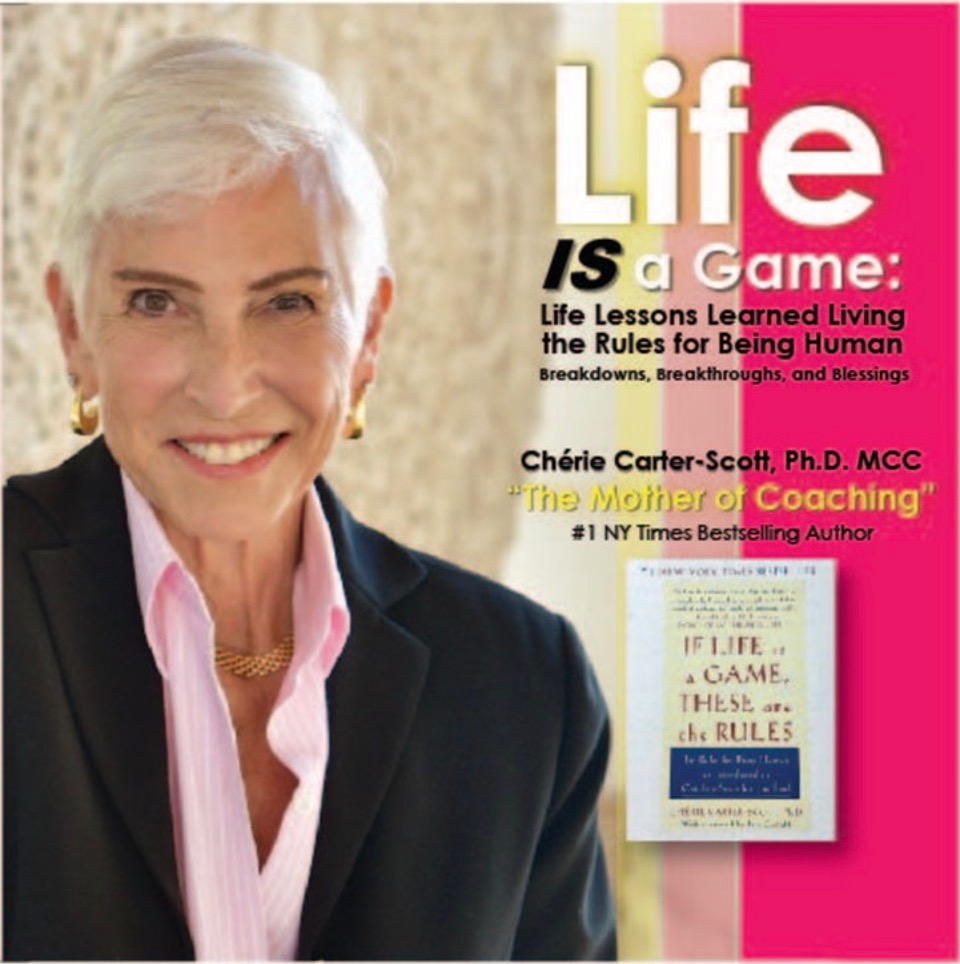
Dr. Cherie’s NEW book “Life IS a Game” explores this rule in great depth, as well as the other 9 rules for being human.

She dedicated her life following these rules and now, at the age of 75 she reveals the lessons that she learned by following the “10 Rules for Being Human” for over 50 years.

The beauty and brilliance of this book is that it’s a real life experiment and testimony to the truth. Get your copy today and make sure to leave an honest review, it helps more than you know. Thank you!

Rule 8: What you make of your life is up to you

10-rules-for-being-human-rule-8

You possess all the tools and resources necessary to craft a fulfilling and meaningful existence. The power lies not in external factors, but in the choices you make every single day.

Imagine yourself as a skilled sculptor, standing before a rough block of stone.

Life has provided you with this raw material: a unique combination of experiences, events, hardships, skills, and talents.

You hold the chisel (the meaning you give things) and the hammer (the action you decide to take), the tools to shape this stone into something magnificent. Each decision you make contributes to the final form.

Some days, the sculpting feels effortless, the form emerges naturally. Other days require more deliberate action, a thoughtful removal of material to reveal the hidden beauty within.

But the key lies in the fact that the final creation is entirely yours.

Sometimes, you might think that life is unfair, that there are too many curveballs your way.

But that doesn’t change the truthfulness of this rule, what you make out of it is what matters.

Many people had it far worse than you and they managed to use their chisel and hammer to create a masterpiece.

Let’s look at some of them…

Nick Vujicic (Motivational Speaker)

Nick Vujicic (Motivational Speaker)

Born without limbs, Nick could have easily succumbed to despair.

Instead, he embraced his life experiences and became a powerful motivational speaker, inspiring millions to overcome their own limitations and embrace life with joy.

Helen Keller (Author, Activist)

Helen Keller (Author, Activist)

Struck deaf and blind by illness at a young age, Helen Keller lived in a world of complete darkness and silence.

Yet, with the help of her dedicated teacher, Anne Sullivan, she learned to communicate and became a renowned author, advocate for the disabled, and the first deafblind person to earn a Bachelor of Arts degree.

Her story exemplifies the power of education and human connection in overcoming seemingly insurmountable obstacles.

Nelson Mandela (Politician, Activist)

Nelson Mandela (Politician, Activist)

Imprisoned for 27 years for his fight against apartheid in South Africa, Nelson Mandela emerged unbroken.

He went on to become the country’s first black president, leading a movement towards reconciliation and forgiveness.

His unwavering commitment to justice and his ability to heal a nation divided by race serves as an inspiration for anyone facing oppression and injustice.

Stephen Spielberg (Filmmaker)

Stephen Spielberg (Filmmaker)

Dyslexic and rejected from the University of Southern California film school twice, Steven Spielberg never let setbacks deter him.

He went on to become one of the most influential filmmakers of all time, directing iconic movies like Jaws, E.T., and Schindler’s List.

His story demonstrates the importance of self belief and perseverance in the face of rejection.

Arunima Sinha (Athlete, Mountaineer)

A brutal train accident resulted in the amputation of Arunima Sinha’s leg at the age of 18.

Defying her limitations, she became the first Indian amputee to climb Mount Everest.

Arunima didn’t let her disability define her.

Instead, she used it as fuel to achieve the extraordinary, showcasing the power of human spirit and determination.

Malala Yousafzai (Activist)

Malala Yousafzai (Activist)

Shot by the Taliban for advocating for girls’ education, Malala didn’t let this attack silence her.

She recovered, became the youngest Nobel Peace Prize laureate, and continues to fight for girls’ education around the world.

Even after being shot by the Taliban for her activism, Malala spoke out against violence and the importance of education as a tool for peace.

Her message of forgiveness and reconciliation in the face of violence is a powerful testament to the human capacity for compassion and understanding.

5 Ways How to Become an Active Creator of Your Reality:

Here’s how to cultivate an empowered mindset and take ownership of your life…

1. Identify your values.

What truly matters to you? Is it creativity, connection, adventure, or personal growth?

Understanding your core values serves as a compass, guiding your choices and ensuring your life aligns with what you hold dear.

But how do you identify these values?

Here are some prompts to get you started…

  1. Imagine your ideal life. What does it look like? How do you spend your days? Who are the people around you?
  2. Reflect on past experiences. What moments have brought you the most joy and fulfillment? What recurring themes emerge?
  3. Consider your role models. What qualities do you admire in others? Why?
  4. Pay attention to what energizes you and what drains you. What activities leave you feeling inspired and what tasks feel like a chore?

Once you have a brainstormed list of values, take some time to refine it.

Are there any overlapping values?

Can you group them into broader categories?

The goal is to identify a handful of core values that truly resonate with you.

2. Write down your values where you can see them.

The act of physically writing something down makes it more concrete and memorable.

Take a pen and paper, or open a document on your computer, and write down your list of core values.

Treat this like a sacred document, something you’ll revisit often.

Consider creating a vision board that incorporates visual representations of your values. Maybe it’s an image of a serene beach for tranquility, a group of friends laughing for connection, or a mountain peak for challenge.

Surrounding yourself with these visual cues will keep your values top of mind and serve as a source of inspiration throughout your day.

You can even get creative and write down your values in the form of affirmations.

For example, if one of your core values is creativity, you could write “I embrace my creativity and find unique ways to express myself every day.”

Repeating these affirmations to yourself can help solidify your values and empower you to make choices that align with them.

3. Set clear intentions.

Where do you want your life to go? What kind of experiences do you yearn for?

Taking time to envision your ideal future aligned with your values and setting clear intentions empowers you to make choices that move you in the desired direction.

This isn’t about creating a rigid life plan, but rather about planting seeds of possibility.

Imagine yourself five or ten years from now.

What does your life look like? Are you in a fulfilling career? Do you have strong, supportive relationships? Have you traveled to new and exciting places?

Once you have a clearer vision of your ideal future, translate that vision into specific, achievable goals.

Perhaps you want to learn a new skill that will help you advance in your career. Maybe you desire to travel to a specific country. Break down these larger goals into smaller, actionable steps.

This will give you a roadmap to follow, a sense of direction, and the motivation to take action.

4. Embrace the “Self Empowerment” mindset.

Life throws curveballs. It’s a fact, as inevitable as sunrise and the occasional downpour.

But what separates those who get soaked from those who dance in the rain?

It’s the proactive mindset, a philosophy that empowers you to see life’s challenges not as roadblocks, but as opportunities for growth and creation.

Here’s the key shift: instead of feeling like LIFE is happening to you, you embrace the idea that YOU are happening to life.

You become a sculptor, not a bystander, taking the raw materials of experience and shaping them into something meaningful.

This proactive approach hinges on the greatest ability of all humans: to give and to take away meaning from things.

We, as a species, possess the remarkable power to imbue even the most uncontrollable situations with purpose.

A job loss can be a catalyst for career exploration. A health scare can spark a commitment to healthier living. A global pandemic, well, that can inspire a wave of awakening.

So, how do we cultivate this proactive mindset?

  1. Reframe Your Perspective: Instead of seeing a setback as a defeat, view it as a redirection. Ask yourself, “What can I learn from this? What new opportunities might it open up?”
  2. Embrace Responsibility: Life may throw the curveball, but you control how you swing. Take ownership of your responses, focusing on what you can control, your attitude, your actions, and your interpretation of events.
  3. Find the Silver Lining: It might be tough, but there’s always a silver lining, even in the darkest of clouds. Train yourself to look for the positive aspects, the hidden lessons, the unexpected blessings.

And finally…

5. Take action, even small steps.

Sometimes, the most daunting part is simply getting started.

Atcively creating your own reality is not just about thinking, it’s about doing.

Don’t wait for the “perfect” moment to take action. Break down your goals into smaller, manageable steps and celebrate each forward movement.

The strength of your spirit.

Remember, my friends, the power lies within you.

In fact, the ability to use everything in your life, the good and the challenging, to move forward and live the life that you want to live it’s what determines the strength of your spirit.

You are not a passive passenger on the journey of life, you are the driver, charting your course, navigating the twists and turns, and ultimately, creating the masterpiece that is your life.

Embrace your choices, learn from your experiences, and watch your vision unfold with each courageous step forward.

Now, go forth and create a masterpiece!

If you want to dive deeper into this rule and understand how to become the active creator of your own reality, get Dr. Cherie’s NEW book “Life IS a Game” and learn how to play the game of life!

Life IS a Game Book Cover Master

If you want to learn more about Dr. Cherie visit her website.


Go to Rule #7< or >Go to Rule #9

10 Rules for Being Human | Rule 7: Others are only mirrors of you

“Others are only mirrors of you. You cannot love or hate something about another person unless it reflects to you something you love or hate about yourself. Each reflection is an opportunity for growth.” — Dr. Chérie Carter-Scott

Ever felt a surge of annoyance towards someone who seems to embody your least favorite traits? Or perhaps a deep admiration for a person who exudes qualities you secretly wish you possessed?

These reactions, my friends, are more than just judgments, they’re reflections.

According to Dr. Cherie’s Rule #7: Others are only mirrors of you.

We don’t simply react to others, we react to the parts of ourselves that we see reflected in them.

The things that trigger strong emotions, positive or negative, often hold clues to our own internal world.

Dr. Cherie’s NEW book “Life IS a Game” explores this rule in depth, as well as the other 9 rules for being human.

She dedicated her life following these rules and now, at the age of 75 she reveals the lessons that she learned by following the “10 Rules for Being Human” for over 50 years.

The beauty and brilliance of this book is that it’s a real life experiment and testimony to the truth. Get your copy today and make sure to leave an honest review, it helps more than you know. Thank you!

Rule 7: Others are only mirrors of you

10-rules-for-being-human-rule-7

Imagine yourself standing before a magnificent, multifaceted mirror.

This mirror doesn’t just show your physical form, it reflects the entirety of your being… your strengths, weaknesses, insecurities, and desires.

As you walk around the room, different facets of your personality are highlighted.

The polished side reflects your confidence, the slightly tarnished one, an area in need of attention.

The people you encounter in life are like these multifaceted mirrors.

The qualities that draw you to someone often resonate with your own values or aspirations that you haven’t realized within your own self.

Conversely, the things that grate on you might be aspects you’re subconsciously trying to suppress within yourself.

The closer you are to the person, the more intense the mirror effect gets.

That’s why family dinners and holidays are so harsh for some people, that’s why intimate relationships are called the incubators for growth. The closer you are to a person, the greater light is casted onto your shadow. And that doesn’t feel good.

But that’s how real transformation happens…

4 Powerful Ways to Leverage the Mirror Effect:

Here’s how you can use this rule for self discovery and growth…

1. Observe your emotional triggers.

The next time you find yourself feeling intensely positive or negative towards someone, take a pause.

Instead of judging them, turn the inward lens on yourself. Become a detective of your own emotions.

Consider asking yourself these questions:

  1. What specific behavior or characteristic of this person triggered my reaction?
  2. Does this remind me of a past experience or a particular belief I hold?
  3. How does this reaction make me feel about myself?

By dissecting your emotional triggers, you can start to identify the hidden messages being reflected back at you.

Perhaps an acquaintance’s boastfulness evokes feelings of inadequacy, revealing a desire to cultivate your own confidence.

Maybe a friend’s unwavering optimism reignites your own spark of hope, reminding you to nurture a positive outlook.

2. Try Journaling as a Tool for Self Reflection

Journaling provides a “safe space” to unpack the complexities of your inner world.

After observing your emotional triggers, you can use journaling to delve deeper.

You can call it “Reflections” or “The Mirror Guide”.

And this can be a daily practice that you do (at the end of your day or each morning) that helps you gain clarity of your inner world.

Here are some prompts to get you started:

  1. “What is it about this person that I admire or dislike so intensely?”
  2. “What emotions does this reaction evoke in me? Anger? Shame? Envy? Inspiration? Admiration? Contempt?”
  3. “Are there any limiting beliefs or negative self talk surfacing due to this interaction?”

By writing down your thoughts and feelings, you create a space for self discovery.

Patterns may emerge, revealing recurring themes or hidden insecurities.

You know how scientists write equations that help them uncover hidden layers of reality invisible to our senses?

Well it’s the same with the practice of journaling…

Sometimes, our thoughts and emotions are too complex to understand rationally, or even to be aware of them.

But when we are writing down in a journal, especially when we have the right questions to help us pick our minds and hearts, we are doing the same thing scientists are doing by using equations…

We peak a glimpse into a hidden world and we translate it in a way so that we can understand what’s really happening there and be aware of it.

We might find invisible patterns, recurring emotions, beliefs we didn’t realize we had…

That is the real gold.

This awareness paves the way for personal growth and transformation.

3. Reframe Self Criticism Into Self Compassion

Remember, the goal isn’t to beat yourself up over every negative reflection.

We all have areas for growth. Instead of self criticism, approach yourself with kindness and understanding.

Let’s say you find yourself feeling threatened by someone’s success.

This might be a mirror reflecting your own desire for achievement or a hidden fear of failure.

Instead of harsh self judgment, acknowledge that these feelings exist.

Then, reframe them into a positive intention: “This is a sign that I too want to achieve great things. What steps can I take to move towards my own goals?”

4. Take Action for Positive Transformation

The Mirror Effect isn’t just about self discovery, it’s about seeing the real reality of things so you can actively shape your personal growth journey.

Once you have a clearer understanding of the aspects being reflected, the power lies in your response.

Do you want to keep suppressing those parts, or do you want to actively work towards change and integrate all your aspects into wholeness?

Let’s revisit the example of feeling threatened by someone’s success.

Now that you understand this might reflect your own desire for achievement, you can take action!

Enroll in a relevant course, set achievable goals, and surround yourself with supportive people.

Remember, growth doesn’t happen overnight, but by taking conscious steps, you’ll start to see the reflection in the mirror change.

The people in your life are catalysts for growth.

By embracing these practices, you can transform the Mirror Effect into a powerful tool for self discovery.

The people you encounter in life are not simply bystanders, they’re catalysts for growth.

And life will always bump you in situations and people that reflect your suppressed sides to help you embrace your self fully and become whole.

So, next time you find yourself reacting strongly to someone, remember, they’re just holding up a mirror.

Look closely, and you might just discover a hidden facet of yourself waiting to be explored and embraced.

If you want to dive deeper into this rule and really understand how the Mirror Effect works in reality, get Dr. Cherie’s NEW book “Life IS a Game” and learn how to play the game of life!

Life IS a Game Book Cover Master

If you want to learn more about Dr. Cherie visit her website.


Go to Rule #6< or >Go to Rule #8

The Dr. Dolores Show: How to Become Your Own Best Friend [Self Discovery Series Part 2]

Dr. Dolores Fazzino, Nurse Practitioner, Medical Intuitive, Energy Whisperer

Join us for Episode 2 of our 5 part series on “Becoming Your Own Best Friend: A Self Discovery Series”

Today’s topic is Cultivating Compassion.


The Self Discovery Series:

Part One: Unveiling Authenticity invites you to embrace your true self, shedding societal expectations.
Part Two: Cultivating Compassion teaches the importance of self kindness and forgiveness.
Part Three: Nurturing Inner Strength helps you find resilience in the face of challenges.
Part Four: Embracing Boundaries empowers you to set healthy limits, reclaiming control over your life.
Part Five: Thriving in Self Love celebrates your unique qualities and journey toward self acceptance.


The Dr. Dolores Show: How to Become Your Own Best Friend [Part 2]

the-dr-dolores-show-how-to-become-your-own-best-friend-part-2

In the second episode of the series, “Becoming Your Own Best Friend” Dr. Dolores talks about Compassion as a central topic.

Dr. Fazzino, a renowned holistic practitioner and life coach, delves into the vital principles of self kindness and forgiveness, illuminating their significance in nurturing a fulfilling life.

She emphasizes the importance of acknowledging and accepting one’s imperfections, fostering a sense of empathy, and treating oneself with the same warmth and understanding as one would extend to a beloved friend.

Drawing from her profound wisdom shared in the recent episode, here are five actionable strategies to help you cultivate a deeper sense of self love and acceptance…

5 Actionable Strategies to Cultivate Self Love and Acceptance:

1. Practice Self Kindness

Dr. Dolores emphasizes the importance of treating yourself with the same kindness and compassion that you extend to others.

Make a conscious effort to speak to yourself with gentleness and understanding, especially during moments of self doubt or difficulty.

Instead of harsh self criticism, offer yourself words of encouragement and support.

Here is what you can do:

  1. Start your day with positive affirmations. Speak to yourself with kindness and encouragement.
  2. Treat yourself to small acts of self care daily, such as taking a relaxing bath, going for a walk in nature, or indulging in your favorite hobby.
  3. Keep a gratitude journal and write down three things you appreciate about yourself each day.

2. Embrace Forgiveness as a Process

Understand that forgiveness is not a one time event but rather an ongoing process.

Allow yourself the space and time to forgive past mistakes and shortcomings, recognizing that each step toward forgiveness is a step toward healing and personal growth.

By releasing yourself from the burden of resentment, you create space for self compassion and acceptance to flourish.

Here is what you can do:

  1. Reflect on past experiences or relationships where forgiveness is needed. Write a forgiveness letter to yourself or others, expressing your willingness to let go of resentment.
  2. Practice self compassion meditation, focusing on sending love and forgiveness to yourself.
  3. Seek support from a trusted friend, therapist, or support group to navigate the process of forgiveness and healing.

3. Cultivate Self Awareness

Take time to explore your thoughts, feelings, and behaviors with curiosity and compassion.

Practice mindfulness techniques such as meditation or journaling to deepen your self awareness and gain insight into your inner world.

By becoming more attuned to your thoughts and emotions, you can identify patterns of self criticism and replace them with thoughts of self love and acceptance.

Here is what you can do:

  1. Set aside time each day for self reflection. Journal about your thoughts, feelings, and experiences, without judgment.
  2. Practice mindfulness exercises, such as deep breathing or body scans, to ground yourself in the present moment and observe your inner state.
  3. Notice patterns of self criticism or negative self talk. Challenge these thoughts by asking yourself if they are rooted in truth or distorted perceptions.

4. Permission to Feel and Heal

Grant yourself permission to acknowledge and experience a full range of emotions, including those that may be uncomfortable or challenging.

Avoid suppressing or denying your feelings, as this only perpetuates self criticism and internal conflict.

Instead, allow yourself the freedom to feel and heal, knowing that every emotion is valid and serves as an opportunity for growth and self discovery.

Here is what you can do:

  1. Create a safe space for emotional expression. Allow yourself to cry, laugh, or express anger without judgment.
  2. Practice self compassion during moments of emotional distress. Offer yourself comforting words and gestures, such as placing a hand over your heart.
  3. Seek out supportive resources, such as books, podcasts, or therapy, to learn healthy ways to process and heal from past traumas or emotional wounds.

5. Celebrate Your Journey

Lastly, embrace the journey of self love and acceptance as a lifelong process rather than a destination.

Celebrate your progress, no matter how small, and recognize that self love is cultivated through consistent effort and practice.

Be patient and compassionate with yourself, acknowledging that growth takes time and that setbacks are a natural part of the journey.

Here is what you can do:

  1. Set achievable goals for self improvement and celebrate your progress along the way.
  2. Practice self acknowledgment by recognizing your strengths, achievements, and personal growth milestones.
  3. Surround yourself with a supportive community of friends, family, or mentors who uplift and affirm your journey toward self love and acceptance.

In this episode, Dr. Fazzino provides more actionable strategies for breaking free from self criticism and embracing a mindset of self love and acceptance.

As the episode unfolds, participants are invited to embark on a journey of self discovery, cultivating compassion as a cornerstone of their personal evolution.

Join Dr. Dolores Fazzino in this enlightening episode as she illuminates the path to self compassion and forgiveness, empowering viewers to become their own best friends on the journey to wholeness and fulfillment…

CLICK BELOW TO LISTEN TO “THE DR. DOLORES SHOW” PODCAST:


To donate to our podcast “The Dr. Dolores Show” please snap the QR code. Your donations will ensure our work continues to be produced and hosted globally.

Donate-QR-Code-Dolores-Fazzino

What to Look for In This Episode of The Dr. Dolores Show:

  1. I think for most people we are really good at being nice to other people and extending that olive branch, we are kinder to other people than we are to ourselves. (02:15)
  2. “When you don’t take care of yourself, nobody is going to take care of you, if you are not kind to yourself nobody else is going to be kind to you.” Dr. Dolores (04:24)
  3. “It is how you are being and how you are feeling that is creating your reality.” Dr. Dolores (07:41) 
  4. It enhances relationships to be compassionate with yourself. (10:50)
  5. Let’s face it, it is nice to be around people that are happy, that have good vibes and good energy. (11:33)
  6. Fostering a compassionate and forgiving mindset allows you to look deeper into what is happening and to find those really deep gold nuggets that are going to help you grow. (22:32)
  7. Forgiveness is a process, it is not a one time event. (23:48) 
  8. Allow yourself to go to places and feel things that you probably haven’t given yourself permission to do. (25:02) 
  9. Allow your inner wisdom to guide you to your next step. (27:40) 
  10. There is authenticity in inner peace. (40:56)
  11. Cut yourself some slack, be kind to yourself and realize we are all on our own journey and we are doing the best we can. (47:27)  

FIND THE DR. DOLORES SHOW WITH DR. DOLORES FAZZINO HERE!

All the top podcast locations. Click HERE

Apple, Google Play, Audible, iHeart Radio, Spotify ++++

Get your Free Guided Meditation to be in the Present Moment https://bit.ly/PresentMomentGM

Is your Ei (Emotional Intelligence) better than your Ai (Artificial Intelligence)?

‘So, did you tick the squares which show a cycle or bus or traffic lights?’ 🤔

My friend laughed and gave me a thumbs up. 👍

‘Was your input then reviewed by a lovely bot that decided whether you are human enough?” I asked with a smile. 🤖

‘Yeah. I know where this is going.” She said.

“Screening and boundaries before acceptance… if only we did this level of due diligence before entering into relationships right??!” I asked with a sigh.

She nodded. As a psychiatrist she has seen every kind of relationship trouble under the sun.

“Relationships are a lot like greatness!”

“You know what I have realized? Relationships are a lot like greatness! Some we are born with, some are thrust upon us and some we create.

The relationships that we are born into and the ones that get thrust upon us will shape so much of the way we choose to create the others that it’s mind blowing we are not taught the skills and capacities needed to navigate this wild and unpredictable journey!” 😐

“Absolutely!” I said in complete agreement.

“It’s quite ironic, isn’t it? In this age of advanced technology and artificial intelligence, we seem to have mastered the art of programming machines, but when it comes to programming our own real intelligence, especially in relationships, we’re often left scratching our heads.”

“Isn’t it wild?” She mused.

We are clueless when it comes to our own OS…

is-your-ei-better-than-ai

“We want the perfect smartphone with the best apps and flawless camera and whatnots but faced with our inner apps that evolved a million years ago we are still clueless.

We are unable to delete the trigger apps that got downloaded in our childhood. We don’t debug or trash our Big Files of the Fight We Had on that Tuesday after my Birthday Party and you said this and this and this.” 😒

I really had a hearty laugh at that.

Those Big Files my ex and I had downloaded into our system crashed the mainframe of your marriage. We had no anti virus software to protect us and no tech support to call.

As a final straw when we switched it all off and then on again, the 2.0 version of the relationship had us living separate lives waving a divorce decree like a flag of independence.

No complaints from me because this 2.0 version has less malware, no surveillance, more stability and definitely less crashed tabs! 🙋‍♀️

So what can be done to reboot our relationships without crashed tabs?

How do we make sure that our Emotional Intelligence is as good at making our lives easy as Artificial Intelligence does?

If you are a highly successful professional woman going through a divorce or breakup or just struggling with feeling stuck in an emotional warzone 🙆‍♀️ filled with landmines and surprise attacks, then contact me at [email protected] for a FREE discovery call to understand how my RelationSHIFT framework 🧘‍♀️ can transform your life! 🌈

Struggling with Alcoholism? Discover 5 Great Recovery Programs that Aren’t Alcoholics Anonymous

Many individuals struggle with alcoholism these days.

Some turn to AA for help.

However, some people are not such big fans of certain aspects of AA, and they may look for other options if they’re trying to get clean.

Ventura addiction treatment and sober living are always possible for individuals who live in the area and want other options besides Alcoholics Anonymous.

Let’s look at some other programs that have established a positive reputation in this niche…

5 Great Recovery Programs for People Struggling with Alcoholism:

alcoholism-great-recovery-programs

1. Modern Management Support Groups

This is an option that is pretty different from most of the other programs you are likely to find.

Modern Management, sometimes abbreviated as MM, focuses on helping individuals who are engaging in problematic drinking and certain behaviors associated with it.

Positive lifestyle changes are what MM focuses on.

It is a program that relies on peer support a great deal.

Perhaps the biggest difference with MM as compared to some other groups is that it contends that some problem drinkers can still consume alcohol in moderation.

Most other treatment programs demand that the drinker abstain entirely.

2. SOS Alcoholism Program

SOS stands for Secular Organizations for Sobriety.

Often, when someone says they do not want to involve themselves with AA, that is because there are certain pseudo religious aspects of the group that they don’t like.

You will not find anything like that with SOS.

It is an entirely secular organization.

There is no giving yourself up to a higher power like you do with AA.

This group separates spirituality from the equation.

3. Women for Sobriety

As the same implies, this is a group created by women that is also specifically intended for women who are struggling with alcoholism or problem drinking.

There are face to face groups that meet all throughout the United States.

Some women like this format because they can talk about their problems away from the male gaze.

These meetings can be a place of welcoming support where individuals can feel seen and heard by those who are their same gender.

4. LifeRing Alcoholism Recovery Program

LifeRing has become more popular in recent years.

This is an online community that does some in person meetups as well.

This group believes that each individual’s key to recovery rests within themselves.

It is another group that stays away from the faith or spiritualism based identity that is so much a part of AA.

This group talks a lot about the “addict self” that people are trying to get away from.

They feel that if you can weaken the “addict self,” you will strengthen the “sober self” that hides within.

5. SMART Recovery Groups for Alcohol Addiction

SMART is a research based collective that does not use a spiritual model.

Instead, it uses scientific evidence and research to figure out a plan for each individual who is struggling with alcohol. 

They have both in person meetings and online support.

They also don’t like to use the word “alcoholic,” instead using more positive language in the hopes of getting away from the stigma associated with alcoholism and abuse.

Understanding the Distinctive Features of the Xpod from ePuffer: All You Need to Know

0

Are you considering to stop smoking? Well, vaping is (according to few researches) the healthier alternative to smoking cigarettes. A lot of people choose to transition to vaping.

One of them is our editor, Ricky, who recently did exactly this. And he has few pieces of advice to share.

The Xpod is a vaping device that has piqued the interest of vapers around the world (Erick is one of them), both experienced and inexperienced.

The reason for this is that it stands out from other vaping devices thanks to its distinctive features.

ePuffer is a leading seller of vaping products, with a wide selection available.

Nonetheless, the ePuffer Xpod is distinguished from products from other brands by a few special features.

We will focus on the special qualities of the Xpod from ePuffer in this article, emphasizing why it is the best option for you.

The Unique Characteristics of the Xpod from ePuffer

understanding-the-xpod

Here are the unique characteristics of the Xpod from ePuffer that all vapers should be aware of.

Rechargeable battery

The first feature distinguishing the Xpod from ePuffer is its 375 mAh rechargeable battery.

Because it can be recharged, it becomes more affordable for you over time.

Additionally, the rechargeable feature allows it to be used repeatedly, which ultimately increases vaping convenience.

Plus, since it produces less waste as a reusable device, the rechargeable battery makes it environmentally friendly.

This indicates your dedication to the objectives of sustainability.

Additional advantages of rechargeable batteries include promoting reliability, offering customization possibilities, and ensuring user safety.

You can count on a reliable and prolonged vaping session with this battery.

Prefilled and refillable pod flavor options

Vapers can choose from a wide variety of flavors available on the market.

You get access to a prefilled and refillable pod system when you get Xpods from ePuffer.

Some brands, on the other hand, only give you a choice between the two.

With this option, you can choose to vape whenever you want and always use a prefilled pod with your favorite e liquid flavor.

Additionally, before adding e liquid to the pod system, you may choose to experiment with different combinations of flavors and mix them yourself.

You are able to tailor the experience to your preferences thanks to this access.

With the help of these customization options, you can experiment more until you find a formula that meets your needs.

Sophisticated design of the Xpod from ePuffer

Xpods from ePuffer have an elegant and sophisticated design that makes them perfect for use in social settings as well as other places.

The gadget has a chic appearance and a modern, streamlined design.

In addition, its durability is enhanced by the use of premium materials in its construction.

Vapers can use it with confidence and for an extended amount of time.

The available colors are navy blue, violet, and pearl white.

All you need to do is to choose your favorite color.

Hybrid technology

Among other Xpod brands, the Xpod from ePuffer is distinct due to its technological features.

The device’s adaptability, space saving design, cost effectiveness, customization potential, and innovative features are all significantly enhanced by hybrid technology.

The device is distinct because of its closed and open pod system.

The device also has adjustable airflow, an LED indicator, safety features, and sensors that are activated by buttons and draws.

The device’s ease of use and enhanced user interface are attributed to its technological composition.

What You Should Remember?

We have examined the unique characteristics of the Xpod from ePuffer in this article based on our editor’s experience.

These features make it ideal for vapers of all skill and experience levels.

However, we do not advize nor promote vaping. This is just an informative article based on our editor’s tips.

Vaping is a good alternative to smoking cigarettes but in our opinion, if you want to quit, do that.

Do not replace one habit with another less harmful one, instead find the healthy ones.