
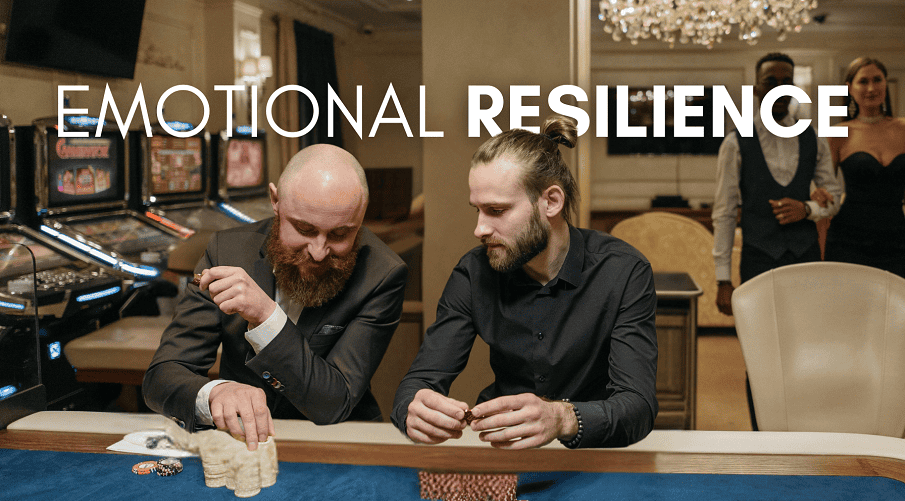
A seasoned poker player once described a loss as “information delivered with emotion attached.”
The hand ended, the balance shifted, and the mind raced to explain it away.
The useful part came later, after the first wave of frustration passed and the player reviewed decisions with a calmer head.
That same sequence shows up across online casino play for adults who participate legally, especially in fast sessions where outcomes arrive quickly and feelings arrive even faster.
Emotional resilience rarely comes from one big lesson.
It comes from repeated contact with small disappointments, followed by a deliberate return to composure.
In that sense, setbacks in gaming can function like a controlled environment for practicing recovery, as long as the approach stays mindful and the play stays within personal boundaries.
How Can Online Casino Setbacks Help You Build Emotional Resilience?
Start With Platforms That Reduce Unnecessary Stress
Resilience practice works best when the environment stays stable.
Poorly built apps create friction that has nothing to do with the game itself.
Lag, confusing terms, or inconsistent UI can trigger irritation that people later mislabel as “tilt.”
That muddies the learning signal because the emotional spike comes from the platform, rather than the outcome.
High quality apps and websites support a cleaner experience, which makes it easier to observe reactions and improve control.
For example, Jackpot City fits naturally into this discussion because it reflects what experienced players tend to value when they choose a platform for consistent play.
Clear navigation, predictable performance, and straightforward account flows help reduce avoidable stress.
That matters for resilience, because it keeps attention on decision making and emotional recovery, rather than on fighting the interface.
Understand What a Setback Triggers in the Brain
A setback usually lands as a threat signal, even when the stakes remain modest.
The brain treats uncertainty as a problem to solve right away.
That urgency can push people toward impulsive choices, such as speeding up session pace or switching games in search of a quick emotional reset.
The outcome becomes secondary, and the real driver becomes mood repair.
Two patterns show up often among experienced players.
One pattern is “story pressure,” the need to explain the loss instantly with a clean narrative.
The other is “control pressure,” the need to prove control through immediate action.
Both patterns feel productive in the moment.
Both patterns often reduce clarity.
A more useful lens treats the setback as a moment to practice response selection.
The skill is placed in the gap between result and reaction.
Athletes do this after a missed shot.
Traders do it after a bad fill.
Performers do it after an off night.
They acknowledge the hit, then return to process.
Build a Reset Routine That Trains Composure
Resilience becomes reliable when it turns into a routine that runs even on bad days.
The routine should feel practical, short, and repeatable.
It should also separate emotional regulation from gameplay decisions, since mixing the two tends to blur judgment.
A strong reset routine can include:
- Name the emotion in plain language, like “irritated” or “disappointed,” then pause for a short count before clicking anything.
- Switch from outcome thinking to process thinking, by focusing on the decision made rather than the result delivered.
- Use a brief physical reset, such as changing posture or loosening the jaw, to interrupt the stress loop.
- Set a pre decided checkpoint, then evaluate whether focus remains steady or whether the session needs to end.
This routine works because it gives the mind a job other than chasing relief.
Over time, that repetition builds a familiar pathway back to calm.
The goal stays simple.
Return to a steady state faster, with less drama.
Where the Global iGaming Market Stands
The global iGaming market (that is expected to grow from $110.8 billion in 2025 to $130.52 billion in 2026) continues to mature in ways that benefit serious users who care about structure and reliability.
Many operators have invested in better mobile performance, clearer UX, and stronger payments infrastructure, which supports smoother sessions and fewer preventable frustrations.
That improvement matters for emotional control, because stability reduces the background noise that can amplify disappointment.
The market has also pushed toward more transparent product standards in many regions, driven by competition and by consumer expectations.
Experienced users now expect clear terms, responsive support, and tools that help manage play boundaries.
When platforms compete on trust and experience, the overall ecosystem becomes easier to navigate with intention, which fits the resilience angle.
A stable market environment supports stable personal habits.
Translate the Skill Into Real Life Pressure
The most valuable transfer happens when the same reset routine shows up outside gaming.
A tense work message, a late delivery, or a disagreement at home can trigger the same “story pressure” and “control pressure.”
The difference lies in the consequences.
Real life often carries social and professional stakes, and the emotional residue can last longer.
The bridge is practice.
A person who learns to pause after a setback, label the reaction, and choose the next step with care builds a general skill that applies broadly.
Over time, that skill shows up as calmer communication and clearer decisions under stress.
The setback stays a setback, yet the response becomes stronger.
That is what resilience looks like in action.