

For decades, success was measured by how much we could do, how many hours we could grind, how many goals we could chase, and how much we could squeeze into a single day.
Hustle became something like a badge of honor.
The human body, mind, and spirit were never designed for constant acceleration.
Somewhere along the way, we began mistaking exhaustion for achievement.
Now, a quiet revolution is unfolding…
Neuroscience, psychology, and ancient wisdom traditions are converging on a single, radical truth: rest is not the opposite of productivity, it is the foundation of it.
Why ‘Doing Less’ is the New Superpower
The Science of Rest
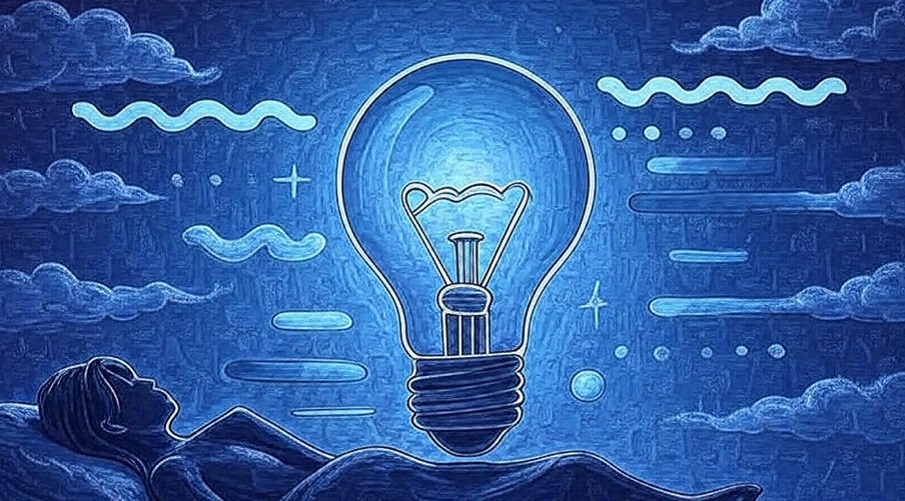
Research in neuroscience shows that when we rest, our brain activates the default mode network, a state where creativity, problem solving, and self awareness thrive.
Athletes who embrace recovery periods perform better and sustain peak performance longer.
Even in corporate environments, companies that integrate rest and reflection into their culture see higher innovation and employee satisfaction.
The science is clear: rest is not laziness, it is biological optimization.
Rest as a Paradigm Shift
The Rest Era is more than a wellness trend.
It is a paradigm shift in human evolution.
Stillness can be more transformative than motion, and by slowing down, we do not fall behind, we rise above.
The most powerful minds of the future will not be those who can multitask the fastest, but those who can regulate their nervous systems, recover their energy, and make space for clarity to emerge.
Rest is where integration happens.
It is where learning becomes wisdom, action becomes alignment, and hustle transforms into harmony.
The world is entering a new rhythm, one that honors cycles instead of constant sprinting.
Those who learn to rest consciously will access deeper levels of insight, creativity, and magnetism.
They will lead not through force, but through presence.
Doing Less as a Superpower
Doing less is no longer a weakness, it is a superpower.
It is the art of trusting that your evolution does not require overexertion, it requires balance.
The future belongs to those who know when to move and when to be still.
True power lies not in doing more, but in knowing when to stop.
References:
- Psychology Today. (2025). Why Rest is Productive: The Science of Doing Nothing. Retrieved from https://www.psychologytoday.com/us/blog/your-authentic-joy/202508/why-rest-is-productive-the-science-of-doing-nothing
- Luo, W. (2024). Rest to Promote Learning: A Brain Default Mode Network Perspective. Retrieved from https://pmc.ncbi.nlm.nih.gov/articles/PMC11047624/