

By Charles Barnard, founder of Success Institutes.
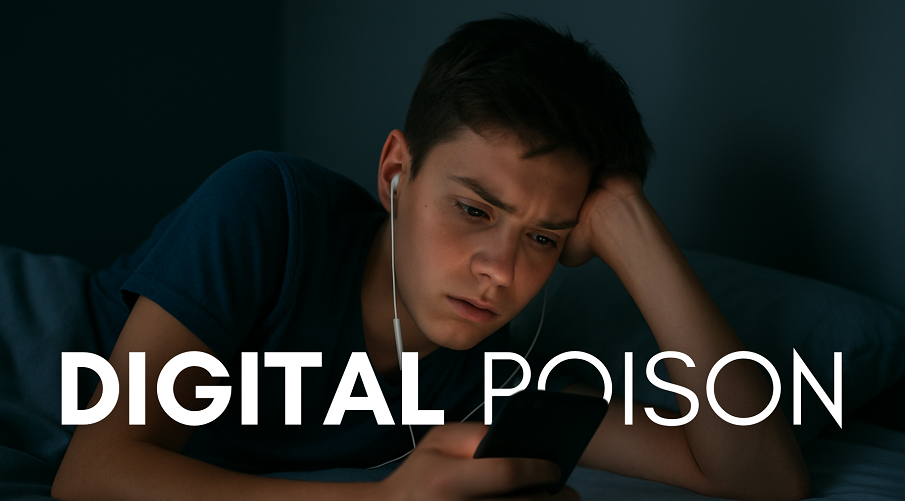
Jack lay on his bed, the glow of his phone illuminating the darkened room.
His earbuds hummed with the low throb of music, but his mind was elsewhere.
He scrolled through his social media feed, his thumb flicking upward with mechanical precision.
Perfect faces stared back at him… smiling in exotic places, laughing in perfect light, their captions a mix of effortless humor and curated vulnerability.
He knew it wasn’t real.
He knew that behind the filters and carefully chosen angles were the same insecurities he carried.
Still, the knot in his chest tightened as he scrolled past picture after picture of friends at a party he hadn’t been invited to.
Jack’s phone buzzed.
A message from his friend Will appeared:
“Where are you?”
Jack’s stomach churned.
He had told Will he wasn’t feeling well, which, in that moment, was true.
But the deeper truth was that he didn’t have the energy to pretend tonight.
He stared at the screen, then locked his phone without replying.
It wasn’t always like this…
Jack used to look forward to weekends with his friends: pickup basketball games, late night pizza runs, the easy rhythm of real connection.
But lately, his mind felt cluttered.
The constant notifications, the pressure to keep up with group chats, the endless scrolling… all of it left him feeling overwhelmed.
Somewhere along the way, the phone in his hand had stopped being a tool and started becoming a weight.
Increased Anxiety and Depression Linked to Screen Time
Research has consistently shown a strong correlation between increased screen time and rising levels of anxiety and depression in teenagers (Twenge & Campbell, 2018).
The more time teens spend on their phones and computers, the higher their reported levels of psychological distress.
Jack’s growing anxiety reflects this trend.
Excessive screen time activates the brain’s reward system, creating a dopamine feedback loop that makes it difficult to disconnect (Montag et al., 2019).
The instant gratification of likes, comments, and notifications reinforces compulsive behavior, while the lack of meaningful interaction leaves teens feeling isolated and empty.
Studies confirm that teens who spend more than three hours a day on social media are at a significantly higher risk of anxiety and depression (Twenge et al., 2019).
Jack’s mind had become conditioned to this rapid cycle of feedback, restless without it, yet drained by its constant presence.
Social Comparison and Declining Self Worth
Social media thrives on comparison, a dangerous game for developing minds.
Teens who engage in high levels of social comparison on platforms like Instagram and Snapchat report lower self esteem and greater body dissatisfaction (Huang, 2017).
Even when teens know that social media is a highlight reel, their emotions still respond to the curated perfection they see online.
The result: their own lives feel less interesting, less successful, less valuable.
For Jack, this was becoming all too real.
His friends’ accomplishments (making the varsity team, getting asked to prom, landing internships) began to feel like proof of his own inadequacy.
He knew his friends weren’t trying to make him feel small, but constant exposure to their successes magnified his perceived failures.
Sleep Disruption and Cognitive Decline
Jack’s late night scrolling was more than just a bad habit, it was stealing his sleep.
Blue light from electronic devices suppresses melatonin production, the hormone that regulates sleep (Cajochen et al., 2011).
He would set his phone down at night, close his eyes, and yet his mind would race, overstimulated by a flood of images and notifications.
Chronic sleep deprivation has serious consequences: weakened emotional regulation, increased irritability, and impaired cognitive function (Lo et al., 2016).
Jack’s slipping grades and inability to focus weren’t laziness, they were symptoms of an exhausted brain.
Emotional Regulation and Impulse Control
Adolescence is a critical period for emotional development.
The prefrontal cortex (the brain’s decision making and self regulation center) is still maturing during the teenage years (Casey et al., 2019).
Excessive screen time disrupts this process.
Constant notifications and rapid digital interactions heighten emotional reactivity and weaken impulse control (Gentile et al., 2012).
For Jack, this looked like snapping at his brother, arguing with his parents, and making promises to cut down on his phone use, only to be scrolling again minutes later.
Cyberbullying and Social Rejection
The digital world also carries darker risks.
A study by Hinduja and Patchin (2019) found that 37% of teenagers report being victims of cyberbullying, which is strongly linked to depression and suicidal thoughts.
Jack wasn’t directly bullied, but he experienced subtler forms of rejection.
Seeing photos from parties he wasn’t invited to, noticing his messages left unread… these small moments added up, reinforcing his feelings of exclusion.
Pathways to Recovery
Jack’s story mirrors the challenges of many teens today.
But research shows that healthier digital habits can reverse these effects.
For Jack, change began when his parents introduced screen free hours after 8 p.m.
He started charging his phone outside his room and spending more time in offline activities… sports, face to face conversations, and mindfulness practices.
Studies confirm this works: teens who limit social media use to under two hours a day report improvements in mood, self esteem, and overall mental health (Przybylski & Weinstein, 2017).
As Jack rebalanced, his grades improved, his sleep deepened, and his real world friendships strengthened.
Slowly, the weight of his phone lifted.
Conclusion: The Impact of Electronics on Teen Mental Health
Jack’s story highlights the complex, often harmful effects of screen time on adolescent well being.
From anxiety and depression to poor sleep, emotional reactivity, and constant comparison, the costs are real.
But the solution isn’t to abandon technology, it’s to use it with balance and intention.
By setting boundaries, fostering real connections, and reclaiming offline spaces, teens can thrive without being consumed by their screens.
References:
- Casey, B. J., Getz, S., & Galvan, A. (2019). The adolescent brain. Developmental Review, 28(1), 62-77.
- Huang, C. (2017). Time spent on social network sites and psychological well-being: A meta-analytic review. Cyberpsychology, Behavior, and Social Networking, 20(6), 346-353.
- Twenge, J. M., & Campbell, W. K. (2018). Associations between screen time and lower psychological well-being among children and adolescents. Preventive Medicine Reports, 12, 271-283.