

By Charles Barnard, founder of Success Institutes.
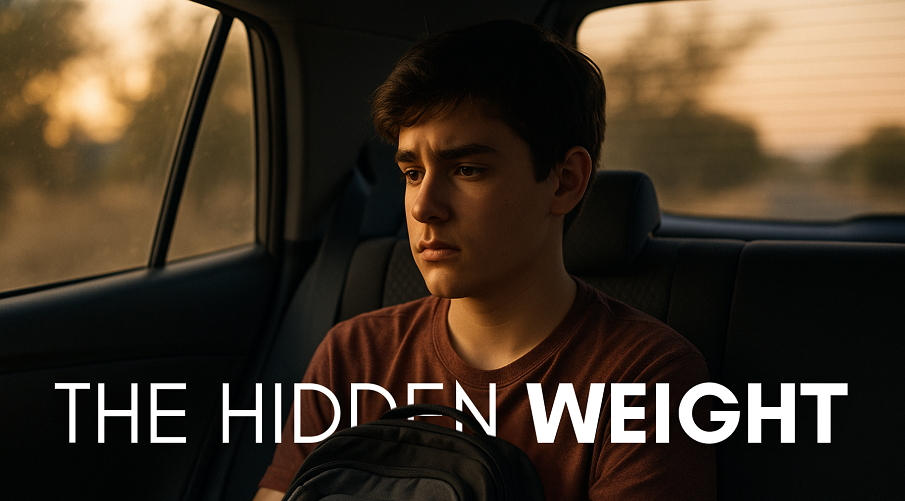
Fourteen year old Alex sat silently in the backseat of his mom’s car, staring out the window as the late afternoon sun streaked across his face.
His shoulders slumped beneath the weight of a backpack filled with unfinished homework and unspoken pressure.
Just days earlier, his school counselor had called home to report that Alex hadn’t turned in three assignments.
His teachers described him as “disengaged” and “disconnected,” but what no one could see was the real issue: Alex was feeling overwhelmed by stress.
Adolescence has always come with challenges, shifting identities, growing independence, and a deep longing for acceptance.
But in today’s world, teens are facing unprecedented levels of stress, stemming from academics, social expectations, family dynamics, and digital overload.
And it’s not just affecting their moods… it’s altering their physical health, relationships, performance, and long term well being.
The Physical Toll of Emotional Burdens
When Alex began middle school, he was energized, excited to join the soccer team and try robotics.
But as the weeks passed, the emotional weight of academic expectations and social friction began to take a toll.
He couldn’t sleep…
He lost his appetite…
His stomach clenched at the thought of going to school.
These symptoms aren’t rare.
According to the American Psychological Association (APA, 2014), 31% of teens report feeling overwhelmed and Nearly 30% report feeling sad or depressed due to stress.
Chronic stress triggers physiological responses: increased cortisol, sleep disturbances, weakened immune function, and gastrointestinal issues (Romeo, 2010).
For teens (whose bodies and brains are still developing) this can result in fatigue, irritability, and increased vulnerability to illness.
Emotional Strain and Mental Health Impacts
Seventeen year old Keisha, a high achieving student with dreams of becoming a doctor, spent most nights hunched over her desk, reworking her chemistry notes for the third time.
Her parents beamed with pride at her straight A’s, but Keisha was silently unraveling.
She began experiencing anxiety attacks before exams and felt paralyzed by the fear of not living up to expectations.
According to the CDC (2022), Over 40% of high school students report persistent feelings of sadness or hopelessness.
Stress plays a major role in this mental health crisis.
When left unrelieved, chronic stress can lead to anxiety disorders, depression, and even suicidal ideation.
Teens may not always articulate their struggles clearly, but their behaviors (withdrawal, mood swings, irritability) often reveal a battle beneath the surface.
Stress doesn’t always come from dramatic events.
For many teens, the daily accumulation of small pressures (like grades, social dynamics, college prep, social media) creates a silent crisis.
Too often, they’re told to “just deal with it,” without being taught how.
Strained Relationships and Isolation
Fifteen year old Jonah once spent hours skateboarding with neighborhood friends.
Over the school year, he began isolating himself.
His family noticed: more time in his room, his phone always in hand, his laughter becoming rare.
Stress affects how teens connect with others.
Overwhelmed teens may retreat from social contact, misinterpret interactions, and lash out at loved ones.
This deepens loneliness and erodes essential support systems.
Peer relationships, so central to adolescence, can also become stressors.
Social media amplifies performance pressure, pushing teens to curate their lives for approval.
FOMO, cyberbullying, and exclusion leave emotional scars (Twenge & Campbell, 2018).
Academic Performance and Identity
Alex’s slipping grades were the visible cracks of an internal struggle.
Stress impairs brain functions like memory, focus, and problem solving.
Under pressure, the brain’s executive function weakens, making it harder to concentrate, organize, and retain information (Sandi, 2013).
Academic performance often becomes linked to self worth.
When stress hinders performance, it can lead to a vicious cycle: shame, lower motivation, more stress.
Teens start to believe they are failures, not just that they’ve failed.
This distortion affects their identity, self esteem, and goals.
Long Term Health and Life Trajectories
Perhaps the most sobering aspect of teen stress is its long term impact.
Chronic stress during adolescence is linked to cardiovascular disease, substance abuse, and mental health disorders in adulthood (McEwen & Morrison, 2013).
Even when teens survive short term stress, their coping strategies (like avoidance, suppression, substance use) can carry into adulthood, affecting resilience, relationships, joy.
Without intervention, a stressed teen becomes a stressed adult, conditioned to survive, not thrive.
Pathways to Healing and Hope
The good news?
Stress doesn’t have to define a teen’s life.
With the right tools, support, and mindset training, teens can learn to face stress rather than flee from it.
Proven approaches include Social Emotional Learning (SEL), Mindfulness practices, and Mentoring. (All shown to improve emotional regulation, self awareness, and resilience as presented in a study by Botvin & Griffin, 2007)
Keisha opened up to her school wellness counselor. She started journaling and challenging her inner perfectionist.
Jonah’s family introduced tech free dinners and nudged him back to the skatepark with a friend.
Alex worked with a supportive teacher, learned breathwork, and started breaking his tasks into smaller steps.
These stories remind us: stress doesn’t mean weakness.
Teens are capable of tremendous growth, but they need environments that nourish their well being, not just their performance.
Conclusion: From Struggle to Strength
So, how are teens’ lives affected by stress?
Deeply!
And across every dimension of their lives: from their bodies to their beliefs, their friendships to their futures.
Stress isn’t just real, it’s formative.
But with early recognition, open conversations, and emotional skills, teens can learn to transform stress into strength.
They will rise, not because the stress disappears, but because they realize they are bigger than the weight they carry.
References:
- American Psychological Association. (2014). Stress in America: Are teens adopting adults’ stress habits? https://www.apa.org/news/press/releases/stress/2014/stress-report.pdf
- Botvin, G. J., & Griffin, K. W. (2007). School-based programmes to prevent alcohol, tobacco and other drug use. International Review of Psychiatry, 19(6), 607–615. https://doi.org/10.1080/09540260701797753
- Centers for Disease Control and Prevention. (2022). Youth Risk Behavior Survey Data Summary & Trends Report: 2011-2021. https://www.cdc.gov/healthyyouth/data/yrbs/index.htm
- McEwen, B. S., & Morrison, J. H. (2013). The brain on stress: Vulnerability and plasticity of the prefrontal cortex over the life course. Neuron, 79(1), 16–29. https://doi.org/10.1016/j.neuron.2013.06.028
- Romeo, R. D. (2010). Adolescence: A central event in shaping stress reactivity. Developmental Psychobiology, 52(3), 244–253. https://doi.org/10.1002/dev.20437
- Sandi, C. (2013). Stress and cognition. Wiley Interdisciplinary Reviews: Cognitive Science, 4(3), 245–261. https://doi.org/10.1002/wcs.1222
- Twenge, J. M., & Campbell, W. K. (2018). Associations between screen time and lower psychological well-being among children and adolescents: Evidence from a population-based study. Preventive Medicine Reports, 12, 271–283. https://doi.org/10.1016/j.pmedr.2018.10.003