How to Play and Enjoy BLOCK BLAST: A Relaxing Puzzle Adventure
Some games are exciting because they are fast, competitive, or full of surprises. Others are enjoyable because they offer a quiet moment to think. BLOCK BLAST belongs to the second group. It is a simple puzzle game based on arranging colorful blocks, yet its easy-to-understand rules can lead to surprisingly thoughtful decisions.
Introduction
Some games are exciting because they are fast, competitive, or full of surprises. Others are enjoyable because they offer a quiet moment to think. BLOCK BLAST belongs to the second group. It is a simple puzzle game based on arranging colorful blocks, yet its easy-to-understand rules can lead to surprisingly thoughtful decisions.
You do not need a long tutorial or complicated controls to begin. The basic idea is familiar to anyone who has played a block puzzle before: place pieces on a board, complete rows or columns, and clear them to make room for more shapes. However, as the board fills up, every move becomes more important. A placement that looks useful now may create problems several turns later.
That balance between relaxation and strategy is what makes BLOCK BLAST interesting. It can be played casually for a few minutes, but it also rewards players who enjoy planning, recognizing patterns, and improving their decisions over time.
Gameplay
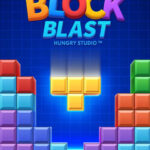
The main gameplay is built around a grid and a selection of block shapes. Depending on the version or mode, you may receive several pieces at once. Your task is to place each piece on empty spaces without overlapping other blocks. Unlike falling-block games, the pieces usually remain where you put them, so you have time to consider your choices.
When a complete horizontal row or vertical column is formed, it disappears. This creates open spaces and adds to your score. Clearing several lines with one placement is especially satisfying because it combines careful preparation with good timing.
At first, the board may look almost empty, and the available pieces seem easy to use. You can place them in many different ways without immediate consequences. As the game continues, however, empty spaces become more valuable. Large shapes may require a particular arrangement, while awkward gaps can prevent you from making a useful line.
A typical round often follows a simple rhythm:
- Look at the available shapes.
- Examine the open spaces on the board.
- Decide which piece is hardest to place.
- Search for possible line clears.
- Place the pieces while preserving future options.
The game does not usually require quick reflexes. Instead, it encourages observation. You can pause before placing a piece and compare several possibilities. This makes it suitable for short breaks, quiet evenings, or anyone who enjoys puzzles without a stressful time limit.
Another enjoyable feature is the feeling of gradual improvement. During an early attempt, you may focus only on clearing one row. After a few rounds, you may begin setting up multiple lines, protecting open areas, and thinking about the shape of pieces that could appear next. The rules stay simple, but your understanding of them becomes deeper.
Tips for Better Play
Keep the board flexible
One of the most useful habits is to avoid filling the board too tightly in one area. A crowded corner can be difficult to repair, especially if it contains small, uneven gaps. Try to maintain a reasonably balanced layout and leave room for both wide and tall shapes.
This does not mean the board must always look perfectly organized. Sometimes a temporary cluster is necessary to create a line clear. The important point is to avoid making a placement that removes too many future possibilities.
Place difficult shapes first
If you receive several pieces, study them before making a move. Some shapes are easy to fit in many locations, while others need a very specific space. It is often safer to place the difficult piece first, then use the flexible shapes afterward.
For example, a long bar may require an open row or column. If you fill that space with smaller blocks first, the bar could become impossible to use. Thinking about the least flexible piece can prevent many unnecessary game-ending situations.
Look beyond immediate clears
Clearing a line feels rewarding, but the highest-value move is not always the one that removes a row immediately. A quick clear may leave behind awkward gaps or block a better opportunity. Before placing a piece, consider what the board will look like afterward.
Ask yourself a few simple questions:
- Will this create a useful open area?
- Can another piece complete a line soon?
- Am I trapping an empty space?
- Is there room for a larger shape?
These questions do not need to be answered perfectly. Even a few seconds of planning can improve your results.
Use corners carefully
Corners can be helpful because they provide stable places for certain shapes. However, they can also become difficult to access if filled with mismatched blocks. Try not to create isolated holes that are too small for most pieces.
A good general approach is to build in a controlled way while preserving a central area or several connected spaces. Connected empty spaces give you more choices than scattered single squares.
Do not rush
Because the game is turn-based or relatively calm, there is usually no reason to hurry. Take time to rotate or compare pieces if the game allows it, and inspect the entire board before committing.
Rushing often leads to placing a piece in the first space that seems acceptable. That move may work immediately but cause trouble later. A slower approach helps you notice line-clearing combinations and safer arrangements.
Treat mistakes as information
Every failed round can teach you something. Perhaps you used the flexible pieces too early, left an awkward hole, or focused too much on a single clear. Instead of viewing the result as a failure, identify the decision that caused the board to become difficult.
This mindset makes the game more enjoyable and encourages steady improvement. Puzzle games are often less about finding one perfect strategy and more about learning which choices create better options.
Conclusion
BLOCK BLAST is a good example of how a straightforward game can offer meaningful depth. Its controls are simple, its pace is comfortable, and the goal is easy to understand. Yet each placement can affect the entire board, turning ordinary blocks into small strategic decisions.
The best way to experience it is to play patiently. Keep the board open, consider difficult shapes first, and think about future possibilities rather than chasing every immediate line clear. With practice, you will begin to recognize useful patterns and make more confident choices.
Whether you play for five minutes or spend a longer session trying to beat your previous score, the game offers a pleasant mix of relaxation and concentration. It is easy to start, satisfying to learn, and thoughtful enough to remain interesting after the basic rules become familiar.