
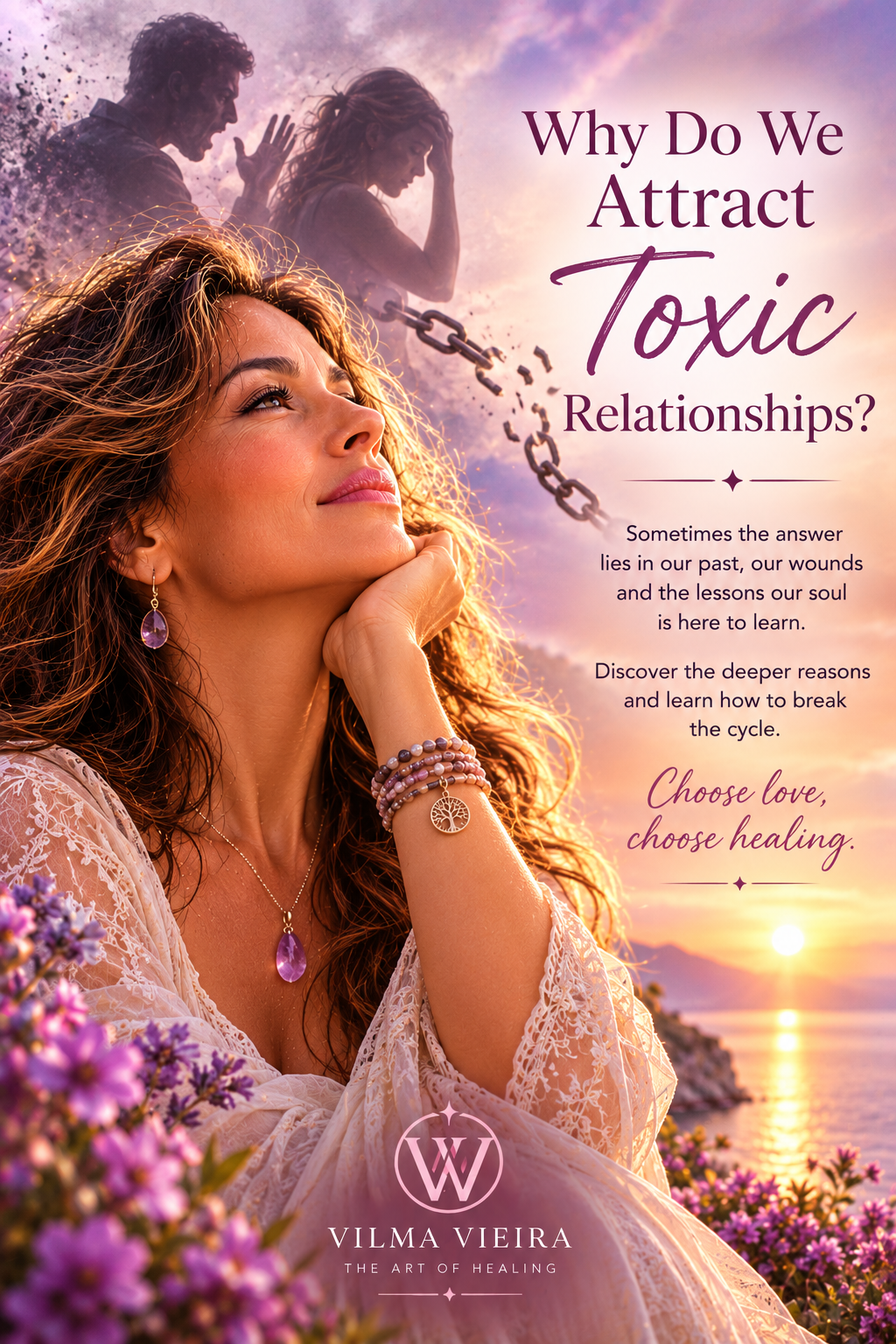
Why Do We Attract Toxic Relationships?
We evolve through relationships, or rather, through the way we relate to others. Every encounter, every connection we make, can act as a mirror, reflecting something within us: a wound, a lesson, a purpose, or an opportunity for expansion.
Today, however, I want to focus on relationships that do not serve us, those that cause persistent emotional pain, insecurity, or undermine our self-esteem.
Conflict is a normal part of any relationship, and things do not always go smoothly. But when unhealthy patterns continue without change, accountability, or genuine transformation, the relationship can undoubtedly become toxic.
What are we talking about? Emotional manipulation, abuse of any kind, whether physical, emotional, psychological, or financial, jealousy and possessiveness, the dismissal of our feelings and opinions, a lack of freedom, and many other forms of harmful behaviour.
But what makes someone attract and/or remain in this kind of relationship?
1. Soul contracts
From a spiritual perspective, there may be a soul contract in which two souls agreed, before incarnating, to experience an abusive or unbalanced relationship in order to resolve karma or learn a particular lesson. That lesson might be learning when to walk away, recognising when a relationship is no longer healthy, and finding the courage to choose ourselves.
After all, it takes two to tango.
2. Past-life memories
This does not necessarily involve a soul agreement. It may simply be an emotion or an unresolved experience that needs to be acknowledged and transformed. This could involve dependency, obsession, or the fear of an abrupt separation.
In such cases, a person may carry the emotional memory of having lost someone in another lifetime and, as a result, prefer to hold on to that person at any cost, even when it means accepting disrespect or mistreatment.
3. The wounds of abandonment and rejection
When someone carries deep abandonment or rejection wounds, they may unconsciously abandon themselves in order to keep a relationship. They might try to fix, rescue, or change the other person, believing that if they can make things work, they will finally feel loved and secure.
4. An emotional void, lack of fulfilment, and loneliness
When we feel unfulfilled, disconnected from ourselves, or deeply lonely, we may settle for almost anyone rather than face the prospect of being alone. The fear of loneliness can become stronger than the desire for a healthy relationship.
5. Upbringing and cultural conditioning
The environment in which we grow up, along with the values and expectations of our community, can strongly influence what we consider acceptable in a relationship.
For example, in some cultures, divorce is frowned upon and seen as a source of shame or disgrace. As a result, someone may feel that enduring an unhappy marriage is preferable to facing social judgement.
6. Society’s expectations
We are often conditioned to believe that being in a romantic relationship is a measure of happiness or personal success. Society can make people feel that being single is somehow abnormal, encouraging them to stay in relationships simply to avoid being alone.
7. Low self-esteem
Low self-esteem can make someone perceive disrespectful behaviour as normal or acceptable. They may place the other person’s needs, feelings, and happiness above their own, gradually losing sight of their own worth.
What Can We Do When We Know We Are in a Toxic Relationship?
First, prioritise your safety.
If the relationship is abusive, seek help immediately and make your safety the priority. Do not prolong the situation by giving endless chances or waiting for things to improve. You do not have to keep exposing yourself to harm to prove that you have tried hard enough. Repeated abusive behaviour is a very clear red flag.
Second, work on the emotional wounds that may be drawing you towards people who activate them.
Perhaps that is the role these relationships play: to bring certain wounds and unresolved emotions to the surface. But once we have acknowledged and processed those emotions, there is no reason to remain in a harmful relationship. Staying only makes sense if there is genuine accountability, a willingness to change, and a real transformation in the relationship dynamic.
Third, develop self-esteem and emotional independence.
Work on releasing unhealthy attachment patterns and the fear of being alone. Reconnect with who you are, understand what you genuinely want from a relationship, and establish those desires and values as your new standard.
And above all, work on your sense of self-worth and what you believe you deserve.
After doing this long and challenging inner work, it is perfectly possible to encounter a few more frogs along the way! Sometimes, we need to remain consistent with our decisions and the changes we have made. From a spiritual perspective, we might even say that the universe likes to test us.
But perhaps the most important work of all is to heal the toxicity within our relationship with ourselves, and to learn to love ourselves unconditionally.
That is when genuine love finally has room to land.
By then, we have learned to feel whole within ourselves. We know how to create our own happiness, honour our worth, and enjoy our own company. A romantic relationship is no longer something we need in order to feel complete. It becomes a beautiful addition, a source of connection, joy, and expansion of the energy we already embody.
![]()
Life Coach Code Decode Into Superhuman
- Account
- Feed
- Find Life Coach
- Events
- Resources
- Pillars Test
- Mental Biases Encyclopedia | All the tricks your mind pulls on you
- Emotional Dictionary | Learn the language of emotions and understand their messages
- Coaching Techniques Encyclopedia | Discover All Practices, Tools, and Therapy Exercises that Exist
- Coaches for Peace | Free Support, Consultation, and Advice for Anyone Affected by The War
- Glossary
Available Points
233
Vilma Vieira
Recommended
Coaching Score Explanation
This category evaluates a coach’s expertise, techniques, and years of professional experience, along with their certifications. We also focus on their business structure. While the score reflects their current standing, it also acknowledges the unique journey each coach takes in continuously growing, refining their practice and expanding their influence in the field.
Score: 11 / 15
Clients Score Explanation
This category focuses on how client-centered a coach is, the impact they have, and their dedication to helping others. It emphasizes the number of positive testimonials they’ve received, which reflect the effectiveness of their work. This score highlights how well a coach connects with and supports clients, while also providing insight into areas where they can further enhance their impact and client satisfaction.
Score: 14 / 15
Characteristics Score Explanation
This category reflects the personal qualities that make a coach stand out. It is our "secret" rating algorithm. Coaches are always evolving, and this score highlights how their values and resilience contribute to their practice.
Score: 11 / 15
Community Score Explanation
Here, we assess a coach’s involvement, authority, and reputation within the broader coaching community. This score is about how they engage online, share their knowledge, and contribute to the growth of others. Every coach has room to grow, and this score can reflect their journey toward building a strong online and global presence as well as lasting impact and legacy.
Score: 12 / 15










© Newspaper WordPress Theme by TagDiv