
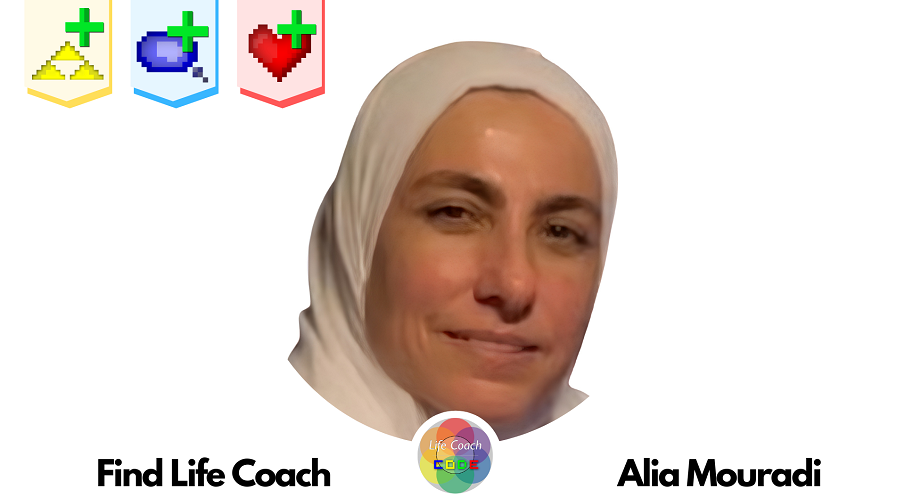
Alia Mouradi is one of the coaches that we found this month and we did a little interview with her. She impressed us with her kindness and strength of character.
She believes that cancer is not a battle to be won, but a journey that deserves compassion, dignity, and understanding. Through her own experience supporting her son during his cancer journey, she discovered the importance of finding meaning, maintaining hope, and staying connected to what truly matters, even in life’s most challenging moments.
She combines her personal experience with professional coaching expertise to support cancer patients, survivors, parents, and caregivers. As an ICF credentialed coach, she developed an ICF approved cancer coaching program and her unique FALAH framework, helping individuals navigate uncertainty, reconnect with their identity, and strengthen their emotional, mental, and spiritual wellbeing.
She is passionate about changing how the world understands cancer and the people experiencing it. Beyond supporting individuals and families, she educates coaches and healthcare professionals to look beyond the medical diagnosis and recognize the whole person, creating a more compassionate and holistic approach to cancer care. Here is what she said…
Meet Life Coach Alia Mouradi:
Name: Alia Mouradi
Pillar: The Spirit, The Mind, The Heart
Who is this coach for: Cancer patients, survivors, parents, caregivers, and healthcare professionals seeking emotional support, resilience, clarity, and meaning throughout the cancer journey.
How they can help: Through her FALAH framework, cancer journey mapping, values based goal setting, Universal Wellbeing Model, and reflective coaching tools, Alia helps clients navigate uncertainty, reconnect with their identity, and strengthen their emotional and spiritual wellbeing.
First of all, how are you and your family doing in these “crazy” times?
Thank you for asking.
We are doing well.
Life always brings challenges, and this is an unsettling time in our region.
But as far as my family is concerned, we are well, and I am grateful for that.
We are taking things one day at a time.
How did the coronavirus pandemic affect your clients? Did it affect you at all?
During the pandemic, I did not have outside clients.
The people I worked with were inside the hospital, mainly children and families.
My focus was on helping them explore their values and what mattered most to them during their cancer journey.
For me, the pandemic was also very personal.
I was in the hospital with my son and already felt isolated.
My husband worked in pediatrics at the same hospital, so we had support, but my children and extended family were in the United States and could not travel.
Even friends could not visit, and my son did not want visitors.
It was a very lonely and difficult time.
At the same time, I was taking a coaching program.
I was learning about coaching while living through one of the hardest experiences of my life.
That made the learning very real for me.
Coaching support became an important part of helping me stay grounded, understand what I could control, and keep going.
The Origin:
Tell us about you, your career, how you started with your coaching career?
I am a mom and grandmother, originally from Syria, and I have lived in Riyadh for the past 30 years.
I mainly stayed at home to raise my children and worked for a while as an interior designer.
I have always been interested in personal growth and enjoyed sharing what I learned with friends and at gatherings.
Before the pandemic, I started a life coaching program by chance and continued during the first year of the pandemic.
When my son was diagnosed with cancer, I stopped everything to focus on him.
While we were in the hospital, I came across a cancer coaching program, and taking it changed my life, personally and professionally.
Later, I earned my ICF credential, volunteered with cancer organizations, and developed programs for teens, moms, and survivors.
I then wrote my first book about my experience as a mom and caregiver, hoping to support others going through a cancer journey.
That book became the foundation for my cancer coaching program for coaches and healthcare professionals, which was approved by the ICF.
What was your biggest obstacle that you had to overcome in your life that made you who you are today?
My son’s cancer diagnosis was the biggest obstacle I have faced in my life.
At the same time, I can honestly say it became one of the most important experiences of my life because it changed how I live, personally and professionally.
During the pandemic, I was in the hospital with my son and felt very isolated.
My children and family were in the United States and could not travel, and even friends could not visit.
My husband worked in pediatrics at the same hospital, which gave us support, but it was still a lonely and difficult time.
That experience helped me discover who I am.
It strengthened the relationships that matter most to me, helped me understand my own journey, and allowed me to see my son’s journey with more compassion and awareness.
Professionally, it gave my life a new direction.
I discovered coaching while we were in the hospital, and I was learning about coaching while living through the experience myself.
Later, I earned my ICF credential, volunteered with cancer organizations, wrote my book, and developed a cancer coaching program approved by the ICF.
My son’s journey became the reason I support other people going through similar experiences.
What are the biggest lessons that you learned overcoming your greatest obstacle?
The experience changed my relationship with myself.
It helped me discover who I am, understand my priorities, and find meaning in a very difficult journey.
One of the hardest lessons was learning to trust and let go of what I could not control.
Even though my faith teaches me to trust, it was hard because I like to manage what is happening around me.
I also had to learn not to push my ideas on my son and my husband.
My husband is a pediatric oncologist and understood the medical side deeply, but there were times when I disagreed with his decisions.
Part of that was my need for control, and part of it was my desire to protect my son from pain.
I learned that I could not control everything, but I could choose how I showed up, with more trust, presence, and compassion for myself and my family.
I also learned that being present can matter more than having answers.
Sometimes you cannot take away someone’s pain, but you can be there without rushing to fix or explain everything.
Acceptance is not giving up.
It means seeing reality clearly so you can respond with wisdom.
And hope is bigger than one outcome.
You can hope for healing while still finding connection and meaning during uncertainty.
Another important lesson was that a person is more than their diagnosis.
Cancer can affect identity, but it does not erase someone’s values, relationships, dreams, or dignity.
Finally, caregivers need care too.
Families often focus completely on the person receiving treatment, while their own needs become invisible.
Supporting the caregiver is part of supporting the family.
These lessons shape how I coach today.
I do not want to give people my answers.
I want to help them recognize their own strength, resources, and choices.
The Coaching Style:
How do you innovate with coaching your clients?
I take an approach that considers the whole person.
A client is not just their diagnosis, emotions, or goals.
They are a whole person with values, culture, faith, relationships, and their own way of moving through life.
I have studied the Enneagram and personality traits, which helped me understand myself better and see how differently people handle life.
I believe everyone has their own inner compass, and as a coach, I need to understand that compass before I can support change.
Awareness matters, but the real work begins when someone learns how to use what they discover about themselves.
My philosophy is that life happens for you, not to you.
Life will always bring challenges, but we can choose how we respond, based on our values, culture, and faith.
For example, someone going through cancer may come to coaching feeling overwhelmed and unsure.
Instead of focusing only on treatment or telling them to stay positive, I help them look at what they can control, what matters to them now, and what support they need.
They may realize that, even in a hard situation, they still have choices: how they talk to themselves, how they use their energy, and how they stay connected to the people and activities that give their life meaning.
From there, we find small, realistic steps that help them feel more grounded and more in charge of their own journey.
What’s unique about your coaching approach?
My approach combines lived experience, professional coaching, and a holistic view of wellbeing.
Cancer coaching is a support system for the mental, emotional, spiritual, and relational parts of the journey, alongside the medical care a person receives.
I do not see a client only as their diagnosis, emotions, or goals.
They are a whole person, with values, culture, faith, relationships, and their own way of moving through life.
Everyone has their own wellbeing journey, even within one family.
I have experienced the cancer journey as a mom, and through my husband’s work as a pediatric oncologist, I also understand the importance of medical expertise.
However, I do not confuse personal experience with professional expertise.
My role is not to tell people how they should feel or what their journey should look like.
It is to create a space where they can explore their own experience and discover what is meaningful and possible for them.
My FALAH framework guides this work through five questions:
- Where am I now?
- Who am I?
- What matters to me?
- What do I need?
- How do I integrate this into my life?
I make room for faith, culture, family, and relationships when they matter to the client.
My approach is coaching, not psychotherapy or medical treatment, and I respect the role of the healthcare team.
Ultimately, I help people move from feeling disconnected from themselves to greater clarity, confidence, and meaningful engagement with their lives.
What benefits do your clients get after working with you?
My clients gain a clearer understanding that cancer is a journey, not a battle.
It moves through different stages, and even though every person’s experience is different, they do not have to face it alone.
Through coaching, they develop a greater awareness of themselves and a stronger sense of who they are beyond the diagnosis.
They gain clarity about what matters to them, learn to recognize what they can and cannot control, and identify realistic steps that align with their values.
They gain a greater awareness of themselves, a stronger sense of identity, clarity and meaning, more intentional choices, greater awareness of support and resources, and a more integrated approach to wellbeing.
They learn how the mental, emotional, spiritual, and relational parts of the journey connect.
For coaches and healthcare professionals, my work helps them listen more deeply, use coaching skills appropriately, and support the whole person, not just the medical condition.
I do not promise that coaching will remove distress, improve medical outcomes, or make the journey easy.
But I offer a structured space for reflection, awareness, and intentional action so people can live with more clarity, connection, and meaning during a difficult time.
Do you use any specific tools to be efficient with your clients?
Yes.
I use a map of the cancer journey and FALAH goals as my main tools.
The map helps clients understand where they are in their journey and recognize that cancer moves through different stages.
FALAH goals help them set goals that honor each stage of the experience.
These are not just SMART goals.
They are goals based on the person’s values, needs, and what matters most to them.
I also use the Universal Wellbeing Model to help clients explore different areas of wellbeing and reflect on changes over time.
My coaching is guided by ICF competencies, and I use reflective questions and emotional intelligence tools when appropriate.
But for me, the most important tool is not a tool at all.
Sometimes, as coaches, we are not there to fix people.
We are there to help them explore who they are, what they need, and what matters to them.
The client is the expert in their own life.
My role is to create a safe space for that exploration.
In work related to cancer, I choose tools carefully and within my scope of practice.
Coaching does not replace medical care or mental health treatment.
A tool is valuable only when it helps the client gain insight, feel more grounded, or make a meaningful choice.
The Impact:
If you had a super megaphone that, when you speak into, the whole world will hear your message, what would you say?
Cancer is not a battle that decides whether someone is strong enough to win.
It is a journey of rediscovering yourself, finding meaning, building a support system, honoring your identity, and living according to your values.
Every person’s experience is different, and every person’s journey deserves dignity, compassion, and respect.
I want to help change how the world sees cancer by helping people move from pain to meaning, from fear to faith, and from simply getting through the journey to discovering what makes life meaningful, even in its hardest moments.
My message is simple.
Do not let the uncertainty of the journey take away the meaning of the life you are living today.
There may still be hope, connection, purpose, and possibilities you have not yet discovered.
That is the legacy I want to leave: not just to tell my story, but to help change the way others understand theirs.
What is the greatest lesson you have learned in your life?
The greatest lesson I have learned is that we cannot always choose what happens to us, but we can choose how we meet what happens.
For a long time, many of us think wellbeing depends on our circumstances.
We think that when the problem is solved, when everyone is healthy, or when life goes back to normal, then we will be well.
But what happens when life does not go back to the way it was before?
I have come to see wellbeing as the ability to stay connected to myself, to what matters to me, and to the possibilities that are still available, even during hard times.
I have also learned that everyone has their own wellbeing journey, even within one family.
People may be living through the same situation, but they experience it differently and need different kinds of support.
My faith has deepened this understanding.
Trust does not mean knowing how everything will turn out.
Sometimes it means taking the next step without seeing the whole path.
I have also learned not to put life on hold until the crisis is over.
Even during pain, there can be love, connection, gratitude, meaning, and moments of joy.
That is the understanding I bring into my work.
Wellbeing is not the absence of difficulty… It is how we care for the person living through it!
Your final thoughts?
Cancer changes us.
It can transform who we are, what we believe in, how we live, our priorities, and our emotions.
There is no going back to exactly who we were before.
But within that change, there is also an opportunity to find meaning and hope in the journey.
My mission is to help change the way people see cancer, from a battle to a journey, and to create a support system through coaching.
I want to support parents, patients, and caregivers, and help healthcare professionals bring a coaching perspective alongside medical care.
Coaching can support the mental, emotional, spiritual, and relational parts of the journey while the medical team focuses on treatment.
I am committed to this work not because I can promise an easy journey, but because I believe it can be a transformative one.
We may not always be able to remove pain, but we can walk beside and support one another through it.
Coaching is one way of doing that and one way of making an impact.
Where Can You Find Alia Mouradi?
If you liked this interview and if you would love to speak with Coach Alia and see if she can help you, schedule a free call here.
If you’d like to peak a glimpse into her coaching, follow her Instagram account.
And if you’d like to connect with her more personally, you can do that through LinkedIn or by sending her a direct message on her Email [email protected]. It was an honor having this interview with her.