
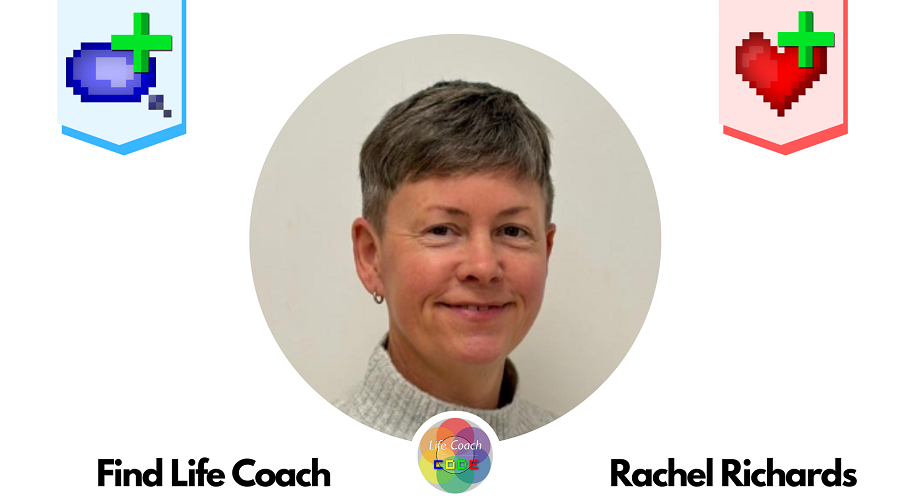
Rachel Richards is one of the coaches that we found this month and we did a little interview with her. She impressed us with her focus and professionalism.
She knows what it feels like to question your own wiring in a world that was not designed with you in mind, and she has transformed that lived experience into a powerful, compassionate coaching practice that helps neurodivergent individuals rediscover self trust and authentic connection.
She works with ADHD and autistic adults who are navigating dating, identity shifts, and complex relationship patterns, guiding them to build partnerships rooted in alignment rather than performance, and clarity rather than confusion.
She creates a space that is both professionally grounded and deeply human… where curiosity replaces judgment, safety replaces masking, and clients move from feeling “too much” or “not enough” to confidently building relationships that genuinely fit who they are. Here is what she said…
Meet Life Coach Rachel Richards:
Name: Rachel Richards
Pillar: The Mind, The Heart
Who is this coach for: Neurodivergent individuals, particularly late diagnosed ADHD and autistic adults, who want to build aligned, healthy, and sustainable relationships without masking or reshaping who they are.
How they can help: By using various tools and techniques like reflective questioning, belief examination, attachment exploration, communication mapping, and nervous system awareness tools within a safe and supportive space.
First of all, how are you and your family doing in these “crazy” times?
We are doing well, thank you.
As a neurodivergent family, we have each had our own unique journey through challenging times.
I think that awareness has really helped us.
We do not all respond in the same way.
That is okay.
I really admire my parents and my brother because, despite the odds and challenges they faced, they never gave up.
They each created a successful path for themselves while remaining kind and humble, both to themselves and to others.
They encouraged me to be myself and to follow my own dreams rather than fit into someone else’s expectations.
They taught me what it feels like to be heard, accepted, and understood.
I honestly think that is where my passion comes from.
When you have experienced that kind of acceptance, you want others to feel it too.
We genuinely enjoy spending time together.
I also deeply value my chosen family.
That sense of belonging and of being seen has shaped both my life and my work.
How did the coronavirus pandemic affect your clients? Did it affect you at all?
For many clients, the pandemic increased stress.
Routine disappeared.
Uncertainty grew.
Relationships were placed under pressure.
I saw heightened anxiety, burnout, emotional dysregulation, and increased masking as people tried to cope.
For some individuals, it slowed the pace down and gave room to pause and reflect.
Social pressures reduced.
People were not constantly saying yes.
Sensory overload lessened.
For certain neurodivergent clients, stress levels actually decreased.
On a personal level, it was also a difficult time.
My mum was really ill and very vulnerable.
There was a constant awareness that if I got too close, I could unknowingly pass on the virus.
That felt incredibly stressful.
I was holding love and caution at the same time.
During that period, I stopped watching and listening to the news.
I realised that I needed to protect my own nervous system.
The slower pace taught me something important.
I learned that no matter how much time we think we have, it never feels like enough.
It made me reflect deeply on prioritising what truly matters.
It made me feel grateful for the time and connection we do have.
That whole period reinforced something I believe strongly.
Responses to crisis are individual.
It depends on someone’s wiring, their needs, their environment, and their support systems.
Even within our own neurodivergent family, we experienced it differently.
There is no single narrative.
There are only personal ones.
The Origin:
Tell us about you, your career, how you started with your coaching career?
I trained with Animas and qualified as an Associate Certified Coach.
When I reflect back, I can see that I was coaching long before I had the formal title.
I have worked within the charity sector.
I currently work as a Health and Wellbeing Coach, alongside running ndrelationshipcoach.co.uk.
Throughout my career, including my work within the NHS, I have consistently supported people in understanding themselves better and finding frameworks that work for them.
I have always been curious about how people think, how they cope, and how they grow.
Over time, I recognised a clear gap in relationship support for neurodivergent individuals.
So much advice assumes a neurotypical way of processing emotions, communication, and social interaction.
I founded ndrelationshipcoach.co.uk to bridge that gap.
My work focuses on helping neurodivergent individuals build relationships around their wiring rather than against it.
I often work with late diagnosed ADHD and autistic adults who are navigating dating, identity shifts, and long standing relationship patterns.
They want something more aligned and sustainable.
At the heart of my coaching is a belief that everyone has inner wisdom.
My role is to create a space where that wisdom can surface.
People feel seen, heard, and understood.
They can then create lasting change from that place.
What was your biggest obstacle that you had to overcome in your life that made you who you are today?
There has not been just one obstacle.
There have been several illnesses over the years, alongside deeply rooted core beliefs and moments of real self doubt.
As a neurodivergent person, self trust can slowly become diminished over time.
You hear messages, sometimes subtly and sometimes directly, like you are too much, sit still, you are difficult, or why can you not just.
Over time, you can start to question your own instincts.
Part of my journey has been learning to trust myself again.
Illness has a way of slowing you down and asking difficult questions.
It shifts perspective.
It makes you reflect on what is within your control and what is not.
Coaching, alongside family and friends, supported me deeply during those periods.
It helped me realise that not everything I believed about myself was true.
It also helped me recognise that although we are all unique, there is a strong thread of common humanity running through our struggles.
I genuinely feel coaching is a privilege.
Being trusted with someone’s story and vulnerability is something I do not take lightly.
Trust has been a central theme for me.
Coaching asks you to trust yourself, trust others, and trust the process.
Rebuilding that self trust has shaped both who I am and how I coach.
What are the biggest lessons that you learned overcoming your greatest obstacle?
I have learned how it feels when you are aligned with yourself.
There is a noticeable difference when you are following your passions and choosing yourself.
There is also a difference when you surround yourself with your tribe, the people who genuinely understand and support you.
Curiosity has been a gift.
Instead of judging my wiring, I have learned to get curious about it.
I have learned to understand it and work with it.
Accepting my wiring rather than fighting it has brought a steadiness I did not have before.
The Coaching Style:
How do you innovate with coaching your clients?
For me, innovation is not about adding complexity.
It is about really paying attention to the person in front of me.
If someone feels overwhelmed by dating, I slow things down with them.
I explore what is actually happening.
Is their nervous system overloaded.
Is unpredictability dysregulating.
Are old beliefs being triggered.
Is executive functioning playing a part.
Sometimes we build practical tools like communication scripts.
Sometimes we explore attachment patterns.
Sometimes we gently question long held core beliefs.
It really depends on the individual.
I think innovation, especially in this space, is about respecting cognitive diversity.
It is about adapting the process rather than assuming one approach fits everyone.
What’s unique about your coaching approach?
My approach is neurodivergent informed, strengths based, and deeply human.
I am naturally very curious.
I love learning and exploring.
That journey has not always been straightforward.
I was not diagnosed with dyslexia until I was twenty four.
Many years later, I was also diagnosed with ADHD.
Looking back, so much of my early experience makes more sense now.
There were times growing up when learning felt harder than it seemed to for others.
That can shape your self belief.
Curiosity never left me.
If anything, it became stronger.
I have always wanted to understand how things work, especially people.
That curiosity shows up in my coaching.
I do not rush people.
I create space where someone can slow down and properly explore themselves.
Sometimes they explore in ways they have not been able to before.
There is no pressure to have immediate answers.
Clients often tell me they feel genuinely seen, heard, and understood in our sessions.
That sense of safety allows us to go beneath surface level behaviours and create lasting change.
I do not coach people to fit into neurotypical relationship expectations.
I help them understand their processing style, attachment patterns, communication needs, and sensory thresholds.
We then build relationships around that.
For me, it is about exploration, understanding, and authenticity rather than performance.
What benefits do your clients get after working with you?
Clients come away with a better understanding of themselves.
They gain clarity about how they are wired and how they communicate.
They understand what triggers them and what soothes them.
They also understand what they actually want in a relationship.
They stop focusing on what they have been told they should want.
They focus on what genuinely aligns with them.
That self understanding changes everything.
Dating becomes less confusing.
They are no longer trying to mould themselves to fit someone else’s expectations.
They are clearer about their needs and boundaries.
They recognise red flags sooner.
They feel less anxious before and after dates because they understand what is happening internally.
They build a healthier relationship with themselves first.
That naturally improves their relationships with others.
Many find their tribe. They find people who genuinely understand their depth, humour, sensitivity, or directness.
They move from surviving relationships to learning how to thrive in them.
They stop seeing themselves as too much or not enough.
They begin to see themselves as wired differently.
They recognise they are capable of building relationships that truly fit.
Do you use any specific tools to be efficient with your clients?
I use reflective questioning frameworks, belief examination exercises, attachment exploration, communication mapping, and nervous system awareness tools.
Reflection is a big part of my work.
Slowing things down enough for someone to really notice what is happening internally can be powerful.
Safety is the most powerful tool.
Creating a space where someone feels safe enough to explore their thoughts, patterns, and fears allows real work to happen.
They know I am not going to rush them or pull away.
Sometimes the most important thing is that I stay with them while they work through something difficult.
When someone feels safe, they can go deeper.
Depth is where lasting change happens.
The Impact:
If you had a super megaphone that, when you speak into, the whole world will hear your message, what would you say?
You are not broken.
You may simply be trying to live by a framework that was never designed for you.
Understand your wiring.
Trust your inner wisdom.
Build relationships from alignment, not expectation.
What is the greatest lesson you have learned in your life?
In the past, I have gone down deep downward spirals.
I have believed narratives about myself that felt completely true at the time.
One of the greatest lessons I have learned is that not everything is true.
This is especially the case with the stories we tell ourselves when we are overwhelmed or doubting.
I have also learned that when someone says I am too much, it does not automatically mean there is something wrong with me.
It may simply mean I am too much for that individual.
That is different.
I can be too much for someone and still be enough as I am.
Having a support system who sees me, accepts me, and reflects that back to me has been incredibly grounding.
There is something powerful about having your enoughness mirrored back to you.
For me, the greatest lesson has been about alignment and acceptance.
It has been about understanding what is within my control and what is not.
It has been about coming home to myself rather than constantly trying to reshape who I am.
Self acceptance feels steady.
That steadiness changes everything.
Your final thoughts?
For me, coaching is a partnership.
It is not something I do to someone.
It is something we do together.
There is a shared commitment to curiosity, honesty, and growth.
I genuinely get a lot back from coaching.
Sitting with someone’s reflection often mirrors things in me too.
It keeps me humble.
It keeps me learning.
It reminds me of our shared humanity.
When someone feels truly seen and understood, something shifts.
Being trusted with that process is something I do not take lightly.
Helping neurodivergent individuals build relationships where they do not have to mask or shrink feels deeply meaningful.
It is work I feel grateful to do.
Where You Can Find Rachel Richards?
If you liked this interview and if you would love to learn how to come home to yourself and build lasting relationships without masking who you truly are, schedule a free chemistry call here and see how Coach Rachel can help you.
Feel free to explore her website and see all the things she offers.
And if you’d like to connect with her more personally, you can do that through LinkedIn or by sending her a direct message via her Email [email protected]. It was an honor having this interview with her.